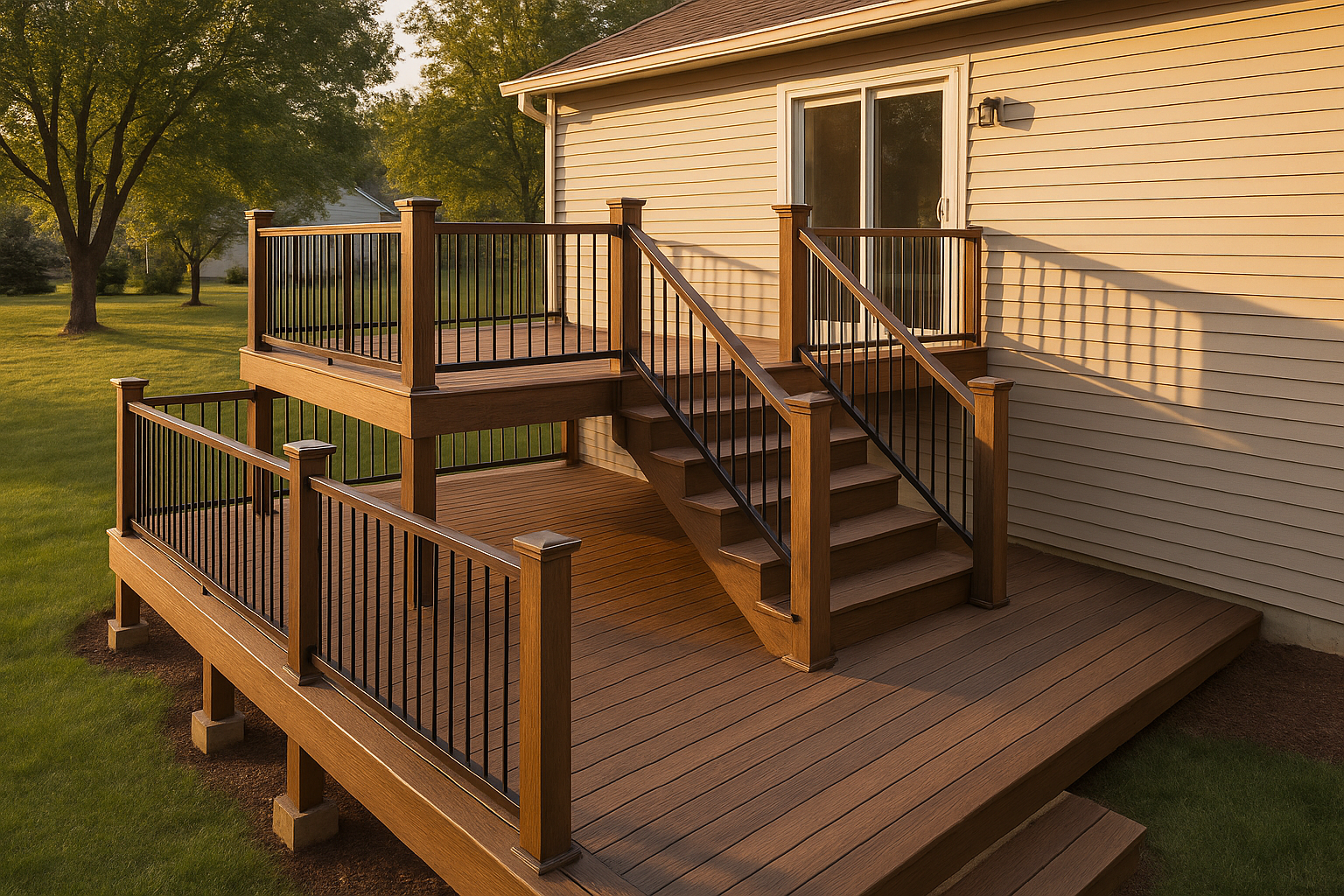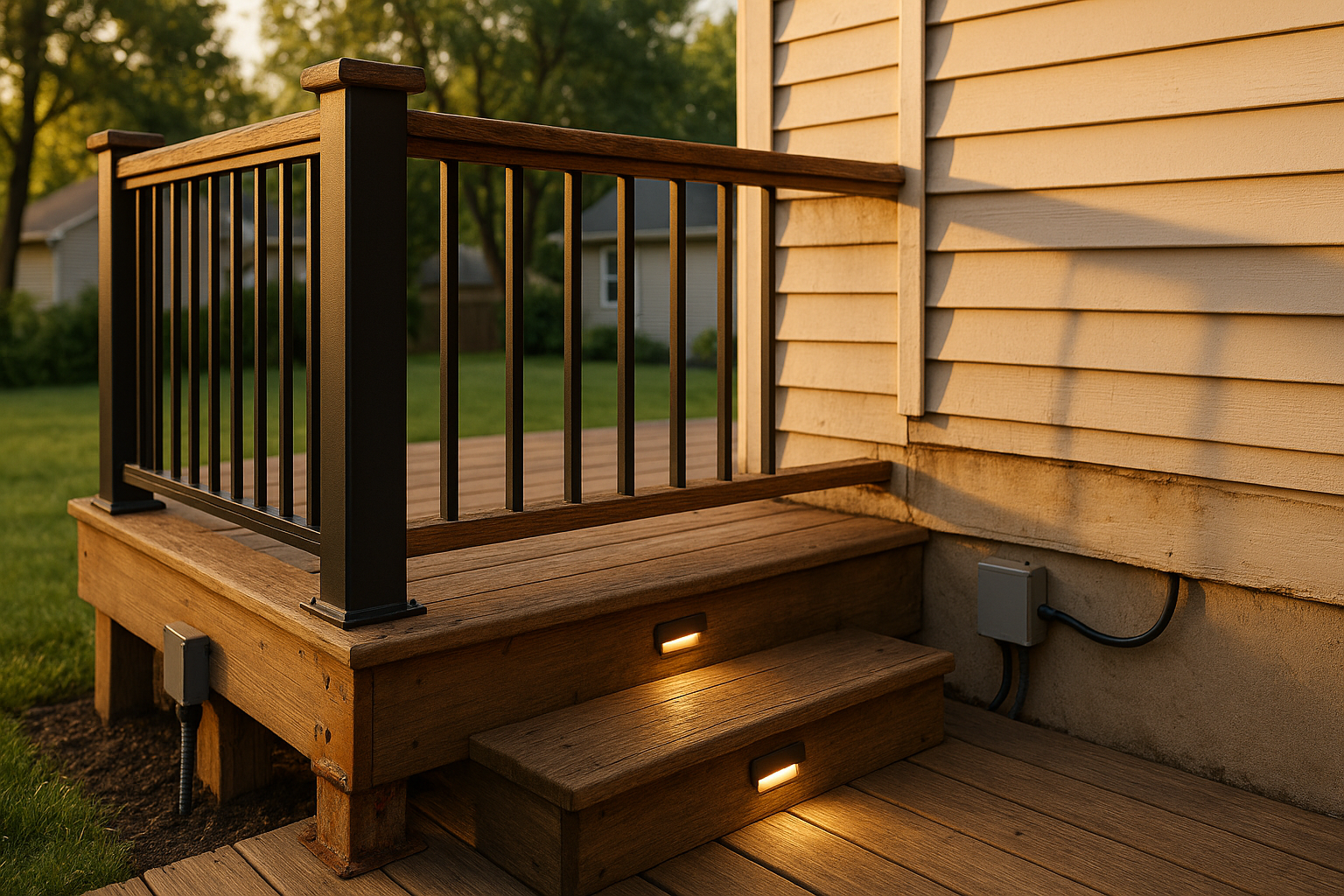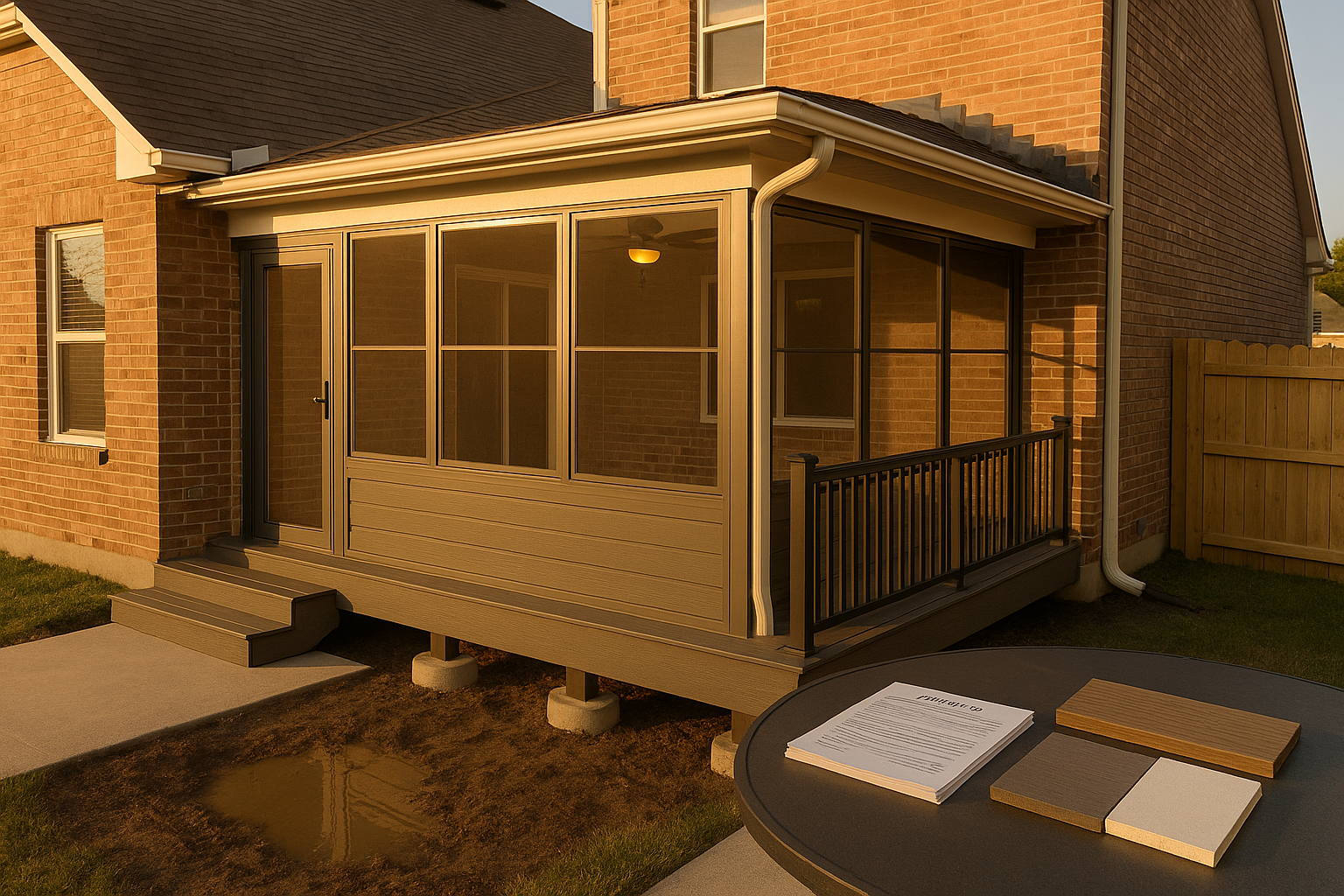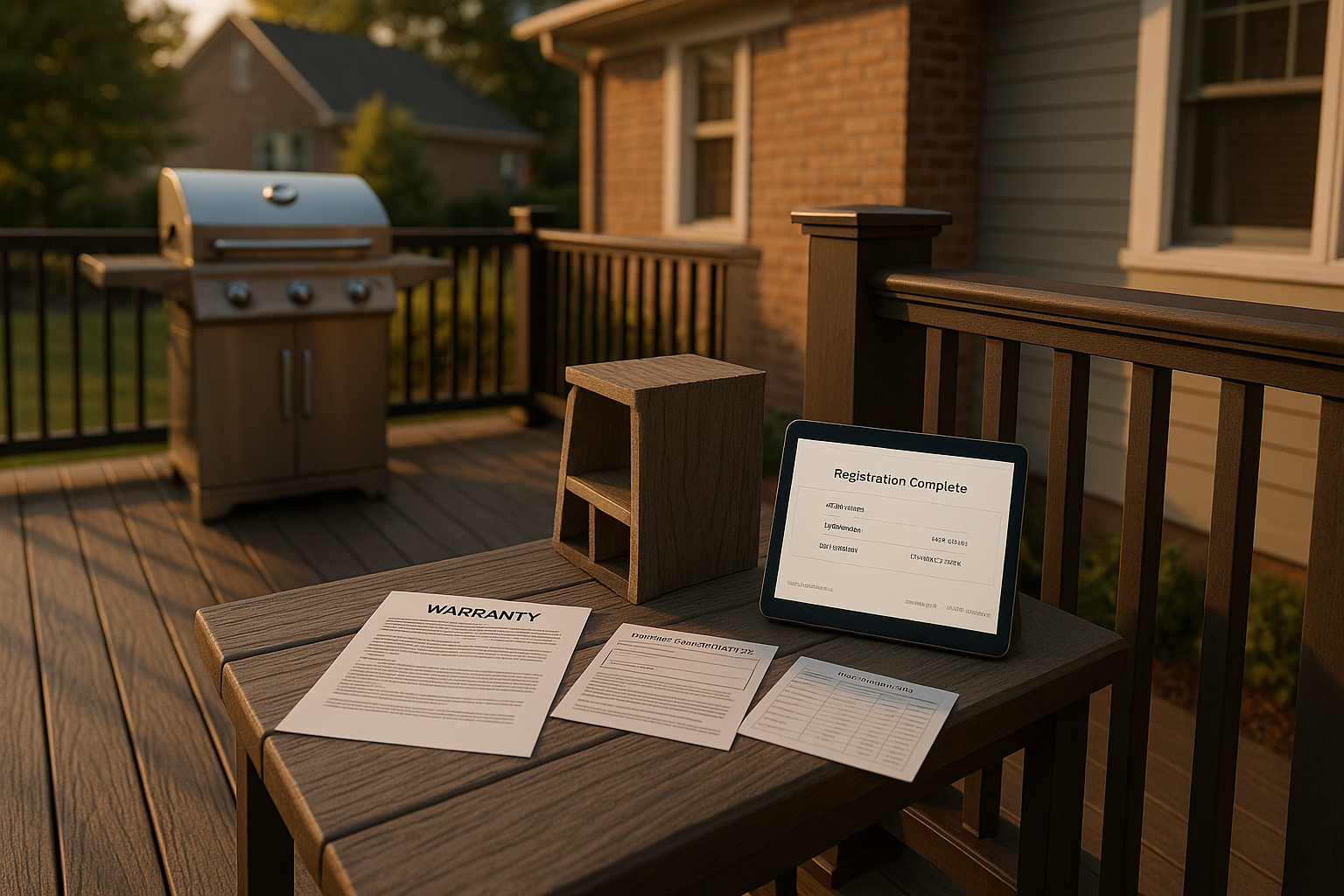
You know that sinking feeling? A guy I know in Fishers spent close to $40k on a new composite deck. Three summers later, the boards near his grill started looking chalky. He dug out the paperwork—turns out he never registered the warranty, and the fine print said you only had 90 days. He thought he had a 25-year fade warranty. He had nothing.
That's the thing about a composite decking warranty: it's only as good as the paperwork, the installation, and the person who installs it. At DeckPros we see this all the time. So let's break down what's actually covered, what's not, and how to keep your deck protected here in Indianapolis and the surrounding suburbs.
The Two Layers of a Composite Decking Warranty
First, you need to know that there are two separate warranties on any deck we build. The manufacturer's warranty covers the materials—the composite boards, the railing system, sometimes the hidden fasteners. That's the one with the big number: 25, 30, even 50 years for structural stuff. Fade and stain coverage on premium capstock lines often runs 25 to 50 years too, but it's limited and prorated after a while.
Then there's the installation warranty from your contractor. That's the part most people forget. Manufacturer warranties never cover labor. If a board warps due to a manufacturing defect, they'll send you a new board, but you're on your own for the labor to swap it out—unless your contractor backs their work. DeckPros gives you a written labor warranty on our installation. If we installed it wrong and that causes a failure, we fix it. That's separate from the board manufacturer's promise.
And here's a twist: railings often have different terms than deck boards. A 50-year structural warranty on the decking might not apply to the railing. Same for fascia, trim, and hidden fasteners. Always ask for the warranty matrix for every component, not just the headline number.
If you're working with a general contractor who also does fences or railing, make sure they understand how those pieces interact with the deck. A fence contractor who sets posts too close to your deck can trap water against the boards—voiding the moisture warranty. Same with a railing contractor who uses the wrong screws. That's why we handle railings and adjacent fences as part of the whole project, not as an afterthought.
What's Typically Covered (And What's Not)
Most composite warranties cover manufacturing defects: boards that split, rot, delaminate, or develop excessive fading or staining from normal household stuff like ketchup, wine, or bird droppings. (Yes, bird droppings. If the stain won't come out with approved cleaners, that's a covered claim on good lines.) They also cover termite damage and fungal decay.
But the exclusions are where people get tripped up. Here are the big ones we warn homeowners about in Indianapolis:
- Improper installation: wrong gapping, not enough ventilation, unapproved fasteners. If a board buckles because the installer didn't leave the right gap for freeze–thaw movement, the manufacturer will deny the claim.
- Chemical damage: rock salt, ice melt with calcium chloride, pool chlorine, or muriatic acid. We tell every customer: no rock salt on composite. Use a plastic shovel and an approved de-icer.
- High heat: fire pits, grills, or charcoal smokers sitting directly on the deck. You need a heat shield or pad. We've seen claims denied because someone set a hot grill lid on the boards. If you're planning a fire feature, check clearance requirements. We wrote a whole guide on fire pit safety on decks in Indiana.
- Inadequate ventilation on ground-level decks: This is huge for Indiana. A deck built over concrete or close to the ground needs airflow underneath. Without it, moisture gets trapped and boards can warp or mold. The warranty won't cover that. If you're building low to the ground, follow the ground-level deck build guide to keep your warranty intact.
A homeowner in Greenwood ignored our advice and put a rubber mat under his grill. The trapped heat cooked the composite and voided the entire section. Don't be that guy.
Registration, Transfer, and Proration: The Fine Print That Matters
Most manufacturers require you to register your product within a certain window—usually 90 to 120 days after purchase. If you miss it, you might lose coverage or get a reduced term. DeckPros handles registration for you. We keep the receipts, the lot numbers, and the proof of purchase on file. You just live your life.
What if you sell your house? Many warranties are transferable, but usually only once, and you have to notify the manufacturer within a set time after the sale. The coverage often becomes prorated for the second owner. Proration means the manufacturer pays a percentage based on how old the deck is. So if your 25-year composite decking warranty is 60% prorated after 10 years and a board fails, they might pay 40% of the material cost. You're still paying for labor either way.
That's why we recommend choosing a board with a strong non-prorated period. Some premium lines have 15 or 20 years of full coverage before proration kicks in.
If you're thinking about adding a fence or privacy wall later, keep the warranty in mind. A privacy wall in Noblesville that attaches to the deck might require specific hardware or spacing. We coordinate with our fence contractors to make sure nothing compromises the deck warranty.
Indiana's Climate and Your Composite Decking Warranty
Indianapolis gets it all: freeze–thaw cycles that can pop a board out of its clips, summer UV that fades cheaper composites, hail storms that dent cars and decks, and oak leaves that leave tannin stains every fall. A good composite decking warranty covers fading from UV, but that only helps if you maintain the deck with approved cleaners. Leaf stains? They're usually removable with a soft brush and mild soap. If you ignore them for years, the stain can become permanent, and that's on you, not the warranty.
Snow management is another big one. Use a plastic shovel, never metal. And skip the rock salt. We tell customers in Carmel and Zionsville to use a calcium chloride-free de-icer or just plain sand for traction. If you have an above-ground pool, splash-out can affect the boards. Rinse the deck after heavy pool use; chlorine will eat the cap over time. Our guide on building a deck around an above-ground pool covers the waterproofing details that keep warranties alive.
What about hail? Hail damage isn't a warranty issue; it's a homeowners insurance claim. The manufacturer won't replace boards dented by a storm. But if the hail causes a crack because the board was already defective, that's different. Call us and we'll help sort it out.
Adding a pergola or shade sail? Check the mounting. A patio enclosure supplier might sell you a beautiful structure, but if the posts bolt through the decking in the wrong spot, you could void the deck warranty. We install shade structures that work with the deck, not against it. See our deck shade solutions article for examples.
Making a Claim Without the Headache
The claim process doesn't have to be a nightmare. A few months ago, a homeowner in Westfield noticed a board with a hairline crack after two years. She called us, we pulled up her file: photos of the installation, lot numbers, the registration confirmation. I took a few pictures, emailed them to the manufacturer, and had a replacement board in two weeks. No drama.
That's the value of working with a contractor who documents everything. DeckPros keeps a digital file for every project. If you ever need to file a composite decking warranty claim, we do the legwork. We've been through the process enough to know what manufacturers ask for: proof of purchase, installation photos, maintenance records if applicable, and sometimes a sample of the board.
Here's my honest opinion: don't buy a composite deck based on the warranty number alone. A 50-year warranty on paper is worthless if the installer didn't follow the spec or if you can't find your receipt. Look for a contractor who understands the local codes, the climate quirks, and the fine print. That's where the real protection is.
If you're planning a new deck or replacing an old one, let's sit down and go through the warranty options side-by-side. We'll bring samples, show you the coverage terms for different brands, and give you a written proposal with everything spelled out—materials, installation specs, and our labor warranty. No fine print surprises. Start your quote online or call us. We serve Indianapolis, Carmel, Fishers, Noblesville, Westfield, Zionsville, Greenwood, Brownsburg, Avon, and Plainfield.
Thinking about your own deck or pergola?
Free in-home design consultation, 3D rendering, and a written quote — no pressure.