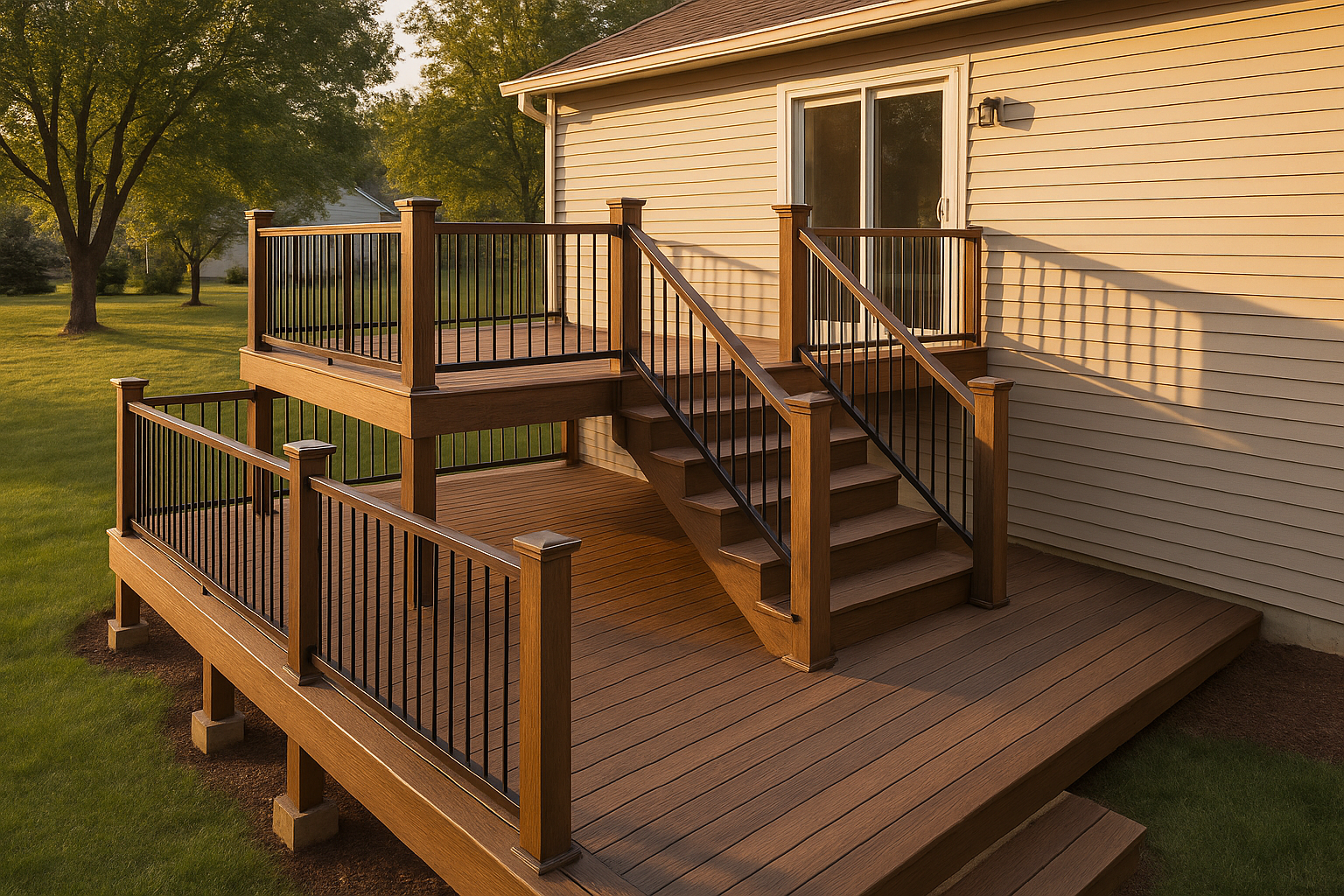
A couple years back, a guy named Mike in Fishers bought one of those sleek smokeless fire pits. He set it right on his composite deck, threw in a few logs, and within an hour the boards under it started to look like a melted candle. The heat had nowhere to go, and that pricey deck warped and turned gray. Mike called us after the fact, and we had to rip out a 4-foot section and replace it. That whole mess could have been avoided. So, can you put a fire pit on a deck? Yep, you can. But it's not just a matter of setting it down and lighting up. Here's what you need to know for Indianapolis and nearby towns like Carmel, Fishers, Zionsville, Westfield, Noblesville, Greenwood, Brownsburg, Avon, and Plainfield.
Wood-Burning vs. Gas: Which Fire Pit Is Safer on a Deck?
First, the fuel type matters a lot. Wood-burning pits are the classic campfire vibe, but they spit sparks and embers. Those can land on your deck, your siding, or even your neighbor's fence. Gas fire tables or bowls, on the other hand, give you a controlled flame with zero flying embers. That's a big difference on a deck, where there's no bare dirt to catch anything.
For composite or PVC decking, even a gas fire table can radiate enough heat to discolor or soften the boards. Most decking manufacturers publish a maximum surface temperature they'll cover under warranty, and it's lower than you'd think. If you're set on a wood-burning unit, you'll need a much bigger buffer zone and a spark screen at all times. We've seen too many composite decks get ruined because someone trusted a thin fire pit mat that was only rated for occasional use.
Now, if you have a wood deck, the risk is charring rather than melting. Either way, the deck material needs protection. And if you're still deciding between a gas fire pit on a wood deck or a fire pit on composite deck, think about ember control and heat output first.
How to Protect Your Deck: Mats, Pavers, and Inlays
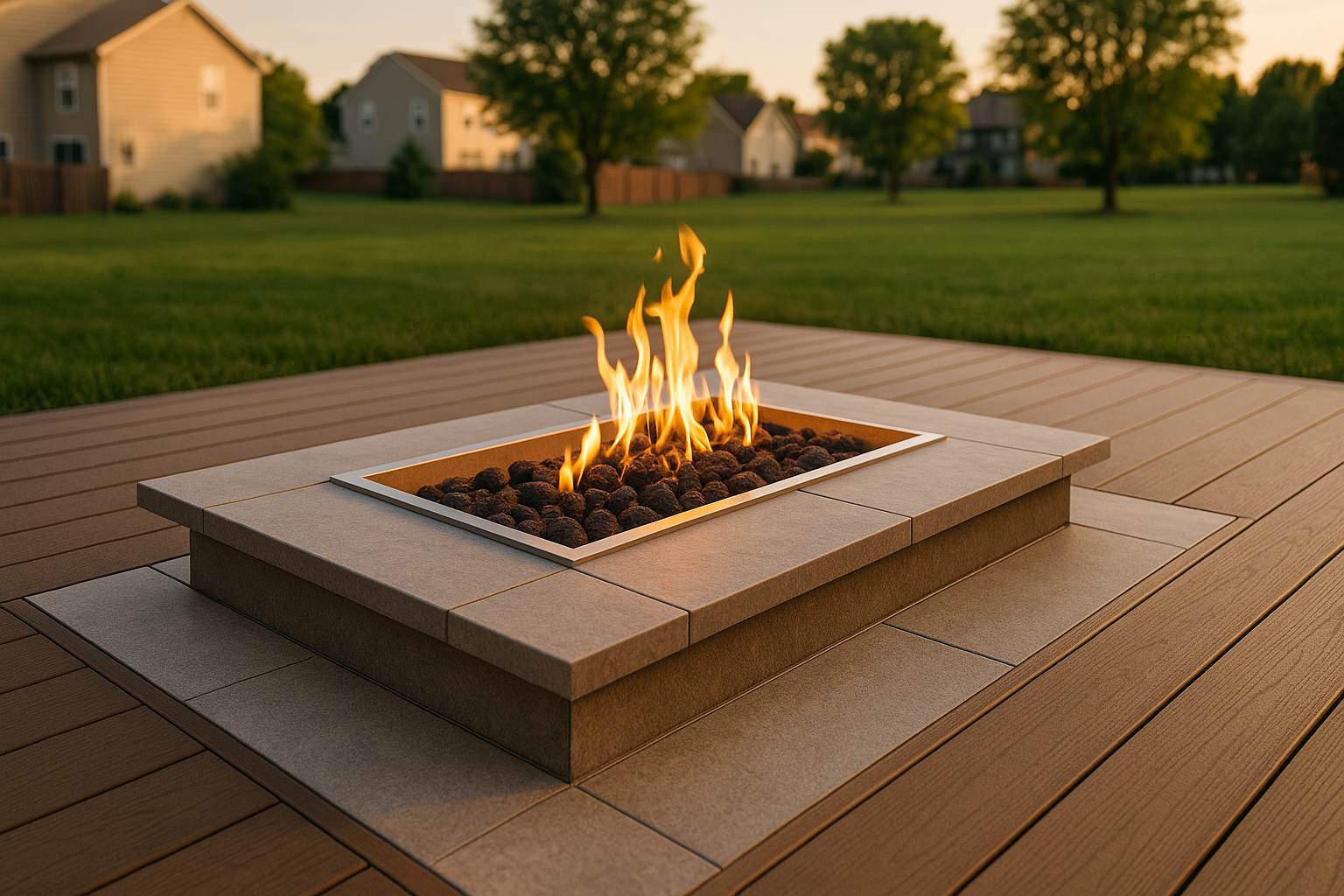
The best protection isn't a flimsy mat—it's a permanent non-combustible inlay. Picture a rectangle or circle of porcelain pavers set into the deck surface, with a proper underlayment that handles heat and drainage. That's what we build for clients who want a fire feature that lasts. A fire pit mat or heat shield can work for a portable unit, but it needs to extend at least 24 inches beyond the pit on all sides. Otherwise, radiant heat can still sneak around the edges and damage your decking.
Composite decking expands and contracts with temperature changes, and a fire pit only makes that worse. If you're adding an inlay, you need to leave the right gaps between the pavers and the deck boards. We covered that in our guide to deck board spacing and gapping. The short version: don't butt materials tight against each other or you'll get buckling.
Also, check your decking manufacturer's guidelines before you do anything. Some brands will void the warranty if you place any heat source directly on the boards, even with a mat. Others are fine as long as you use a listed non-combustible pad and maintain clearances. When in doubt, call us.
Clearances: How Far Does a Fire Pit Need to Be from Railings, Siding, and Overhangs?
Most fire pit manufacturers list a minimum clearance on all sides, usually 36 inches to anything combustible. That includes railings, siding, doors, windows, and even outdoor furniture. In Indiana, we don't have a single statewide code for recreational fires on decks, but Indianapolis/Marion County and many surrounding towns follow national fire codes (like NFPA 1) that require similar distances. The key is to treat any vertical surface as a potential fuel source.
If your deck has wood railings, they're basically kindling if a flame leans toward them. You might need to move the fire pit farther away, or consider switching to metal railing or composite railing with a higher ignition point. That's where a railing contractor comes in—we can replace or modify your railings to work with your fire feature.
Overhead clearance is just as important. Never put a fire pit under a low pergola, covered porch, or any structure with a solid roof. Even open-frame pergolas can trap heat and smoke if the fire is too close. And always check the wind direction before lighting.
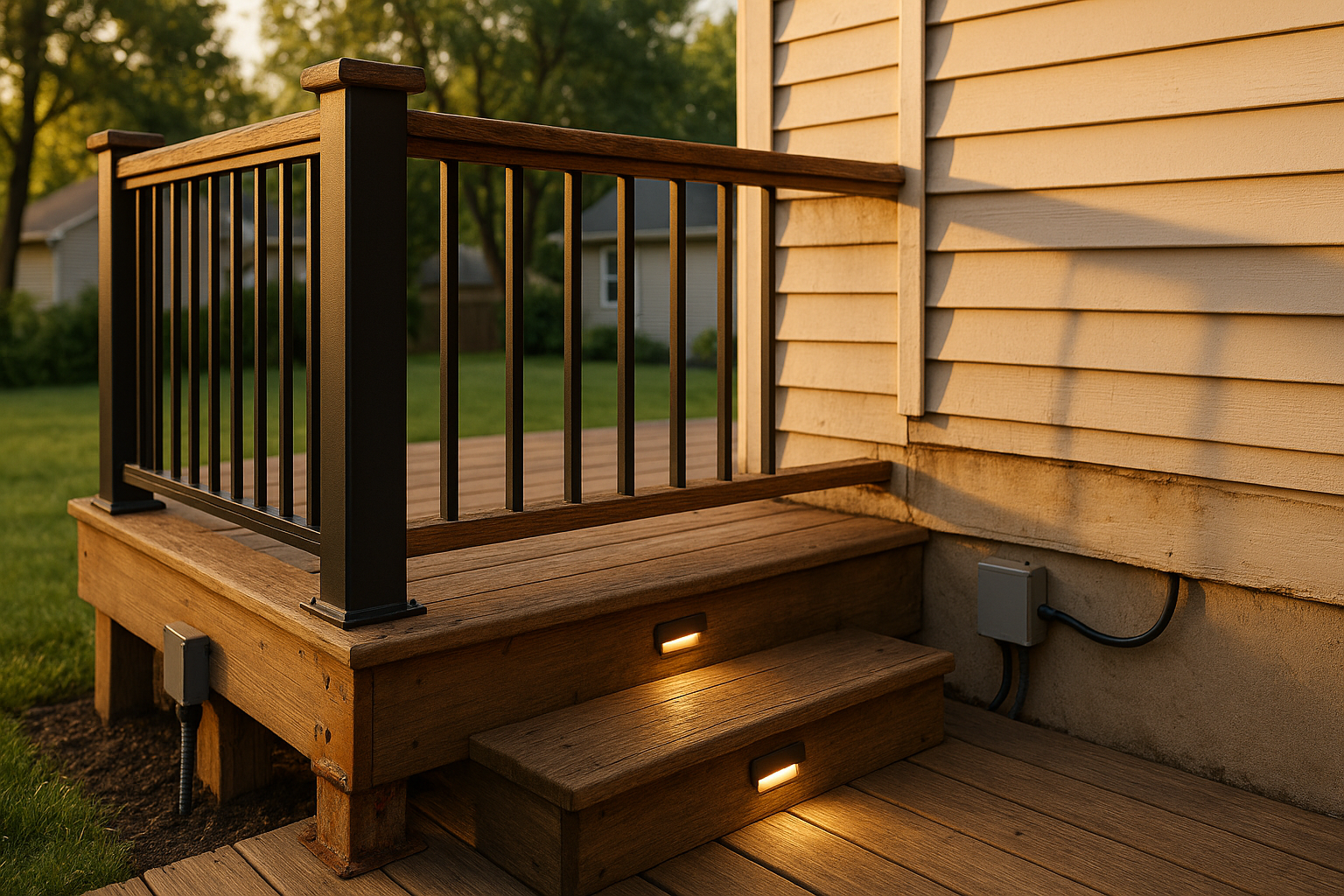
Under the deck matters too. Heat can radiate downward, especially from a wood-burning pit. If you have a finished space below (like a patio or storage room), you need a heat shield or a non-combustible ceiling under that area. We also recommend keeping the under-deck area well ventilated and free of stored junk. A deck skirting design that allows airflow can help.
Wind, Smoke, and HOA Rules in Central Indiana
Indianapolis is flat and the wind shifts constantly. That means your fire pit smoke can end up in your neighbor's yard or even through their windows. In tight neighborhoods like Broad Ripple or Fountain Square, that's a quick way to start a feud. HOAs in Carmel, Fishers, and Zionsville often have strict rules about open flames. Some ban wood-burning fire pits entirely and only allow gas fire tables on decks. Before you buy anything, check your HOA covenants and the current Indianapolis open burning regulations. They change seasonally, especially in summer when air quality alerts kick in.
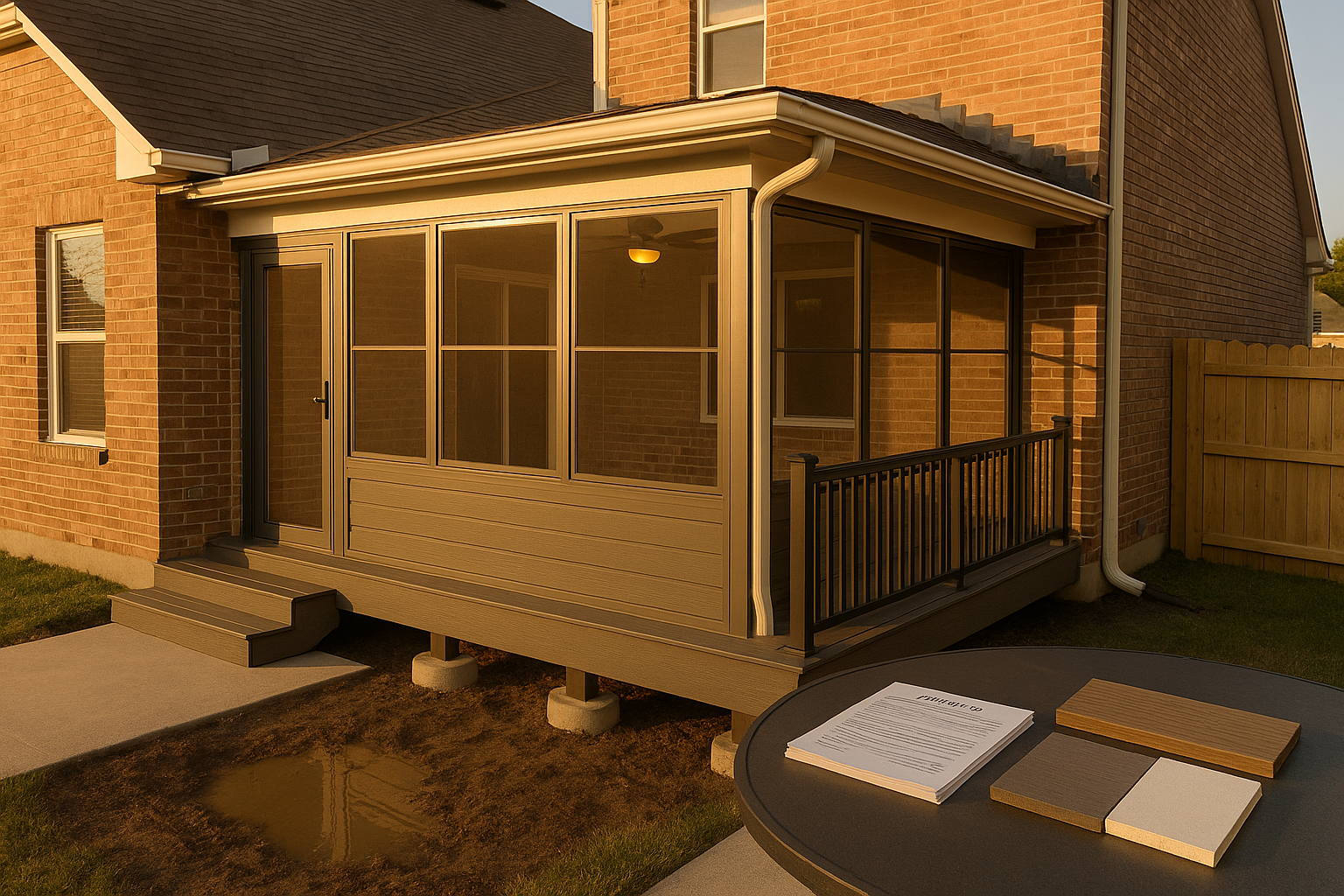
If wind is a problem, a privacy fence or windscreen can redirect the breeze away from your seating area and your neighbor's side. But don't enclose the deck too tightly or you'll trap smoke and heat. A fence contractor can install a partial screen that blocks the prevailing wind without turning your deck into a chimney. And if you're thinking about a screened porch or patio enclosure, forget about putting a fire pit inside. The lack of ventilation makes it a carbon monoxide hazard, not to mention a fire risk. Fire features belong on open decks or patios, not enclosed spaces.
Built-In Fire Features: The Smart Long-Term Move
If you're building a new deck or doing a major remodel, think about integrating the fire pit from day one. A built-in gas fire table set into a porcelain paver inlay looks high-end and is actually safer than a portable unit. You control the flame with a key valve, there's no ash to clean, and you can size the non-combustible zone exactly right. Plus, you can run a gas line so you never run out of propane mid-party.
But a stone inlay and a heavy fire table add real weight to your deck. You need to make sure the footings and framing can handle that concentrated load. In Indiana, our frost depth is 36 inches or more, so footings need to go deep. We covered that in our post about deck footings and frost depth.
If you're adding a gas line, you'll likely need a permit from your city or county. Indianapolis/Marion County requires licensed gas line installation and an inspection. That's not a DIY thing. The same goes for any built-in fire pit that's connected to a gas supply. Plan ahead because permits and inspections can take a few weeks.
And don't forget winter. Freeze-thaw cycles in Indiana can crack grout in a paver inlay if it's not installed with exterior-rated materials and proper drainage. Salt from boots can also stain stone. Use a cover for your fire table and clean the area before the first freeze. We have a fall maintenance checklist that covers this stuff.
At DeckPros, we help homeowners design and build decks that actually work for Indiana weather. Whether you want a simple gas fire table on a paver pad or a full built-in feature with seating and lighting, we'll make sure the clearances are right, the deck can support the load, and you won't melt your composite boards. Ready to talk? Get a free quote for your deck project.
Thinking about your own deck or pergola?
Free in-home design consultation, 3D rendering, and a written quote — no pressure.