Mike thought he'd save a few bucks by digging his deck footings 24 inches deep. His backyard in Carmel drains fine, and his neighbor's deck had been fine for years with shallow holes. So he poured the concrete, built the deck, and everything looked great. Then came two wet winters. By spring, one corner of the deck had lifted almost half an inch, and the railing pulled away from the house. Mike called an inspector, who told him his footings were sitting in the frost zone — that band of soil that freezes and expands every winter. In central Indiana, that zone goes deeper than most people think. Mike had to jack up the deck, cut out the bad footings, and start over. He told me later, "I thought 32 inches was plenty. Turns out, my town wanted 42."
Why Deck Footing Depth Indiana Gets Complicated
Frost heave isn't a myth. When the ground freezes, water in the soil turns to ice and expands. That expansion pushes up anything sitting above the frost line — including concrete piers. If your deck footings don't go below the frost depth, the whole deck moves. And in Indianapolis, the frost line isn't uniform across the metro. Marion County might require one depth, Hamilton County another. The magic number you hear a lot is 36 inches, but some spots in Boone or Hendricks County want 42 inches. A few homeowners have told me they got approved at 32 inches, but that's rare and usually for small, unheated structures like a garden shed. For a deck that holds people, furniture, maybe a grill, the rule is: go deeper than you think.
The right deck footing depth for Indiana is only half the story. The width of the footing matters just as much. A skinny pier that goes 48 inches deep but is only 8 inches across might punch through weak soil under load. Central Indiana has a lot of clay — that dense, sticky stuff that holds water. Clay expands when wet and shrinks when dry. So you need a footing that's wide enough to spread the weight over more soil, plus a few inches of gravel at the bottom for drainage. Some builders in Fishers and Westfield swear by bell-shaped footings that flare out at the base, because that extra surface area fights both settling and uplift.
If you're planning a bigger deck — maybe one with a roof or a hot tub — don't skimp on diameter either. A hot tub can add thousands of pounds. A covered deck with a roof needs footings that can handle wind uplift. We've got a whole post on covered deck roof cost in Indianapolis if you're thinking that direction.
While we're on the subject of digging holes, don't mix up fence post holes with deck footings. A fence contractor in Zionsville might tell you that fence posts only need to go 24-30 inches deep, because a fence doesn't carry much weight. But a deck is a different beast. If you're planning a fence around the yard at the same time, that's a separate permit and a different depth. The one thing they have in common? You still need to call 811 before any digging.
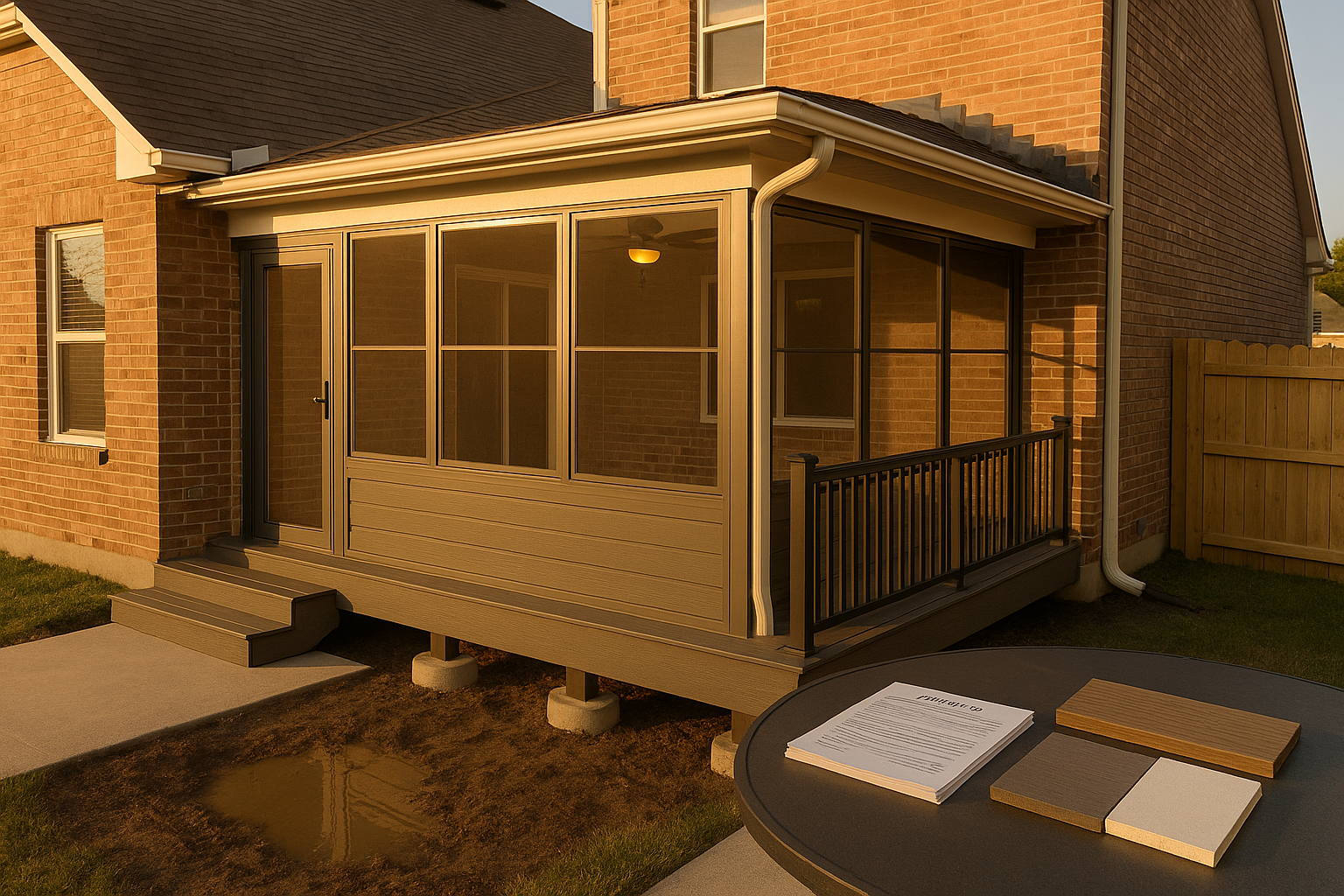
And if you're dreaming of turning that deck into a screened porch or patio enclosure someday, talk to a patio enclosure supplier now. The roof and walls add a ton of weight, and the wind loads go up. That means your footings need to be bigger and deeper than for a simple open deck. Many homeowners in Avon and Plainfield plan for a future roof by pouring larger footings from the start. It's cheaper than ripping out concrete later.
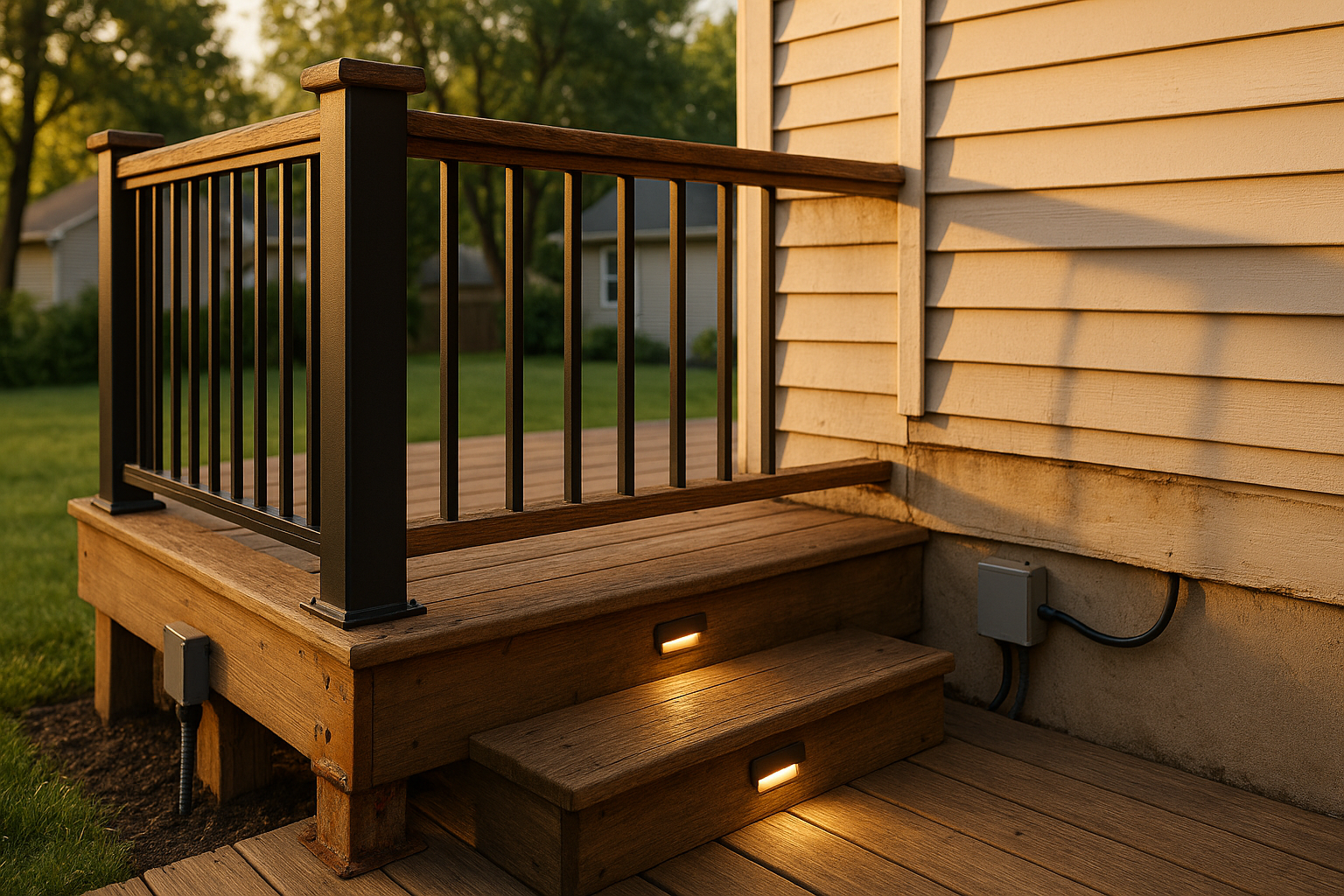
Even a simple railing adds load. A railing contractor will explain that a 42-inch guardrail must resist a 200-pound lateral force. That force pushes sideways on the posts, and the post has to transfer that to the footing. If the footing is shallow or undersized, the post can wiggle loose over time. I've seen decks where the railing felt solid until someone leaned on it, and then the whole post moved because the footing was only 18 inches deep.
Permits and Inspections: The Part Nobody Warns You About
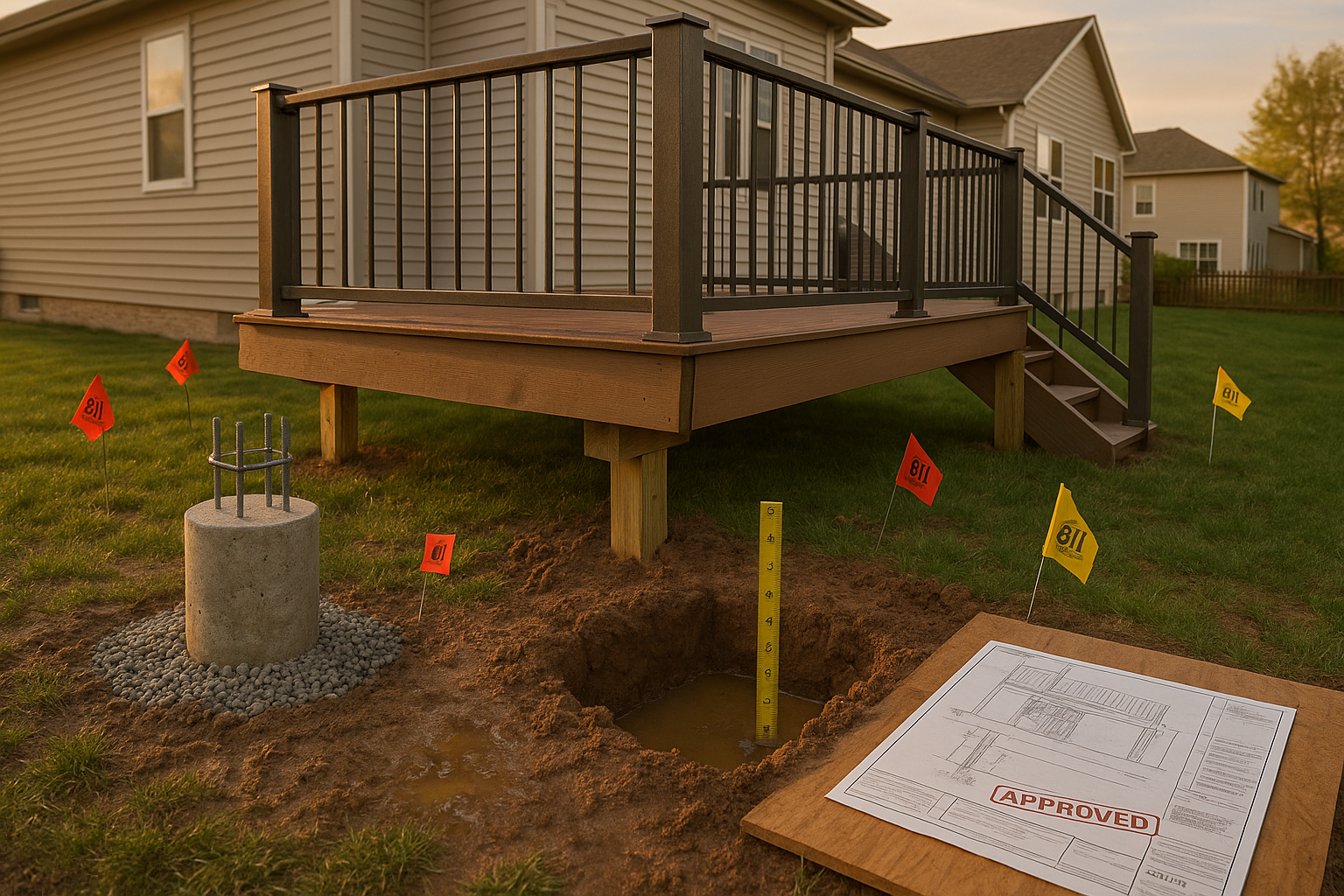
Every city and county around Indianapolis has its own permitting process. In Greenwood, you might need a building permit and a separate footing inspection before you pour. In Brownsburg, the inspector might want to see the hole depth and the rebar cage before any concrete goes in. Skipping the inspection is a bad idea. I heard about a guy in Noblesville who poured footings on a Saturday, thinking he'd save time. The inspector came Monday, couldn't verify the depth, and made him dig a test hole next to each footing. He ended up chipping out concrete to prove the depth. That cost him two extra days and a few hundred bucks.
And before you dig anything, call 811. It's free, it's the law, and it saves you from hitting a gas line or fiber optic cable. The flags might look ugly for a few days, but they're better than a trip to the ER or a $10,000 repair bill. In Marion County, you need at least two business days for locates, so plan ahead.
If you're wondering whether your existing patio can just get posts on top without digging, no. Not unless it was designed as a structural slab, which most patios aren't. The weight of a deck will crack a normal 4-inch concrete patio.
When Concrete Piers Aren't the Best Option
If your soil is really bad — maybe you're on a slope, or you have fill dirt from a recent construction site in Fishers — you might look at helical piles. These are giant screws that get twisted into the ground until they hit load-bearing soil. They're more expensive than concrete, but they install fast and don't require digging a big hole. Many Indianapolis inspectors accept them if an engineer stamps the design. I've seen them used on decks in Carmel where the backyard dropped off 6 feet and the homeowner didn't want a 10-foot deep concrete pier. Helical piles also work great if you're building in winter because you don't have to worry about concrete curing in cold weather.
Speaking of winter: if you're pouring concrete in January, you need to protect the pour with insulated blankets or use an accelerator. Cold concrete doesn't cure properly and can crumble. That's why most deck projects around here happen in spring and fall.
And for floating decks — the ones not attached to the house — you still need footings below frost depth. They might be smaller, but they're not optional. We compare the two in floating deck vs attached deck in Indiana.
How DeckPros Handles Your Footing Depth
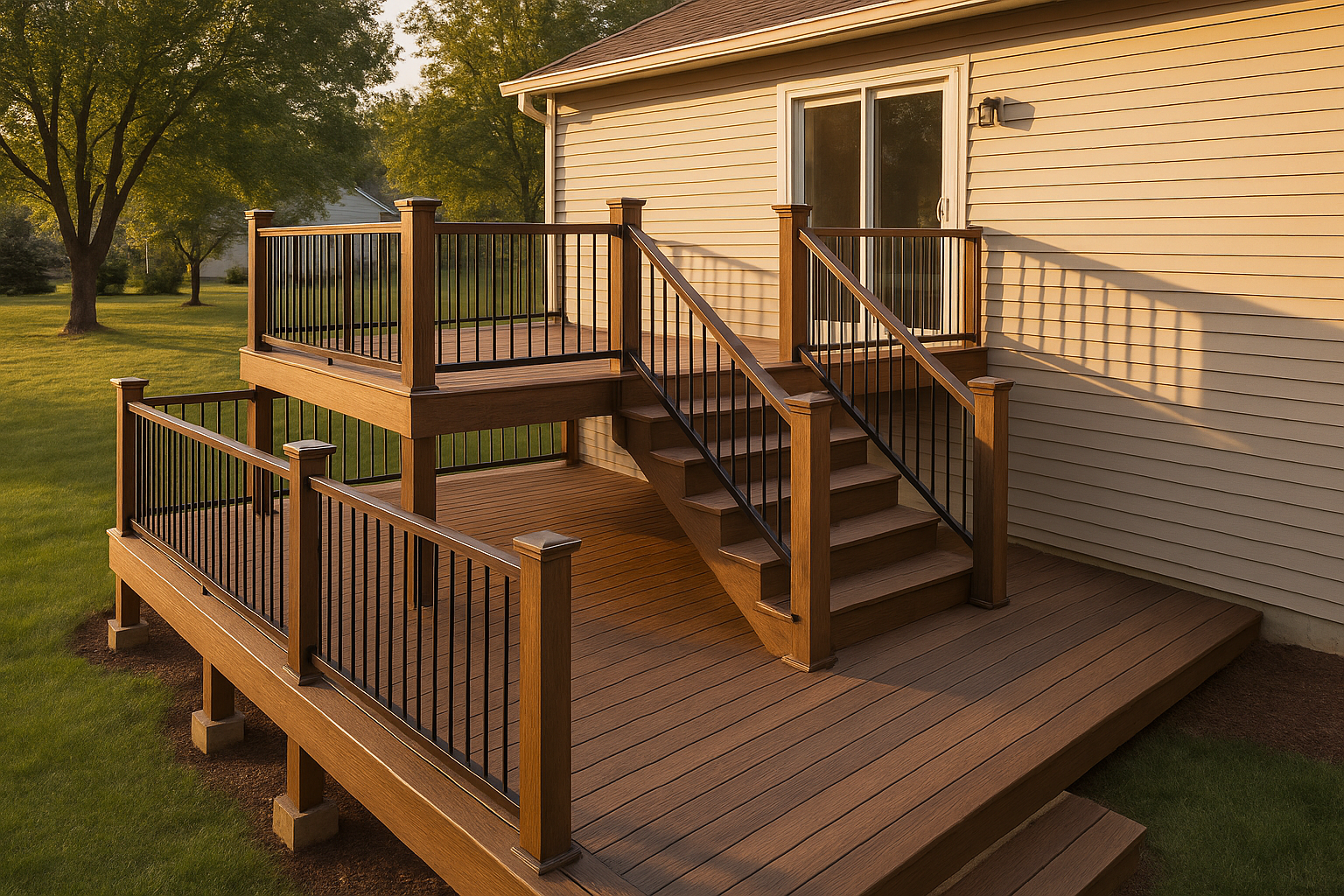
We don't guess. When we come out for a site assessment, we check the soil, look at the slope, and pull the local code for your exact address. We'll tell you if you need 36, 42, or even 48 inches, and we'll design the footing diameter and layout for your specific deck — whether it's a simple 12x12 platform or a two-story deck with a roof and hot tub. We handle the permit application, schedule the inspection, and make sure the holes are ready when the inspector shows up. And we document everything — so if you ever sell your house, you have proof the deck was built right.
If you're planning a deck in Indianapolis, Carmel, Fishers, Zionsville, Westfield, Noblesville, Greenwood, Brownsburg, Avon, or Plainfield, don't guess on footing depth. The frost in Indiana doesn't care about your budget or your timeline. Get it right the first time. Schedule a site assessment with DeckPros and we'll confirm the correct deck footing depth for your Indiana home, check your soil, and give you a permit-ready plan and quote.
Thinking about your own deck or pergola?
Free in-home design consultation, 3D rendering, and a written quote — no pressure.