Last spring I got a call from a homeowner in Fishers. He'd just moved into a brick-veneer house with a sliding glass door that opened onto a three-foot drop into the yard. He wanted a deck, but the thought of drilling into that brick made him nervous. "Can I just build a deck next to the house and not attach it?" he asked. That's the floating deck vs attached deck question, plain and simple. And it's one we hear all over Indianapolis, Carmel, and the surrounding suburbs. The answer depends on your yard, your door height, and how much you want to avoid touching that siding or brick.
The basics: what's a floating deck, what's an attached deck?
A floating deck (sometimes called a freestanding deck or detached deck) doesn't connect to your house. It sits on its own footings or deck blocks, usually close to the ground. An attached deck bolts to your house with a ledger board that gets fastened to the framing — not the brick veneer — then has support posts on the outer edge. Simple, right? But here's where Indiana clay makes it interesting.
When a floating deck makes sense
If your back door is maybe two feet or less off the ground, a floating deck can be a sweet deal. You avoid poking holes in your siding or brick, which means no risk of water wicking into the wall. That's a big deal in a place with as much rain and freeze-thaw as we get. And if you've got utility lines crisscrossing the yard — call 811 first — a freestanding deck can often sit right over an easement without permanent footings. Many HOAs in Fishers or Zionsville are also friendlier to ground-level decks because they don't alter the house structure.
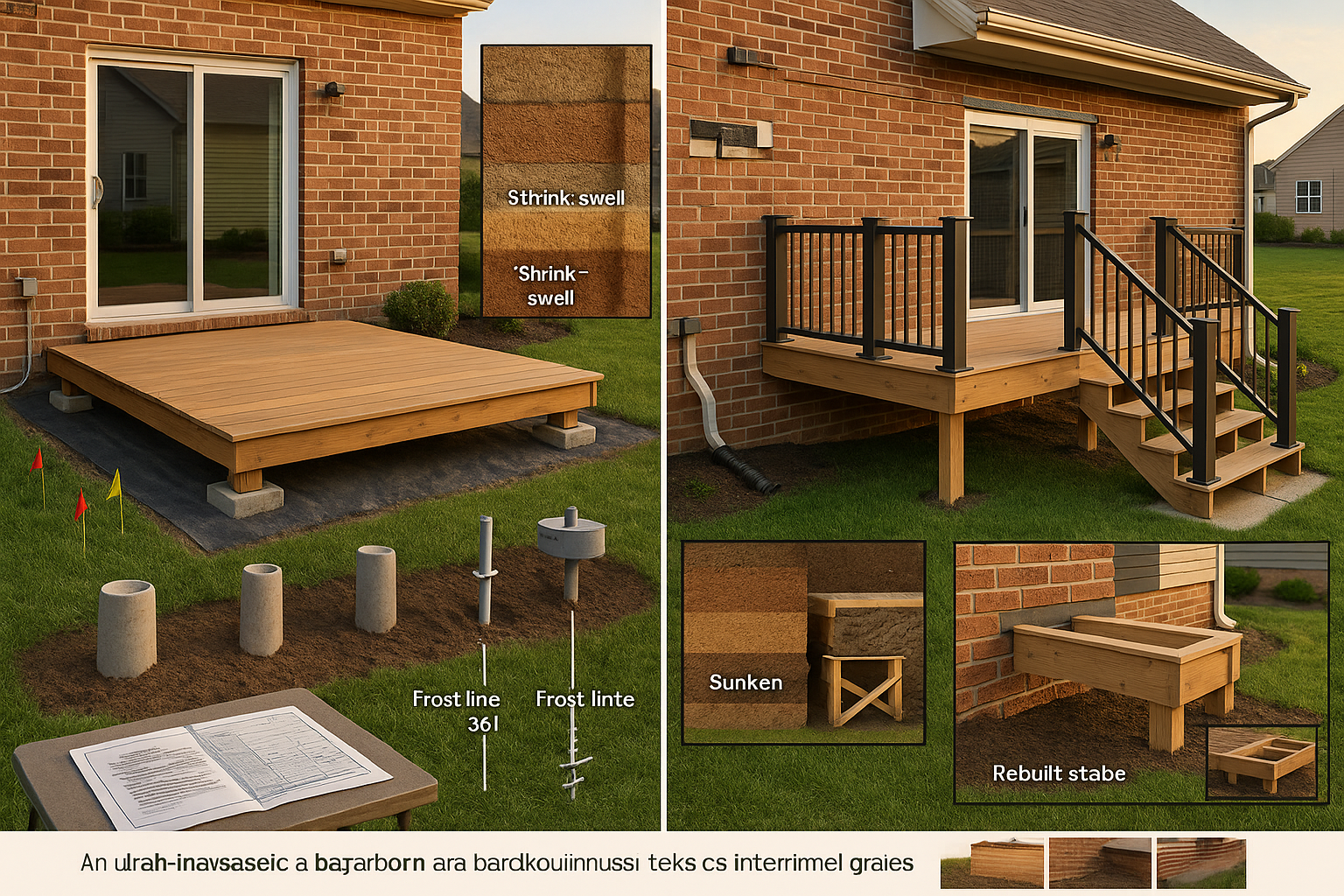
But here's the thing: floating decks on Marion County clay need a good base. I've seen a Greenwood homeowner build a lovely 12x12 floating deck on plain deck blocks set right on the grass. Two winters later, the corners were off by an inch and a half. Clay shrinks and swells with moisture, and without a compacted gravel pad and a layer of geotextile fabric, the blocks shift. So yes, floating decks can work — but excavation and drainage prep aren't optional. Direct downspouts away, slope the ground, and consider concrete piers instead of blocks if your soil is especially soupy. And if you want a little privacy around a low deck, a fence contractor can tie panels into the edge and make the whole yard feel like a room.
When an attached deck is the better call
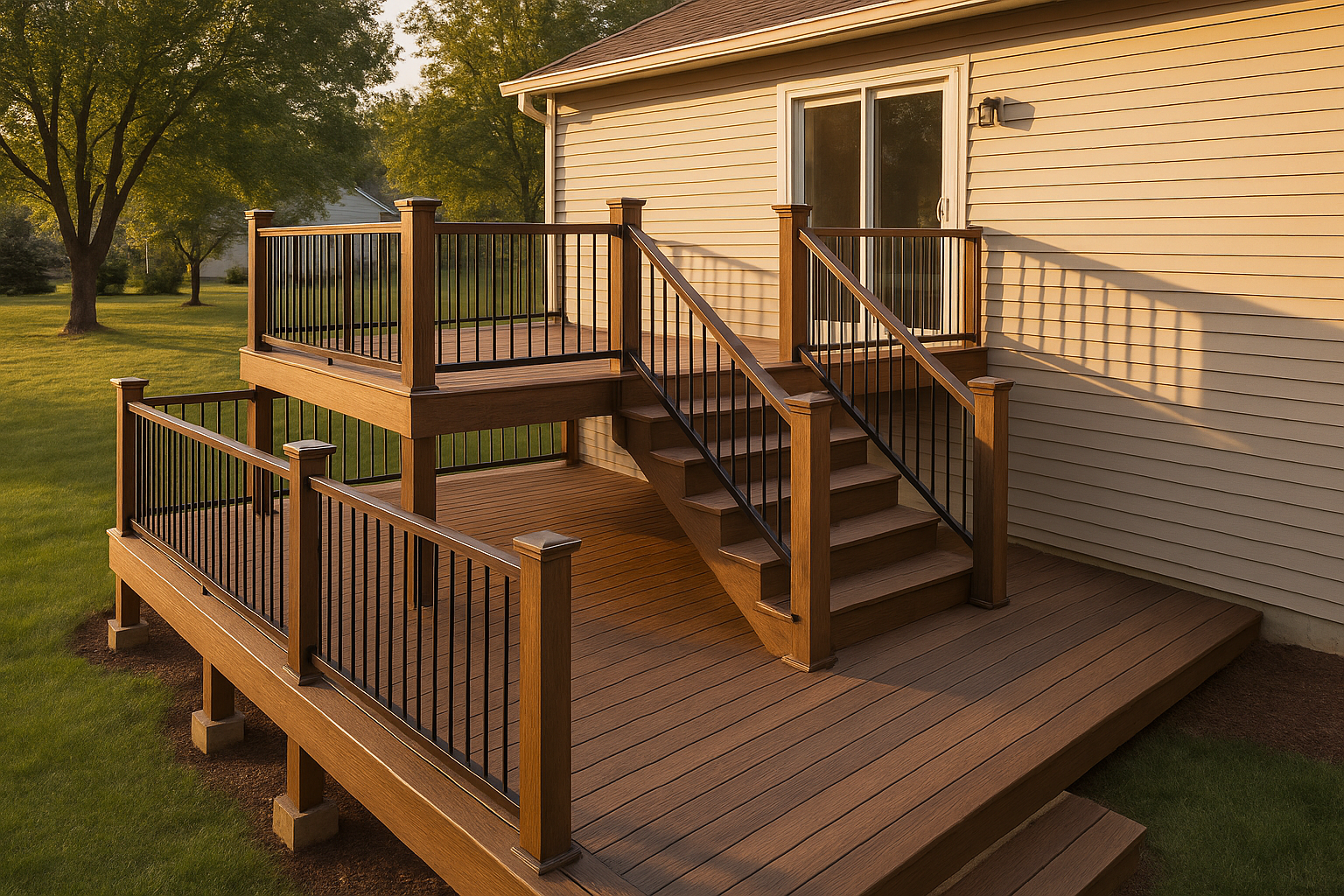
Got a second-story door? Then a floating deck probably won't work. You'd need stairs, and a tall freestanding deck needs serious bracing and bigger footings — at that point, you're almost at the cost of an attached deck with less stability. In the floating deck vs attached deck debate, attached wins for elevated doors. An attached deck gives you a clean, flush entry from the house, and it handles snow load and wind better because it's tied to the structure.
The ledger board is the heart of an attached deck. It must be bolted to the house framing, not through brick veneer. We use metal flashing and waterproof tapes behind the ledger, and on a brick house, we often set the deck on its own posts right next to the wall instead of bolting through the brick — a hybrid that avoids leaks but still feels attached. Local codes in Indianapolis and Carmel are strict about this because a bad ledger leads to rotten rim joists and sagging decks.
Attached decks also open the door for future upgrades. If you're thinking about adding a roof, a screen room, or a second level down the road, an attached deck gives you the structural backbone. That's why we often steer Zionsville and Westfield homeowners with elevated doors toward attached designs even if a floating deck seems cheaper on paper.
Foundations, frost depth, and why your soil matters
Central Indiana's frost depth is around 36 inches. That means any deck that attaches to the house — or any elevated deck, really — needs footings that go below that line. We use concrete piers or helical piers drilled down past the frost line. That keeps the deck from heaving in January and settling in March. For a low floating deck, you can get away with a gravel pad and blocks in many cases, but it still needs to be level and well-drained.
A good contractor will look at your soil, check for organic material, and excavate until they hit stable clay. Add crushed stone in lifts, compact it, and maybe lay a geotextile under the gravel. That's what we did for a Noblesville couple last fall. Their previous deck had sunk two inches on one side because the builder threw blocks on top of topsoil. After we pulled it out, rebuilt the base properly, and re-set the frame, you could stand on it and feel zero bounce. That's the difference between a weekend project and a professional foundation.
Permits, HOAs, and the not-so-fun stuff
In Indianapolis, attached decks and most elevated decks need a permit and inspections. Some small, low floating decks might be exempt, but the only way to know is to call the City of Indianapolis Department of Business and Neighborhood Services. Don't guess. If you're in Carmel, Fishers, Noblesville, or any of the surrounding towns, each has its own process and HOA rulebook. Many HOAs want a plan set and material specs before they'll sign off.
Before you dig, you also need to call 811. Underground utilities can change your deck layout in a heartbeat. We've seen a homeowner in Avon plan a big attached deck, only to find a gas line and a cable bundle running right where the footing needed to go. We shifted the design to a freestanding deck — still attached look, but no footings near the lines. Problem solved, permit approved.
Future add-ons: roofs, patio enclosures, and railings
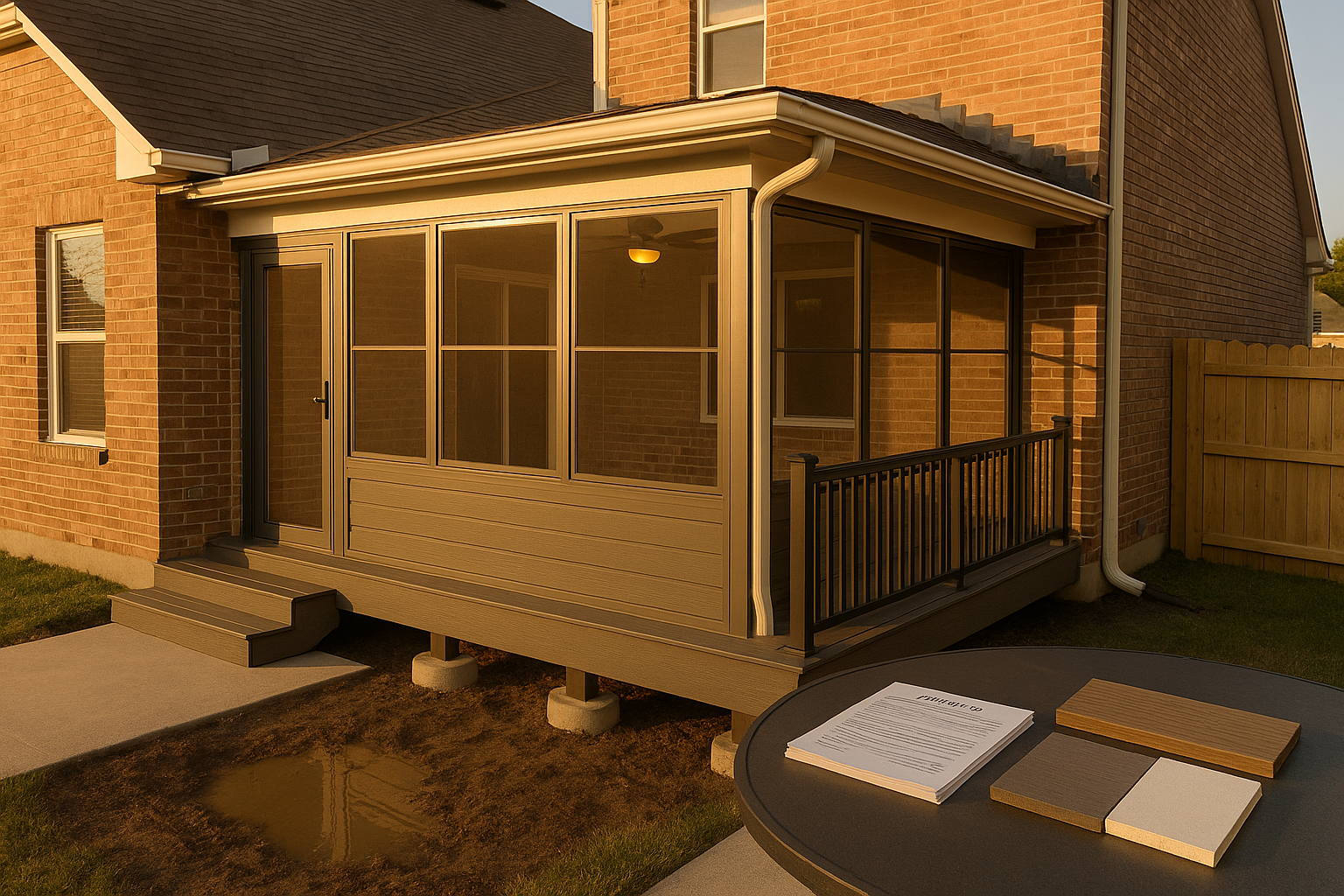
If you're dreaming of a covered deck or a screen room someday, go attached from the start. A floating deck can't easily support the roof loads of a patio enclosure without massive footings and engineering. Attached decks already have the ledger to anchor a roof or wall system. A patio enclosure supplier will usually ask whether your deck is attached before they quote a three-season room. Check out our post on covered deck roof cost in Indianapolis for real numbers.
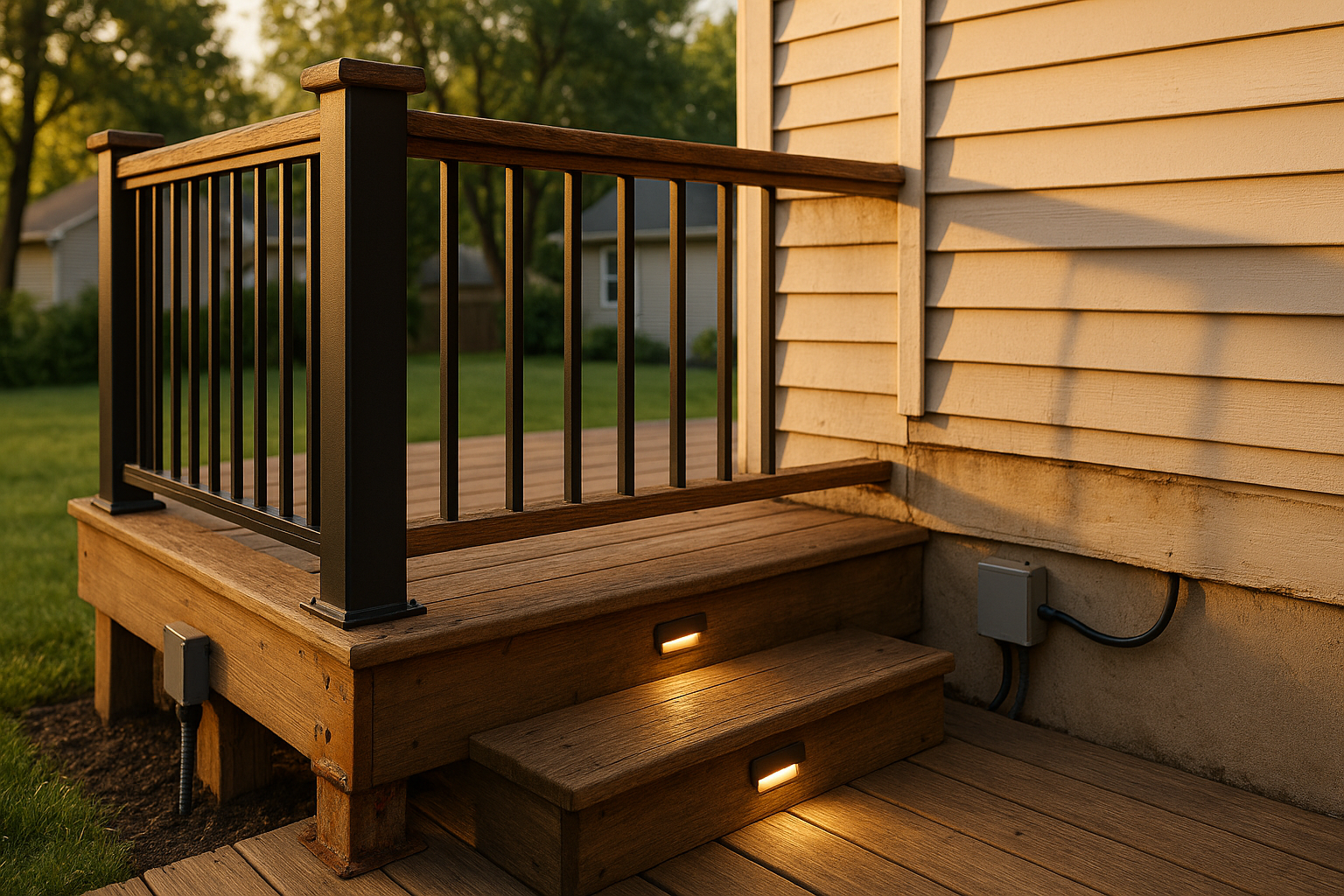
Railings are another piece. Any deck that's more than 30 inches off the ground needs guardrails, and local code has specific height and spacing rules. A railing contractor can help you choose between composite, aluminum, or cable rail. For a low floating deck, railings might not be required, but if you add a step or two, you'll want something to grab. If you're thinking about an outdoor kitchen or a TV, an attached deck also makes it easier to run deck electrical outlets code Indiana from the house.
Cost, lifespan, and what it does to resale value
For a simple cost comparison, floating deck vs attached deck almost always favors the floating option for low decks. You skip the ledger work, the deeper footings, and some inspections. But for an elevated deck, attached often ends up being the better value because you're buying stability and future flexibility. Materials matter too: composite decking holds up better in Indiana's wet-freeze cycles than wood, but it costs more upfront. Check out our full breakdown on composite vs wood decking lifespan in Indiana.
When it's time to sell, buyers and home inspectors around Indianapolis look for permitted work, frost-depth supports, and correct ledger flashing. A DIY floating deck with no documentation can raise eyebrows — and a bad attached deck can kill a deal. If you're planning to sell in a few years, get the deck built right the first time. Our post on deck inspection before selling your home goes into what buyers will ask about.
So which should you pick? Honestly, it depends on your door height, your soil, and your five-year plan. If you're in Indianapolis, Carmel, Fishers, Zionsville, Westfield, Noblesville, Greenwood, Brownsburg, Avon, or Plainfield, we can come out, walk your yard, and tell you straight whether a floating deck or an attached deck makes sense. You'll get a clear scope, material options, and a permit game plan. No pressure. Schedule a free planning consult and quote here.
Thinking about your own deck or pergola?
Free in-home design consultation, 3D rendering, and a written quote — no pressure.