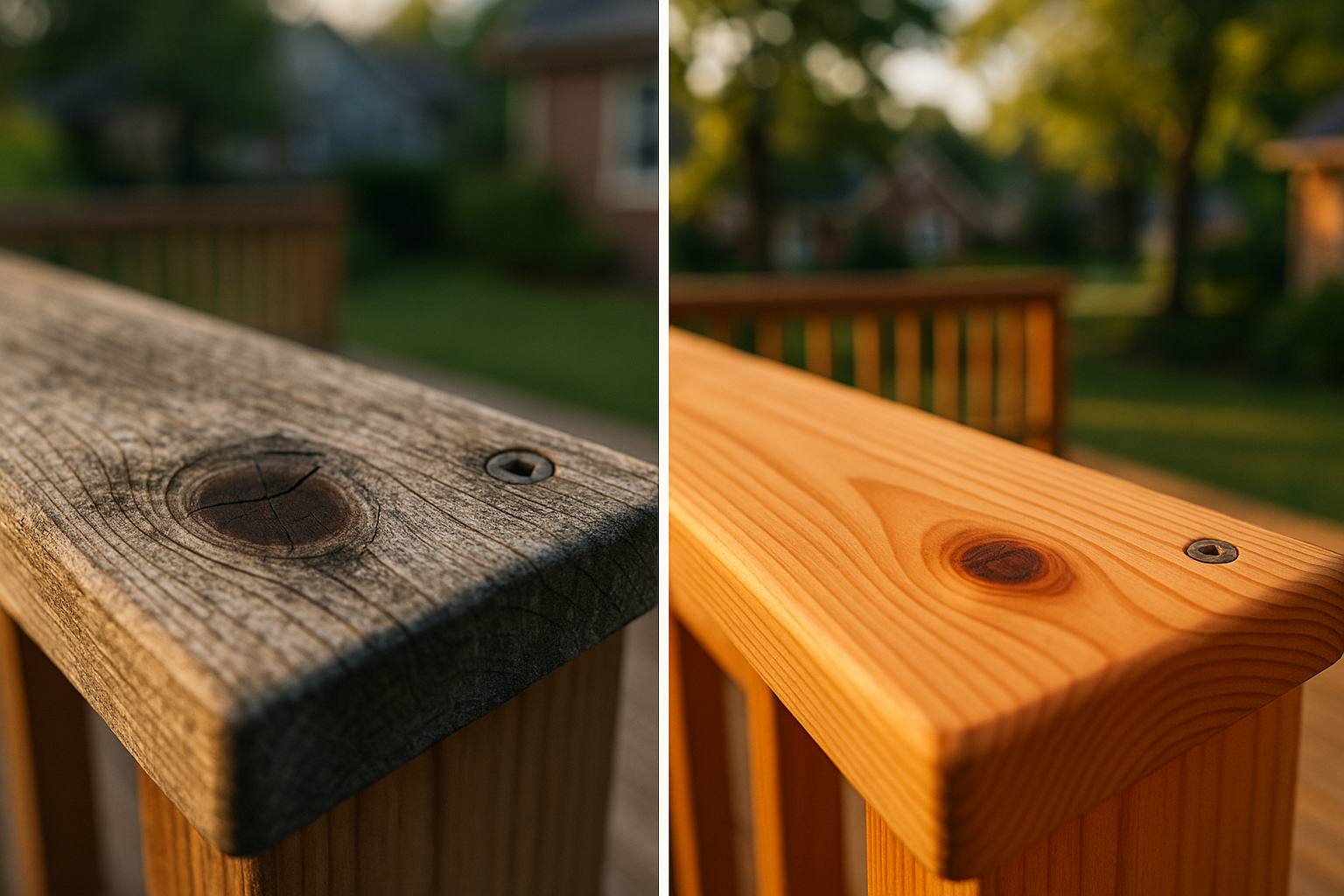
Last spring, my neighbor over in Fishers decided to sell. Great house, big yard, top-rated schools — offers should've rolled right in. And they did. First weekend, a solid offer above asking. We were all high-fiving until the buyer's inspector stepped onto the back deck. That's when things got quiet. Loose railing at one corner, a couple of spongy boards near the grill, and some rusted hardware hanging on for dear life. Nothing catastrophic, but enough to spook the buyers. They asked for a $4,500 credit and a repair addendum on the spot. The deal almost cratered over something that could've been caught and fixed a month earlier for maybe a thousand bucks.
You're probably reading this because you're about to put your own house on the market somewhere around Indy — maybe in Carmel, Greenwood, or Plainfield. You want it to go smooth, and you don't want your deck to be the reason a deal gets complicated. A pre-listing deck inspection is one of those things that sounds like overkill until you're the one scrambling to save a sale. Trust me, I've heard enough stories from contractors and Realtors to know: it's the practical move.
Why bother with a deck inspection before you list?
Honestly, the biggest reason is to avoid surprises. Buyers are skittish, and their inspectors are paid to find problems. If your deck has even minor safety issues — a wobbly railing, missing ledger flashing, or a stair stringer pulling away — it can throw a whole transaction off track. FHA and VA appraisals are especially picky about deck safety; they'll flag anything that doesn't meet basic code. That can delay or kill financing. A pre-listing inspection lets you get ahead of those flags, fix things on your terms, and present a clean disclosure. You control the narrative instead of crossing your fingers.
It also helps with negotiations. When the buyer's inspector points out a rotted joist, they hold the leverage. You end up offering a credit or rushing repairs at the last minute, often paying a premium for speed. But if you already have an inspection report and a list of completed fixes, those chips are off the table. You can stand firm on your asking price because you know the deck is solid. Plus, a well-maintained deck just photographs better, and that's money in your pocket before the first showing.
What actually happens during a deck inspection?
A professional deck inspection isn't just a quick walk-and-wave. It's a detailed look at everything from the footings up. The inspector — or in our case, one of our experienced DeckPros builders — checks the foundation: are the footings still solid, or has our Indiana freeze-thaw cycle pushed them out of whack? We poke at the posts and beams, looking for rot or cracks. The ledger board, where the deck attaches to the house, gets special attention because that's where water likes to sneak in and cause real damage. Flashing needs to be intact and properly installed; if it's not, you've probably got hidden rot behind the siding.
Then there's the deck surface itself. We look for split boards, soft spots, and end-grain decay. Stairs get measured for uniform risers and solid connections. Railings are a big one — we test every post for wobble and check that the height and baluster spacing meet current codes (which can vary slightly by municipality, so local knowledge matters). If the deck has built-in seating or planters, we check those too because they can trap moisture. The whole thing usually takes 30 to 45 minutes, and you get a written report with photos and a prioritized punch list of what's urgent versus what's just cosmetic.
The usual suspects: deck problems we see all over Indy
Central Indiana weather does a number on decks. That freeze-thaw cycle I mentioned? It's brutal. Water gets into tiny cracks, freezes, expands, and over time splits boards and heaves footings. In spring, you might notice a corner of the deck sinking or a post pulling away from the concrete. Clay-heavy soil in places like Avon and Brownsburg can shift seasonally too, which messes with stair landings and support posts.
Then there's the humidity. Summer here feels like walking through soup, and that moisture invites mold and mildew. North-facing decks and spots shaded by trees stay damp longer, turning them green and slick. A good cleaning helps, but repeated mold can break down the wood fibers. We have a whole guide on removing deck mold and mildew in Indiana's humidity if you want to go deeper on that. Pressure-treated pine is common around here, but if the original builder didn't treat fresh cuts or bolt holes, those edges become a buffet for rot. We see a lot of joist ends and stair stringers that need replacing because moisture sneaked in at an untreated cut.
Quick and cost-effective pre-sale fixes
You don't always need a full rebuild to pass inspection. In fact, most decks just need a handful of targeted repairs. Swapping out a few soft boards, tightening loose railings, and replacing corroded hardware can make a huge difference. If the deck is structurally sound but looks tired, a power wash and a fresh coat of stain can work wonders. Check out our deck staining vs. sealing vs. painting guide to figure out what's best for your timeline.
Timeline-wise, aim to get the inspection at least three to four weeks before you plan to list. Minor stuff — board swaps, rail tightening, stair tune-ups — we can usually knock out in a couple of days. Bigger jobs like replacing multiple joists or rebuilding stairs might take a week or two, especially if you need permits (more on that in a sec). The key is to not wait until the moving truck is idling.
Why railings matter more than you think
Let's zoom in on railings for a minute because they're a top buyer concern and a common safety tripwire. Codes today require guardrails to be at least 36 inches high on residential decks, with balusters spaced close enough that a 4-inch sphere can't squeeze through. Graspable handrails on stairs are a must. If your deck was built before the current code cycle, those measurements might be off. Loose posts? That's a red flag that often points to deeper connection issues. As a local railing contractor, we see how easy it is for a shaky railing to unravel buyer confidence. A solid, code-compliant railing system signals that the whole deck was built with care. And honestly, it's one of the most straightforward things to fix before listing.
If your deck connects to a patio or you've been kicking around the idea of a screened porch or enclosure, that's worth mentioning too. Some buyers will pay extra for a house that has an outdoor space they can use in bug season. A patio enclosure or even just framing for future screens can add appeal. As a patio enclosure supplier, we can chat about what's possible without blowing up your timeline. Even if you don't add one now, knowing the deck structure can support it might be a nice tidbit to drop on the listing sheet.
“I don't want to spend money on a deck I'm leaving”
I hear this all the time, and I get it. You're moving. Why pour cash into a house you won't enjoy? Two reasons. One, a damaged deck can cost you way more in price reductions and concessions than the repair bill ever will. If a buyer's inspector flags a safety issue, you're probably going to pay for it one way or another — either with a lower offer or a repair credit, often estimated at the highest possible cost. Doing it ahead means you control the spend.
Two, buyers can't always “just take a credit.” If the appraisal calls out deck problems, some loan programs won't fund until they're fixed. That can delay closing or kill the deal entirely. And winter? Doesn't matter. Cold doesn't stop a deck inspection. As long as the deck isn't buried under a foot of snow, we can check the structure. Some finishes need warmer temps to cure, but we can always advise on timing. We've written about the best time of year to build or repair a deck in Indiana, and it covers shoulder-season workarounds.
Permits and HOAs are another headache we handle for you. If a repair triggers a permit — say, you're rebuilding stairs or changing the railing design — we pull it. If your neighborhood HOA requires approval for any exterior change, we can help with the paperwork. You don't need to become an expert in local building codes; that's our job as your contractor. And yes, sometimes a fence repair gets thrown into the mix if the deck adjoins a fence or the buyer's inspector notices something. Since we also work as fence contractors, we can coordinate both so you're not juggling separate crews and schedules.
Ready to list with confidence?
Here's what success looks like: a deck that feels rock-solid underfoot, no squeaky boards, no give in the railings. It photographs well with a clean, fresh surface. When the buyer's inspector shows up, they walk the deck, test a few things, and move on. No side conversations, no surprise repair addendums. Offers come in strong, and you close on time.
That's doable. We start with a pre-listing deck inspection that's detailed but not intimidating. You get a clear list of what's wrong, what's optional, and what it'll cost to fix. We can often do the inspection and quote on the same day. From there, you pick what fits your budget and timeline, and we get it done. No pushy sales, no scare tactics — just honest work from a crew that knows Central Indiana decks inside and out.
If you're getting ready to sell your home in Indianapolis, Carmel, Fishers, Zionsville, Westfield, Noblesville, Greenwood, Brownsburg, Avon, or Plainfield, let's make sure your deck is a selling point, not a sticking point. Give us a call or request a quote, and we'll walk through it together.
Thinking about your own deck or pergola?
Free in-home design consultation, 3D rendering, and a written quote — no pressure.