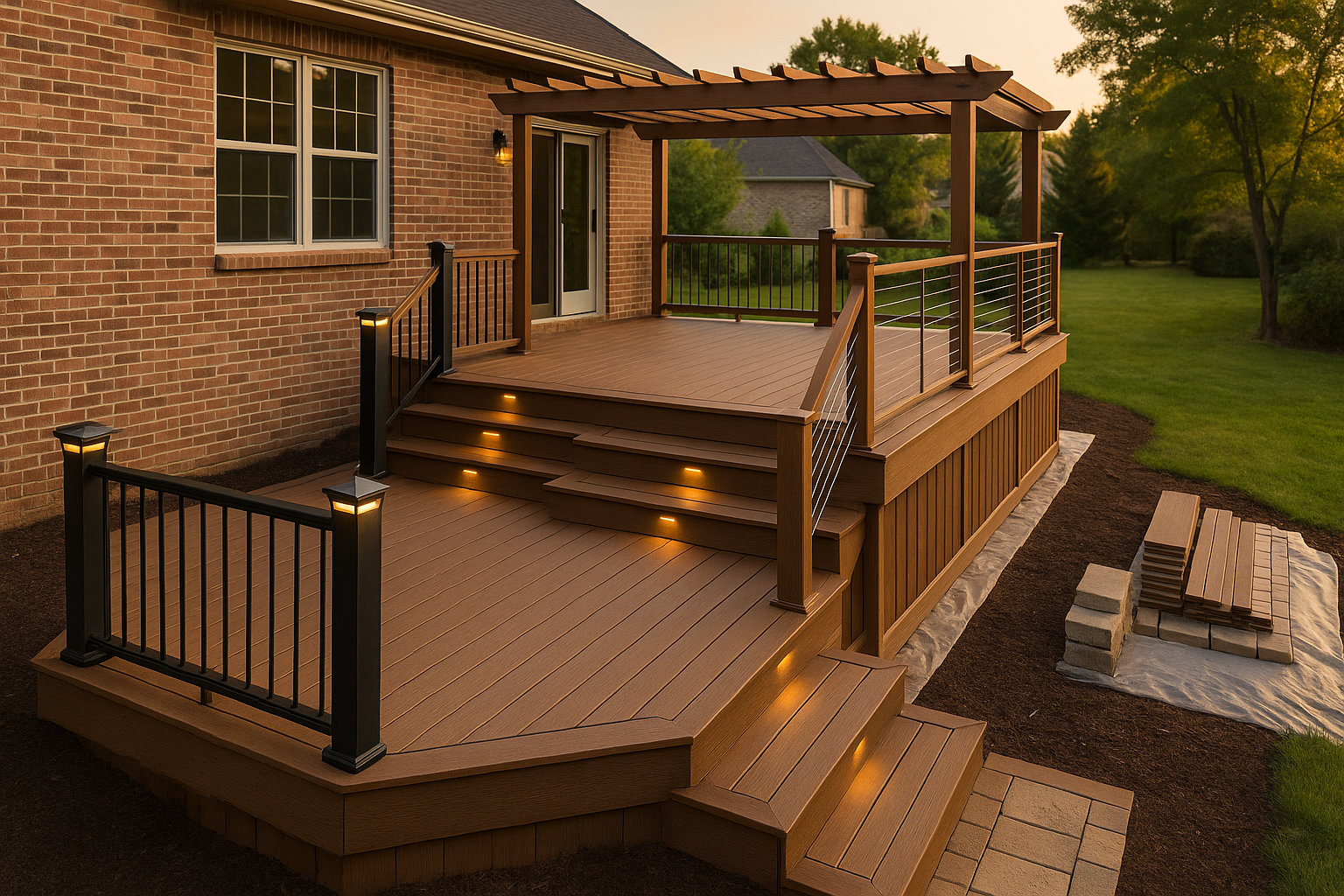
A great deck starts with a great plan. As a specialist composite deck builder in Indianapolis, DeckPros designs and builds low-maintenance outdoor spaces that look sharp, stand up to Indiana winters and humid summers, and are easy to live with year after year. From the first site visit to final walkthrough, you’ll get a clear scope, practical material options, and a predictable path to permits and construction.
Composite decks built for central Indiana homes
Composite and PVC boards perform best when the structure and details are tuned to our climate. We design for:
- Frost depth and soils: Footings sized and set to roughly 36 inches to reach below the frost line common in Marion County and surrounding areas, with bearing sized for typical clay soils.
- Freeze–thaw resilience: Proper joist spacing, ventilation, and drainage gaps help boards shed water and dry out after storms and snowmelt.
- Moisture-smart attachments: Continuous ledger flashing at the house, compatible fasteners, and capillary breaks to protect framing and siding types seen around Indy (vinyl, fiber cement, and brick veneer).
- Sun and heat: West-facing backyards in neighborhoods from Carmel to Greenwood can run hot. We plan for color, shade, and airflow to keep surfaces more comfortable.
- Wind and privacy: Rail and screen options tailored to open lots on the north and west sides of Indy or tighter-lot streets near SoBro and Irvington.
If you’re exploring deck ideas beyond a single platform, see planning tips in our article on multi-level layouts: /blog/multi-level-deck-design-ideas/.
A planning-first process that reduces surprises
We start with careful measurement and a written scope before we ever pick up a saw.
1) Discovery and on-site consult - Walk the site, confirm access and utilities (811 locate scheduled before digging), and discuss how you want to use the space. - Identify sun exposure, drainage, and HOA considerations up front.
2) Design and options - Scaled layout with stair and landing locations set for safety, comfort, and code. - Side-by-side material choices (composite vs PVC cores, board profiles, colors, textures) with pros and tradeoffs. - Railing, lighting, and skirting options that complement the home.
3) Clear, written proposal - Itemized line items and allowances, so you know what’s included. - Target schedule that accounts for HOA review, City of Indianapolis permits and inspections, and material lead times.
4) Build with clean communication - We coordinate permits with the Department of Business and Neighborhood Services (BNS) and manage inspections. - You get regular updates and a tidy jobsite.
Materials and details that look premium and last
We install proven composite and PVC brands with manufacturer fade and stain warranties, including options comparable to Trex, TimberTech, and Fiberon. We help you choose what fits your goals and site conditions.
Composite vs PVC for Indiana weather
- Composite (wood–plastic) offers a warm, natural look with excellent value; modern caps resist staining from leaf tannins and pollen common here.
- PVC boards are lighter and highly moisture resistant—useful for ground-level decks with limited airflow or lakeside exposure.
- For freeze–thaw and year-round performance, we pair the right board with correct joist spacing, ventilation, and compatible fasteners.
Comfort underfoot
- Lighter colors reflect more sun and feel cooler in July and August.
- Airflow matters: thoughtful under-deck ventilation and open skirting designs reduce heat buildup.
- Shade elements such as a pergola or shade sail can further cut surface temps; see ideas at /blog/pergola-design-ideas-backyard/.
Clean finishes and craftsmanship
- Picture-frame borders, mitered corners, and color-matched fascia for a finished, tailored look.
- Hidden fasteners for a smooth walking surface, with screws reserved for structural points where required by code.
- Skirting that allows airflow while screening storage or framing.
- Optional LED step and post lighting prewired with weather-rated components for longevity.
Railing that meets code and opens the view
- Modern powder-coated aluminum systems are durable, low-maintenance, and meet Indiana Residential Code for height and spacing.
- Cable rail provides a crisp, contemporary look with minimal view obstruction; learn more here: /blog/cable-rail-vs-aluminum-rail-modern-decks/.
Resurfacing vs rebuilding: an honest assessment
Composite deck resurfacing can be an excellent option, but only when the existing frame is sound and meets today’s code.
We evaluate: - Footings and posts: Depth, size, and condition. Many older decks were not set to frost depth. - Ledger attachment and flashing: Any decay or water intrusion at the house is a stop sign until resolved. - Joist span and spacing: Composite and PVC boards often require tighter spacing than older wood decks. - Hardware and corrosion: We upgrade to code-compliant, corrosion-resistant connectors and through-bolts where needed. - Vibration and bounce: Strategic blocking and stair stringer design reduce flex and noise on upper-story decks.
If the frame passes, we can resurface with composite boards and refresh railings for a major visual and maintenance upgrade. If not, we’ll explain why a rebuild is the safer, longer-lasting route.
Permits, HOA approvals, and inspections—handled
- City of Indianapolis permits and inspections are included in our process; we prepare drawings, submit, and coordinate visits.
- HOA submittals (site plan, elevations, color samples) prepared for neighborhoods such as Meridian-Kessler, Broad Ripple, Irvington, and Geist-area communities.
- Rail, stair, and landing designs follow Indiana Residential Code for guards, handrails, risers, and treads.
Pricing and timeline you can plan around
Every home and design is different, so we don’t guess. Your proposal clearly shows: - Exact materials and finishes, with allowances spelled out. - Labor, permits, disposal, and any electrical for lighting. - Options priced as add/alt so you can compare value.
Typical timeline drivers: - HOA review and permit lead times. - Material availability and custom railing fabrication. - Weather windows for footing work and inspections.
Seasonal tip: Spring and early summer book quickly. Late-fall and winter builds can reduce lead times and work well for composite projects. For a deeper look at material performance in cold weather, see /blog/best-decking-material-indiana-winters/.
Comfort and safety in real weather
A few common concerns and how we address them:
- Heat in summer: Choose lighter board colors, add shade, and maintain airflow under the deck. Many modern caps have improved heat reflectivity.
- Slip resistance: We specify textures with solid wet-traction ratings and follow manufacturer spacing for drainage. For snow and ice, use a plastic shovel and gentle ice melters; avoid metal shovels and harsh rock salt.
- Stains and mildew: Capped boards resist most staining. Occasional soap-and-water rinses remove pollen and leaf tannins. We provide a simple maintenance guide at handoff.
What to expect on your project
- Site protection: Lawn and hardscape protected where we work. Debris contained and hauled off daily.
- Structure first: Posts, beams, and joists installed square, level, and plumb with corrosion-resistant hardware.
- Moisture management: Ledgers flashed; seams, borders, and fascia detailed to shed water.
- Final walkthrough: We review care tips, warranty docs, and confirm you’re satisfied with fit and finish.
If you’re comparing overall deck services, you can also visit /deck-builder-indianapolis/ for our broader capabilities.
Frequently asked questions
How much does a composite deck cost in Indianapolis?
Costs depend on size, height, stair complexity, railing type, and board selection (composite vs PVC). We provide an itemized proposal so you can see where every dollar goes and how material choices affect price.
Do I need a permit for a new or replacement deck in Indianapolis?
Yes for most decks attached to the home or above a certain height. We prepare drawings, submit to BNS, and schedule inspections as part of our process.
Can you reuse my existing deck frame for composite resurfacing?
Sometimes. We verify footings, ledger attachment, joist spacing, and overall condition. If the frame doesn’t meet current standards or shows decay, rebuilding is the safer, longer-lasting choice.
Which composite or PVC brands do you install and why?
We recommend proven, warranty-backed lines from leading manufacturers. Selection is based on your site conditions, desired look, and budget—never just brand name.
Will composite decking get hot in Indiana summers? How can we reduce heat?
Any dark surface warms in direct sun, but lighter board colors, shade features, and airflow planning significantly improve comfort.
Is composite decking slippery when wet or icy?
We specify boards with effective traction textures and design for drainage. Use a plastic shovel and gentle ice melter during winter to maintain grip.
How long does a typical composite deck project take?
After design approval, many builds take a few days to a few weeks depending on size, height, rail fabrication, and inspection timing. Your proposal includes a target schedule.
What railing options pair well with composite decks?
Powder-coated aluminum is durable and low-maintenance; cable rail offers a modern, open view. Both can be engineered to meet code. Explore pros and cons at /blog/cable-rail-vs-aluminum-rail-modern-decks/.
What maintenance is required?
Occasional rinsing, a gentle soap wash as needed, and clearing debris from gaps and stairs. No staining or sealing. We provide a simple care plan at handoff.
What’s the difference between composite and PVC for Indiana winters?
Composite delivers a natural look and value; PVC excels in moisture-prone or ground-contact conditions. With correct framing, both handle freeze–thaw well. We’ll show you samples and explain tradeoffs.
Ready to plan your project?
Let’s walk your site, review options, and put real numbers to a design that fits your home. Get a Free Deck Consultation and receive a clear, written proposal with materials, allowances, and schedule. Start here: /#quote
Thinking about your own deck or pergola?
Free in-home design consultation, 3D rendering, and a written quote — no pressure.