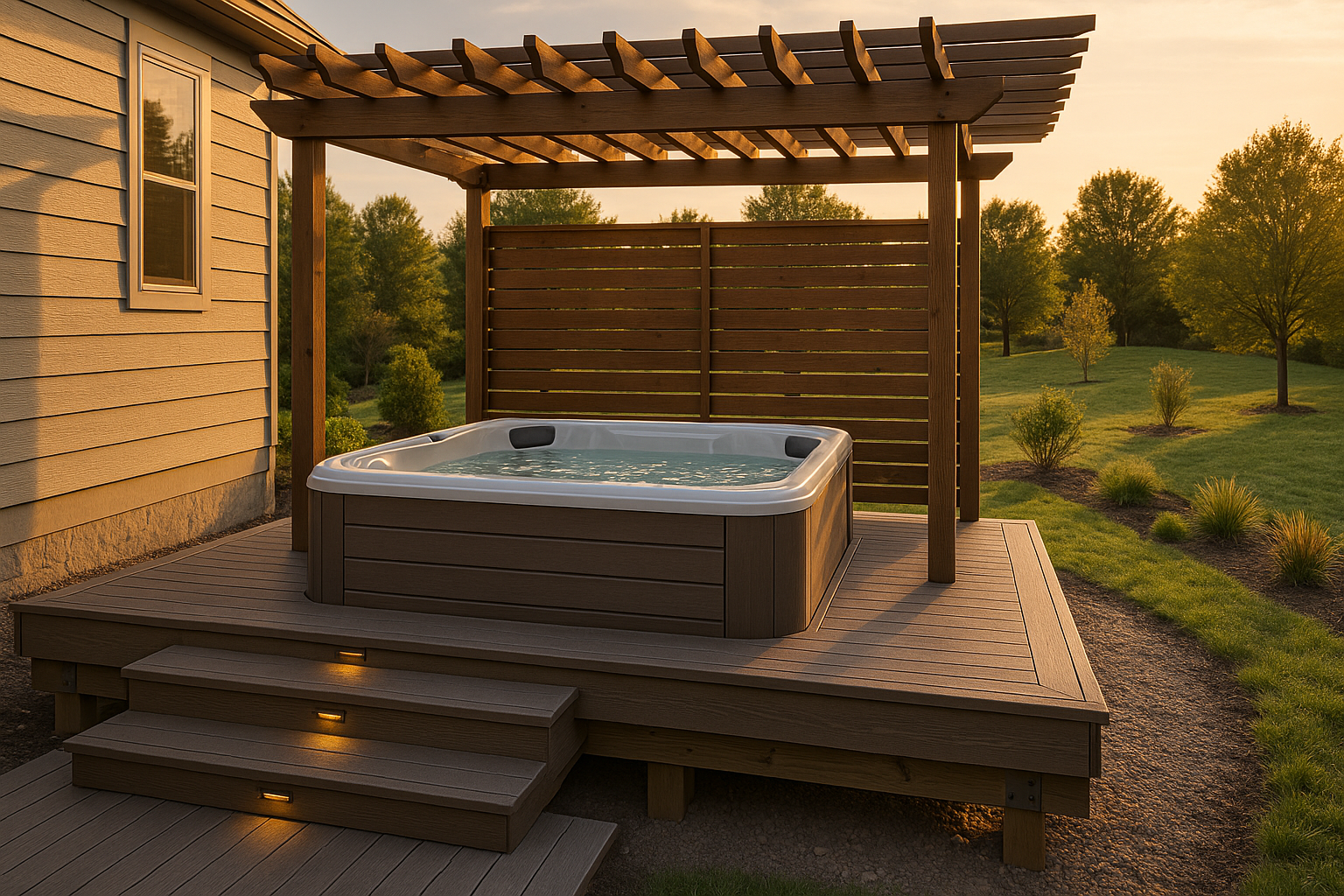
A few years back, my neighbor Dave had a deck that looked tired. He grabbed a clear sealer from the hardware store, rolled it on in an afternoon, and felt pretty good about it. By August, it was peeling like sunburned skin. He called me, frustrated. "I thought sealer was supposed to protect it?" Thing is, Dave didn't really know the difference between a stain and a sealer — and in Indiana's weather, that choice matters a lot.
So let's talk about deck stain vs sealer (and where paint fits in) so you don't end up in Dave's situation.
Stain, Sealer, Paint: What's the Difference?
When folks ask me about deck stain vs sealer, I tell them it's not really a "vs" at all — most stains do both. A clear sealer basically just pushes water away. It soaks into the wood, sure, but it doesn't block UV rays. That's why Dave's deck was graying again by midsummer. The sun still beat on it, cracking and fading the wood underneath. A stain, on the other hand, has pigment. That pigment acts like sunscreen for your deck. And almost every stain on the shelf already includes sealing ingredients. So it's more like "stain that seals" versus "sealer alone."
Paint is a whole different animal. It sits on top of the wood, forming a thick film. In a place like Indianapolis, with our freeze–thaw cycles and humidity swings, that film job usually ends with peeling and chipping — sometimes in just a couple of years. I've lost count of the homeowners who've called us to strip off old latex paint because it was popping off in sheets. If you want a solid color that doesn't hide the wood grain entirely, a solid stain is often a smarter, longer-lasting bet than paint.
Penetrating vs Film-Forming: Why Indianapolis Weather Changes the Game
This is the part that trips up a lot of people. A penetrating finish — whether it's a clear sealer or a tinted stain — soaks down into the wood fibers. It moves with the wood as it expands and contracts with temperature and moisture. A film-forming finish (paint, some thick solid stains) builds a layer on top. That layer can't flex. So when an Indianapolis winter throws freezing rain, then a thaw, then another freeze, that film gets stressed. Water sneaks under tiny cracks, freezes, and pops the coating right off.
I've seen it on decks all over Broad Ripple and Meridian-Kessler: a beautiful painted floor in April, and by March it's a mess. As a deck builder and contractor, we always lean toward penetrating products on horizontal surfaces. For railings — which we deal with a lot as a railing contractor — the same rule applies. A penetrating stain on a handrail holds up way better than a thick paint that starts to chip after one season of being grabbed and scraped by hands, kids, and the dog.
Oil vs Water-Based: Pick Your Poison
Once you decide on a penetrating stain, you've got another choice: oil or water-based? Oil-based stains soak in deep and make the grain look rich. They're great on woods like cedar, and they tend to produce a warm, amber tone. But they stink for a while, and they can get moldy a little faster in shady spots. Water-based stains dry fast — sometimes in a couple of hours — with low odor and less mildew risk. They've also come a long way in durability. In a shaded yard with oak trees dripping pollen, a water-based stain with mildew inhibitors makes a lot of sense. We talk more about managing mildew on decks over here.
If you're in a neighborhood like Fishers where the afternoon sun hammers the deck, an oil-based semi-transparent might be the ticket for a deep, lasting glow. But if you've got a patio enclosure or screened porch attached to the deck, you'll want something that doesn't off-gas forever and doesn't track sandy residue inside. A low-VOC water-based stain handles that nicely. By the way, if your fence needs the same TLC — and we're fence contractors too — the same rules apply. Sprinkler overspray and sun can make fence boards just as scruffy as deck boards.
The Wood You've Got Matters
Not all decks are the same, and the best finish depends on what your deck is actually made of. Here's the quick rundown:
- Pressure-treated pine: Most decks around Indianapolis are built with this. It takes a penetrating semi-transparent or semi-solid stain beautifully. Avoid thick films — they'll peel on this soft, moving wood.
- Cedar: Gorgeous stuff, but it needs to breathe. A semi-transparent oil stain lets the cedar's natural aroma and color come through while protecting it. A thick solid stain can trap moisture and cause rot. We compare cedar to other options here.
- Ipe (or other hardwoods): If you've got an ipe deck in Carmel or around Geist, you already know it's dense. So dense that most stains just sit on top. Ipe requires a specialized penetrating oil that soaks into the tight grain. We cover exactly how to maintain ipe in this guide.
No matter the wood, skipping prep is the fastest way to a bad finish — and we've restored enough decks around Greenwood and Avon to know the difference good prep makes.
Prep: The Unsexy Step That Makes It All Work
I get it. You want your deck to look good, not spend a weekend on your hands and knees with a sander. But the best stain in the world won't stick if the wood isn't ready. Start with a gentle pressure wash (or a good scrubbing) to knock off dirt, pollen, and graying fibers. Use a brightener to even out the color and open up the wood pores. Then — and this is where a lot of people groan — sand it. You don't need to go crazy. A light pass with an orbital sander knocks down the fuzzy fibers and lets the stain penetrate instead of just slicking over the top.
How do you know when it's ready? Do the water beading test. Sprinkle some water on a few boards. If it soaks in fast, you're good. If it beads up and just sits there, the wood isn't absorbing yet — maybe it's still too wet from washing, or maybe it's got old sealer clinging on. For a full deck restoration with stripping and sanding, check out this project in Avon.
Common Worries (and Straight Answers)
"Won't a stain make my deck too dark?" Not if you go semi-transparent. You'll still see the wood grain and natural variation. Want a solid color that looks uniform? A solid stain gives you that without the peeling dance you'd get from paint.
"What about my HOA?" In places like Zionsville and Westfield, HOAs often want color harmony. We do test boards on your actual deck so you can see the color in your light and get approval before we do the whole thing. No surprises.
"Will the deck be slippery after?" Only if you want it to be. You can mix in a non-slip additive — it's like a fine grit that disappears into the finish. We use it on stairs and around pools all the time.
"What if it rains the day we're supposed to apply?" We watch the forecast obsessively. Indianapolis pop-up storms are a thing, so we only schedule when there's a solid dry window. A water-based stain can be rain-ready in a few hours; oil-based needs at least overnight. Either way, we protect your siding, plants, and hardscape.
Let's Figure Out Your Deck Together
Still not sure which direction to go? That's totally normal. Every deck has its own personality — the way it faces the sun, the trees around it, what it's built from. At DeckPros, we don't just slap on a coat and walk away. We come out, do the water test, talk about what you want (and what you don't), and hand you a written quote that spells everything out. Since we're also patio enclosure suppliers and fencing pros, we can help you coordinate the whole backyard look if you're thinking bigger.
If you're around Indianapolis, Carmel, Fishers, or any of the surrounding towns, give us a shout for a no-obligation assessment. No pressure, no upselling — just straight talk from people who've fixed more decks than we can count.
Quick FAQ
Which lasts longer in Indianapolis: deck stain or clear sealer?
Hands down, a pigmented stain lasts longer. A clear sealer might need recoating every year. A good semi-transparent stain can go 2–3 years with basic maintenance.
Can I stain over an already-sealed deck?
Usually, no. Stain needs to soak in, so if the wood is sealed, you'll need to strip or sand first.
What's the best time of year to stain a deck in Indianapolis?
Spring (after pollen dies down) and early fall. Mild temps, lower humidity. Avoid the sticky peak of summer if you can.
How do I keep my deck looking fresh year after year?
Sweep it often, keep leaves off, and plan for a light maintenance coat every couple of years. We can set up a schedule that fits your deck and your calendar.
Thinking about your own deck or pergola?
Free in-home design consultation, 3D rendering, and a written quote — no pressure.