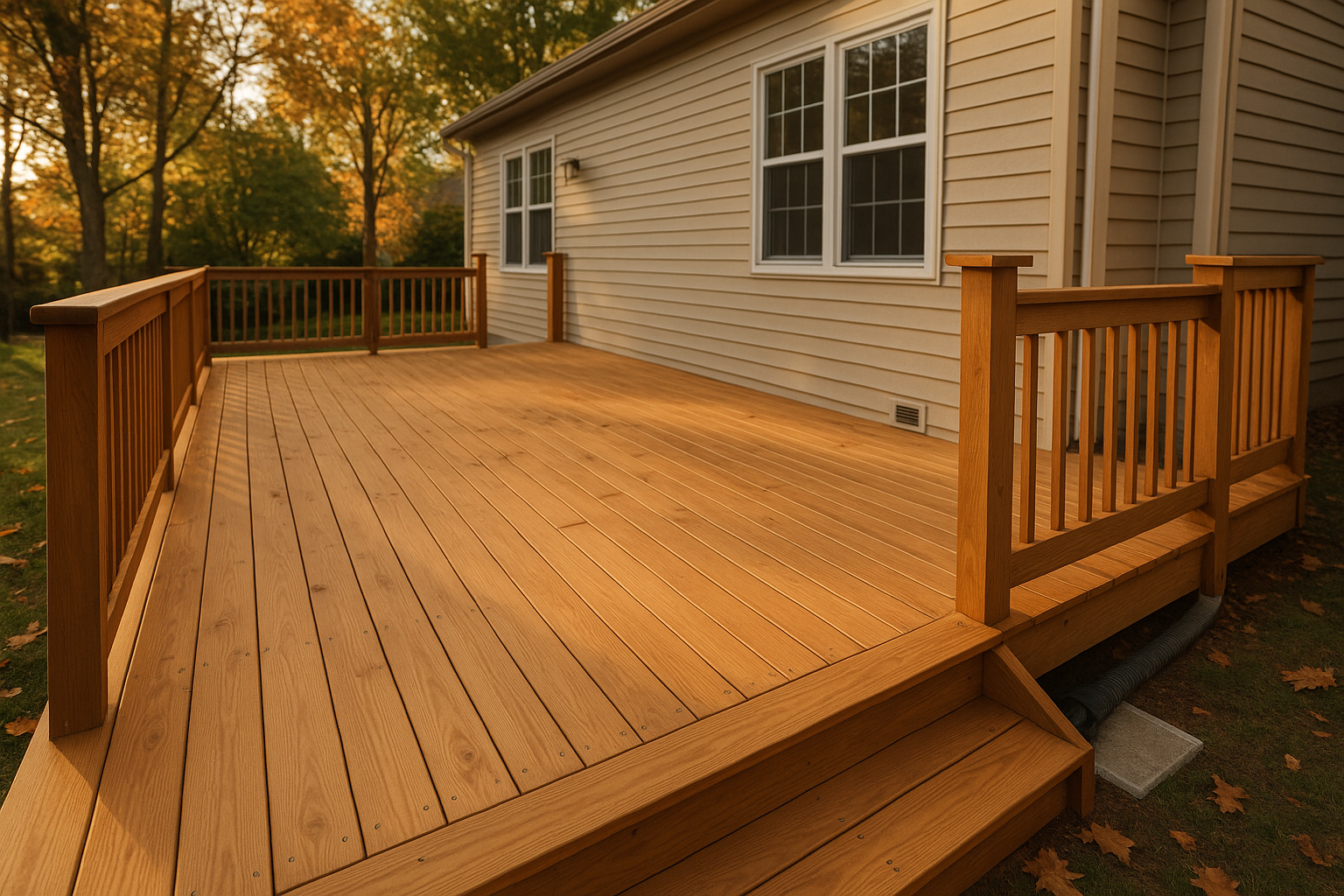
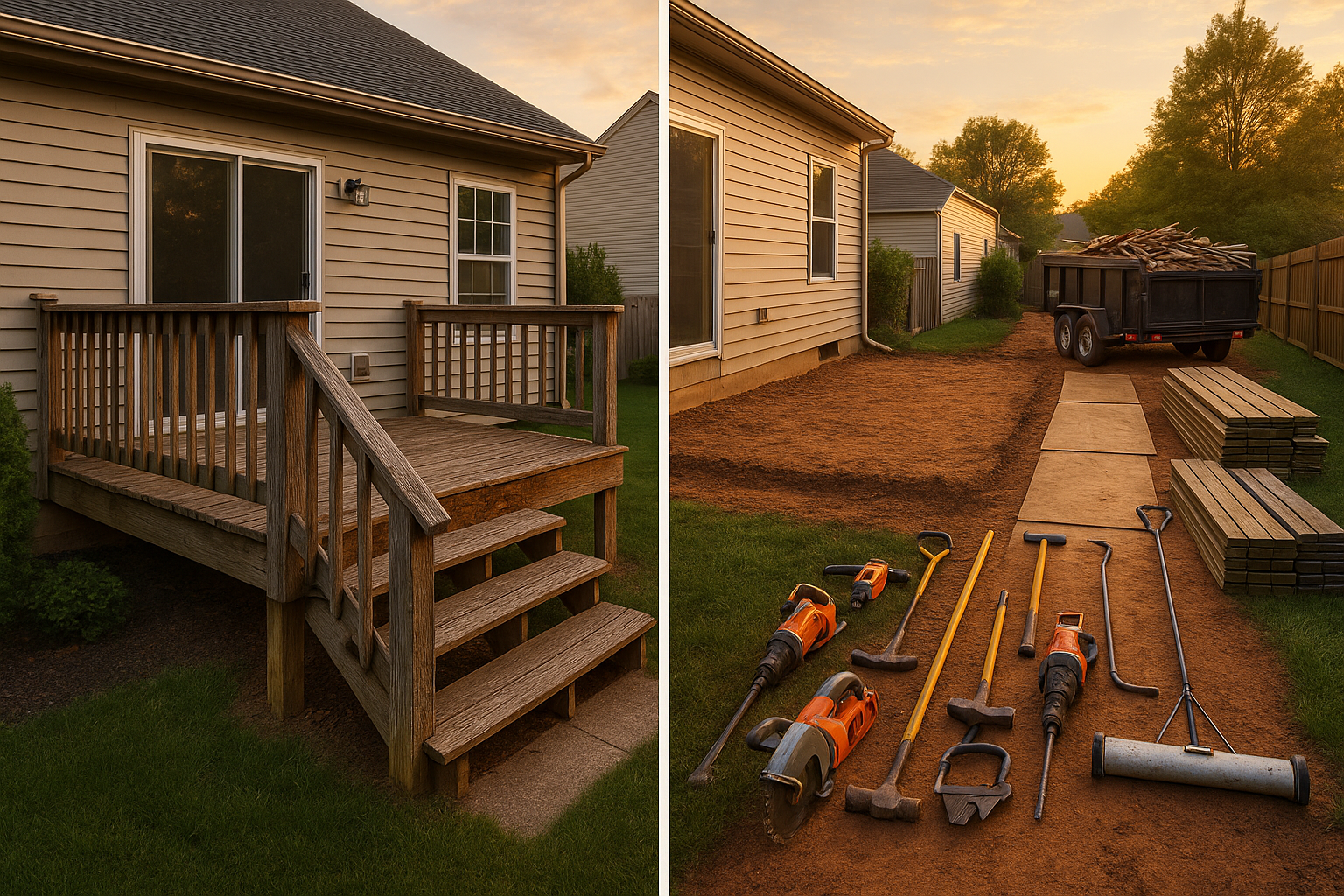
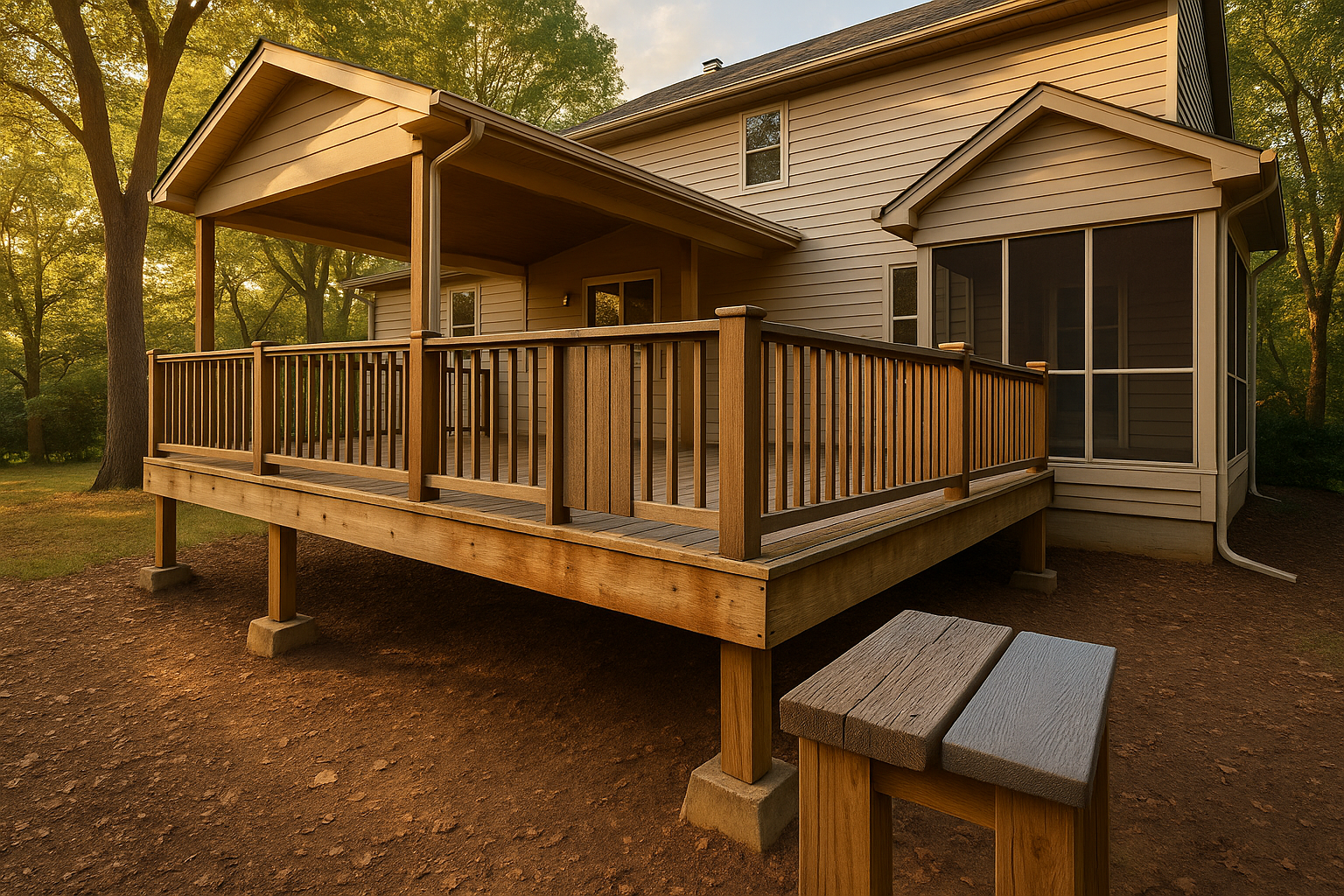
A buddy of mine in Zionsville learned the hard way. He built a gorgeous cedar deck right after moving in — thought he'd spend weekends grilling, not sanding. But by year three, Indiana's freeze-thaw cycles and that big maple tree's shade had turned parts of the deck into a slick, gray mess. He spent his next anniversary date staining instead of going out. His wife still brings it up. That's when he started asking what I now hear all the time: "If I'm going to drop cash on a deck, which one actually costs less when you look past the first check you write?"
That question is the heart of the cedar vs composite decking cost long term debate. Upfront prices grab your attention, but the real story plays out over 10, 15, 20 years — through bleach-and-pressure-washer Saturdays, board replacements, and maybe even a do-over if things go sideways. Let's walk through it like we're standing in a Brownsburg backyard with a cup of coffee, no sales pitch.
The Big-Picture Cost Breakdown
When we talk long-term cost, we're not just adding up the receipt from the lumberyard. You've got:
- The materials themselves (boards, fasteners, railings)
- Any framing upgrades — mostly relevant for composites, which often want joists closer together
- Yearly maintenance — chemicals, tools, maybe a pro's labor if you'd rather not spend your weekends doing it
- Repairs when a board goes bad or a squirrel treats your railing like a chew toy
- Tear-down and disposal if the thing doesn't last
- And the quiet one: how much your time is worth, because cedar asks for a lot of it
A few years back, a family in Avon came to us right after scraping through a refinish job for the third time. When you add up those annual stain-and-seal cycles over a decade, the "cheaper" wood deck started looking surprisingly expensive. That's the trap.
Upfront Dollars: Where Your Money Goes First
Cedar looks gentle on day one. You can often get premium cedar boards for less per square foot than a quality capped composite. But the first-cost gap shrinks when you factor in what composites need underneath. Many composite manufacturers specify tighter joist spacing — 12 inches on center for certain angles, for example — and they want ground-contact-rated framing with proper flashing tape. If your existing frame doesn't meet those specs, you're spending more on lumber and labor before the first board goes down.
And then there are fasteners. Hidden fastener systems give composites that clean, screw-free look, but they add hardware cost. On a cedar deck, you can use face screws, though even then stainless or coated screws add up. The difference upfront might be a few thousand, not a few hundred. So the question becomes: does that gap fill in over time? More often than you'd think.
Maintenance: The 10-Year Wallet Drain
Here's where cedar's ongoing expense really shows up. In Brownsburg's humid summers and leaf-heavy autumns, a cedar deck north of 300 square feet can cost you hundreds every year just in cleaners, brighteners, and high-quality penetrating stain. If you hire it out — and plenty of folks do after one exhausting weekend — labor pushes that into the four figures annually. Do that 8 or 9 times in a decade, and the spread becomes real money.
Composites ask for almost none of that. They don't need stain or sealant. You hose them off, maybe use a mild soap if a grill accident happens. The biggest recurring expense is your time to wash it and maybe a dedicated composite cleaner once a year if you're dealing with pollen or tannin drips from those gorgeous oaks that shade your yard. So when you run a 10-year maintenance budget side by side, cedar often rings up double — sometimes triple — the composite tab. That's where the cedar decking maintenance cost blindsides people.
Lifespan: How Long Before You're Swinging a Hammer Again?
A cedar deck in Indiana, well-built and faithfully maintained, can hit 15 years, maybe a shade more if it's in full sun and you're obsessive about keeping it dry. But in dappled shade with leaves piling up — which is half the backyards here — mold, rot, and cupping can cut that short. Composite, especially the newer capped boards, is routinely warrantied for 25 to 50 years against fade and stain. The composite decking lifespan Indiana homeowners actually get depends on the install quality and ventilation, but 25+ years is a fair expectation. That's a whole extra decade you're not buying lumber, not pulling nails, not apologizing to your spouse for another wrecked Saturday.
Hot Decks, Bare Feet, and Indiana Summers
Yes, dark composite gets hot. But so does dark cedar. And a west-facing deck in Westfield hitting 3 p.m. sun can feel like a stovetop no matter what it's made of. The fix isn't always switching to wood; it's picking a lighter color composite with a textured surface. Some lines now have special cooling technology. If you've got an open backyard with no shade, we always show samples in different tones so you can feel the difference. And if you're set on cedar, just know that a smooth finish on a hot day can be slick underfoot. Traction matters, and many composites now carry wet-slip ratings, which is a nice thing to have when the sprinkler soaks the deck and the kids come tearing around the corner.
The Stuff Nobody Talks About Until It's a Problem
Permits and HOAs: Hendricks County requires a site plan, proper footings, and guardrail code for any new deck or major replacement. Brownsburg subdivisions often have their own rules on railing style and color palette. If your HOA says black aluminum balusters or nothing, you'll need a railing contractor who knows how to work with both cedar and composite. DeckPros handles that from day one — we're a full-service contractor who pulls permits, coordinates inspections, and keeps your timeline honest (check out our take on how long a deck build really takes in the Indy area).
Fences, Patios, and the Big Picture: A deck doesn't live in a vacuum. If you've got an existing fence or you're thinking about adding a patio enclosure later, the materials you choose for the deck can ripple outward. For example, if you're running a fence line that meets the deck stairs, the post systems and finishes should flow. As a fence contractor too, we've seen mismatched outdoor spaces that just look... off. And if you ever decide to screen in part of your deck for a three-season room, those patio enclosure posts need to tie into the deck framing correctly. Planning ahead avoids expensive retrofits.
Framing and Hidden Upgrades: Whether you go cedar or composite, your deck's skeleton matters more than its skin. Ground-contact-rated framing, good flashing, and proper ventilation gaps are non-negotiable in our climate. Composite often means tighter joist spacing and joist tape, which adds cost but also extends the life of the frame beneath. If you're considering switching from cedar to composite on an old frame, we'll crawl under there and tell you honestly if it can handle the upgrade — no sugarcoating.
10-Year Numbers Without the Fluff
Let's put some rough numbers on it — not a quote, but a real-world nudge. For a typical 400-square-foot deck in Brownsburg:
- Cedar upfront: maybe $20–$30 per square foot installed, plus $800–$1,200 annually for a pro to stain it (or your own material cost plus a whole lot of sweat).
- Composite upfront: $30–$45 per square foot installed, factoring hidden fasteners and tighter framing. Maintenance: $50–$100 a year in cleaning supplies.
Over 10 years, that composite often catches up or even pulls ahead, especially if you'd otherwise pay for staining. And that's before we talk about the resale bump — a well-kept composite deck tends to show well in Indianapolis listings, while a tired cedar one can scare buyers off.
If the upfront hit of composite feels steep, there are hybrid plays. Some folks do composite deck boards with cedar railing to shave cost but keep the wood warmth up top. Or they start with pressure-treated framing built to composite specs so they can swap in better decking later. We've walked through those scenarios more times than I can count, and they usually work out fine.
Let's Run the Numbers for Your Yard
Every backyard in Brownsburg has its own micro-climate — that big walnut tree dropping sap, the neighbor's sprinklers hitting your rim board, the slope that traps moisture. What makes sense for the guy in Plainfield might be dead wrong for your lot off Hornaday Road. That's why we don't do cookie-cutter estimates.
Grab a cup of coffee and reach out for a planning consult. We'll put together a clear side-by-side cost analysis for cedar vs composite decking cost long term, right down to projected maintenance and permit timelines. You'll see actual material samples, we'll talk through maintenance schedules, and you'll walk away with a written scope that spells out exactly what everything costs — no surprises, no pressure. Whether you land on cedar or composite, you'll know exactly what you're signing up for over the long haul. And maybe you'll get that anniversary date back on the calendar.
Thinking about your own deck or pergola?
Free in-home design consultation, 3D rendering, and a written quote — no pressure.