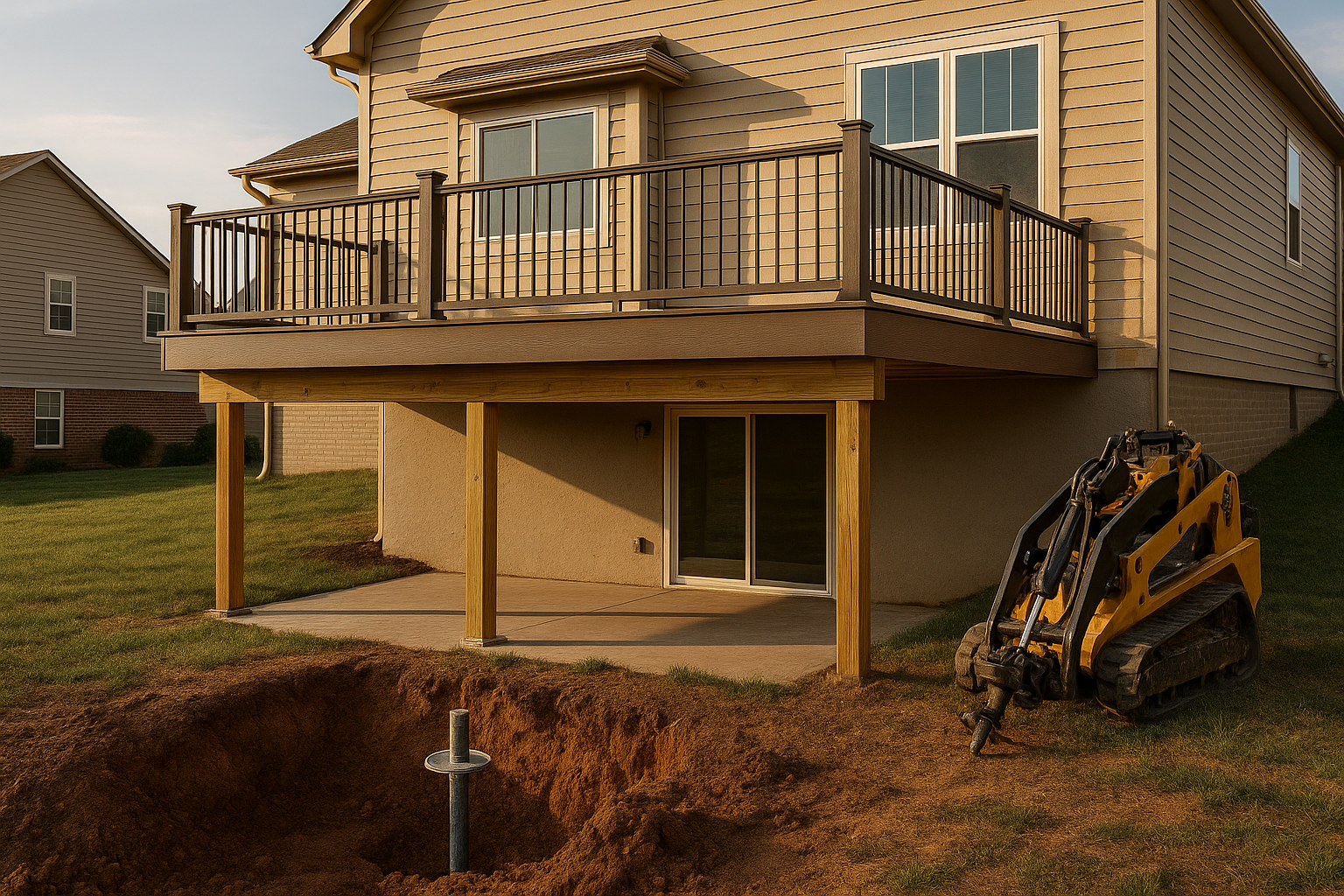
My buddy Eric in Fishers spent two summers staring at his muddy backyard. His sliding door sits about three feet above the grass—classic Indianapolis split-level. Every time they grilled, they'd track dirt inside. He and his wife went back and forth: deck or patio? They finally built a deck, and now their neighbor with a patio is jealous of how they just step right out from the kitchen. The neighbor’s patio, meanwhile, floods every spring. Not fun.
That’s the real dilemma around here. In Indianapolis and spots like Carmel, Noblesville, Greenwood—pretty much anywhere with that heavy clay soil and freeze-thaw craziness—the deck vs patio question isn’t just about looks. It’s about what actually works with your house, your yard, and our Indiana weather.
So what’s the difference, really?
A deck is a raised structure. Wood or composite boards on a frame, sitting on footings buried deep in the ground. A patio is at ground level—concrete, pavers, or stone—layered over a compacted base. Decks shine when your back door is up high. Patios win when you’ve got a flat yard and want to roll out a fire pit without building stairs.
The whole “deck vs patio Indianapolis Indiana” search you’re probably doing usually ends up here: if you’ve got more than two steps down from the house, a deck almost always makes more sense. Less dirt work, cleaner look, no retaining walls to eat up your budget. But if your land is pancake-flat and drains okay, a patio can be a cheaper and simpler route.
Why our weather and soil mess with everything
Indiana’s freeze-thaw cycles are brutal. The ground heaves up and down every winter, and our clay soil holds water like a sponge. Put a patio on a half-baked gravel base and it’ll look like a rumble strip in five years. Decks need footings or helical piers that go down below the frost line (usually 36–42 inches here) so they don’t move.
I’ve seen it in Westfield—a brand new concrete patio with cracks snaking through it after just one winter. Why? They skimped on the base. A paver patio would’ve handled the shifting better because it moves in sections. But even pavers need good drainage underneath. That’s where a contractor who knows local soil really matters. (DeckPros is, well, a contractor—and we’ve dug more holes around here than we can count.)
For a deck, helical piers vs traditional concrete footings is a whole conversation. Helical piers go in fast and don’t require big excavations. They anchor deep into stable soil. In spots like Avon or Plainfield where the clay gets extra spongy, they’re often the smarter call. We can walk you through that on a site visit.
Money talk: what’ll this cost?
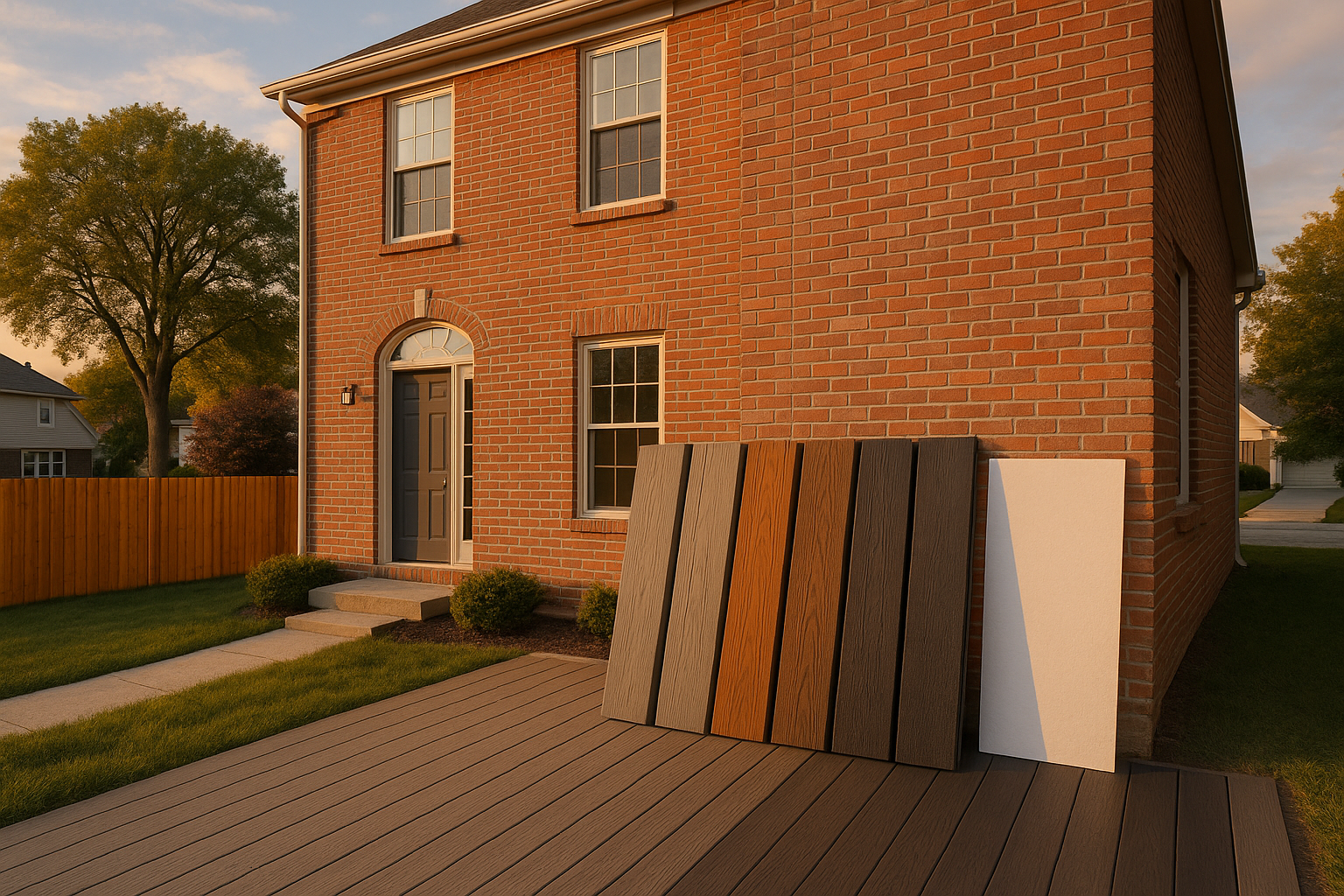
Everyone asks about deck vs patio cost Indianapolis. Honestly, it’s not a simple answer. A basic broom-finish concrete patio might start lower than a deck. But when you get into stamped concrete or pavers, you’re in the same ballpark as a composite deck. Pressure-treated wood decks are usually the cheapest upfront—but they come with a maintenance hangover later.
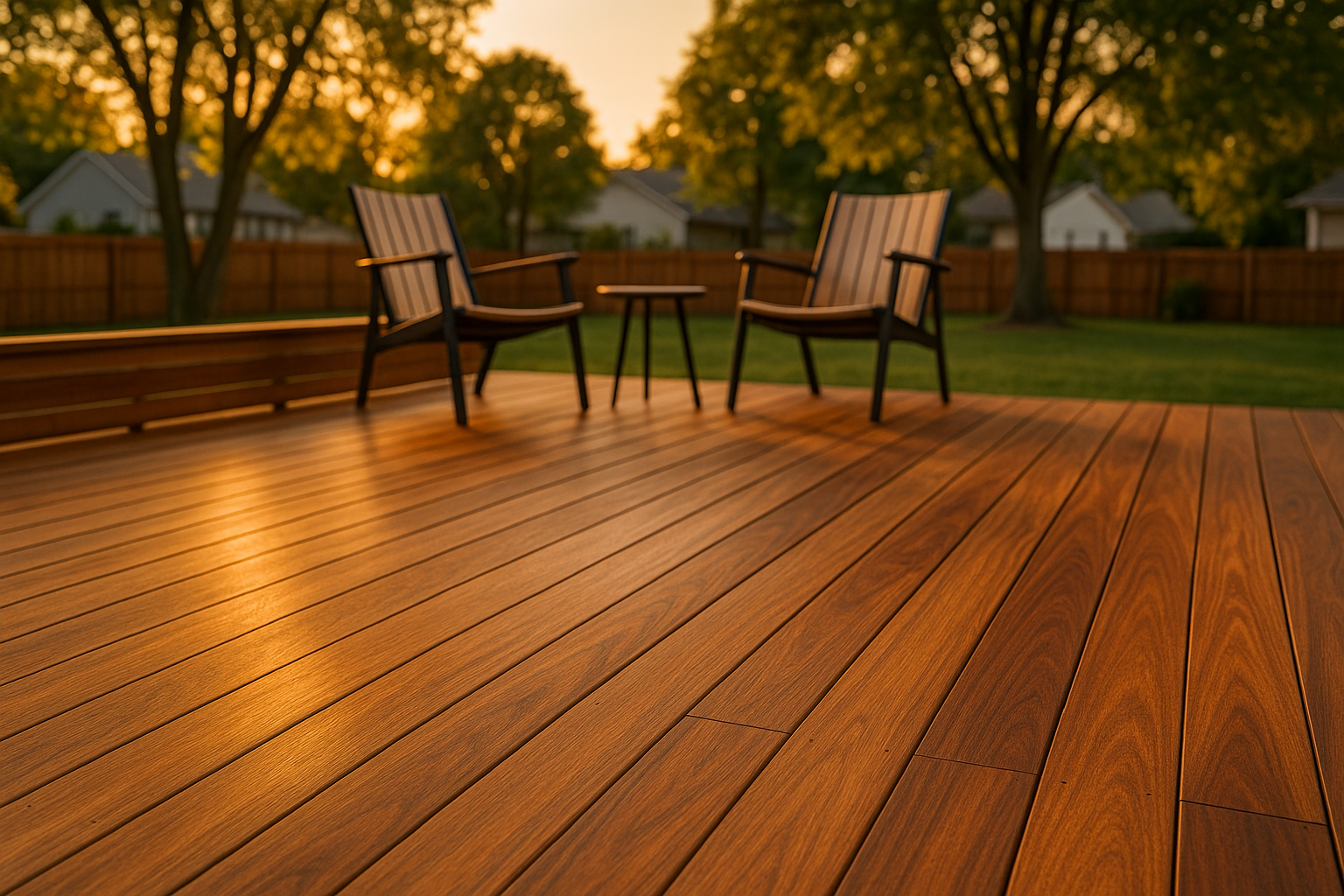
A good rule: if your spot is easy to access and doesn’t need tall footings or tons of base prep, a patio can be the budget-friendly choice. But add a slope, tricky access, or a desire for something elevated, and a deck often wins on long-term value. Composite decking, like TimberTech or Trex, costs more now but saves you sanding and staining every year. (Check our comparison of Trex vs TimberTech in Avon.) And don’t forget railings—for any deck over 30 inches, you’ll need them. Like we said, we’re a railing contractor too, and the right railing style can make a deck look custom without blowing the budget.
The maintenance stuff they don’t always tell you
Wood decks in Indiana need love. Every couple of years you’re sealing or staining, or you get to watch them turn gray and splinter. Composite? Just soap and water. Concrete patios can crack—fixing a shifted slab is a pain. Pavers can sink in spots after heavy rains. A little polymeric sand and maybe re-leveling a spot every few years keeps them happy.
One of our clients in Carmel told us his wood deck looked like a horror movie after five years because he “never got around to sealing it.” He switched to composite and now spends his weekends actually enjoying the yard. We’ve got a deck maintenance schedule guide for Fishers that lays out the timeline.
If you’re leaning patio, remember drainage. Without the right slope away from the house, water pools against your foundation. We’ve seen downspout extensions make or break a patio project in Zionsville.
Safety, hot tubs, fire pits, and fun stuff
Thinking about a fire pit on a deck vs patio Indianapolis? Open flames on a wood or composite deck make me nervous unless you’ve got a serious heat shield and plenty of clearance. Pavers or concrete? Much safer for a solo stove or built-in fire ring. Hot tubs can go on either, but decks need extra engineering to carry that weight plus water and people. We’ve designed decks in Brownsburg specifically to hold a hot tub—it’s totally doable with the right framing.
And if you’re dreaming of a screened porch vs patio Indianapolis, consider how you’ll use it. A screened porch on a deck keeps bugs out and adds a whole room. A patio with a gazebo or enclosure can feel just as cozy. As a patio enclosure supplier, DeckPros can help you frame in a section later, even if you start with an open deck.
Permits, HOAs, and other headaches
In Indianapolis proper, you’ll need a permit for most decks. In suburbs like Fishers or Zionsville, same deal. Patios sometimes slide under the radar, but if you’re adding a roof or connecting to the house, permit time. HOAs in many neighborhoods here—Carmel’s full of them—want to approve colors and materials before you break ground.
Don’t let that scare you off. We handle the paperwork from day one. And remember to call 811 before digging; it’s free and Indiana law. We’ve never seen a project die because of permits, but we have seen delays from skipping that step. A timeline to build a deck Indianapolis can be as short as a few weeks once everything is approved, but start the planning early. Our guide on how long deck builds take walks through the whole process.
Which one adds more value to your home?
Honestly, both can. But in the Indianapolis housing market, outdoor space that looks clean, needs almost zero work, and fits the house style is what buyers want. A beat-up wood deck with peeling stain? Not so much. A gorgeous composite deck with a breakfast nook and black aluminum rails? That speaks to people. A paver patio with a fire pit and built-in seating? That also gets thumbs up.
We’ve talked about deck ROI in Carmel—homes with well-kept outdoor living areas tend to sell faster. The key is matching your neighborhood’s vibe. In a newer Westfield subdivision, a sleek composite deck fits right in. In an older Greenwood area, a classic covered patio might be the move.
So, deck or patio?
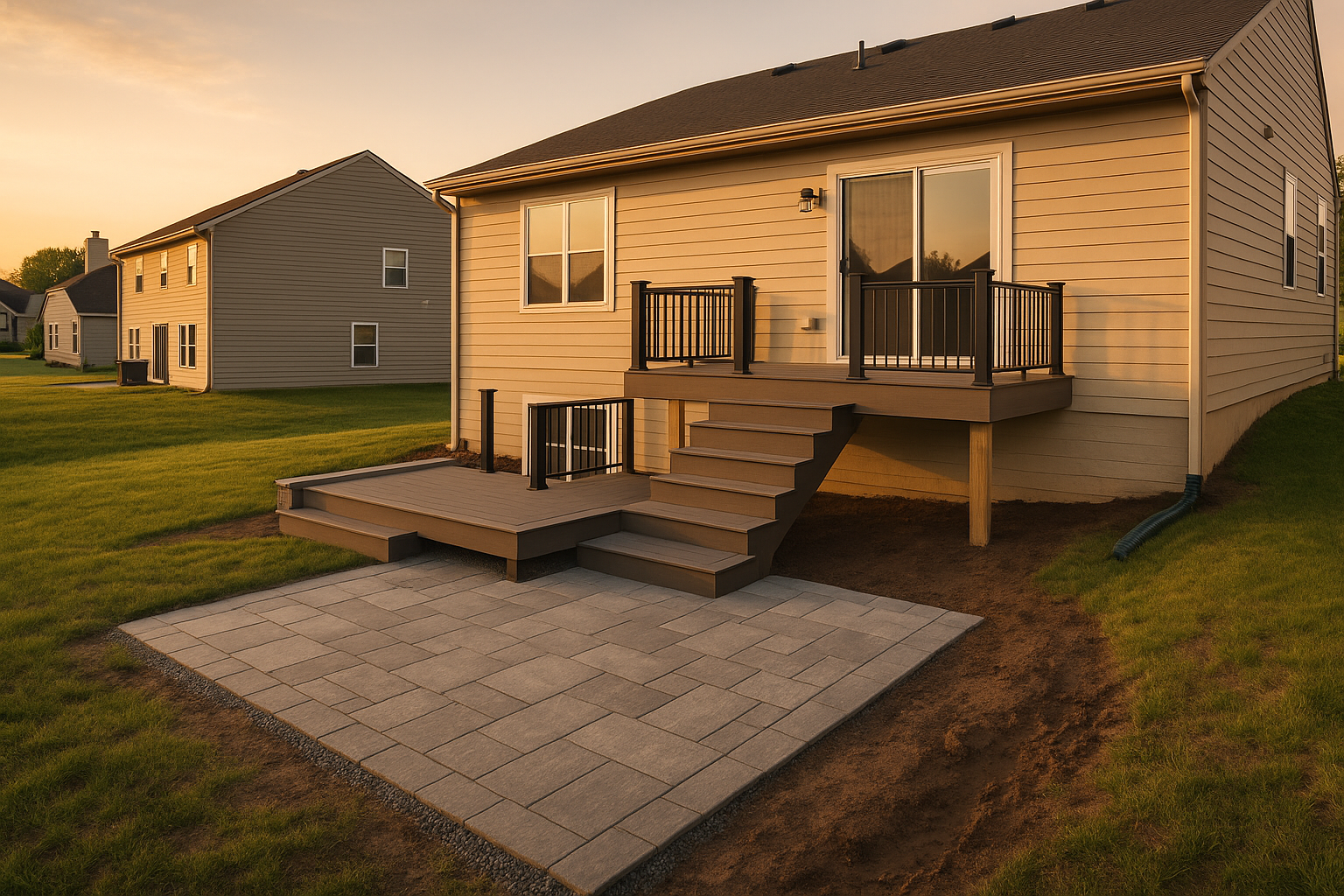
Start with your back door height. If you step out and you’re more than a step or two above the ground, deck. If your yard is flat and you want something fast and low-maintenance, patio. But there’s a middle ground: a smaller deck that steps down to a paver patio. That’s a hybrid—best of both worlds.
The truth is, every yard’s different. That’s why a quick walkaround with someone who knows this stuff pays off. At DeckPros, we don’t push one over the other. We push what makes sense for your slopes, your soil, and how you really want to live outside. We can talk foundation options, show you railing styles, even sketch a fence if you need privacy. (Yep, we do fence contracting too.)
Ready to stop staring at a sad backyard and start using it? Let’s talk. Shoot us a message and we’ll come out for a free look. No pressure, no gimmicks. We’ll map out the whole thing—from permit path to final cleanup—so you know exactly what you’re getting into.
Thinking about your own deck or pergola?
Free in-home design consultation, 3D rendering, and a written quote — no pressure.