I got a text from a friend in Avon last July. A picture of her deck—the one she'd splurged on two years prior—with a sad-face emoji and the words 'My feet are on fire.' She wasn't exaggerating. That dark brown composite soaked up the afternoon sun like a pizza stone. Her dogs wouldn't even walk on it. 'I should've done more homework,' she said.
You're here because you don't want to send that text. You're comparing Trex and TimberTech, the two heavy hitters in the composite decking world, and you need to know which one won't turn your backyard into a griddle or warp after a couple Indiana winters. I get it. We've built hundreds of decks around Avon, Plainfield, Zionsville, and the rest of the Indy metro, and we've seen both brands perform in real conditions. Not in a lab, but on West-facing lots with no shade, on wooded streets in Carmel where leaves pile up, and on busy patios in Fishers with kids and grills.
So let's talk Trex vs TimberTech composite decking—no marketing fluff, just what actually matters.
Composite vs. PVC: What's the Difference?
Trex is all capped composite. That means a core of recycled wood fibers and plastic, wrapped in a protective shell. TimberTech gives you two roads: their capped composite (like the Edge and Pro lines) and their Advanced PVC, which used to be called AZEK. PVC is pure plastic—lighter, resists moisture better, and generally stays cooler. Composite is heavier and can take a bit more impact without denting. Neither is perfect, so which one fits your life?
The Sun Test: Will It Fry an Egg?
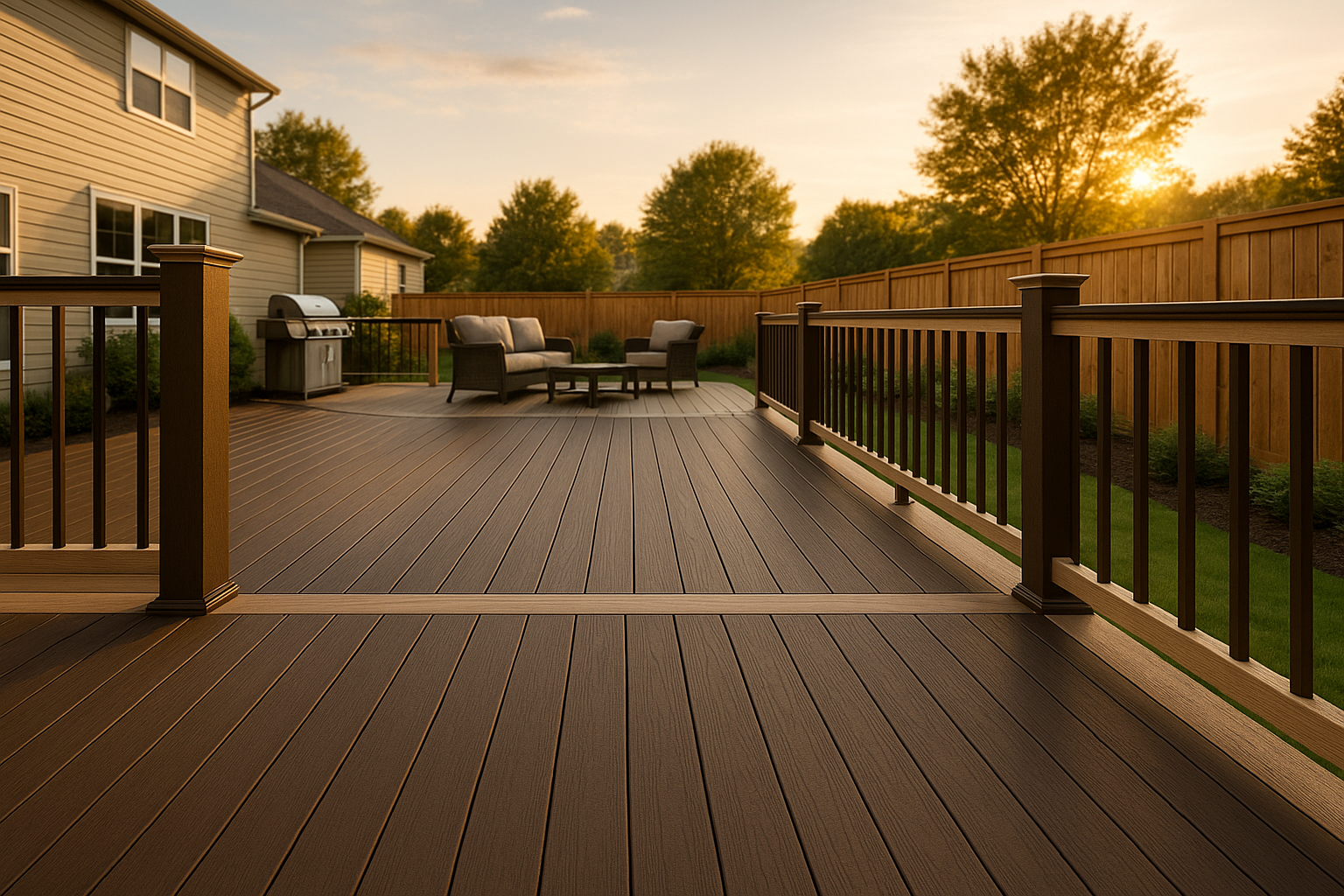
Back to my friend's hot deck. Dark colors on any composite will get hot—think 140°F or more in direct sun. Lighter boards, like a weathered gray or a tan, can be 20 degrees cooler. That's true for both brands. But here's a real difference: TimberTech's Advanced PVC boards naturally run a few degrees cooler than capped composite because PVC doesn't hold heat the same way. If your deck in Avon faces West or South with no tree cover, a light-colored TimberTech Advanced PVC could save your bare feet. And your dog's paws. We've had customers in Brownsburg try this side-by-side with Trex Transcend, and the PVC was noticeably more comfortable. Still not cool as shade, but walkable.
Will My Dog Ruin It? Scratches, Dents, and Hail
Indiana gets its share of spring storms. Hail can beat up a deck almost as much as a rowdy Labradoodle. Entry-level boards from either brand—Trex Enhance, TimberTech Edge—aren't as tough. You'll see scratches from patio chairs and dings from dropped tools. Step up to Trex Transcend or TimberTech Pro and Advanced PVC, and you've got a denser cap that shrugs off a lot more. We've seen Transcend hold up to a German Shepherd that thinks it's an escape artist, and Advanced PVC barely scuff when a heavy bench gets dragged across it. If you've got active kids or big dogs, don't skimp on the top line.
Slippery When Wet? Leaves, Ice, and Winter Salt
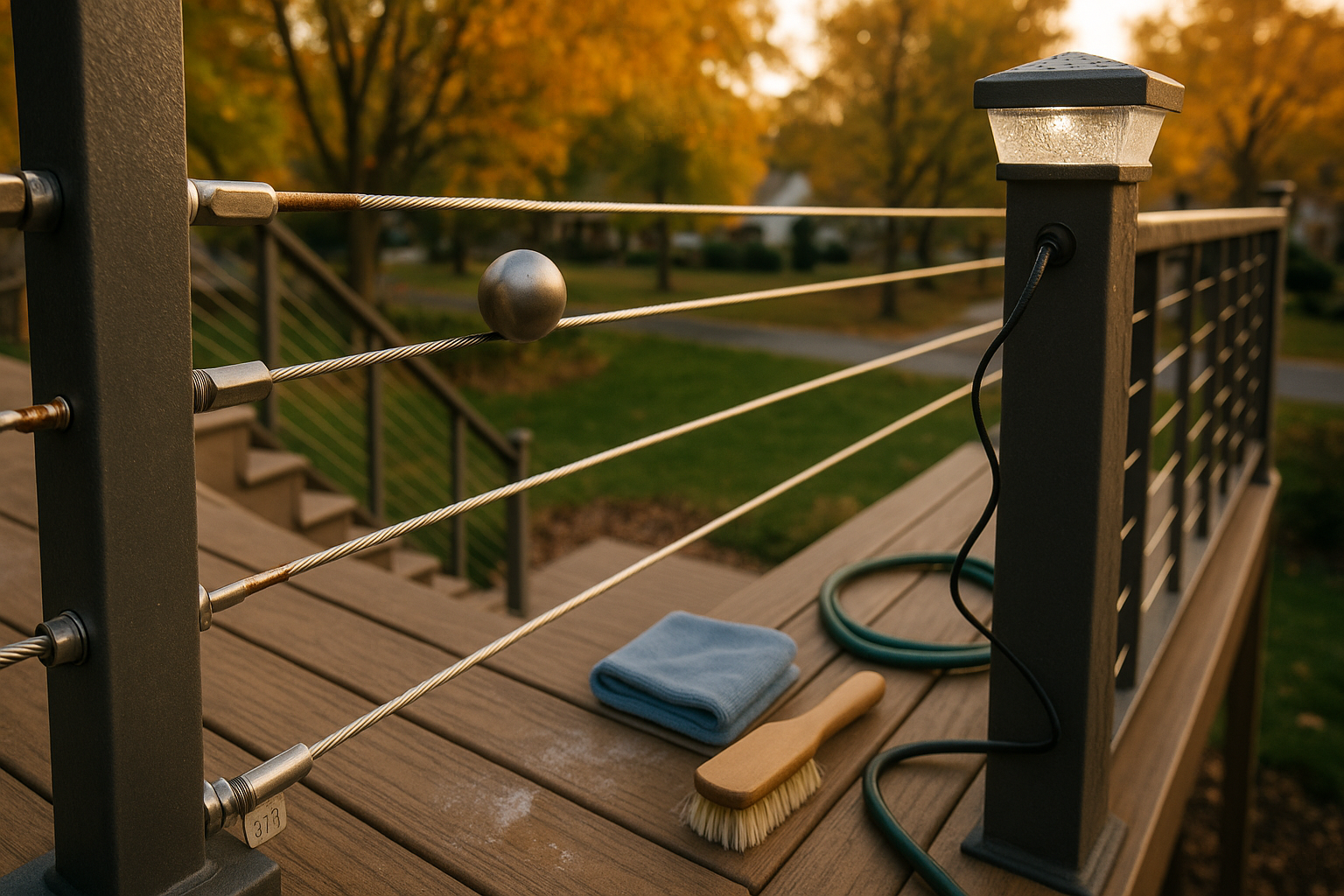
Traction matters. Both Trex and TimberTech texture their boards so you don't go sliding every time it rains. But if your yard is like a lot of Avon backyards—shaded with mature oaks—you'll deal with wet leaves and maybe a little moss. Advanced PVC really shines here because it doesn't absorb water. Mold has a harder time getting a grip. On the flip side, capped composite can get slick with a film of mildew if it stays damp and shady. A quick scrub with soap and a hose keeps it in check. For stairs or around a pool, look for boards with extra grit in the surface—both brands have those options. And if you salt your deck in winter, both materials handle it fine, but we recommend hosing it off in spring to avoid any film buildup.
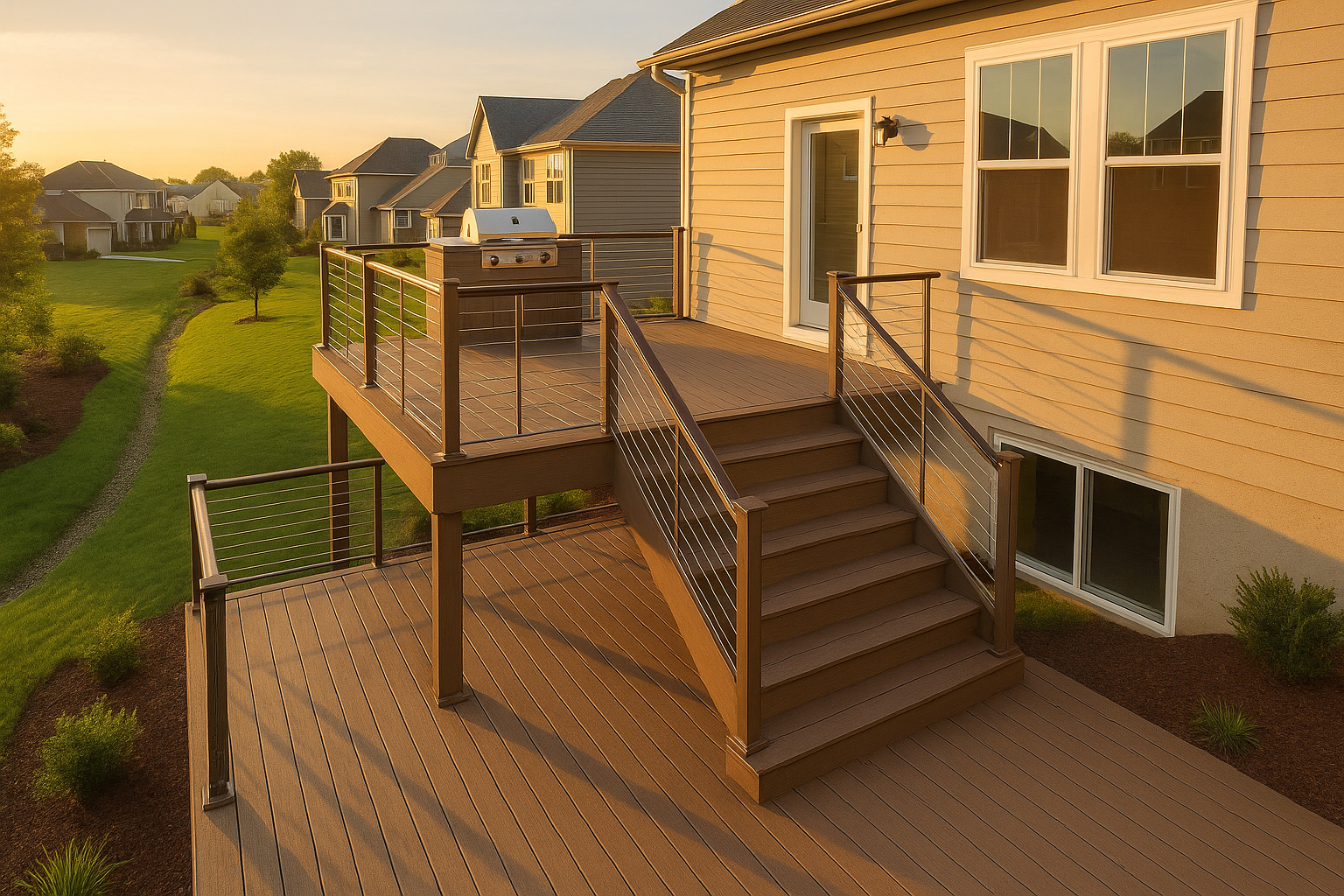
We're also a railing contractor, and honestly, the railing you pick plays into safety just as much. You need a system that grabs the boards tight, no wobble. We usually pair Trex with Trex railing or TimberTech with their own—mixing brands can void warranties. If you want to know what works, check out our thoughts on deck railing options in Brownsburg.
The Cost Picture: From Budget to Premium
Let's talk numbers. Entry-level composite like Trex Enhance might run you $15–$20 per square foot installed, depending on the framework. Mid-tier TimberTech Edge or Trex Transcend can push into the $25–$35 range. Advanced PVC typically sits at the higher end, $30–$40 per square foot. That's for a straightforward deck—add stairs, fancy railing, lighting, and you're looking at more.
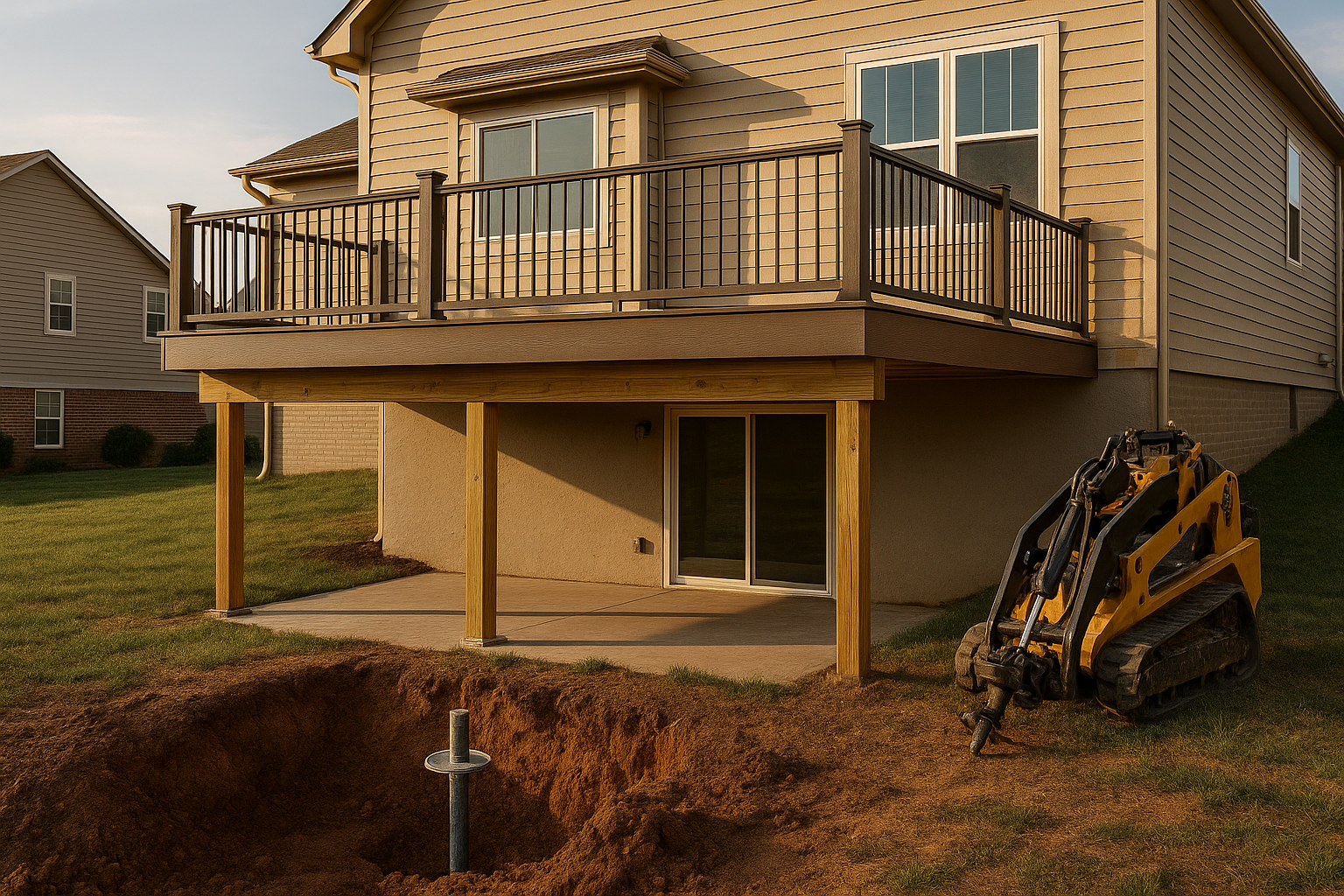
But here's where a lot of Avon homeowners save: resurfacing. If your pressure-treated frame is still solid—check the ledger board and posts—you can often strip the old wood and lay composite right on top. We do this all the time in Greenwood and Noblesville. It's a fraction of a full rebuild. We always inspect the frame first, though; if the joists are rotting or the posts are sinking in our clay soil, it's smarter to start fresh. Either way, we handle it as a full-service contractor, so you don't have to chase down carpenters and inspectors. For a deeper look at bringing an old deck back to life, see our deck repair and restoration guide.
If you're thinking about resale value, a well-built composite deck can pay back a good chunk. We broke down the numbers for Carmel homes in another post.
What About Fading, Stains, and That New-Deck Look?
Warranties on the good lines are great—25 to 50 years against fading and staining. In real life, darker colors can show a bit of wear sooner, especially if they're in full sun. You might see some lightening after a decade. But it's gradual, and both brands use UV inhibitors in the cap. If you're nervous about that, go with a mid-tone or light color. We always bring physical samples to your house so you can see how the light hits it at different times of day. And if you're the type who hosts cookouts every weekend, worry about grease splatters? A quick wipe with a degreaser usually takes care of it on either brand.
Getting the Installation Right
No board performs well on a bad frame. We see too many decks where the joists are laid at 24 inches on center because the old wood deck didn't care. Composite wants 16 or even 12 inches for a stiffer feel. And in Indiana's freeze-thaw cycle, boards expand and contract—sometimes up to a quarter inch over a 20-foot run. If you don't leave proper gaps at butt joints and picture-framing, you'll get buckling or ugly gaps. That's just physics.
Permits? In Avon and throughout Hendricks County, you'll need one for a new deck or a major replacement. DeckPros handles that whole headache. As a licensed contractor, we know exactly what the inspectors want to see—footing depth, guardrail heights, stair rise-and-run. And if you're adding a patio enclosure or screening things in later, we can plan for that too. We're a patio enclosure supplier as well, so we can talk through whether a screened porch might be a better fit for your bug-heavy evenings. If you're not sure whether an open deck or a screened porch makes more sense, we've laid out the pros and cons for Indianapolis homes.
Fences, Railings, and the Whole Yard
Here's a thing people forget: your deck doesn't live in a bubble. Maybe the fence around your yard has seen better days. As a fence contractor, we can look at the whole picture. A crisp new composite deck next to a sagging wooden fence... not great. We've done jobs in Westfield where the homeowner knocked out both at the same time, and the transformation was huge. Same goes for railing—we're a railing contractor, so we're not going to slap on something that doesn't match or ignores safety codes.
So, Trex or TimberTech?
Here's my take after years of this: if your deck gets brutal sun and you hate hot feet, and you have the budget, TimberTech Advanced PVC in a light color is the way to go. If you want the best scratch resistance for a pack of dogs and don't mind a little more heat, Trex Transcend holds its own. And if you're on a tighter budget but still want low-maintenance, Trex Enhance or TimberTech Edge will serve you well if you pick a smart color and keep them clean.
The truth is, both brands make great decking. The real victory is matching the board to your specific yard and your life—and that's where we come in. We don't just throw a catalog at you. We'll walk your property in Avon, talk about where the sun hits, where the leaves pile up, and what you actually use your deck for. Then we set up side-by-side samples you can touch, step on, and even pour coffee on if you want. (We've done that—someone wanted to test stain resistance. It passed.)
If you're around Indianapolis, Carmel, Fishers, Zionsville, Westfield, Noblesville, Greenwood, Brownsburg, Avon, or Plainfield, give us a shout. We'll give you a clear, itemized proposal without the games. Just real talk about your deck.
Schedule a free on-site consult. We'll bring the samples and the straight answers.
Thinking about your own deck or pergola?
Free in-home design consultation, 3D rendering, and a written quote — no pressure.