I was over at a friend’s house in Brownsburg last fall, and she literally grabbed my arm before I stepped onto her deck. “Watch the rail,” she said. The top was so wobbly from years of Indiana weather that it felt like a suggestion, not a guard. She’d been meaning to fix it, but the sheer number of deck railing options Brownsburg Indiana homeowners have to wade through had her stuck. Sound familiar?
If you’re looking at your own deck and wondering which railing will actually hold up, look right, and not become a weekend chore, you’re in the right spot. We’re going to walk through the materials, code stuff, and local quirks that matter when you’re picking a railing system around here.
Safety and Code First: What Brownsburg Requires
Before you fall in love with a minimalist cable setup or sleek glass, let’s talk rules. The Town of Brownsburg follows IRC guidelines pretty closely. That means if your deck surface is more than 30 inches off the ground, you need a guardrail at least 36 inches tall. Stair handrails have to sit between 34 and 38 inches high. And that old 4-inch sphere rule? Still the law—balusters or infill can’t let a 4-inch ball pass through anywhere. It’s safety, sure, but it also keeps little ones and pets from squeezing under.
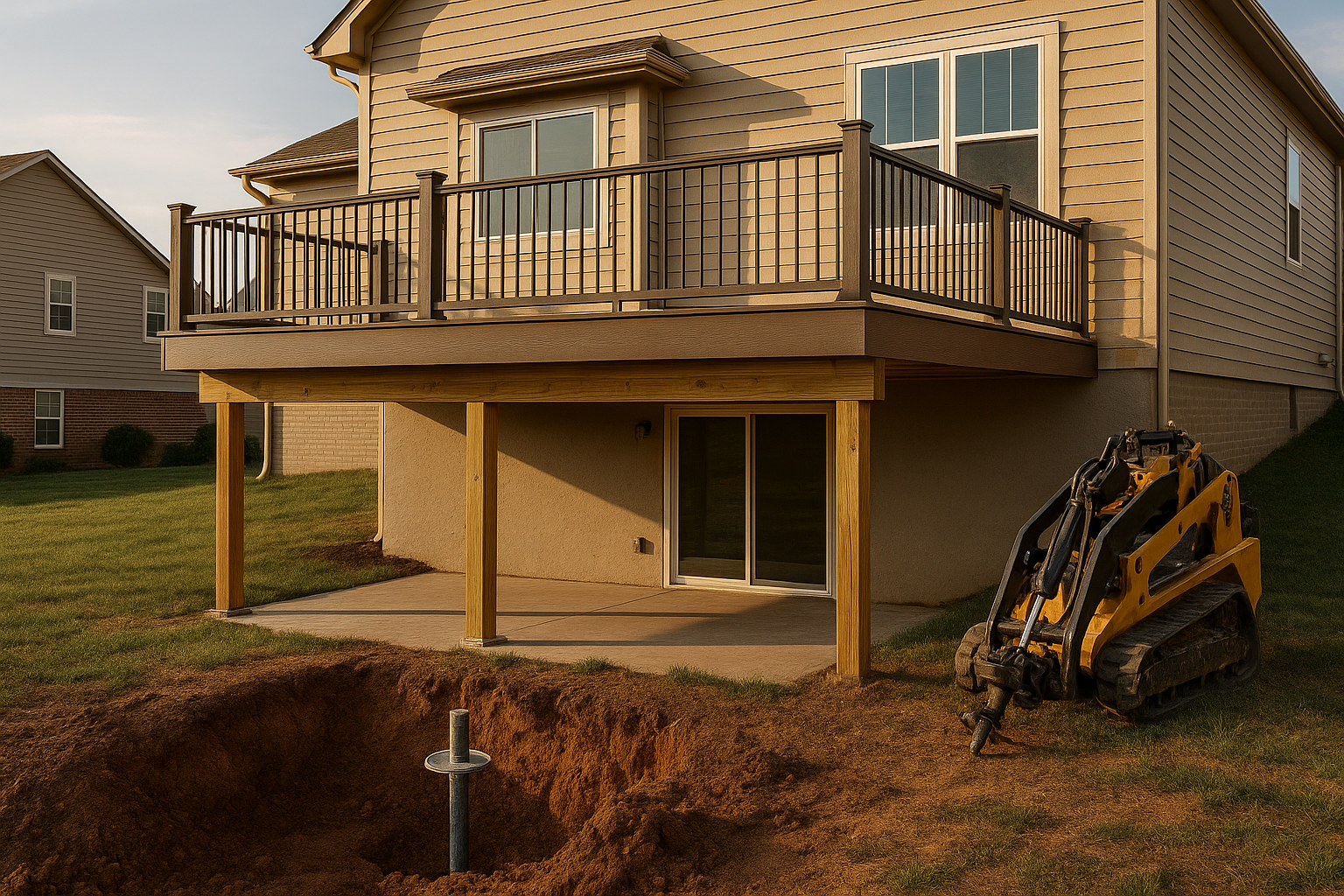
We’ve seen posts that looked fine from the yard but failed a town inspection because the original builder missed a few details. That’s why we always check stair geometry, graspable handrail profiles, and hardware. If you’re just swapping rails on an existing frame, the inspector will still want to see solid connections and up-to-date ledger attachments. Getting it right the first time avoids that awkward call-back.
Railing Materials for Indiana’s Wild Weather
Hoosier weather doesn’t do things halfway. Freeze-thaw cycles heave soil, snow piles up, and July sun bakes everything. Your railing material picks matter way more than the color.
Aluminum deck railing Brownsburg installs are popular for a reason—powder-coated aluminum laughs at rust, never warps, and handles the snow-shovel scrape of winter without chipping like wood does. It’s lightweight but strong, and the coating holds up against de-icing salts that get tracked onto stairs. If you hate maintenance, this is your buddy. Black aluminum railings are especially big in subdivisions like West Chase or Wynne Farms because they match the brick-and-siding look, and HOAs tend to approve them fast.
Composite deck railing Indiana homeowners often choose when they’ve already got a composite deck. It’s a matched set—same fade resistance, same easy cleaning. Composite and PVC railing options fight off moisture and UV well, so you’re not staining every other spring. A quick hose-down brings back the color. Some systems even let you add a drink rail on top, which makes grilling season a lot more fun.
Wood deck railing Brownsburg—usually cedar or pressure-treated pine—still has its fans because it feels warm and classic. Cedar railing pros and cons? It smells amazing fresh, takes stain beautifully, and fits older ranch-style homes naturally. But it needs a fresh coat of sealant every couple of years, and if you skip a season, freeze-thaw will start splitting the grain. We’ve ripped out enough rotted wood to know that the up-front savings can disappear into upkeep costs.
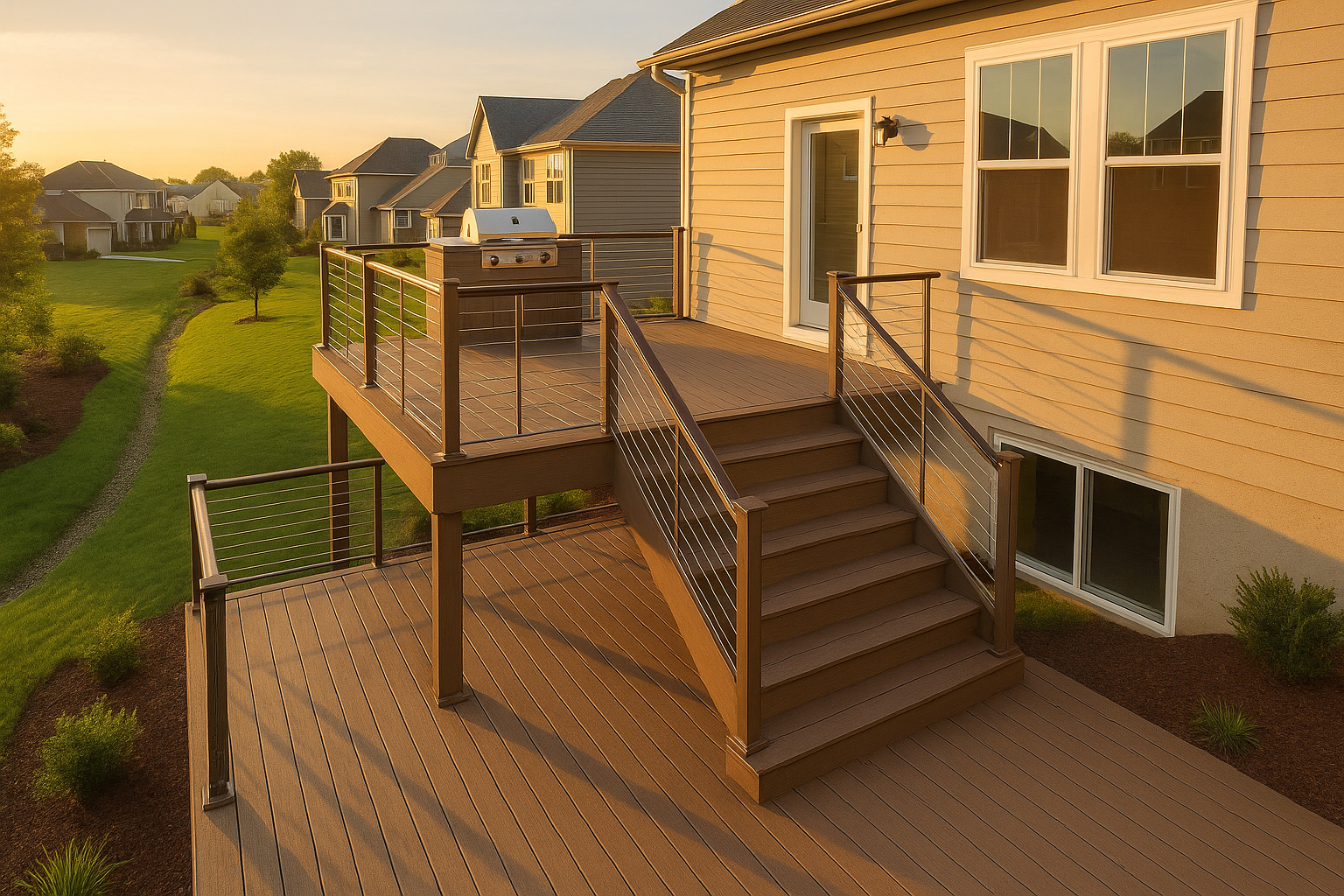
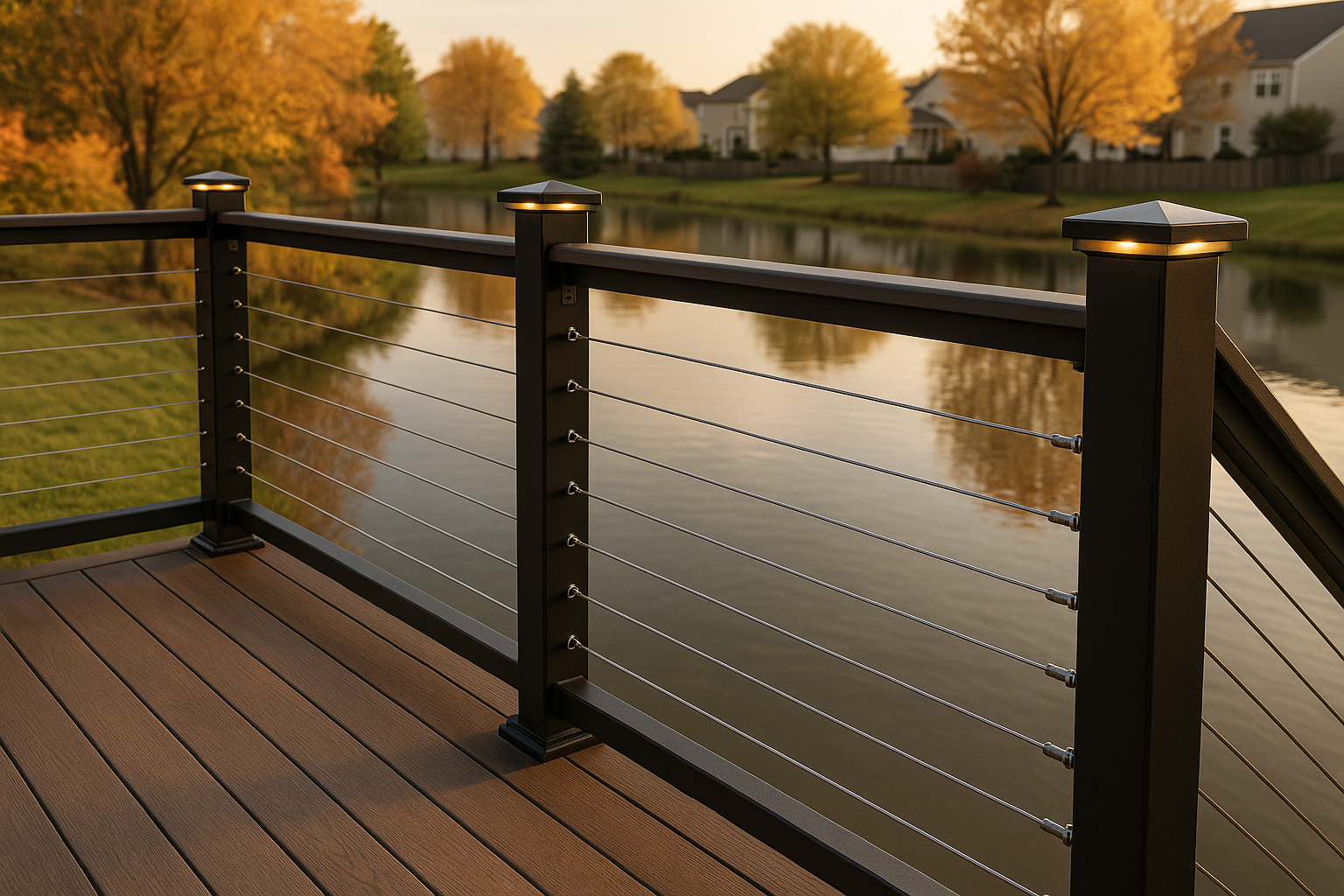
Cable deck railing Indianapolis area is the choice when views matter. Brownsburg backyards near a pond or greenbelt? Cable infill nearly disappears, so you see the water, not the rail. The hardware needs to be marine-grade stainless, and the cables must stay tensioned tight to meet the 4-inch rule. We’ve done cable systems where homeowners were nervous about pets squeezing through, but properly installed, it’s just as safe as balusters—and a lot less visually heavy.
Glass panel deck railing Indiana is the premium option. It blocks wind, which is a big deal on open lots, and keeps the view completely clear. But let’s be real: glass gets dirty. Pollen in spring, cottonwood fluff in June, and general grime demand regular cleaning. If you’re up for that, it’s stunning. We often recommend glass only for certain sections—like the side facing the pond—and more private, lower-maintenance railing elsewhere.
Mixing Materials and Contracting Sense
Here’s where being a deck builder, a railing contractor, and even a fence contractor comes in handy. You’re not just picking a rail; you’re tying it into a whole outdoor space. Sometimes the best answer is a mix: aluminum posts with composite top rails, or cable on the view-facing side and privacy panels near the neighbor’s yard. When we walk a site, we think about how the railing plays with any patio enclosures you might have or want later—like a screened porch addition that needs continuous lines and matching hardware. As a patio enclosure supplier, we’ve seen that mismatched rails can make a sunroom look stuck on instead of intentional.
A good railing installation isn’t just about screwing on brackets. Hidden fasteners and stainless steel connectors are what survive Indiana’s damp springs and salted winter steps. We’ve fixed rails where the previous guy used zinc-plated screws that rusted into powder inside two years. That’s not happening on our watch.
What About Maintenance Later?
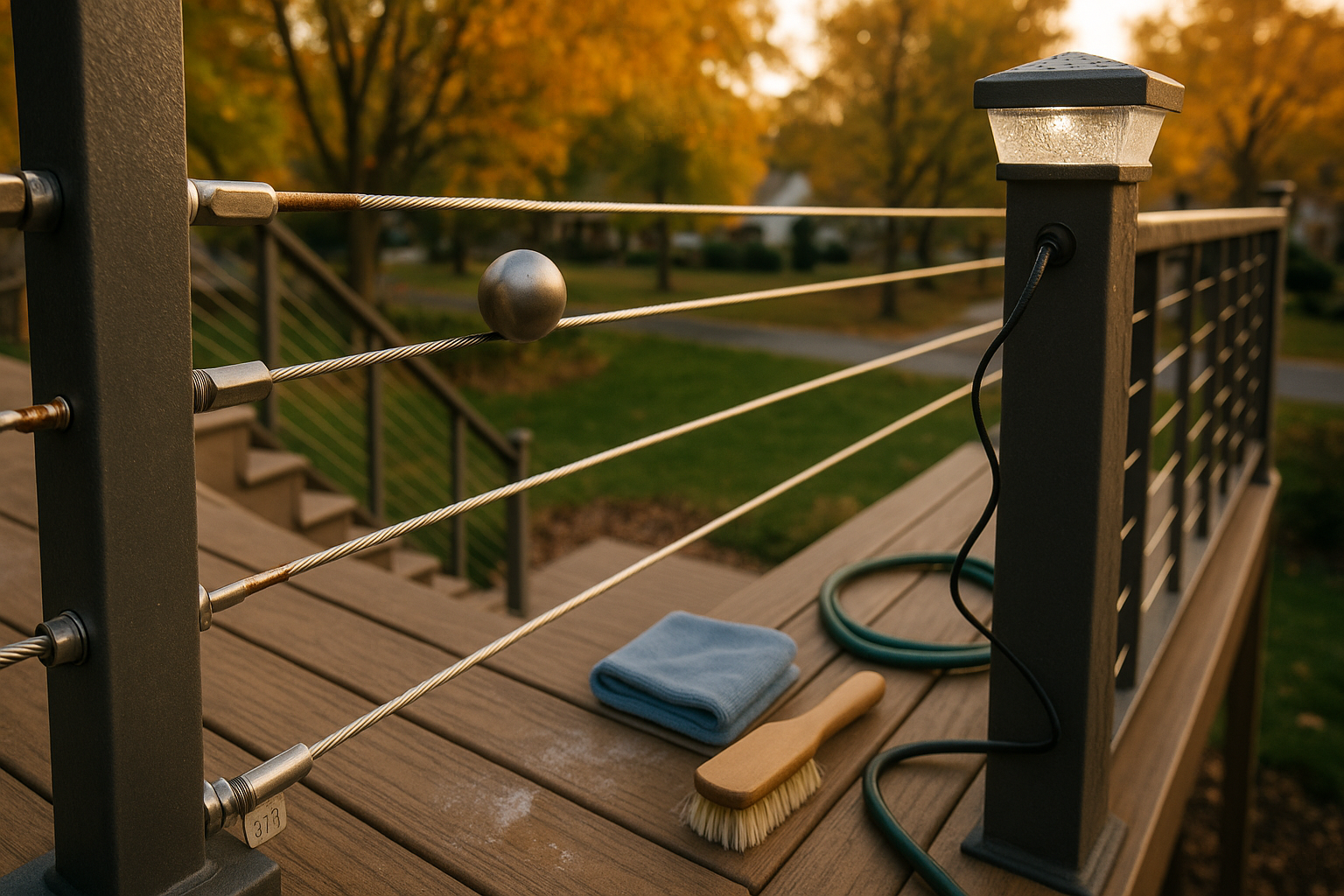
Let’s be honest about upkeep. Aluminum and composite railing? A gentle power wash in spring, maybe a wipe with mild soap if you’re picky. That’s it. Wood needs inspecting for soft spots and re-sealing every couple of years. Cedar especially wants love after a heavy snow winter. Cable systems need a tension check after the first freeze-thaw cycle—metal contracts, and a loose cable won’t pass inspection. Glass panels will show water spots if you have hard water, so factor in cleaning time or a quick squeegee habit. It’s not a big deal, but nobody’s railing stays perfect without some attention.
Getting It Done: Permits, HOA, and a Smooth Build
Most Brownsburg neighborhoods with an HOA want to see your railing plan before you start. Color, post size, and material often need a nod. The town permit process isn’t scary if you have a clear drawing and know which inspector looks for what. We handle those details—it’s part of our job as a contractor who’s been through the drill from Avon to Zionsville. Timelines usually run a couple of weeks for approvals, then installation for a typical deck might take a few days, depending on the complexity of the railing system and stair work.
If your current posts are solid, we might be able to reuse them with new rails. But we’ll test every connection because a wobbly post means a wobbly rail, and that’s a safety fail. Sometimes it’s smarter to replace posts too, especially if they show any sign of rot at the base.
Adding railing lighting—low-voltage post caps or under-rail lights—can make your deck usable after dark and help with those early winter sunsets. You can do it now or later, but we suggest integrating at least the wiring while the frame is open.
Ready to Compare Railing Options on Your Deck?
Picking a railing is one of those decisions that feels small until you’re staring at a sample in your hand, trying to imagine it in January snow and July heat. We get it. If you’re in Brownsburg, Avon, Plainfield, or anywhere nearby, let’s talk through your options in person. We’ll bring samples, check your deck structure, and spell out a line-item quote—no surprises, just a clear plan that matches what your house needs and what you’ll love living with. Grab a spot on our schedule at /#quote and we’ll come see your deck.
Thinking about your own deck or pergola?
Free in-home design consultation, 3D rendering, and a written quote — no pressure.