Last spring, my neighbor Sarah in Broad Ripple had the whole family over for a Memorial Day cookout. The burgers were on, the kids were running around, and then someone leaned against the railing by the grill. That railing gave a little wobble—not a lot, but enough to make everyone freeze. Turns out two post brackets had rusted through over the winter. She got lucky. Nobody got hurt. But she spent the next week getting a real deck safety check, and what she found made her glad she did.
If you've got a deck in Indianapolis, Carmel, Fishers, Zionsville, Westfield, Noblesville, Greenwood, Brownsburg, Avon, or Plainfield, you know the drill. Freeze-thaw cycles, spring rains, summer UV, and winter ice don't mess around. They loosen screws, rot wood, and corrode metal before you even notice. A quick once-over before you host your next barbecue could save you from a trip to the ER—or worse.
Why Indianapolis Decks Need a Regular Safety Check
Our weather is hard on decks. Winter freezes the moisture inside lumber and inside every joint. Then spring thaws it. That cycle pries posts loose and opens up cracks. Add in all the salt we track from sidewalks and roads, and your fasteners start rusting twice as fast. By the time summer rolls around, a railing that felt solid last fall might move an inch when you lean on it. That's why an annual deck safety check isn't overkill. It's the same idea as checking your smoke detectors.
Lots of decks around Indy were built in the 1990s and 2000s. They're hitting the age where railings get wobbly, stair treads crack, and hardware wears out. If you're not sure what to look for, keep reading. If you'd rather just have someone else handle it, jump to the bottom—there's a link to schedule a check.
The Quick Homeowner Scan (What to Look For)
You don't need a tool belt for this. Ten minutes, a flashlight, and maybe a screwdriver. Here's what I tell my neighbors:
- Walk around the deck and grab the railing at a few spots. Push and pull. Any movement at all? That's a red flag. A railing should feel like it's part of the house, not like it's holding on by hope.
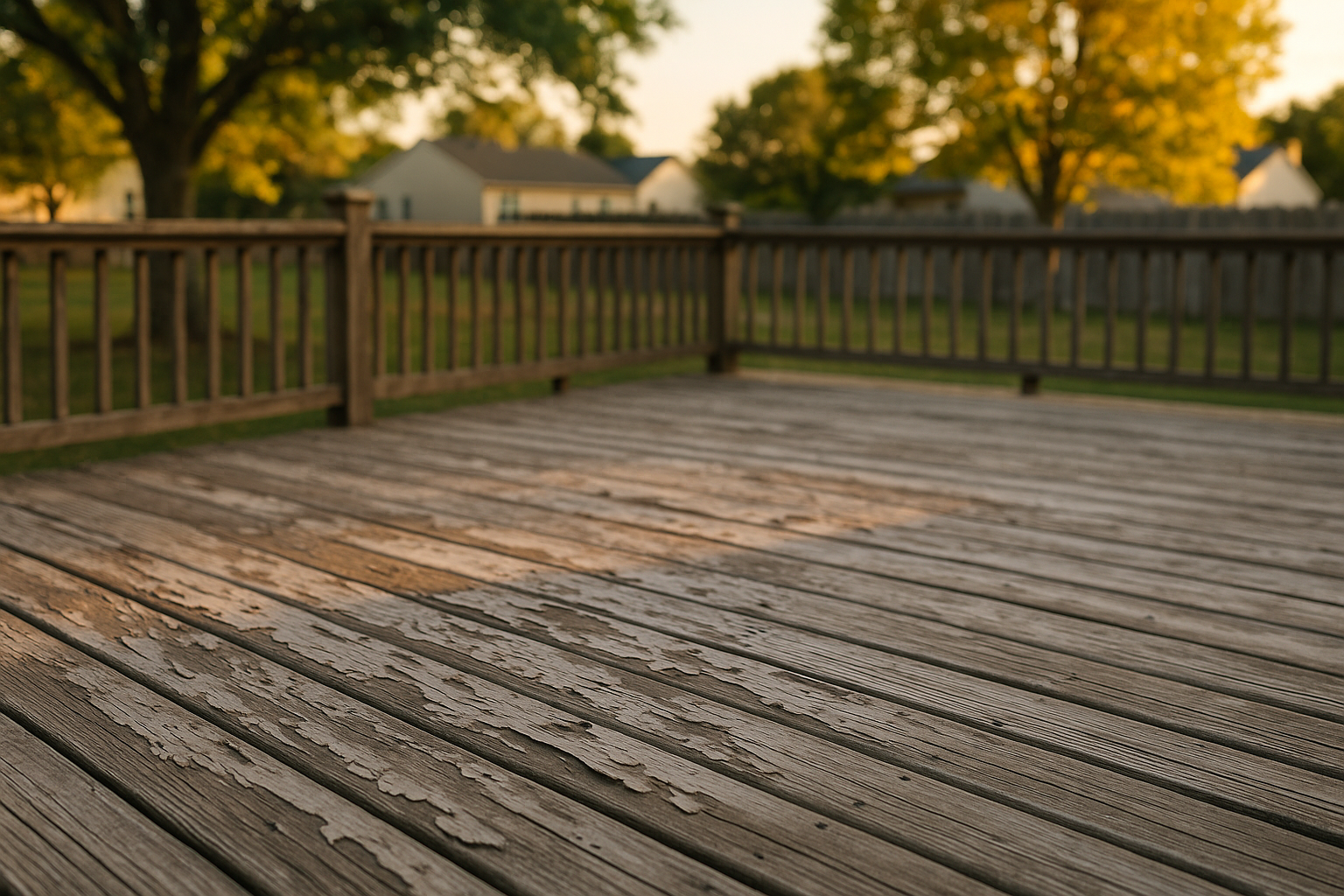
- Look at the posts where they meet the deck boards. See any dark stains, splitting, or rusty metal? Poke at the wood with a screwdriver. If it sinks in like a sponge, you've got rot.
- Check the balusters. Give a few a wiggle. If they're loose, the whole railing system is compromised. Same goes for any missing or cracked balusters.
- Walk the stairs slowly. Do the treads bounce? Are the risers all the same height? A one-inch difference might not look like much, but it's a trip hazard, especially for older folks and kids.
- Grab the handrail and run your hand along it. It should be continuous from top to bottom and easy to grip. If it ends abruptly or feels wobbly, that's a fail.
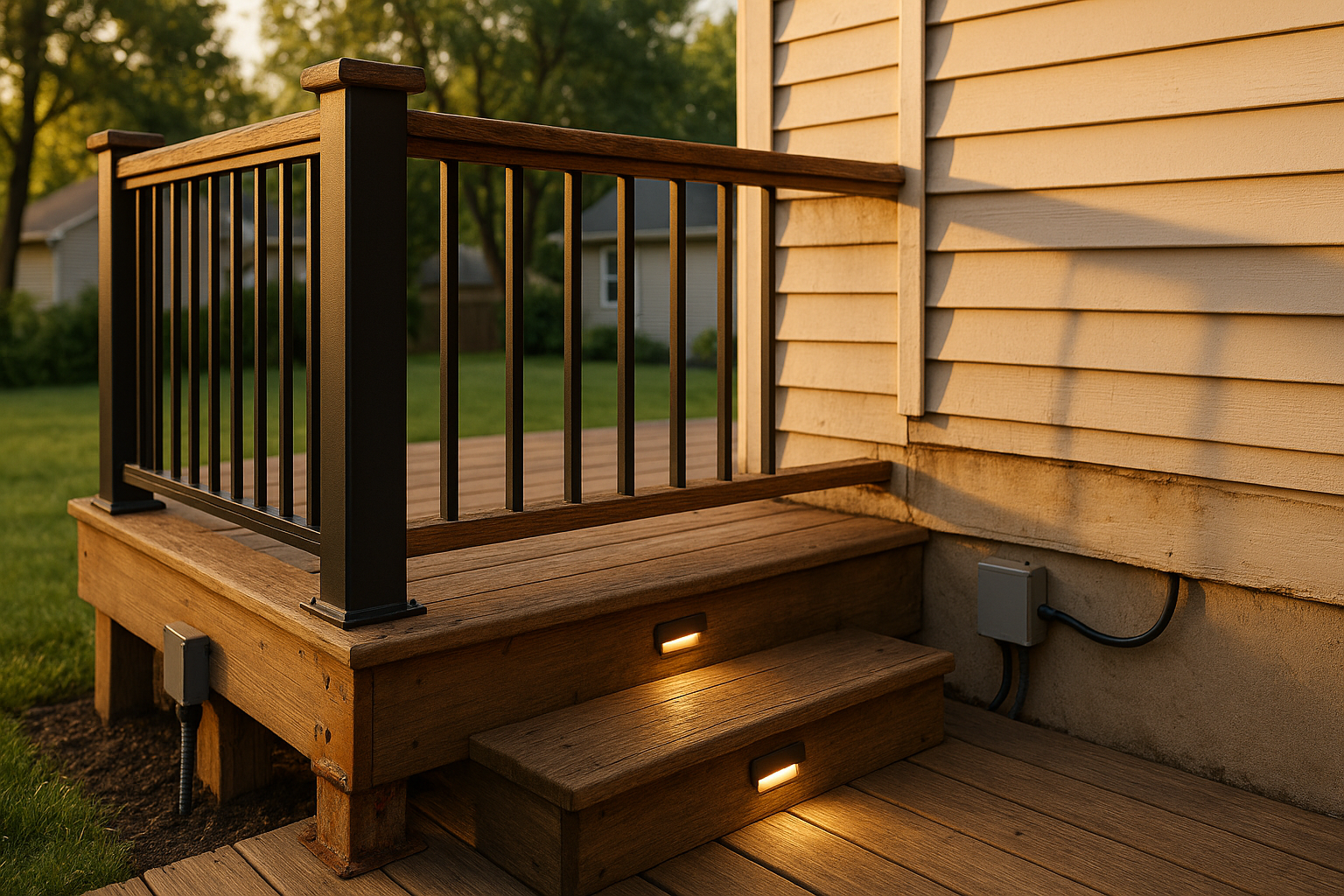
- After sunset, turn on any deck lights. Are the steps clearly lit? If not, you're asking for a fall.
That's the basic deck safety checklist. If you find anything weird, don't ignore it. A railing that wobbles today might let go under the weight of two adults leaning on it.
What a Pro Looks At: Railings, Stairs, and Connections
We're a railing contractor, among other things, so we see a lot of rails that homeowners thought were fine. The quick scan catches the obvious stuff. But a deeper check looks at what's underneath.
For railings, we check the post bases, the brackets, and the way the top rail connects. Indiana code (same as IRC) says guardrails need to be at least 36 inches high for residential decks. Baluster spacing should be less than 4 inches apart so a kid can't squeeze through. A lot of older decks don't meet that. If you've got little ones or grandkids coming over, that's a big deal. We also look at material. Aluminum railings hold up better against Indy's wet winters than wood. Composite railings are good too, but they can still have weak connections if the hardware is cheap. We like powder-coated aluminum with stainless steel fasteners.
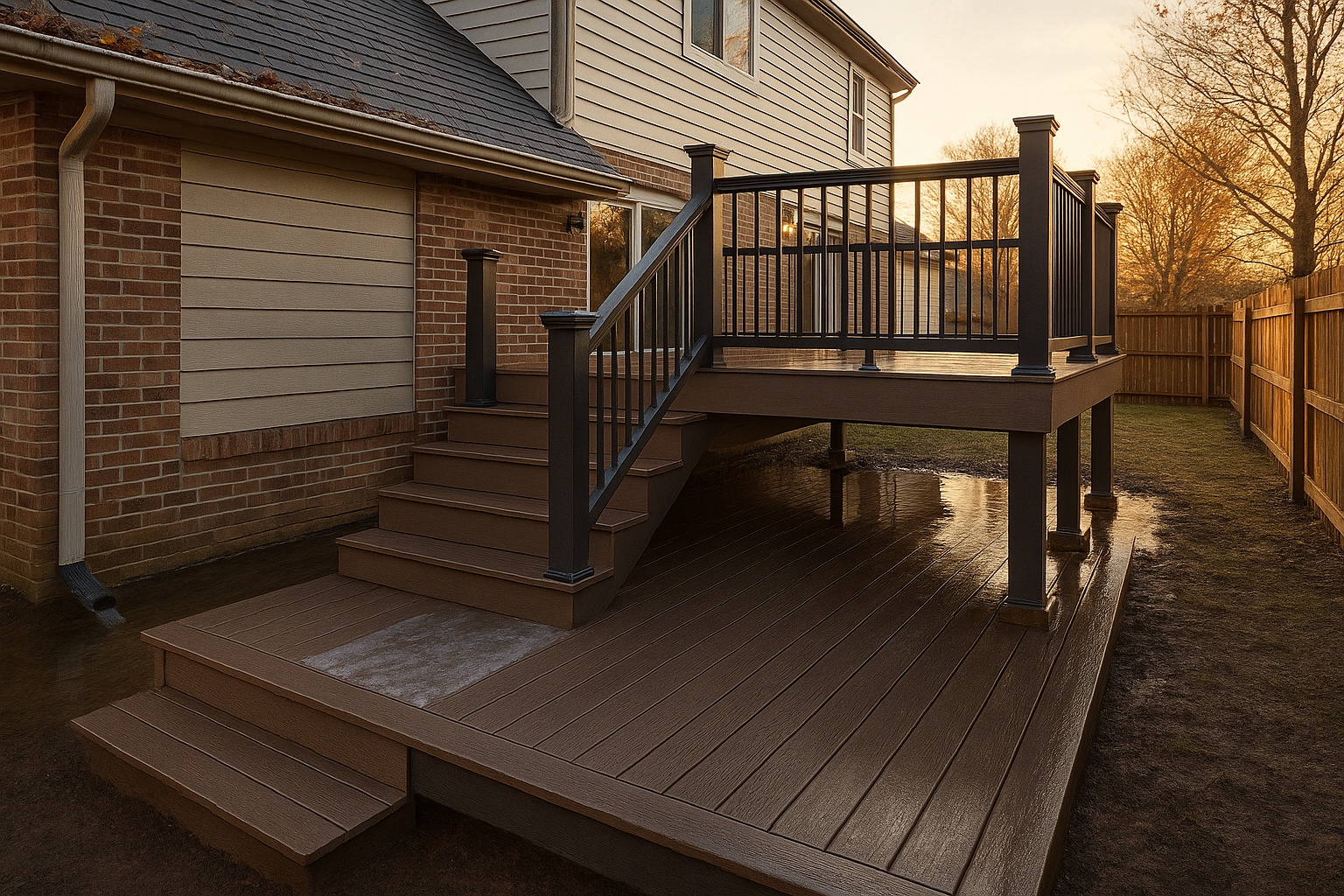
Stairs are where most falls happen. We check the stringers for rot, the tread depth and riser height for consistency, and the handrail code compliance. Handrails need to be graspable—not a 2x4 nailed flat—and they need to return into a wall or post at the ends so a sleeve doesn't catch. If your stairs have open sides, you need a guardrail there too.
We also check the connection between the deck and the house. That ledger board, if it wasn't flashed right, will rot and pull away. That's a structural issue, not just a safety one. If you've got gutters that dump water right onto the deck, check out our post on deck drainage and downspout conflicts for more about that.
As a licensed contractor, we're also allowed to pull permits and do the work to code. Many railing and stair replacements in Indianapolis need a permit. It sounds like a hassle, but it's not that bad—we handle it. And it means you won't have a problem if you ever sell the house.
Lighting and the Forgotten Danger of Dark Steps
Most people don't think about deck lighting as a safety feature. But a dark step is a broken ankle waiting to happen. Every year we hear about someone in Fishers or Carmel who missed a step after a late dinner and ended up in the ER. Low-voltage stair lights are cheap insurance. They run on 12V, so they're safe to touch, and they don't jack up your electric bill. We usually recommend LED step lights with a warm color temperature—bright enough to see, not so bright they blind you or attract every bug in Hamilton County.
When we install lighting, we use wet-location rated fixtures and protect the transformer and wiring in a weatherproof box. If your outdoor outlets aren't GFCI protected, that's a separate issue—maybe a job for an electrician, but we can help coordinate.
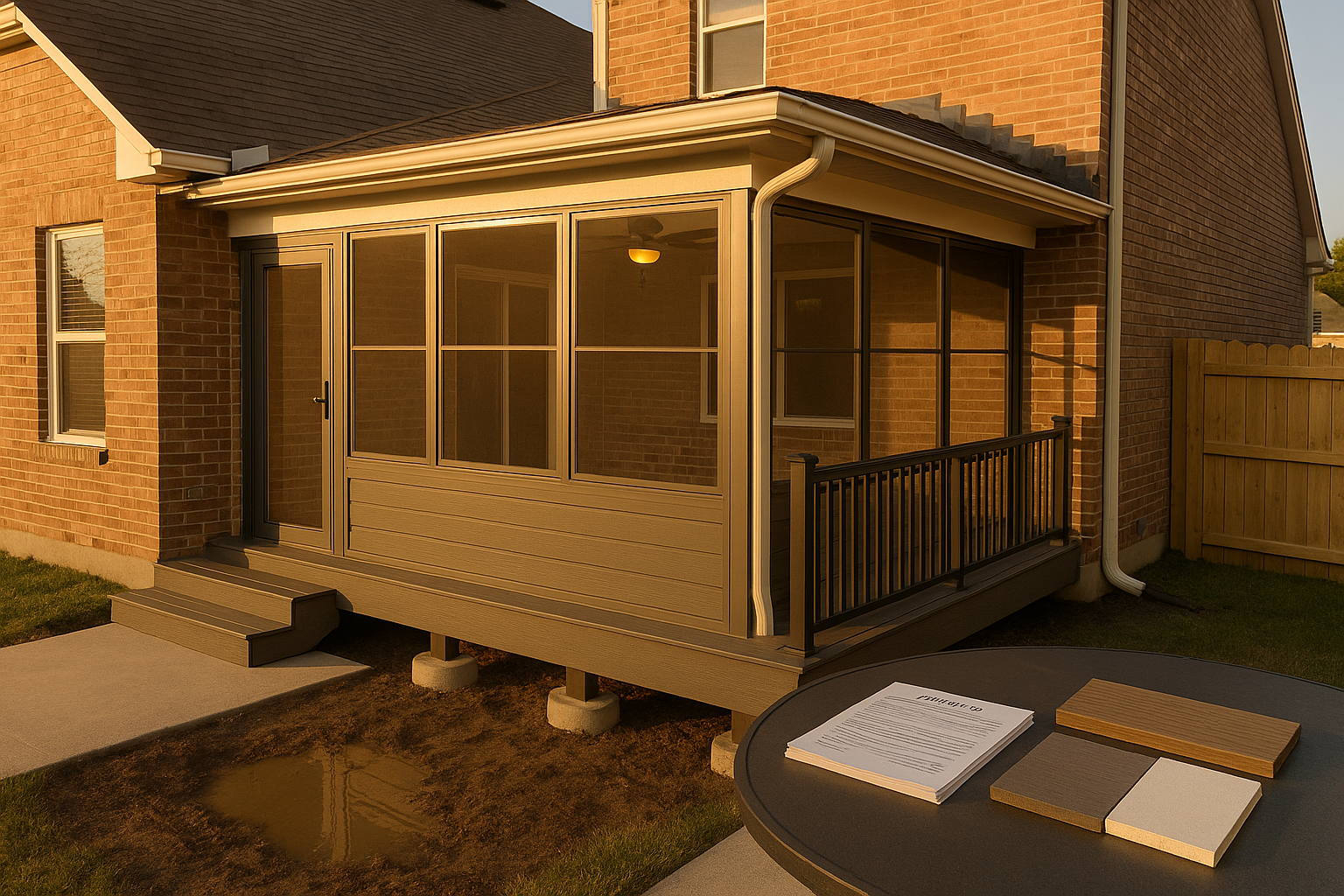
If you have a patio enclosure attached to the deck, we'll check those attachment points too. That's a common place for water to collect and rot to start. And if your deck is near a fence, take a look at those fence posts. A leaning fence can fall onto a deck railing and cause damage. We do fence repairs as well, so we can handle both at once.
When to Call a Deck Pro (and When to DIY)
You can tighten a loose screw or replace a burned-out bulb. But if you find any of these, call someone who does this every day:
- A railing that moves more than a quarter inch when you push on it.
- Stairs that bounce or feel soft underfoot.
- Any wood that you can push a screwdriver into easily.
- Rusted bolts, brackets, or joist hangers.
- A handrail that's wobbly or not continuous.
- Dark stains around post bases or where the deck meets the house.
These are not DIY fixes. They need someone who understands load paths, code, and materials. And yes, it might cost a few hundred to a few thousand dollars depending on what's wrong. But compare that to a hospital bill or a lawsuit. If you want a ballpark, our post on annual deck maintenance cost in Indiana breaks down typical repair budgets.
Also, think about timing. Winter and early spring are actually great times to get a deck safety check done. Contractors are less busy, materials are sometimes cheaper, and you'll be ready the moment the weather turns nice. Low-voltage lighting can be installed year-round, even if there's snow on the ground.
How DeckPros Handles a Safety Check
We keep it simple. You click the link below, tell us a little about your deck, and we'll come out and do a full deck safety check focused on railings, stairs, and lighting. We take photos, write up what we find, and give you options with real prices. No pressure, no upselling. Just a clear plan.
If you're in Indianapolis or any of the surrounding areas—Carmel, Fishers, Zionsville, Westfield, Noblesville, Greenwood, Brownsburg, Avon, Plainfield—we'd love to help. You can also read more on our blog if you're still in research mode.
But if you're hosting soon and you haven't checked your railing lately, do the ten-minute scan. Then call us. Because a deck is for making memories, not for testing your homeowner's insurance.
Schedule your deck safety check — we'll come out, take a look, and give you a straight answer.
Thinking about your own deck or pergola?
Free in-home design consultation, 3D rendering, and a written quote — no pressure.