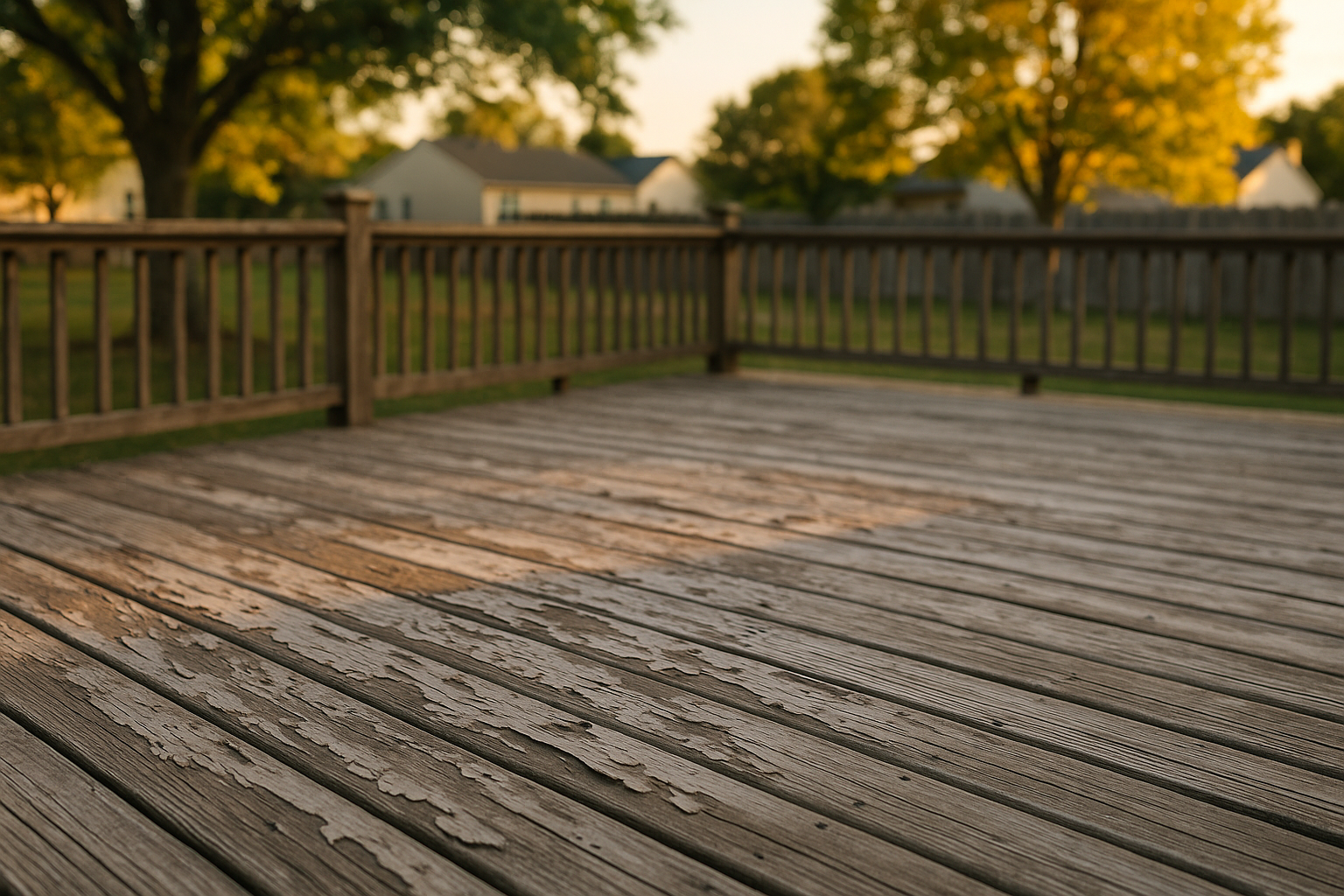
Last spring a guy in Carmel called me about his cedar deck. It looked like driftwood after two Indiana winters. The stain was peeling in sheets, and one board had cupped so bad it caught his daughter's bike tire. He thought he'd done everything right—stained it two years ago, kept it swept. But he hadn't accounted for the south-facing sun and a downspout that dumped water right onto the corner post. When I told him what a proper deck maintenance cost per year would be, he winced. Then he saw the numbers for what they were: way cheaper than replacing the whole deck every decade.
What Actually Drives Your Deck Maintenance Cost
Not every deck needs the same care. A 700-square-foot deck with multiple levels, stairs, built-in benches, and a privacy screen has a lot more surface area than a simple 250-square-foot platform. More faces to clean, more cut-ins to stain. Sun exposure matters a ton too. A west-facing deck in Fishers or Zionsville gets hammered by afternoon UV, which breaks down finishes faster than a shaded spot under big oaks in Meridian-Kessler. Prior coatings matter as well. If someone slapped a cheap film-forming sealer on there three years ago, you'll pay more now to strip or sand it off. Drainage and access are the wild cards. Tight side yards in older neighborhoods like Broad Ripple mean extra hose runs and careful protection for landscaping.
The Numbers: A Realistic Annual Budget
So what does a deck maintenance cost per year on a Western Red Cedar deck in Indianapolis? Forget the national averages. Around here, with our humidity and freeze-thaw cycles, a realistic range for professional maintenance is about $1.50 to $3.50 per square foot per year. For a 300- to 500-square-foot deck, that's roughly $450 to $1,750 a year. That includes your light wash and inspection every year, plus the bigger clean, brighten, and re-stain every 18 to 36 months. If your deck faces south or west, you'll likely need that recoat every 18 to 24 months, which pushes you toward the higher end.
Here's how the line items usually break down. An annual wash runs $0.50 to $1.25 per square foot. The full clean, brighten, and stain cycle is $2.50 to $5.00 per square foot. If you need spot sanding before recoating (peeling areas, sun damage), add $1.00 to $2.00 per square foot. Algae or mildew remediation? Add $0.25 to $0.75 per square foot. Railings are often priced separately because balusters and posts take time. More on that in a minute.
Indiana Weather: Why Your Deck Fades Faster Here
Our climate loves to beat up cedar. Humid summers mean mildew creeps in fast, especially on north-facing or heavily shaded decks in Carmel or Greenwood. Strong UV in late spring and summer breaks down lignin—the stuff that holds wood fibers together—so boards gray and crack. Then winter hits with freeze-thaw cycles that split open any tiny check in the wood. Pollen waves in spring and leaf litter from oaks and maples in fall leave tannin stains and organic grime. All that means you can't just stain every five years and forget it. A penetrating semi-transparent oil works way better here than a thick film finish that peels. The oil soaks in and moves with the wood through temperature swings.
Timing helps too. The best windows for deck work in Indianapolis are April through June and September through October. Wood needs to be dry and the temperatures moderate. If you wait until July's humidity or November's cold, you're asking for a blotchy finish. We also see that planned lead time matters—scheduling in early spring gets you on the books before the rush. Check out our guide on deck material lead times for more on planning ahead.
Don't Forget the Details: Railings, Fences, and Enclosures
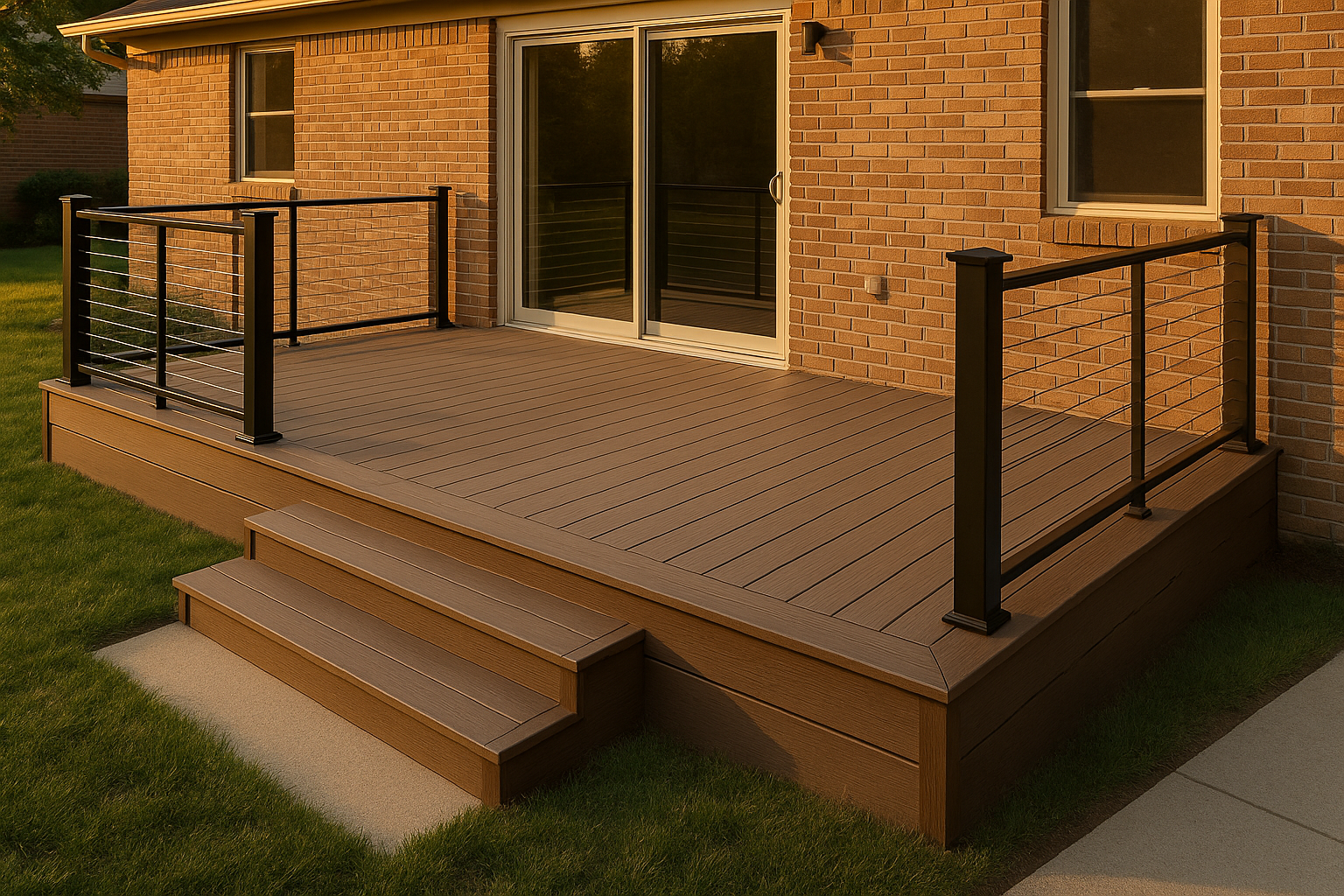
Railings are a big part of your deck's look and your maintenance budget. As a railing contractor, we charge separately for baluster and post work because it's fiddly. Each spindle gets coated on all sides, and cut-ins around brackets eat time. If you've got cable railing, there's also tension checking. A loose cable is a safety issue and makes the whole deck feel worn. We wrote about cable railing tension and maintenance here.
If you have a fence right next to your deck, that's another surface fighting the same mildew. A lot of our deck maintenance visits turn into fence touch-ups too, because the same green crud on your deck boards climbs right up the pickets. We're deck contractors but also fence contractors, so we can knock both out in one trip. No need to hire two crews.
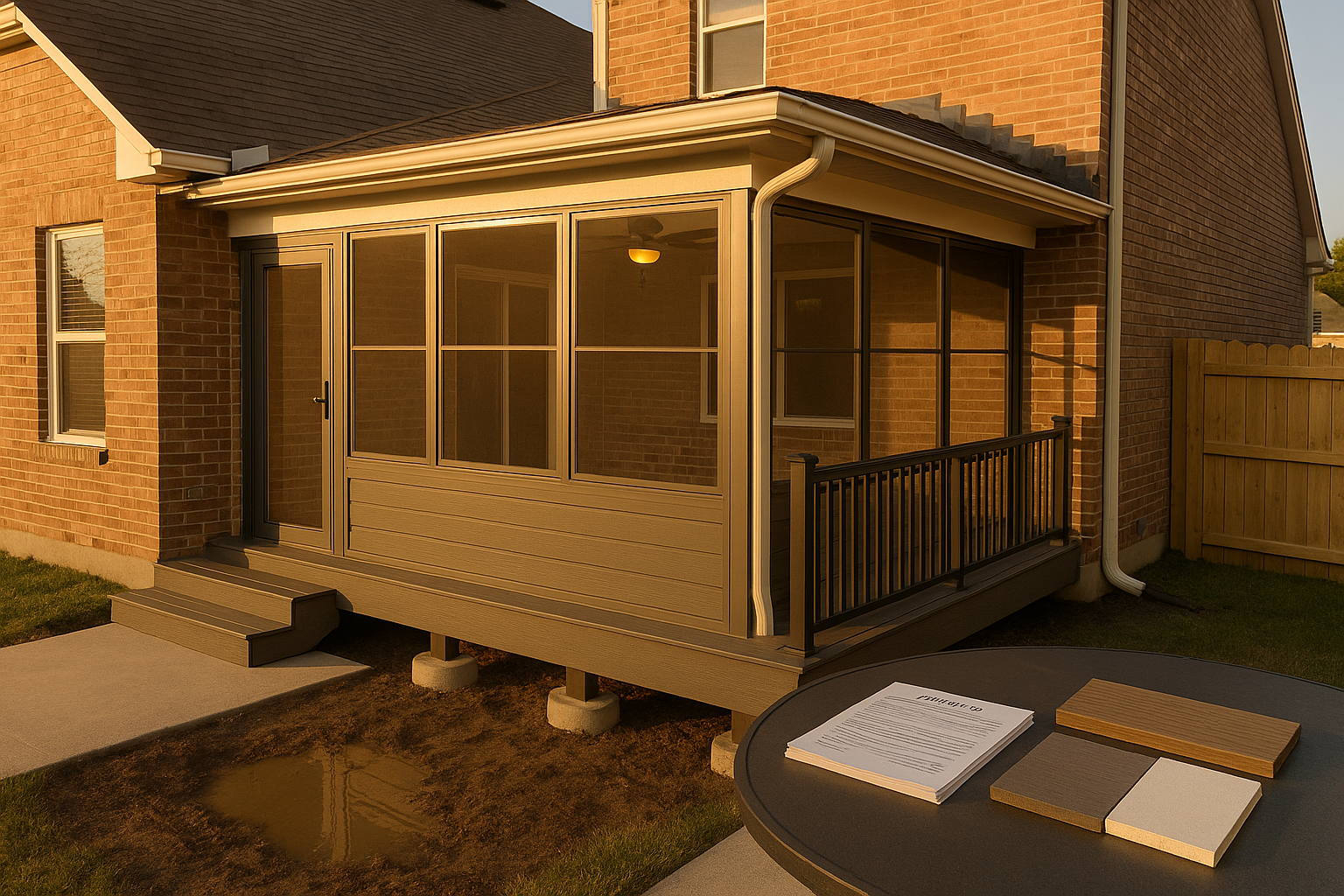
Sometimes there's a patio enclosure or screened porch attached to the deck. That changes the microclimate. Under the roof, less direct sun means more trapped moisture and mildew. As a patio enclosure supplier, we know how that covered section dries differently and needs a different finish schedule. We'll tell you if you should use a clear oil there instead of a tinted one, or add a little extra air gap.
Water, Pressure Washers, and Other Things That Bite You
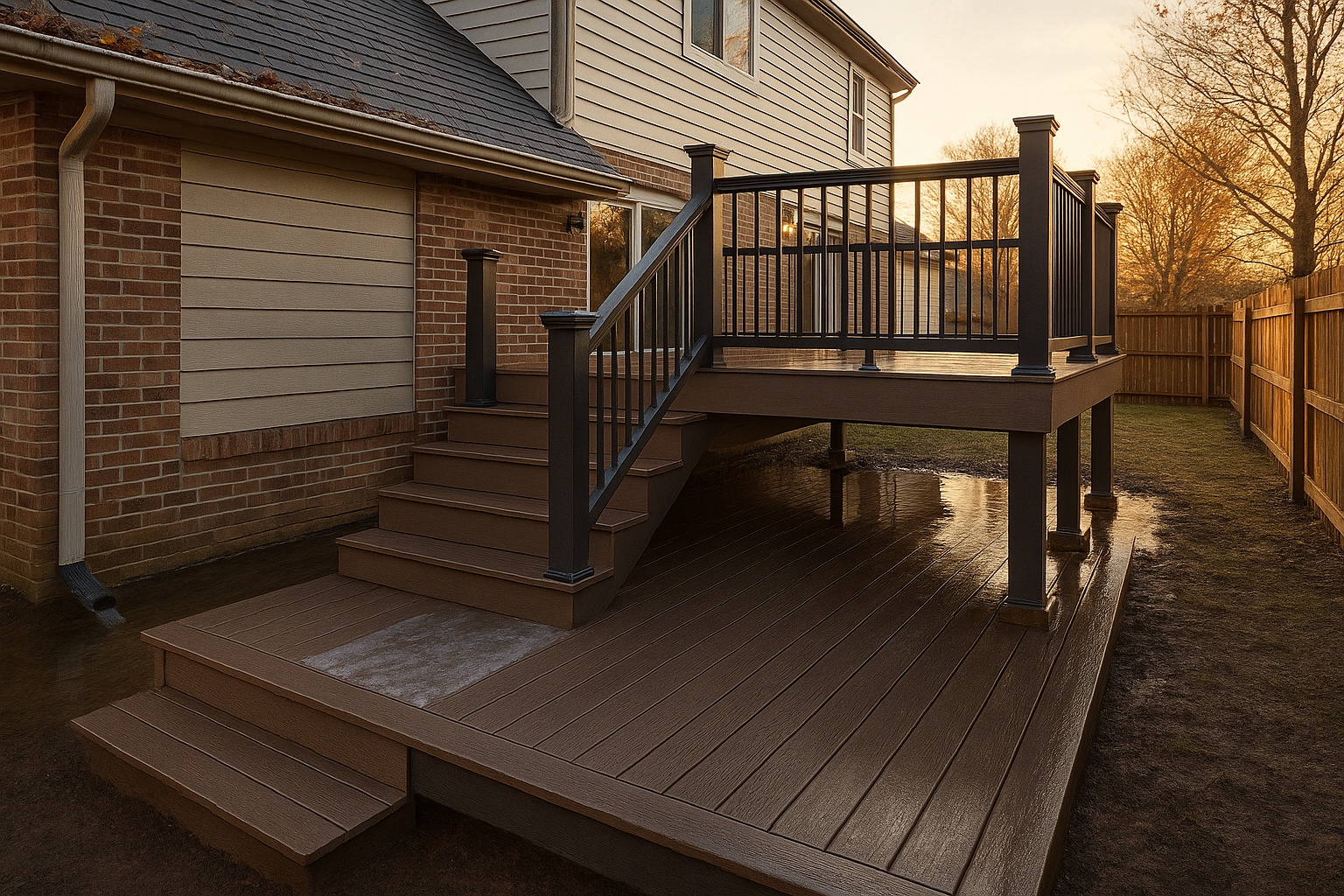
One of the biggest cost drivers we see is bad drainage. Downspouts that dump water onto or under a deck will destroy finishes and rot framing. If a gutter drains right onto your deck boards, that's a constant source of moisture. Diverting water away with splash guards or a downspout extension can save you hundreds over time. We have a whole post about deck drainage and downspout conflicts.
And please, don't pressure wash your cedar deck yourself. We get it—the pressure washer is fun. But the high-pressure stream tears up soft cedar fibers. You end up with fuzzy boards and a blotchy stain. A pro uses low-pressure washing, the right brighteners, and lets the wood dry to the right moisture content before oiling. The deck maintenance cost per year might feel like an extra bill, but doing it wrong means redoing it sooner and paying more in the long run. Peeling stain isn't a sign that stain is worthless—it's a sign of poor prep or the wrong product for Indiana's climate.
The Cedar vs Composite Question
Homeowners often ask us if they should just rip out the cedar and go composite. Composite needs less annual upkeep, no question. Over 10 years, cedar will cost more to maintain. But cedar has a look and a feel that composite can't match. It stays cooler under bare feet, and many Indy homeowners love the natural grain. If you bought a house with a cedar deck in a neighborhood like Irvington or downtown Zionsville, you probably want to keep that character. Consistent care preserves the appearance and the home value. It's not throwing money away—it's protecting an asset.
Get a Written Plan—Not a Guess
The best way to know your real deck maintenance cost per year is to have someone look at your specific deck. At DeckPros, we start with a site assessment. We check moisture levels, test the old finish, look at sun exposure, and inspect framing and fasteners. Then we give you a written scope with line-item pricing—no vague "maintenance package" nonsense. You'll see exactly what we recommend, when we recommend doing it, and what it costs. We can set up a scheduled maintenance plan so you never have to remember. No pressure, just a clear answer.
If you're in Indianapolis, Carmel, Fishers, Zionsville, Westfield, Noblesville, Greenwood, Brownsburg, Avon, or Plainfield, get in touch. We'll come out, walk your deck, and put together a plan that fits your budget and your timeline. Request a deck assessment here. Or browse more deck articles on our blog. You'll get straight talk, no upsells.
Thinking about your own deck or pergola?
Free in-home design consultation, 3D rendering, and a written quote — no pressure.