Last spring, a friend in Fishers called me over to look at his deck. He'd put in a beautiful cable railing system two years back. Now the stainless cables looked dull, with brownish stains near the fittings. He thought stainless steel was indestructible. He paid for a full cable replacement because he skipped the small stuff. Cable railing maintenance is a real thing—and ignoring it costs more than you think.
If you've got cable railings on a deck, balcony, or stair run in Indy, here's what nobody tells you about keeping them safe, clean, and tight.
What Cable Railing Maintenance Actually Includes
Most folks think cable railing only needs a wipe now and then. But real maintenance is a short list of checks. You clean the stainless cables and powder-coated posts. You inspect every strand, fitting, and end post. You check tension so cables don't sag or deflect too much. You look for tea staining and surface rust. And if you have LED lights built into posts or caps, you test those too.
As a deck builder and contractor, we see a lot of decks where the railing was an afterthought. We also handle fence work, and the same stainless cable care applies to cable fences. If you have a patio enclosure with cable rails, same routine. Any railing contractor will tell you: maintenance is part of owning a cable system, not a one-time install.
A Seasonal Schedule for Indianapolis Decks
Indy weather throws everything at outdoor metal. Freeze-thaw cycles loosen hardware. Road salt from I-465 and side streets floats in the air and settles on your deck. Spring pollen and summer humidity leave a film that holds moisture against the stainless. Leaf tannins from those big maples in Carmel and Meridian-Kessler can discolor posts too.
Here's a plan that works around here:
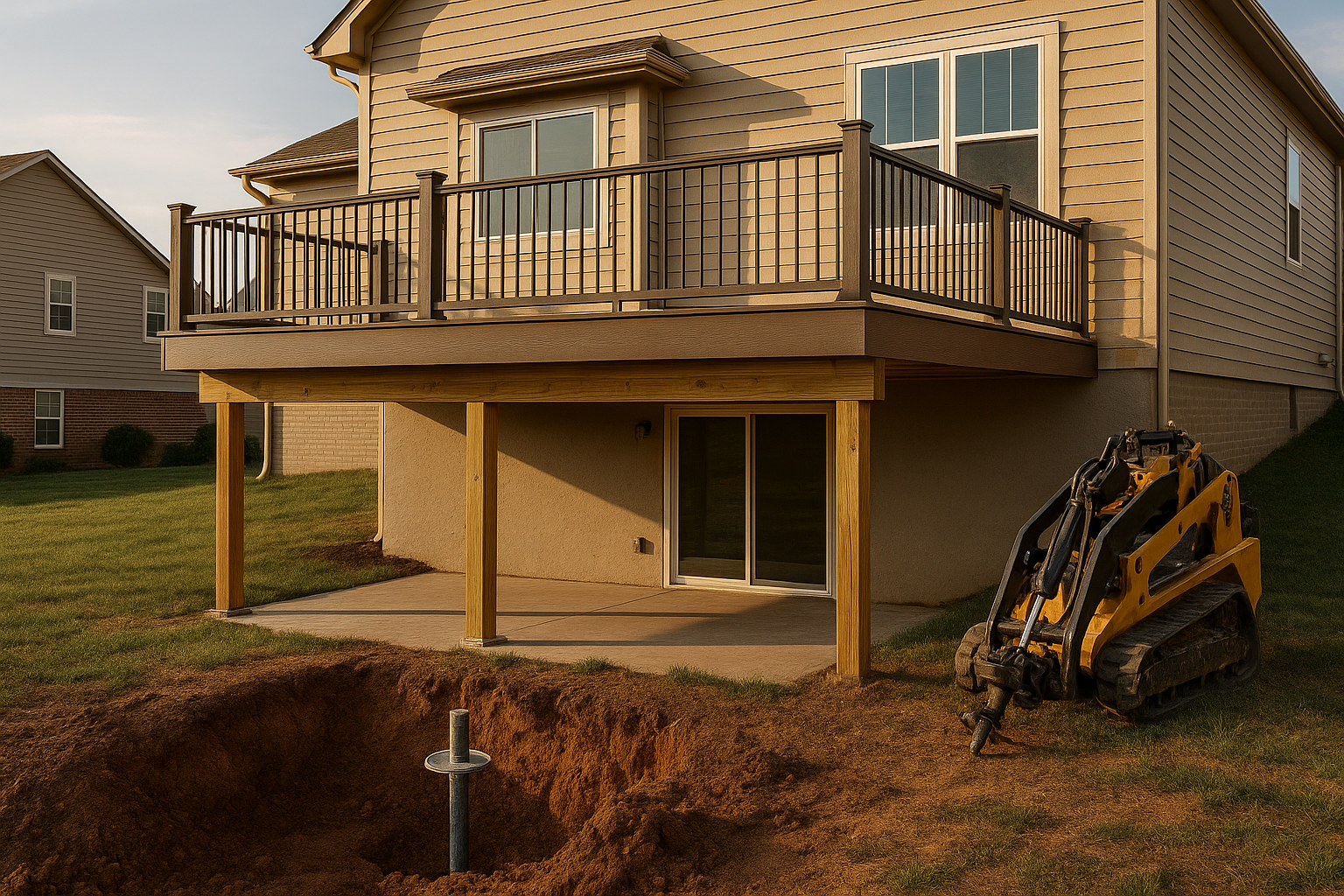
Spring (April-May): Deep clean everything. Rinse off winter salt and pollen. Check every cable and fitting. Re-tension as needed. This is also a good time to inspect the deck framing under the posts. If the wood moved over winter, your railing posts may have shifted. See our guide on deck framing inspection for what to look for.
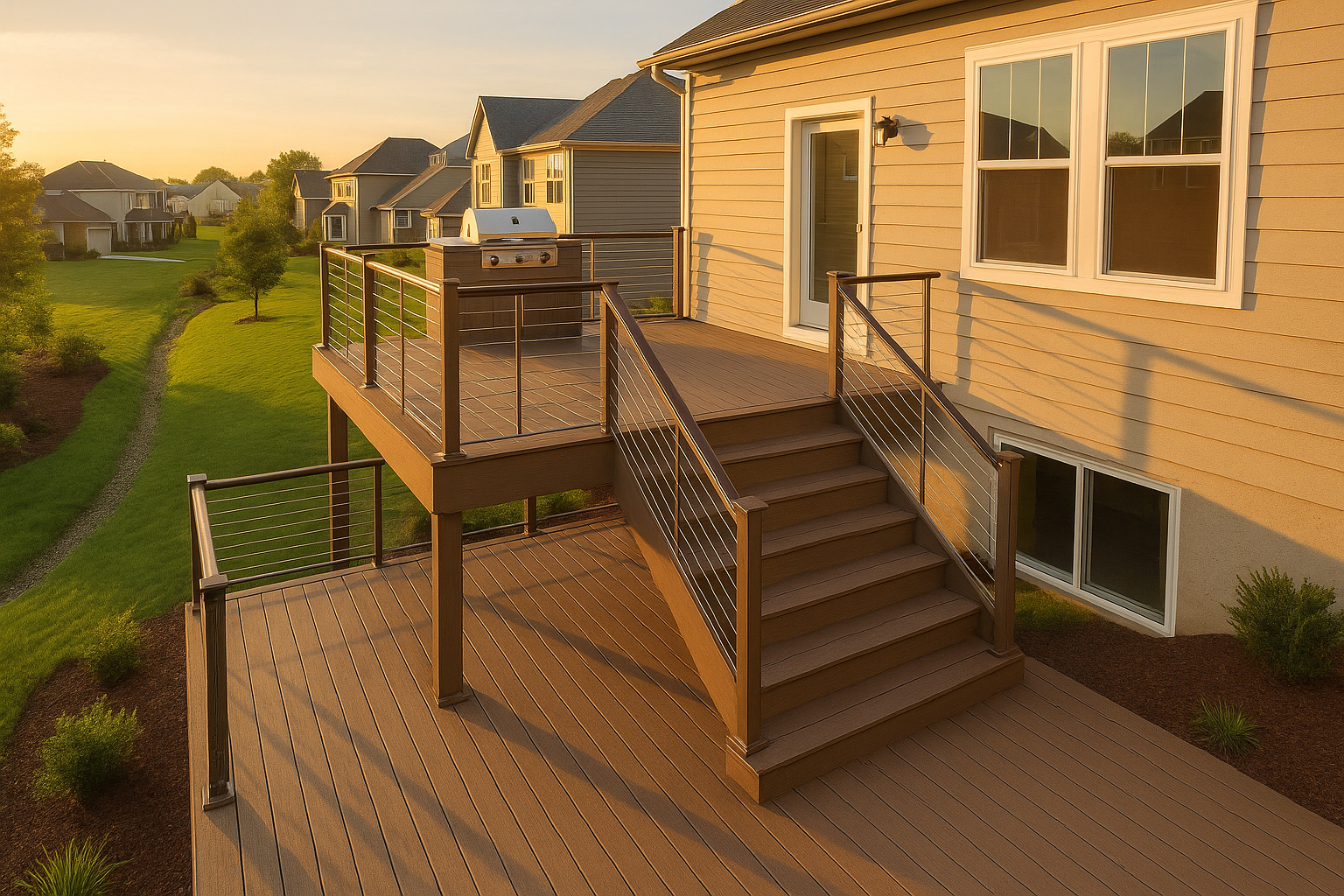
Summer (July-August): Light wash after heavy pollen or bird droppings. Re-check tension on hot days—cables expand and can go slightly loose. If you have stairs, check those more often. Vibration from foot traffic loosens turnbuckles fast. Our article on deck stairs to grade vs landing design covers why stair runs need extra attention.
Fall (October-November): Clean again before winter. Remove leaf tannins and any sap. Apply a manufacturer-approved stainless protectant if you want. Then winterize your composite deck and railing. A pre-winter clean makes spring a lot easier and reduces salt staining.
Winter (December-March): You can't do much, but if we get a warm day, a quick rinse helps. Avoid de-icing salts directly on the deck. Shovel snow off the rail top lightly—heavy snow can load up the cables and posts.
Safe Cleaning: No Pressure Washers, No Bleach
The biggest mistake I hear from homeowners: "I'll just pressure wash it." Don't. High pressure can scratch stainless, drive contaminants into fittings, and strip powder coat. It also forces water into LED fixtures. The same goes for bleach, muriatic acid, or any chlorine-heavy cleaner. Those cause pitting on stainless and ruin the finish.
How to clean cable railing the right way:
- Mix a few drops of pH-neutral dish soap with warm water.
- Use a microfiber cloth or a soft nylon brush.
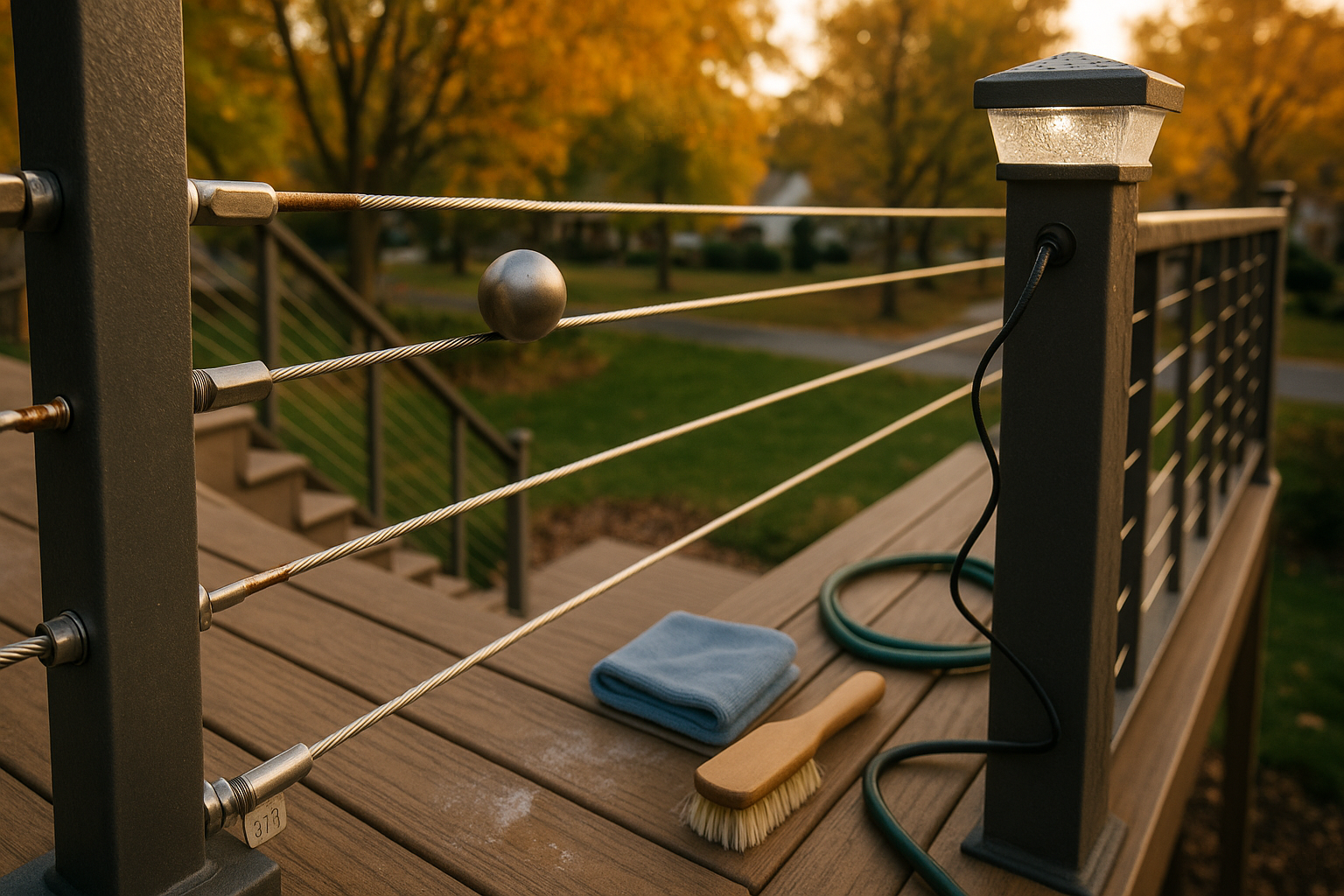
- Wipe each cable, fitting, and post. For tea staining (that brownish tint from road salt), use a non-abrasive stainless steel cleaner made for marine or architectural use. Apply with a soft cloth, rub gently, then rinse.
- Rinse with a garden hose on low pressure. Dry with a clean microfiber towel to avoid water spots.
- Never use steel wool, abrasive pads, or metal polishes not approved for stainless. They leave iron particles that rust.
For Indianapolis, 316 marine-grade stainless beats 304. 316 has molybdenum, which resists chlorides from road salt and pool splash. If your deck is near Geist Reservoir or a chlorine pool, 316 is worth the extra cost. Pair it with powder-coated aluminum posts and plastic isolation washers. That stops galvanic corrosion between different metals.
Tension Checks and Hardware: Don't Let Cables Go Loose
Cables stretch over time. Temperature changes, wood movement, and foot traffic all loosen them. A little sag might not look bad, but code says a 4-inch sphere shouldn't pass between cables. If your cables deflect too much, it's a safety hazard and a code violation.
Check tension monthly during heavy use months. Grab a cable mid-span and push. It should feel tight with very little give. Look at the turnbuckles—are they tight? Any seized threads? If a turnbuckle won't turn, don't force it. You'll strip the threads. A little penetrating oil can help, but if it's frozen, call a pro.
Post movement is another red flag. If an end post leans or the rail top wiggles, the blocking inside the deck framing may be failing. That's not a railing issue; that's structural. See our post on steel vs aluminum deck framing to understand why solid framing matters for railing anchors.
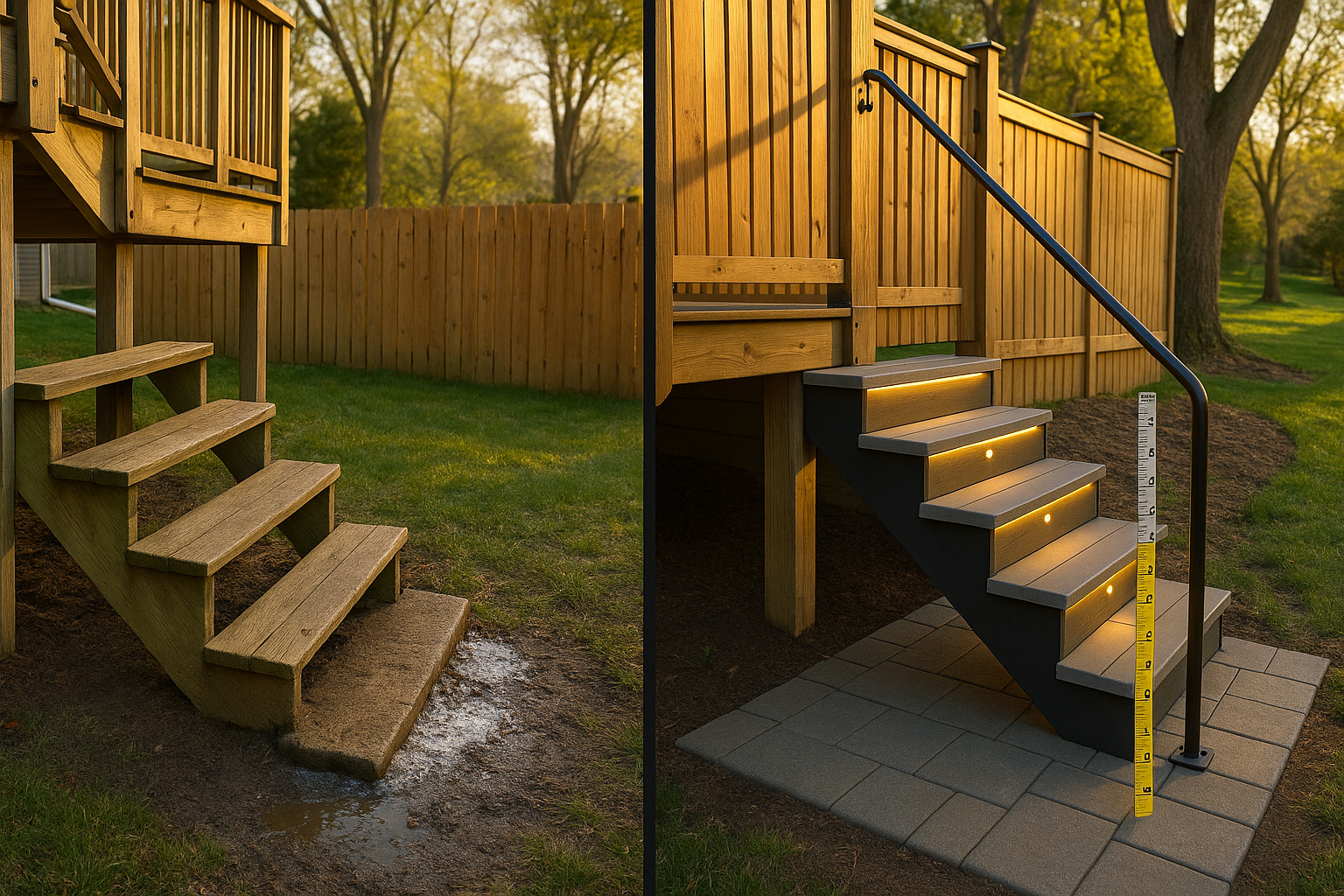
Stairs are the worst. Every step sends vibration up the posts. Check stair cable runs every two weeks during summer. I've seen stair cables so loose they touched the treads. That's not just ugly—it's a trip hazard.
Lighting and Corrosion: The Forgotten Parts
Integrated LED post caps and step lights are common on premium decks in Carmel and Zionsville. But they need care too. Dirt on the lens reduces light output. Moisture inside the fixture causes flickering or failure.
Once a month, wipe lens covers with a damp cloth. Check the transformer—make sure it's plugged in and the GFCI isn't tripped. Inspect low-voltage connections for corrosion. Look for drip loops where water can run off the wire instead of into the connector. If a junction box looks wet or corroded, kill the power and reseal it with dielectric grease.
For corrosion on stainless, the best defense is regular rinsing. After a big storm or a week of road salt, hose off the cables. If you see light tea staining, clean it right away. The longer it sits, the harder it is to remove. Some folks apply a light protective film after cleaning. Use only a manufacturer-approved product. The wrong wax or oil can attract dirt and make things worse.
DIY vs. Calling a Pro
You can handle routine washing and light tension checks. But call a specialist if:
- Multiple cables need re-tensioning and you can't get them uniform.
- Turnbuckles are seized or stripped.
- Any cable strand is frayed or broken. One broken strand is a warning—replace the cable and inspect neighbors.
- A post is moving or the rail feels loose.
- You see pitting or deep rust on fittings.
- Your LED lights keep tripping the GFCI.
A pro tune-up includes documenting current conditions, adjusting tension to code, cleaning and protecting the stainless, and setting a care plan for your specific deck. It's usually a couple hundred dollars and saves you from a thousand-dollar cable replacement later.
If your cables look tired or you haven't checked tension since last year, give DeckPros a call. We work all over Indianapolis, Carmel, Fishers, Zionsville, Westfield, Noblesville, Greenwood, Brownsburg, Avon, and Plainfield. We'll come out, do a safety and maintenance tune-up, and give you an itemized quote. You can request a free quote here or read more on our blog.
Small maintenance now beats a big repair later. Your deck will thank you.
Thinking about your own deck or pergola?
Free in-home design consultation, 3D rendering, and a written quote — no pressure.