Dave in Westfield called me last March, mad as a hornet. "I bought a composite deck because it was supposed to be no-maintenance," he said. "Now it looks like a teenager took a key to it, and the boards are popping up at the corners." He wasn't wrong about the scratches — they came from a metal shovel he used after the third ice storm. And the lifting? That happens when water gets under the boards and freezes, over and over. Composite decking is tough, but Indianapolis winters love to stress-test things. The good news? A couple of hours in October or November can save you from Dave's spring headache. Here's how to winterize composite deck the right way.
Why Your Composite Deck Needs a Winter Routine
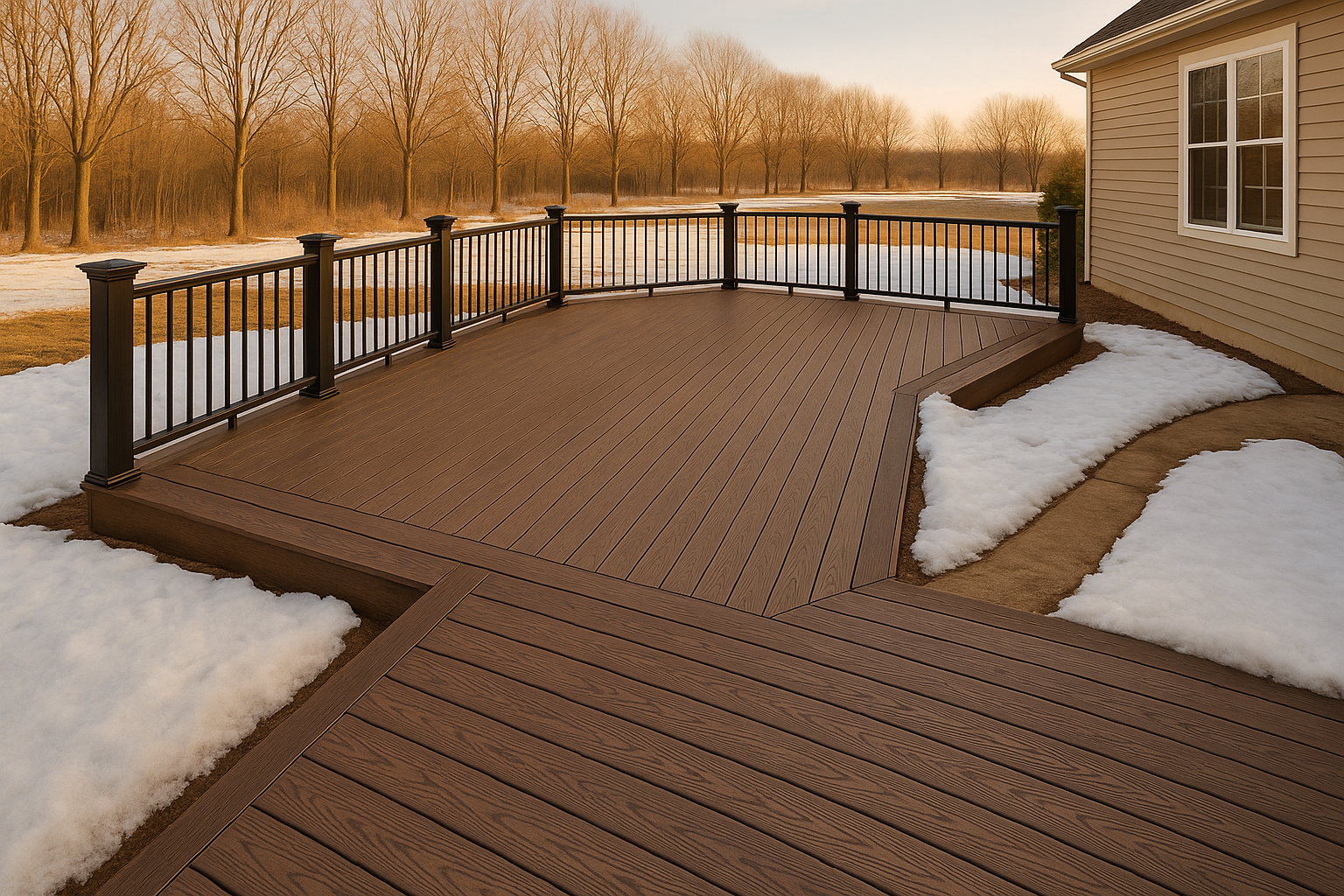
You might think composite decks don't need any care. That's mostly true in the summer. But winter in Central Indiana is a different animal. We get freeze-thaw swings every couple of weeks. Snow melts in the afternoon, then refreezes at night. Road salt from your driveway gets tracked onto the deck. Leaves from mature trees in Broad Ripple or Meridian-Kessler pile up in the gaps and hold moisture. All of that stress can cause boards to shift, fasteners to loosen, and stains to set. Composite is low-maintenance, not no-maintenance. And remember: the frame underneath is still wood. A simple winterize composite deck checklist can keep things solid.
Clean It Now, Not Later
Before the first snow, give the deck a real clean. Blow off leaves and debris. Use a plastic scraper to get crud out of the gaps between boards. If there are leaf stains already, wash with a composite-approved cleaner. Stay away from chlorine bleach. It can discolor the cap. Also skip the wire brush and the pressure washer with a narrow tip. A wide fan tip on low pressure might be okay, but check your board manufacturer's guidelines. For leaf removal tips, we wrote a whole post on preventing fall leaf stains on decks. Do this now so you don't have to fight tannin stains next spring. The goal is to remove organic matter that traps moisture and feeds mildew during thaw cycles.
Snow and Ice: The Right Way to Clear
When snow piles up, don't grab the metal shovel. That's how Dave got his scratches. Use a plastic shovel or a soft broom. Push the snow along the direction of the boards, not across the grain. That helps protect the cap. If you get ice, don't hack at it with a chipper. Instead, apply a little bit of calcium chloride-based ice melt. Most composite deck brands allow it, but apply sparingly and rinse off the residue when temps warm up. Avoid rock salt and sand. Sand can scratch the surface, and rock salt can stain or corrode. Some folks ask about magnesium chloride vs calcium chloride for decks. Both are less harsh than sodium chloride, but calcium chloride is the one most manufacturers list as safe. If you need to prevent slipping on composite deck winter, add some composite-rated anti-slip treads to the stairs. That's better than dumping chemical melt all over. And for short, dark days, a little low-voltage stair lighting can help you see ice before you step on it.
Watch for Water: Downspouts and Drainage
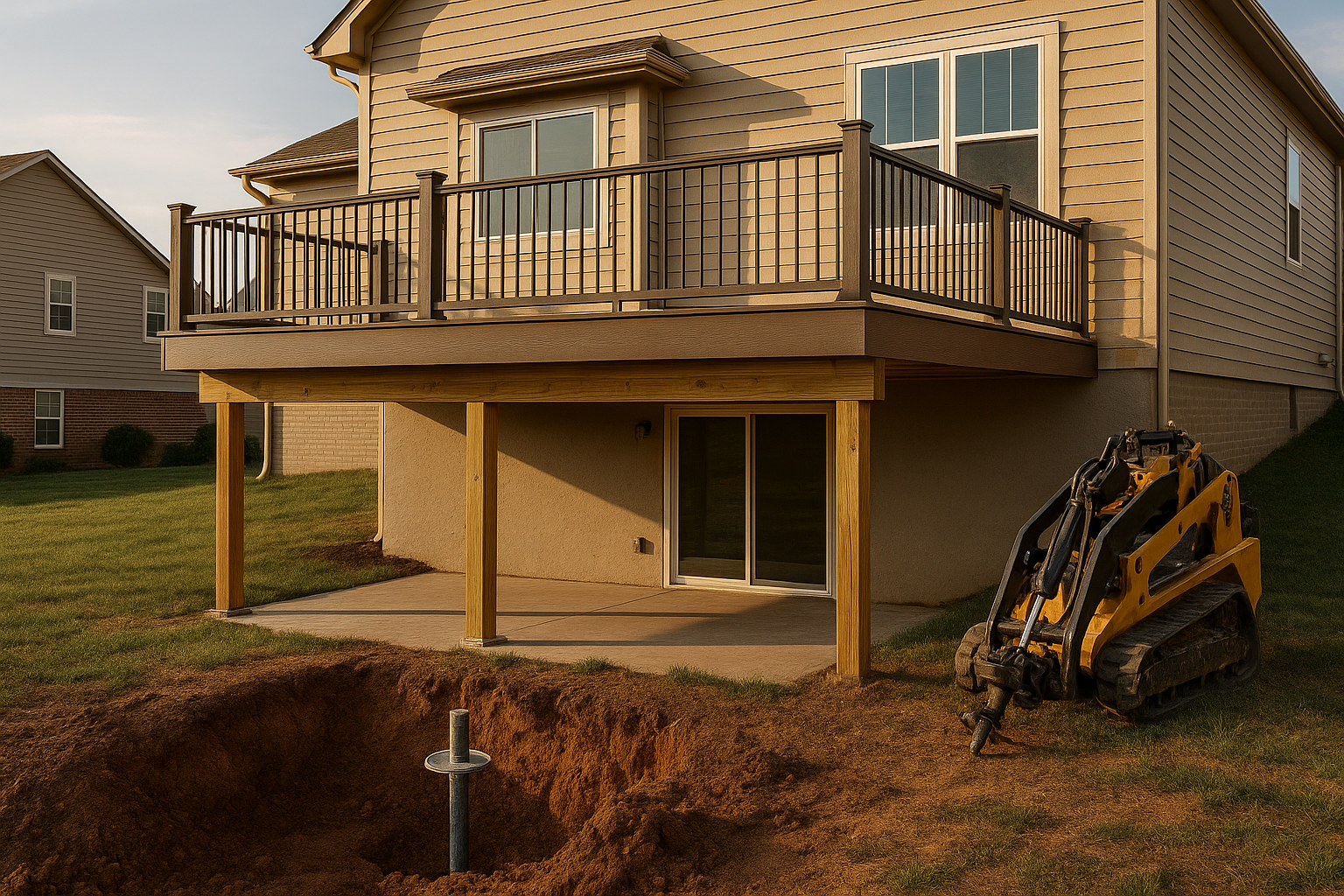
Ice on a deck often starts with a downspout. In Indy, lots of homes have downspouts that dump water right onto the deck or near the stairs. That water freezes into a sheet overnight. Make sure your downspouts discharge away from the deck. Add extensions or splash blocks. Check that the gaps between boards are clear so meltwater can drain. If you have a patio under the deck, an under-deck drainage system or a patio enclosure can keep that space dry and usable all winter long. DeckPros installs those too, and we can help you pick the right option.
Give Your Railing and Hardware a Once-Over
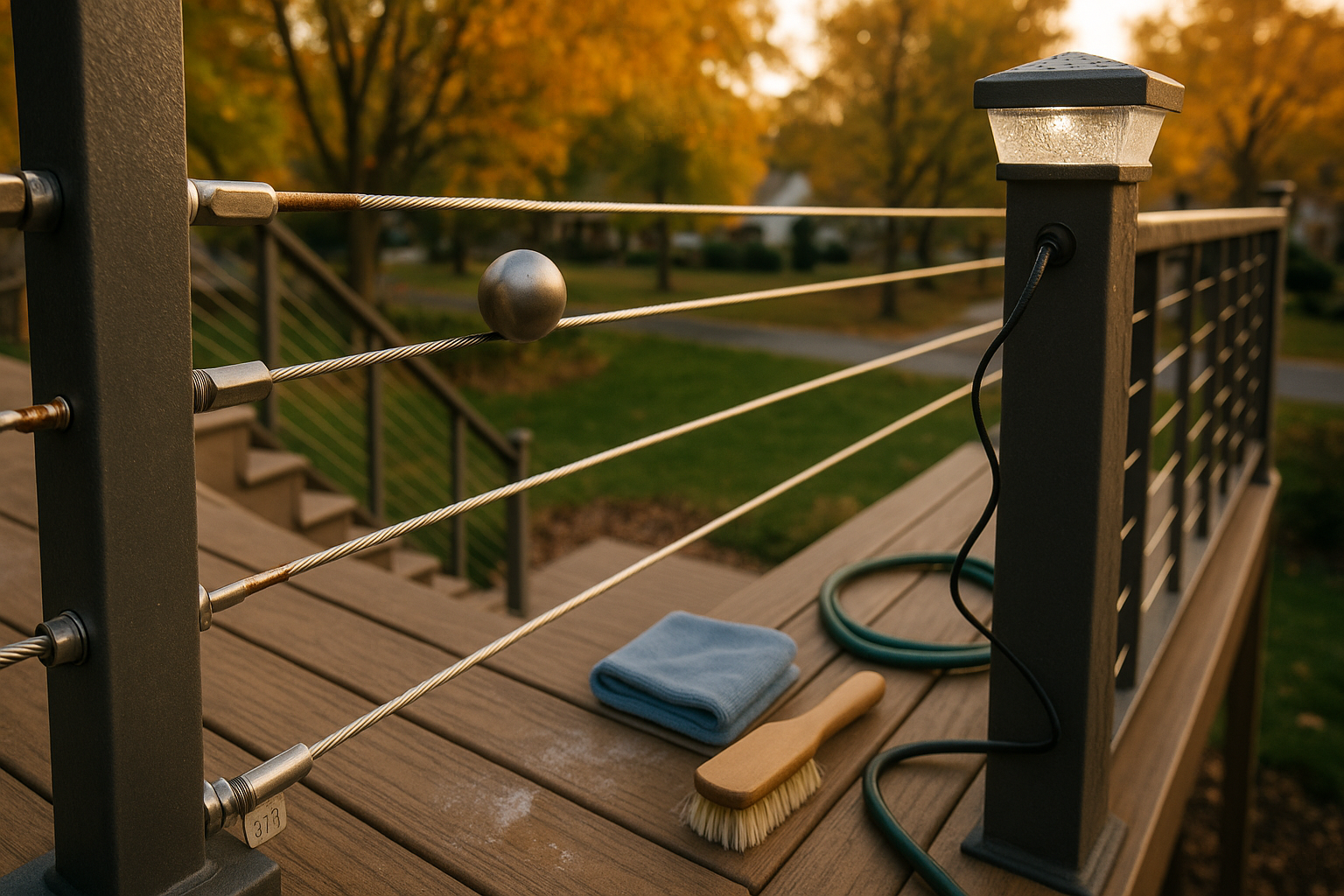
Loose railings are a bigger deal in winter. People grab them when they slip, and if the post moves, somebody can go down. Check the railing posts for wobble. Look at the ledger flashing where the deck meets the house. If water gets behind there and freezes, it can cause rot or pull the ledger away. Tighten any exposed fasteners. If you see boards lifting or gaps opening up, that might be frost heave from our clay-heavy soil. A quick inspection now can catch small problems before they turn into a spring repair. We wrote a post about what deck framing inspectors look for if you want to go deeper. As a local contractor and railing contractor, we see this stuff every day. If your deck is near a fence, check those posts too. A fence contractor can tell you if freeze-thaw shifted anything.
Winter Is the Best Time to Plan (And Sometimes Build)
Believe it or not, winter is a smart time to plan a new deck or major repair. Contractors have more availability, and you might get a better quote. We talked about that in a post about why deck quotes drop in the off-season. And yes, you can build a deck in winter in Indiana, as long as you use the right methods. Check out can you build a deck in winter in Indiana? for the details. If you're also thinking about replacing a fence or adding an enclosure, we can bundle those projects. That saves you money and keeps the site coordinated. Winter is also a good time to get HOA approval for rail or tread upgrades, which can take weeks.
The One Mistake That Voids Warranties
We've seen too many homeowners grab a heavy-duty pressure washer with a pinpoint tip and blast away at composite boards. That can damage the cap and void the warranty. Same with steel wool, wire brushes, and harsh solvents. Before you use any cleaner or tool, check your board manufacturer's care guide. Most have a list of do's and don'ts. If you're not sure, ask us. We can help you stay within the warranty rules. If something does go wrong, we also wrote a guide on how to file a composite deck warranty claim.
Get a Pro to Look It Over
If all of this sounds like a lot, it doesn't have to be. DeckPros offers a Winter Deck Check + Clean. We'll come out, clear debris, inspect the frame and hardware, adjust drainage, and give you a simple list of what needs attention — and what can wait. You can also book a spring-build planning consult now and lock in a spot before the rush. Either way, the first step is easy: request a quote and tell us about your deck. We work all over the Indy metro — from Carmel and Fishers to Greenwood and Plainfield. Don't wait until the next ice storm to find out if your deck can handle it. A little fall prep goes a long way.
Thinking about your own deck or pergola?
Free in-home design consultation, 3D rendering, and a written quote — no pressure.