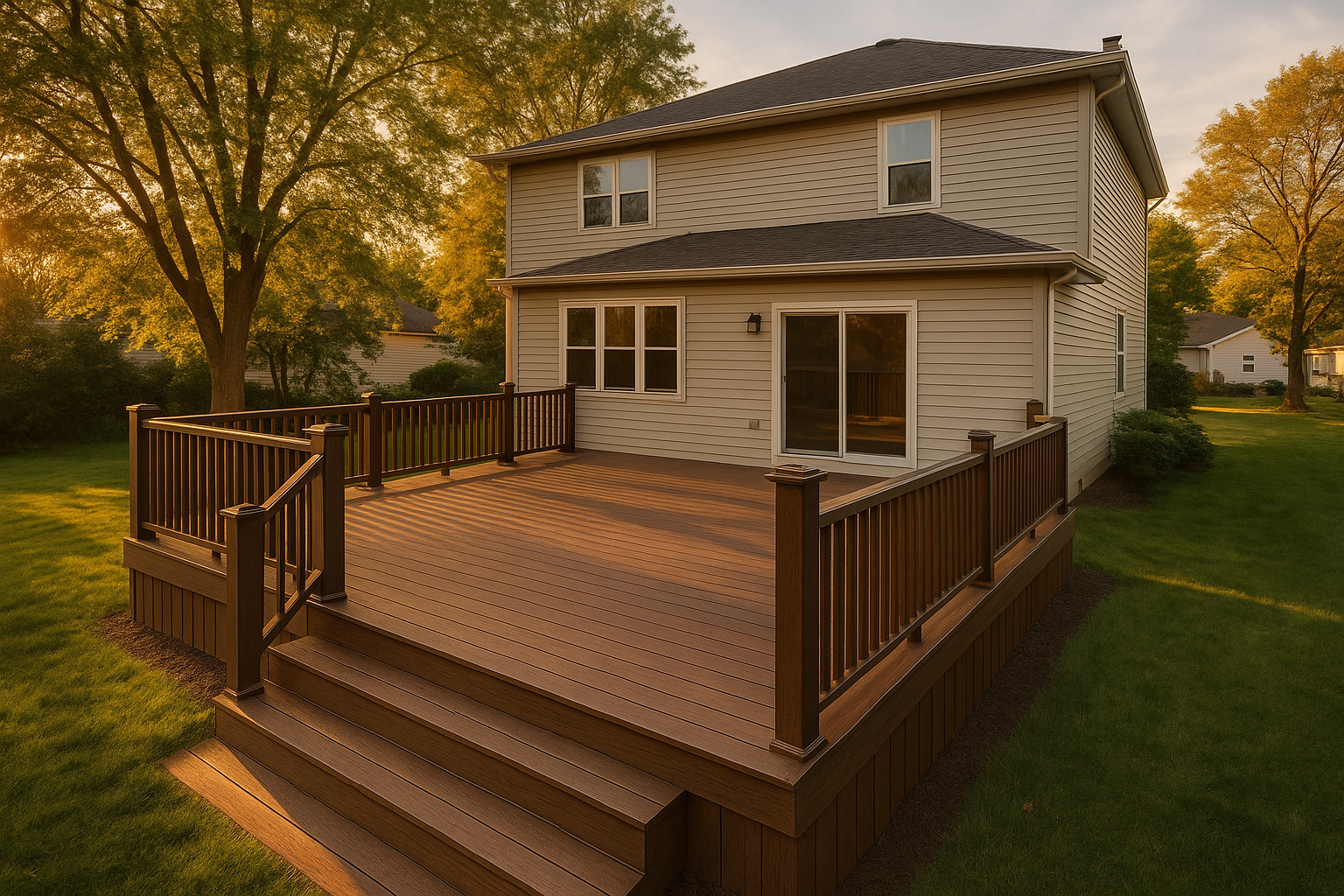
Last August, a homeowner in Zionsville called us about her composite deck. She'd bought the house two years earlier, fell in love with the deck's rich brown color, and then one afternoon she noticed the boards on the southwest corner looked almost chalky white compared to the rest. She called the manufacturer first. They asked for her proof of purchase, lot numbers, and a dozen photos. She had none of it. Not even the name of the product line. She was ready to give up and live with a two-tone deck. That's when she called us. We came out, identified the board brand from the hidden fasteners, found the lot code printed under one board, and built a claim packet that got approved. It took six weeks, but she got replacement boards. The whole thing taught me something: most warranty claims fail not because the deck isn't covered, but because the homeowner doesn't know how to prove it.
If you're in Indianapolis, Carmel, Fishers, or anywhere around the metro, you might be in that same spot right now. Your composite deck is fading, staining, or swelling. Maybe a board is delaminating along the edge. Maybe you used a mild cleaner and the stain just won't budge. You know the deck should be under warranty—you paid a lot for it. But the claim process feels like a black box. I'm going to walk you through it.
What Does Your Composite Deck Warranty Actually Cover?
First, understand that you're dealing with two separate warranties: one from the manufacturer (for the materials) and one from the original installer (for labor). Most composite brands cover material defects—like capstock that peels, unusual swelling, or structural failure. Some also cover fade and stain, but only if the fade is excessive and uneven. A little fading from UV exposure? Normal. A big difference between the south-facing boards and the north side after three years? That might qualify.
Stains are trickier. Warranties often exclude stains from leaves, grill drippings, or ice melt. But if you've cleaned with an approved product and the stain persists, you may have a case. For example, maple and oak leaf tannins in Indianapolis can leave dark spots that never come out once they've baked in. That's not normal wear and tear. The manufacturer may deny it anyway, but a well-documented claim with photos showing you used approved cleaners can push back.
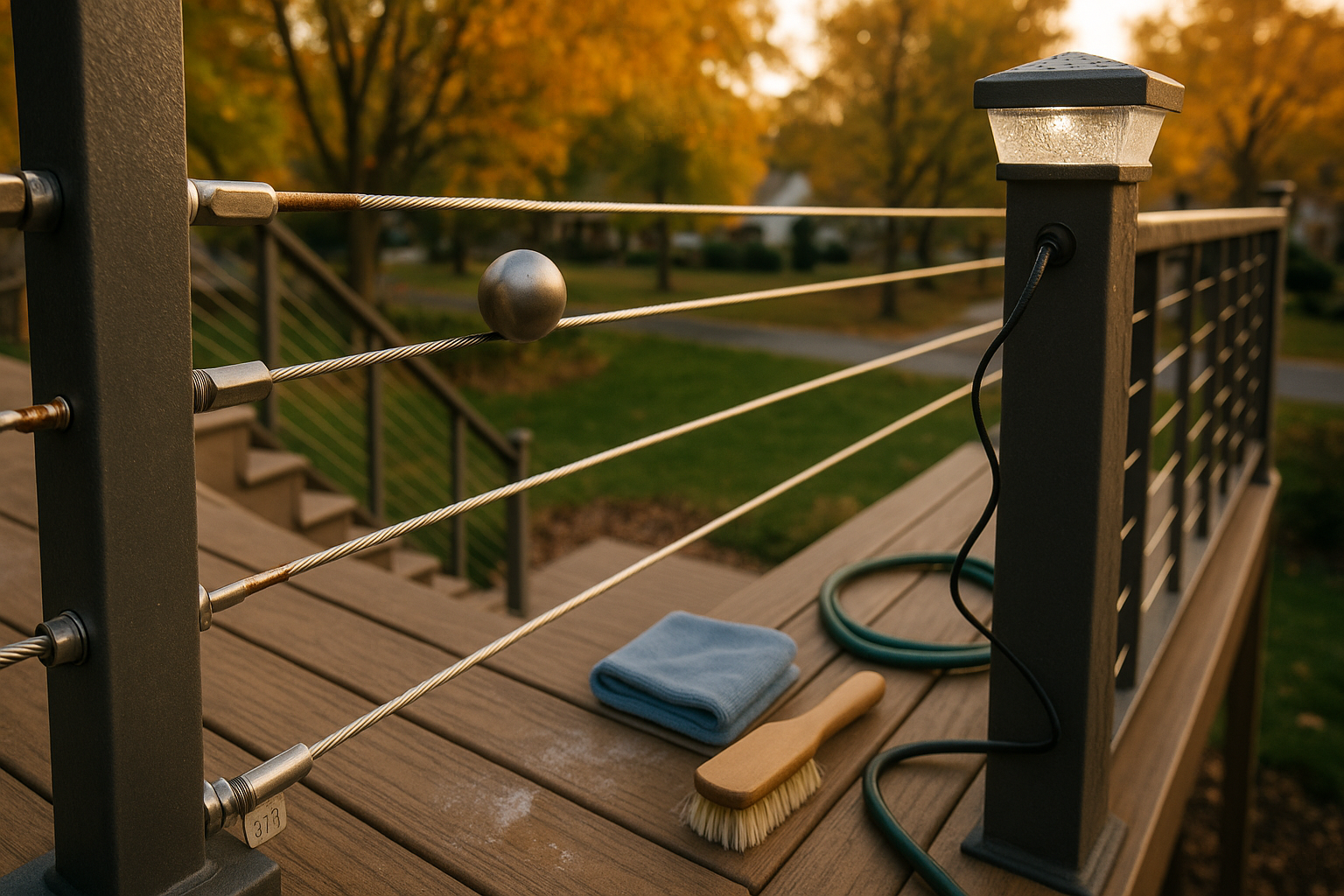
One thing most people don't realize: your railing, fascia, and trim are often covered under a separate warranty with different terms. So if your composite railing is cracking or the color is fading faster than the deck boards, you may need to file a separate railing warranty claim. We've helped homeowners in Westfield and Noblesville with railing-only claims when the deck itself was fine. It's worth checking the fine print.
Get Your Evidence Together Before You File
If you're serious about a composite decking warranty claim, treat it like an insurance claim. You need proof.
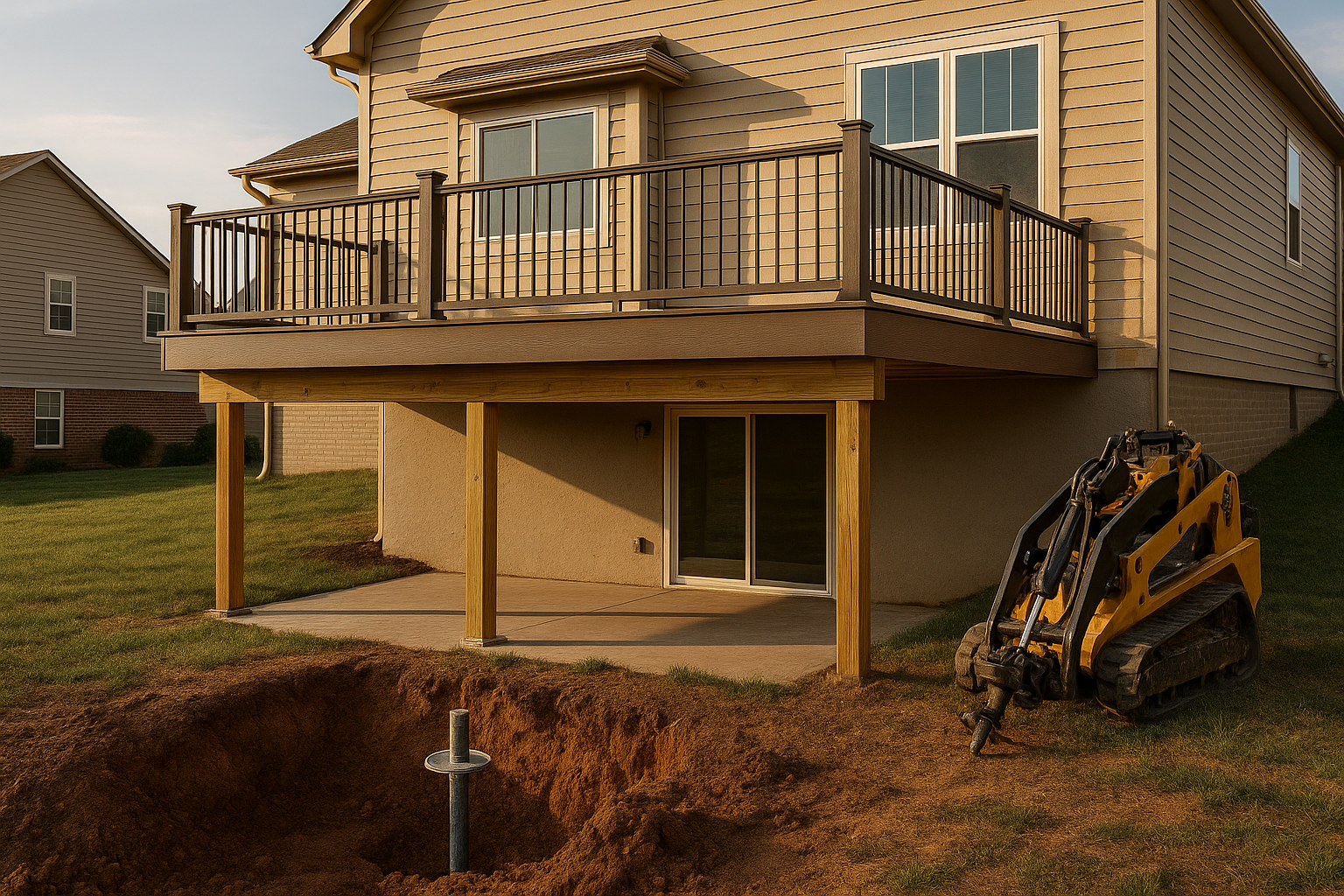
Start with the basics: what brand is your deck? If you don't know, look for a hidden fastener pattern or check the underside of a board. Many brands stamp a lot or production code every four to six feet. You might need to crawl under the deck with a flashlight. This is where a contractor who works on decks regularly can save you hours—we know where to look.
Next, find your proof of purchase. If you bought the house with the deck already installed, you may not have the original receipt. That's okay. Many manufacturers allow a transfer of warranty, or at least a prorated claim, if the new homeowner can provide evidence like a closing document showing the deck was included. If that fails, sometimes the original installer can pull records. We've had luck contacting the builder who did the deck, even if they're out of business—their old supplier might have the product info.
Now the photos. You need three types: wide shots of the entire deck, mid shots of the affected area, and close-ups with a scale reference (a ruler or a coin). Take them in daylight without shadows hiding the problem. If the issue is fade, shoot the same board from the same angle on a cloudy day—it shows color differences more honestly. Document the sun exposure: which side faces south or west? Indianapolis sun is brutal on uncapped edges and high-UV sections. Note any tree cover or shade patterns.
Also write down the little details that affect a claim: joist spacing (should be 16" on center for most composite), ventilation gaps under the deck, ground clearance (at least 6" above grade is typical), and whether you've used any de-icers or harsh chemicals. If you've used rock salt on your deck last winter, say so. Hiding that information can backfire if the claim is investigated. A good contractor can examine the structure to see if installation itself might be the culprit—too-narrow joist spacing can void a material warranty even if the board itself is defective.
When the Claim Is Denied (or Only Partially Covered)
Here's the reality: a lot of composite decking warranty claims get denied. Sometimes it's because the issue is from installation, not the material. Sometimes it's because the homeowner used a pressure washer with too high PSI, which leaves fuzzy patches and voids the warranty. Or used bleach. Or put a grill too close and warped the boards. That's a tough conversation.
If your claim is denied for installation issues, don't panic. You might still have options. A deck contractor—and I mean a general contractor who understands structure, not just a handyman—can tell you if the joist spacing or lack of ventilation is the real problem. Maybe the fix is simple: add more ventilation, replace a few boards, or correct the drainage. That's not a warranty issue, but it's a repair you can plan for.
If the material defect is covered but the manufacturer only offers prorated credit instead of full replacement, do the math. A 10-year-old board might get you 40% of the material cost. That often doesn't cover labor to remove and replace. That's why labor warranties matter. If your original installer is still around and they offered a labor warranty, you may be able to stack that with the material credit.
Sometimes storm damage gets confusing. Hail, windblown debris, or falling branches are typically insurance claims, not warranty claims. If a storm cracked your composite board, call your homeowners insurance. But if the board cracked because it was defective and the storm just finished the job, you might have a warranty case. Document everything before you move anything.
How DeckPros Can Actually Help in Indianapolis
I get it. This whole process sounds like a part-time job. It can be. But that's why we do this for people across the metro—from Brownsburg to Greenwood to Avon. We do on-site inspections, verify joist spacing, measure gaps and clearances, take the full photo set, and put together a claim packet that speaks the manufacturer's language. We even know where to find those obscure lot codes on common brands.
We also act as a liaison. If the manufacturer asks for more photos or wants a second opinion, we handle the back-and-forth. Because we're a deck builder by trade, not just a repair shop, we can give an honest assessment of whether the issue is material, installation, or just normal wear. And if your deck has an attached fence or patio enclosure, we can check those transition areas too—poor flashing between a sunroom and a deck can cause hidden moisture problems that affect the warranty. We've seen it in Fishers and Zionsville homes with enclosed patios.
One thing I always tell homeowners: even if the claim is denied, you now have a clear picture of what's wrong and what it'll cost to fix. Sometimes that's a targeted board swap. Sometimes it's resurfacing with a better product. Sometimes it's just accepting a little fade and enjoying the deck. But you'll know.
If you've been staring at a fading or stained composite deck and wondering if you should bother with the claim process, start with a call. Or better, book a warranty assessment on our homepage or jump straight to the quote form. We'll come out, document everything, and give you a straight answer. No upsell pressure—just a clear plan. Winter is actually a good time to start: manufacturers are slower, and you can have everything ready for spring repairs. Check out our post on why deck quotes drop in the off-season if you're worried about timing.
Don't let the warranty paperwork scare you off. Get your deck the care it's owed.
Thinking about your own deck or pergola?
Free in-home design consultation, 3D rendering, and a written quote — no pressure.