Last February, a guy in Nora paced his kitchen, staring at his frozen backyard. He'd drawn up plans for a 24-foot composite deck, but every contractor he called said, "We'll put you on the spring list." Then a neighbor mentioned DeckPros. His question was simple: can you build a deck in winter in Indiana? Turns out, yes. And his deck was done by the second week of March — before his neighbors even had their permits approved.
That's not a one-off story. Homeowners across Indianapolis, Carmel, Fishers, Zionsville, Westfield, Noblesville, Greenwood, Brownsburg, Avon, and Plainfield ask the same thing every January. The short answer? You can absolutely build a deck in winter here. But it takes a plan, the right foundation strategy, and a contractor who works with the cold, not against it.
Why Would Anyone Build a Deck in the Dead of Winter?
I get the strange looks. Saws running while there's frost on the grass does sound a little off. But here's what homeowners tell me after doing it: they loved it. For one, you skip the spring rush. Good deck builders in central Indiana book out months ahead between April and June. In January or February, the same crew can often start in a week or two. That means your deck is ready the first warm Saturday of spring, not stuck waiting for a permit behind 40 other people.
Winter can also be a smarter time to get a quote. Contractors have time to actually talk through the details instead of rushing between jobs. Off-season pricing doesn't magically drop in half, but you avoid the spring bidding wars. We wrote about how deck quotes drop in the off-season — worth a read if you're on the fence. See why off-season quotes are different.
Another thing: frozen ground is your friend for lawn damage. Heavy wheelbarrows and equipment sleds don't sink into ruts when the ground is frozen solid. Your grass sleeps under a little snow and wakes up without tire tracks. In places like Zionsville and Brownsburg where yards are bigger, that matters.
So if you're asking "can you build a deck in winter in Indiana," the better question might be, "why not?"
The Foundation Problem: Frost Line, Clay, and Your Footings
In central Indiana, the ground doesn't just freeze once. It freezes, thaws, freezes again — all winter long. That freeze-thaw cycle pushes shallow footings right out of the ground. Most local codes require footings to go at least 36 inches deep. You've got clay-heavy soil around Indy, which holds water and expands when it freezes. If your footings sit above the frost line, your deck can heave and shift come February. That's not a repair you want.
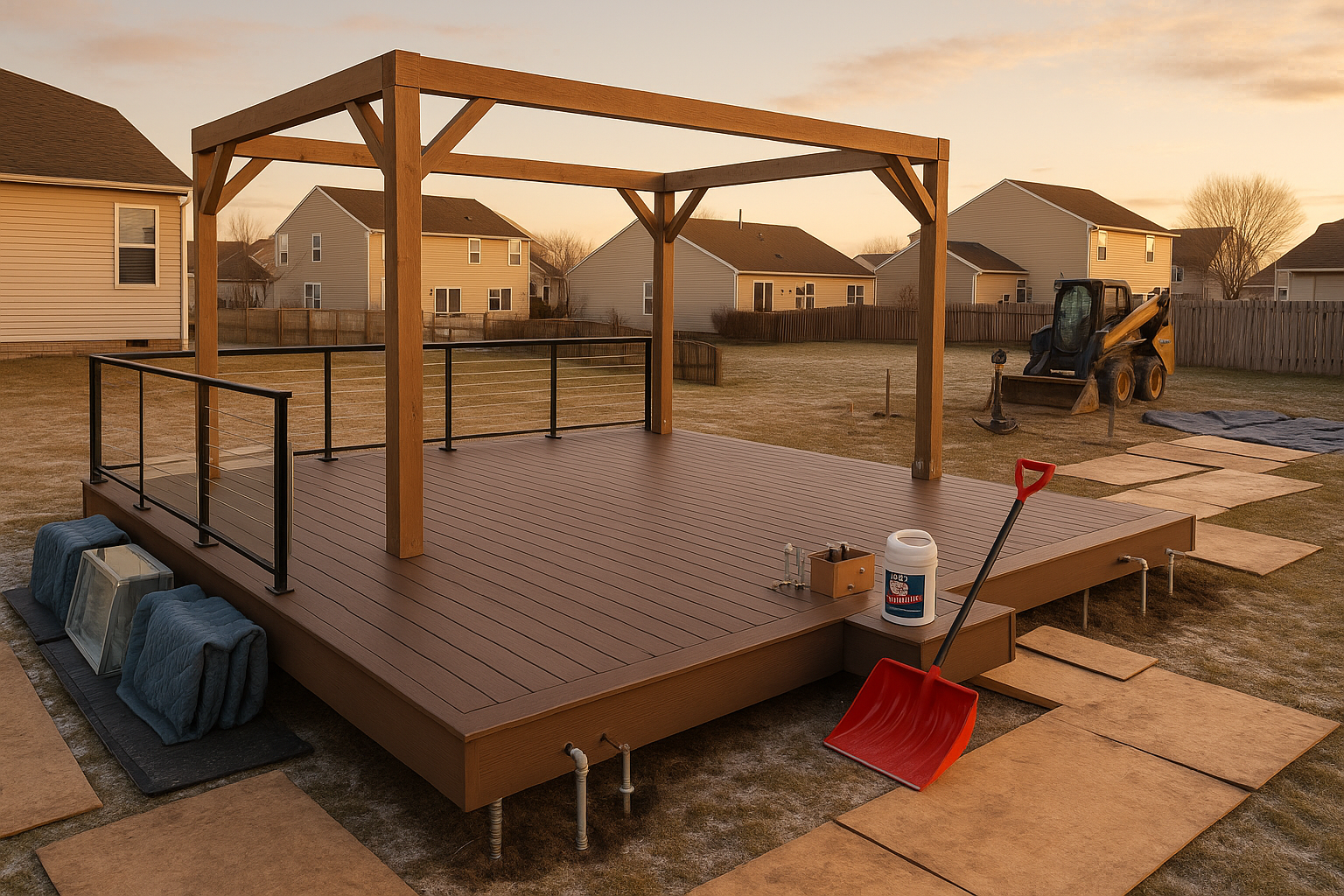
You have two solid options for winter footings. First, concrete. Yes, you can pour concrete in cold weather, but you have to protect it while it cures. A good crew uses insulated blankets, maybe a small heated enclosure, and a cold-weather mix or accelerator. The concrete doesn't freeze; it cures slower but hits full strength fine. The key is keeping the fresh pour from dropping below freezing for the first couple days.
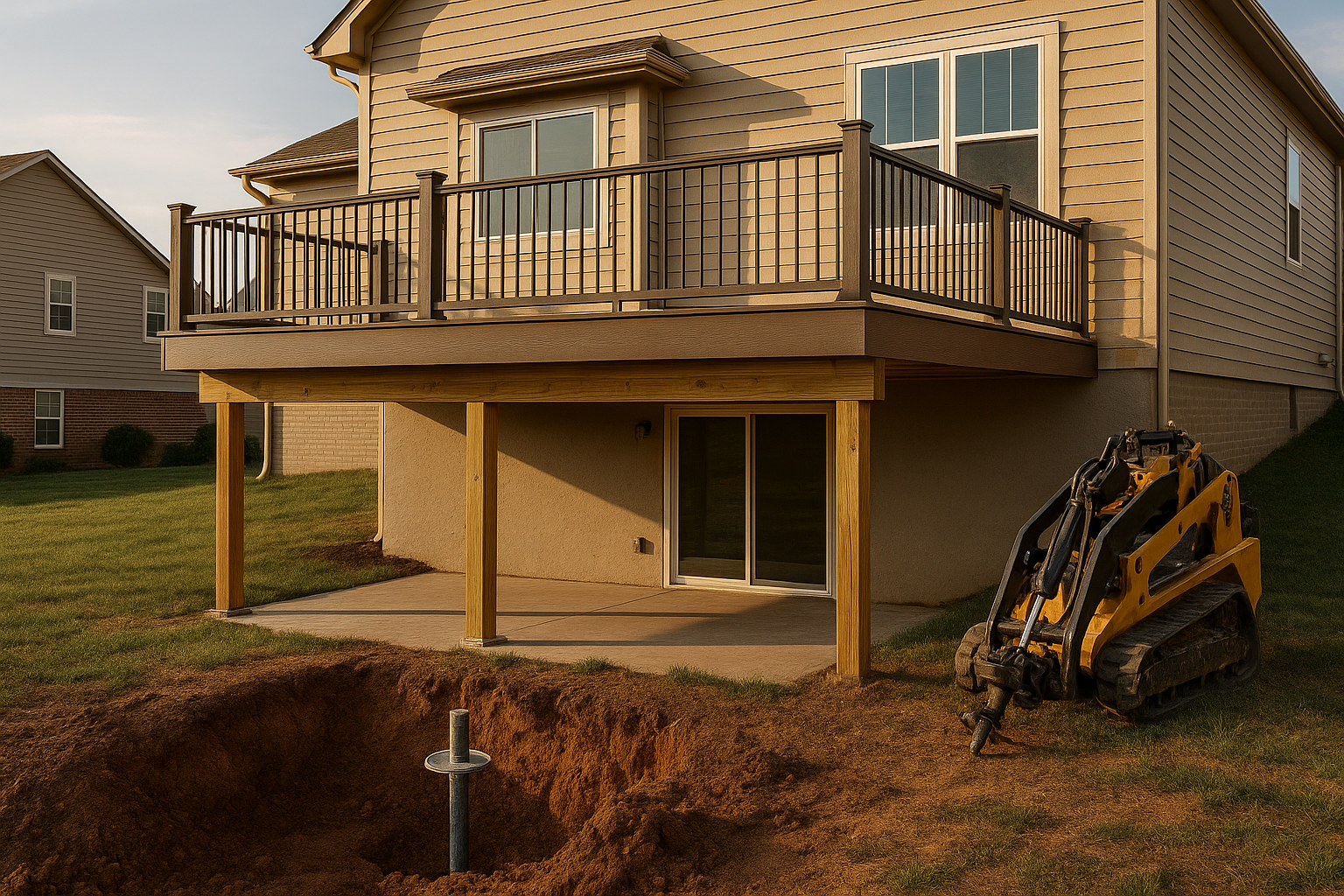
Second, helical piers. These screw into the ground, no excavation, no big open hole. They go past the frost line and lock into stable soil. I've watched a two-man crew set all the piers for a deck in Fishers in one afternoon while the ground was frozen an inch deep. Less mess, less mud, and they handle freeze-thaw really well. For a winter deck, helical piers are often the smart play.
If you're worried that freezing temps will weaken concrete, rest easy. As long as the pour is protected for the first 48 to 72 hours and not allowed to freeze before initial set, you get the same strength as a summer pour. Most concrete contractors in Indy keep thermal blankets on hand for exactly this.
Whichever you choose, still call Indiana 811 before anyone digs. Even if the ground is frozen. The locate service marks public lines, and frozen dirt doesn't make those lines move. Private sprinkler lines or low-voltage lighting need separate locating, so don't skip that. We cover the 811 basics in another post. Call 811 before deck footings.
Materials That Don't Mind the Cold
Composite and PVC decking install fine in winter — if you do it right. The boards expand and contract with temperature. In the cold, you leave slightly larger gaps between them because they'll expand when summer hits. Install them tight in February and you get buckling in July. Hidden fastener systems and clips made for composites hold up, but you need cold-rated screws and fasteners. Cheap fasteners can snap in the cold, and then you're redoing work.
Adhesives are a different story. Construction adhesive often says "use above 40°F" right on the tube. So for winter installs, you avoid adhesives where you can or use ones rated for low temps. That's a detail your contractor should know, not guess at.
One more thing: don't use a metal shovel on a new composite deck if there's snow. Plastic shovel only. And avoid rock salt — it can discolor and degrade the surface. Use calcium magnesium acetate or a deck-safe de-icer. Those little choices keep your deck looking brand new.
Some homeowners ask if building in winter voids material warranties. It doesn't, as long as the manufacturer's installation guidelines are followed. If a warranty claim ever comes up, having a record of proper gapping and fasteners helps. We've got a post on filing composite deck warranty claims if you ever need it. Composite deck warranty claim help.
Permits, Inspectors, and the Paper Trail
People assume the city shuts down in winter, but the Indianapolis Department of Business and Neighborhood Services (BNS) processes deck permits year-round. Same goes for Carmel, Fishers, Westfield, Noblesville — building departments don't hibernate. The catch is weather: if there's a big snowstorm the morning of your footing inspection, the inspector might not show up that day. So you build in a buffer day or two. HOA approvals can take longer in winter too, because board members are busy or meetings get rescheduled. Start that early.
What About Pergolas, Patio Enclosures, Railings, and Fences?
Winter is a good time for those add-ons too. A custom pergola frames up quick in cold weather — it's just post-and-beam work. The same helical piers or concrete footings handle the load. Some of the nicest pergolas I've seen in Indy got built in February, then the homeowners added string lights in April.
Now, if you're dreaming of a patio enclosure — like a screened porch or three-season room built off a deck — that's a slightly different game. You're not exactly building a deck anymore, you're building a structure that needs roof ties, maybe electrical, and weatherproofing. But a patio enclosure supplier or contractor can still start the frame in winter and finish the interior work as temps allow. DeckPros has done winter projects where the patio enclosure shell goes up in two weeks, then the finishing touches wait for a warm spell.
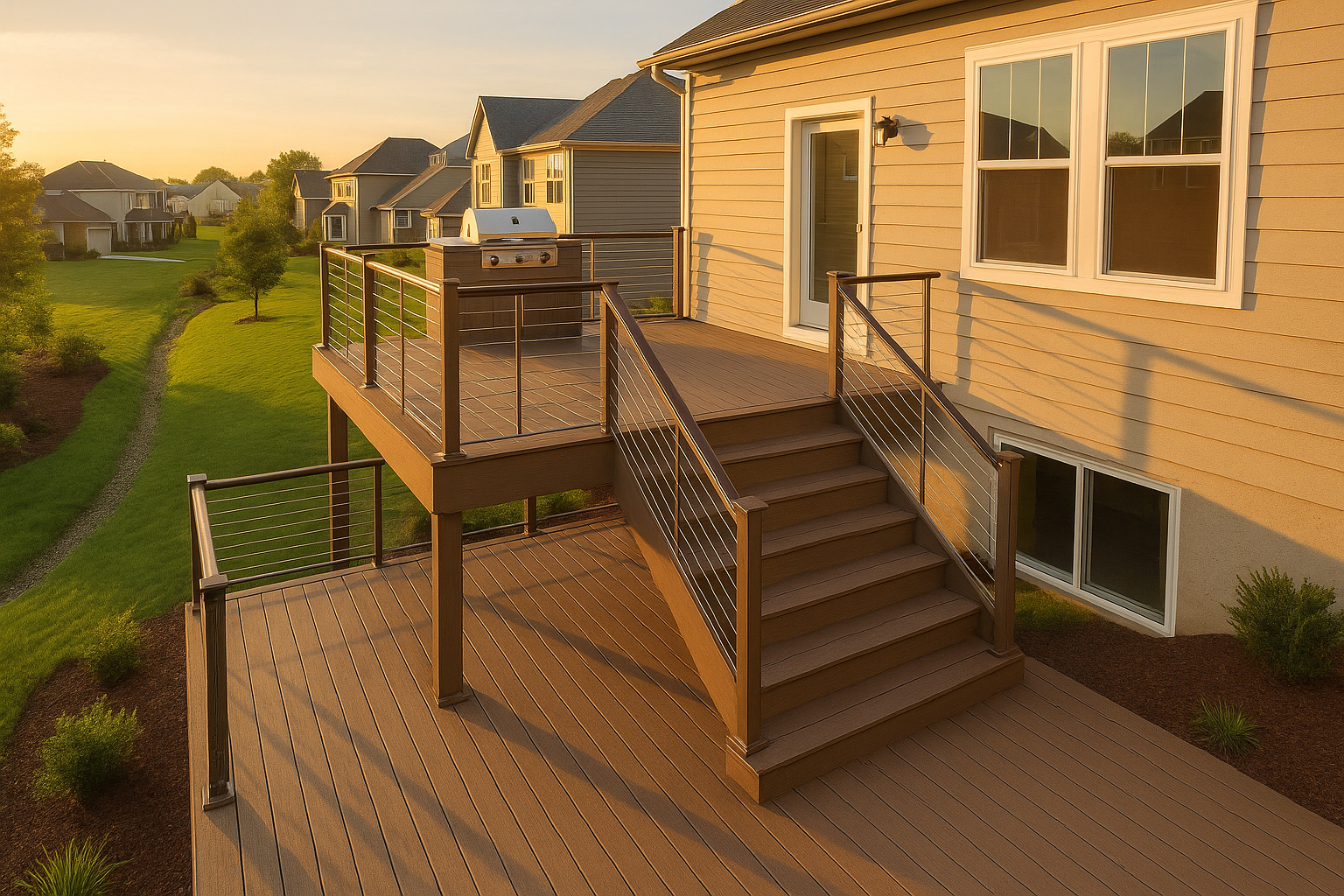
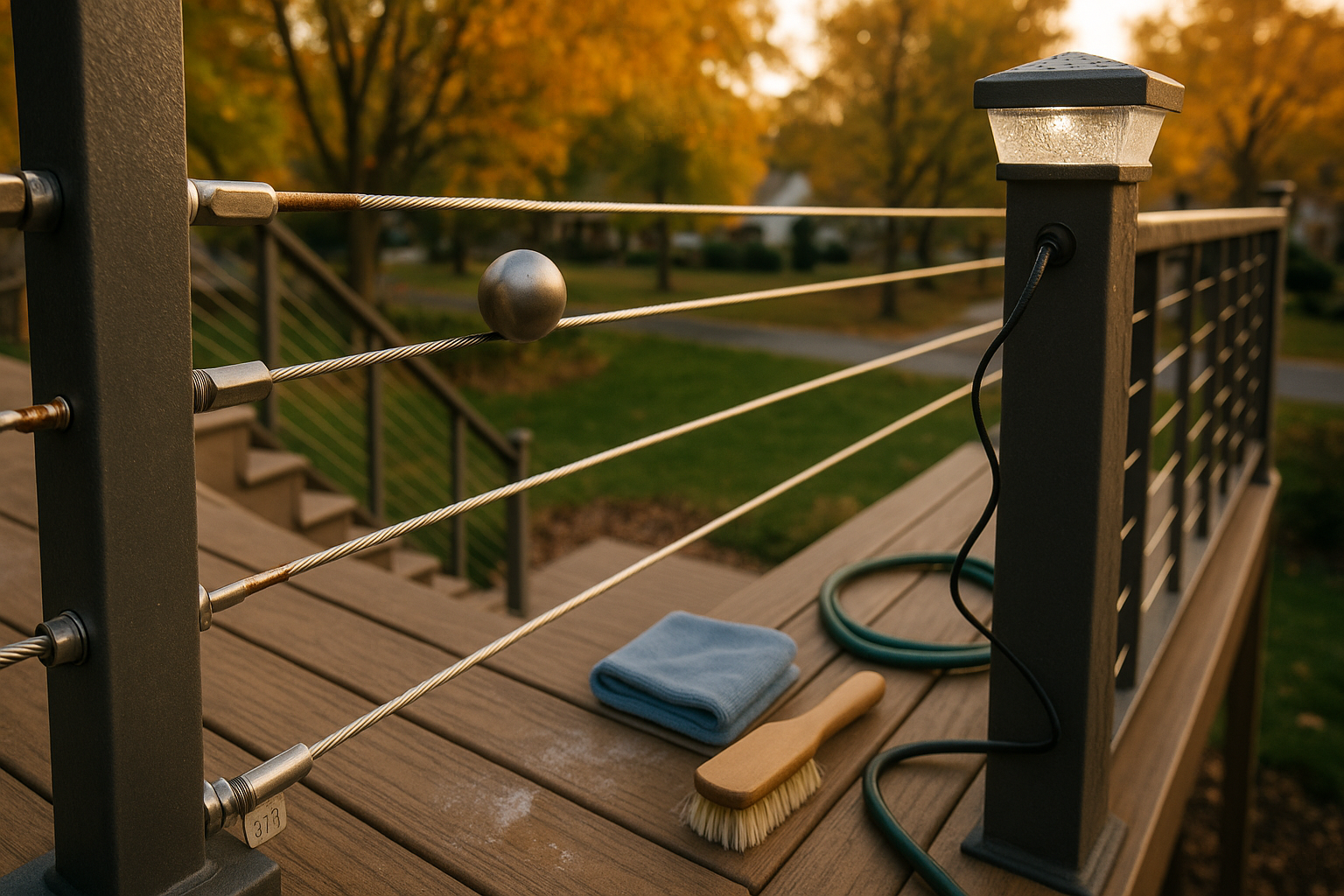
Railings go in fine when it's cold. Aluminum and cable rail systems don't care about 25°F. Tempered glass panels need careful handling because they can crack if knocked around in the cold, but a good railing contractor knows to keep them warm until install. Same idea with composite rail sleeves — just leave proper gaps.
Fences often get added to the same project, especially if you're redoing a backyard. A fence contractor can run post holes with a skid steer in frozen ground as long as they use the right auger and maybe a ground thaw blanket for the top few inches. If you're replacing an old fence along with the deck, winter can be a clean slate before spring planting.
Keeping the Site Safe and Your Yard Not Destroyed
Snow and ice on a jobsite are real hazards. A good crew shovels the work area, sands the pathways, and uses plywood or ground protection mats from the driveway to the back. In older neighborhoods like Broad Ripple or Fountain Square, side yards are skinny — a wheelbarrow full of concrete can tear up a lawn in no time if you don't protect it. Mats fix that.
Also, think about access before the first snow. Move patio furniture, clear the path, and tell the crew where the water spigot is (if it's not frozen). If you have a dog, keep them inside while the gate is open. Those little things make the whole project smoother.
Add Heat and Light While You're At It
Since you're already out there, winter is the perfect time to plan for deck heaters or a built-in fire feature. Gas heaters need gas lines run before the decking goes down. Electrical for post cap lights or stair lights gets roughed in during framing. You don't have to install the heaters now, but having the infrastructure ready means next winter you flip a switch instead of shivering. We wrote a bit about deck heaters and fire features if you want to think through that. Deck heaters and fire features for fall.
So, can you build a deck in winter in Indiana? Absolutely. The people who do it are the ones who stop waiting for perfect weather and start asking the right questions. If you're in Indianapolis, Carmel, Fishers, Zionsville, Westfield, Noblesville, Greenwood, Brownsburg, Avon, or Plainfield, DeckPros can walk you through whether your specific yard and project make sense for a winter build. We'll talk footing strategy, material choices, and a schedule that works with the forecast, not against it. No pressure, no pushy sales pitch. Just a straight answer and a measured quote. You can request a winter feasibility consult here.
Thinking about your own deck or pergola?
Free in-home design consultation, 3D rendering, and a written quote — no pressure.