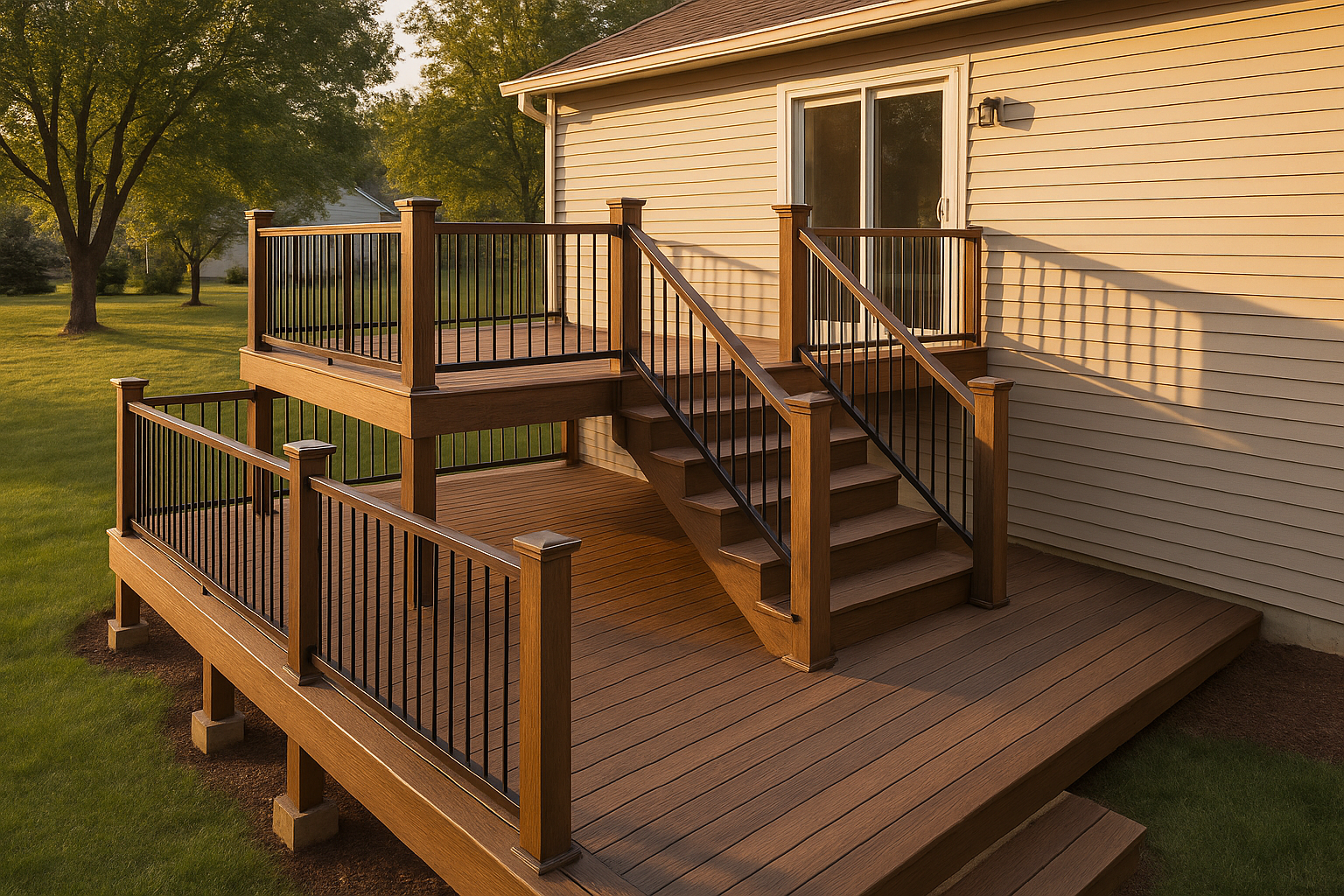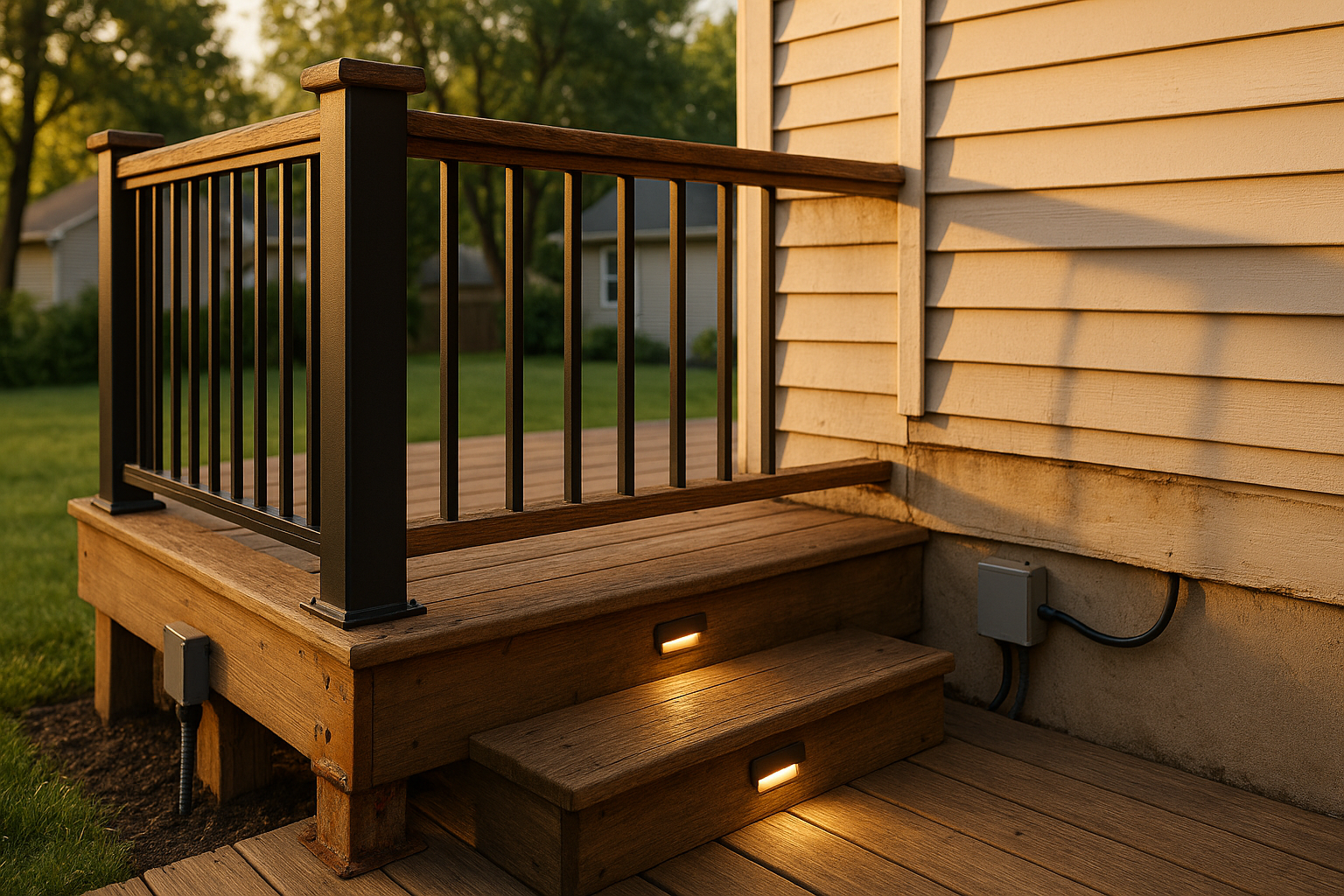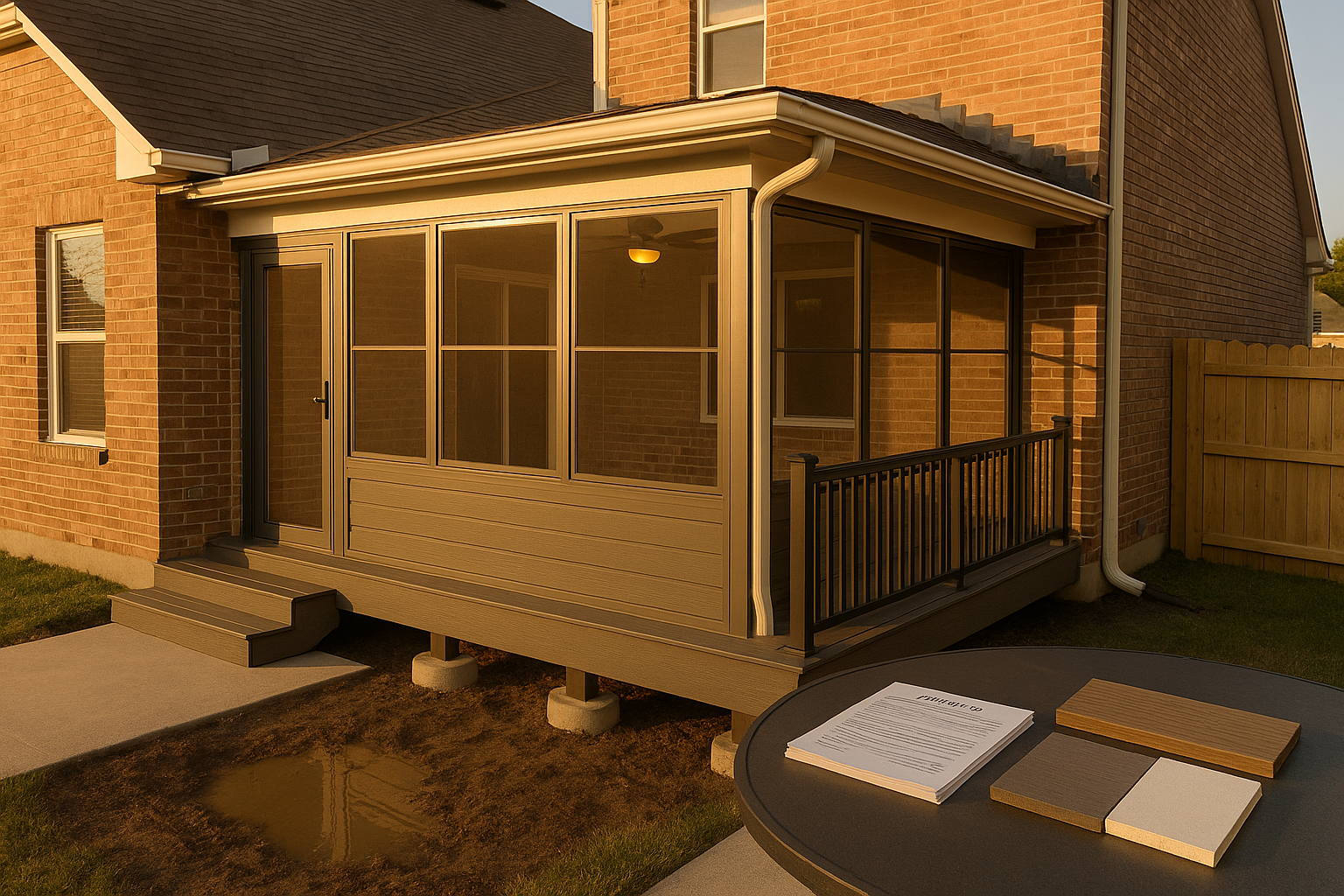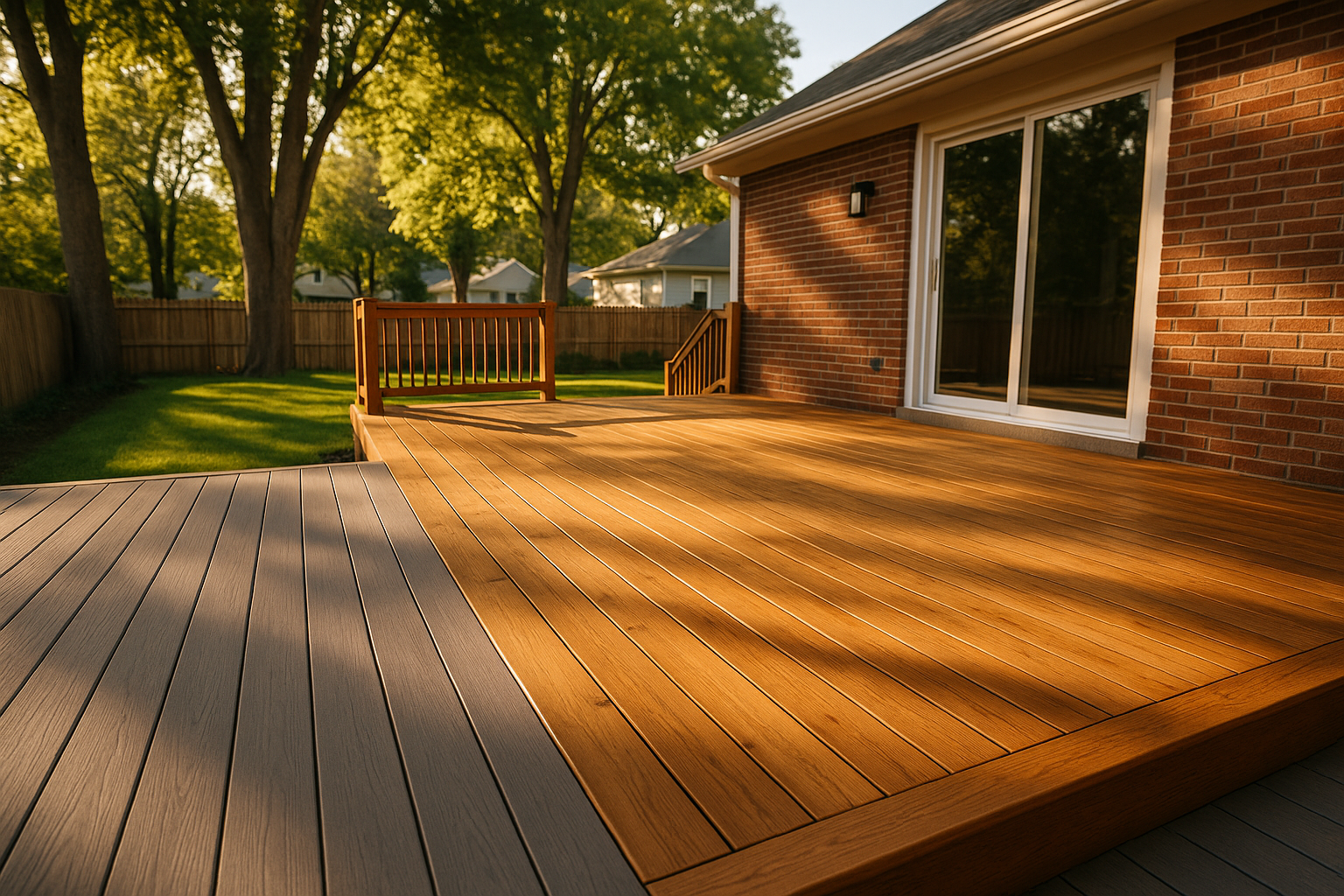
Last spring, a buddy of mine in Noblesville called me in a panic. He'd spent a weekend replacing his old deck boards with pressure-treated pine, and they looked perfect — until the first 85-degree day. By mid-June, the boards were buckling at the seams, cupping like Pringles. He'd butted them tight because "wood shrinks, right?" Anyone who's built a deck in central Indiana knows that's a painful lesson. The truth is, deck board spacing isn't just a cosmetic detail. It's the difference between a deck that lasts 20 years and one that heaves after two.
Why Deck Board Spacing Matters
Drainage, Ventilation, and Debris
Think of your deck like a sieve. If the boards are packed tight, water has nowhere to go. It pools on top, seeps into the joints, and starts rotting the wood or feeding mildew. In Indianapolis, we get plenty of summer thunderstorms and fall leaf drop. A narrow gap (like 1/16 inch) clogs with pollen and maple seeds, trapping moisture. A slightly wider gap (around 1/8 to 3/16 inch) lets water drain and air move underneath. That airflow is what keeps the underside of the boards dry and prevents that musty smell.
Expansion and Contraction in Our Climate
Wood swells when it's wet and shrinks when it dries. Composite and PVC boards expand and contract with temperature. We live in a place with humid summers and freezing winters. A pressure-treated board installed in April might be soaking wet from the lumberyard. If you space it tight, it'll shrink and leave gaps — not awful, but inconsistent. But if you install it tight during a dry spell, then when the humidity hits, the boards push against each other and buckle. That's what happened to my buddy. The fix? Match your initial gap to the board's moisture content that day, not some generic spacer.
Not All Boards Are the Same: Wood vs Composite vs PVC
Pressure-treated southern yellow pine is the most common decking around Indy. It's often sold wet, so you might start with a tighter side gap (like 1/8 inch) knowing it will shrink. Cedar and other kiln-dried woods can go a touch wider because they arrive drier. But here's the thing: every composite brand has its own spec sheet. Some want a 3/16-inch side gap; others want 1/4 inch. PVC decking expansion gap can be even bigger on hot days. And don't forget end-to-end gaps. A 12-foot composite board on a 90-degree day will grow longer than you think. The manufacturer's chart tells you exactly how much to leave at each butt joint based on the board temperature. Skip that chart and you'll get wavy seams.
If you're using hidden fasteners, the clips often set the side gap automatically. But that doesn't mean you can ignore spacing. You still need to plan your end gaps, and you still need to make sure the joists are straight and properly spaced. A clip can't fix a joist that's out of line by half an inch; the board will wander and the gaps will look like a drunk snake. (We've got a whole post on hidden fasteners vs face screwing composite if you're still deciding.)
Nailing the Gap: Tools, Tips, and Common Mistakes
Side Gaps, End Gaps, and Butt Joints
Side-to-side deck board gap: usually 1/8 to 3/16 inch for most wood and composite. Use plastic spacers or a speed square on edge. Check every few rows with a string line. If you see drift, adjust the next row slightly to bring it back.
End-to-end deck board gap: bigger than you might think. Composites can need 1/8 to 3/16 inch at each butt joint, but some PVC brands want up to 1/4 inch if it's cold out. Blocking under the joint keeps boards from sagging. A simple trick: install when the board temperature is moderate, not freezing cold or blazing hot. That way the gap splits the difference.
Butt joints are where decks fail. Stagger them so no two joints line up on the same joist. That looks better and spreads the load. And if you're using a hidden fastener system, check if the manufacturer allows a color-matched biscuit or screw at the butt joint. Many do, and it prevents that little lip from forming.
And don't skip joist tape — it protects the top of the joists from water that drips through your gaps. Read why deck joist tape is worth it.
Hidden Fasteners Don't Do Everything
I've seen homeowners assume that because they bought a clip system, spacing is handled. Then they slap boards down without a single end gap and wonder why the deck looks like a potato chip field. Hidden fastener spacing sets the lateral gap, yes. But you still have to plan for board expansion at the ends, at the house, and around posts. A friend of mine who runs a railing contractor crew in Carmel told me about a job where the homeowner installed composite decking tight against the brick siding. Two summers later, the boards had pushed against the wall and popped the bottom row of siding. A simple perimeter gap (usually 1/4 to 3/8 inch) would have prevented that.
Indianapolis Weather and Your Deck Board Spacing
We get all four seasons, sometimes in one week. Spring rains soak the boards. August sun bakes them to 150 degrees. Winter snow melts and refreezes in the gaps. That freeze-thaw cycle is brutal on tight gaps — water freezes, expands, and pries boards apart. If you're building a deck in Fishers or Westfield, you need to think about what the boards will do in July, not just on installation day.
Shaded lots in neighborhoods like Meridian-Kessler or Broad Ripple stay cooler and wetter. You might lean toward a slightly wider side gap for better airflow. Meanwhile, a sun-baked deck in Greenwood or Avon gets cooked all afternoon, so larger end gaps are critical. And if you're working with a patio enclosure supplier to add a screened porch later, don't tighten the gaps thinking the roof will protect them. The boards still move with temperature.
Under-deck ventilation matters too. If you enclose the skirting or build a low deck (under 12 inches of clearance), you trap moisture. A fence contractor building a vented privacy screen around the deck base can help keep air moving. That's a nice collaboration, and it keeps the deck from turning into a mold factory.
When to Bring in a Pro
Look, you can eyeball a few gaps and get away with it on a small repair. But if you're replacing a whole deck, the math gets real fast. Board temperature, moisture content, joist straightness, manufacturer specs, local code — it's a lot. The Indiana Residential Code has rules about ledger flashing and clearances near the house. And if your footings aren't at frost depth, the whole frame shifts and your perfect gaps turn wavy. That's why we always check the footings before we touch the decking.
If you're in Indianapolis, Carmel, Fishers, Zionsville, Westfield, Noblesville, Greenwood, Brownsburg, Avon, or Plainfield, and you'd rather not learn the hard way like my buddy in Noblesville, give us a shout. We'll come out, confirm the right deck board spacing for your specific material and site, verify the joist layout, and write up a clear plan. Request your on-site assessment and we'll take it from there.
Thinking about your own deck or pergola?
Free in-home design consultation, 3D rendering, and a written quote — no pressure.