Last spring I got a call from a guy in Broad Ripple. He was replacing a few deck boards that had started to cup. No big deal, right? But when we pulled those boards up, we found the joists underneath were soft. You could poke a screwdriver right into the top of a joist. The deck was only eight years old. The boards? Fine. The frame? Rotting from the top down. The homeowner said the same thing every homeowner says: 'I didn't even know that was a thing.' It is. And it's exactly why I tell people around Indianapolis, Carmel, and Fishers about deck joist tape.
What Deck Joist Tape Actually Does
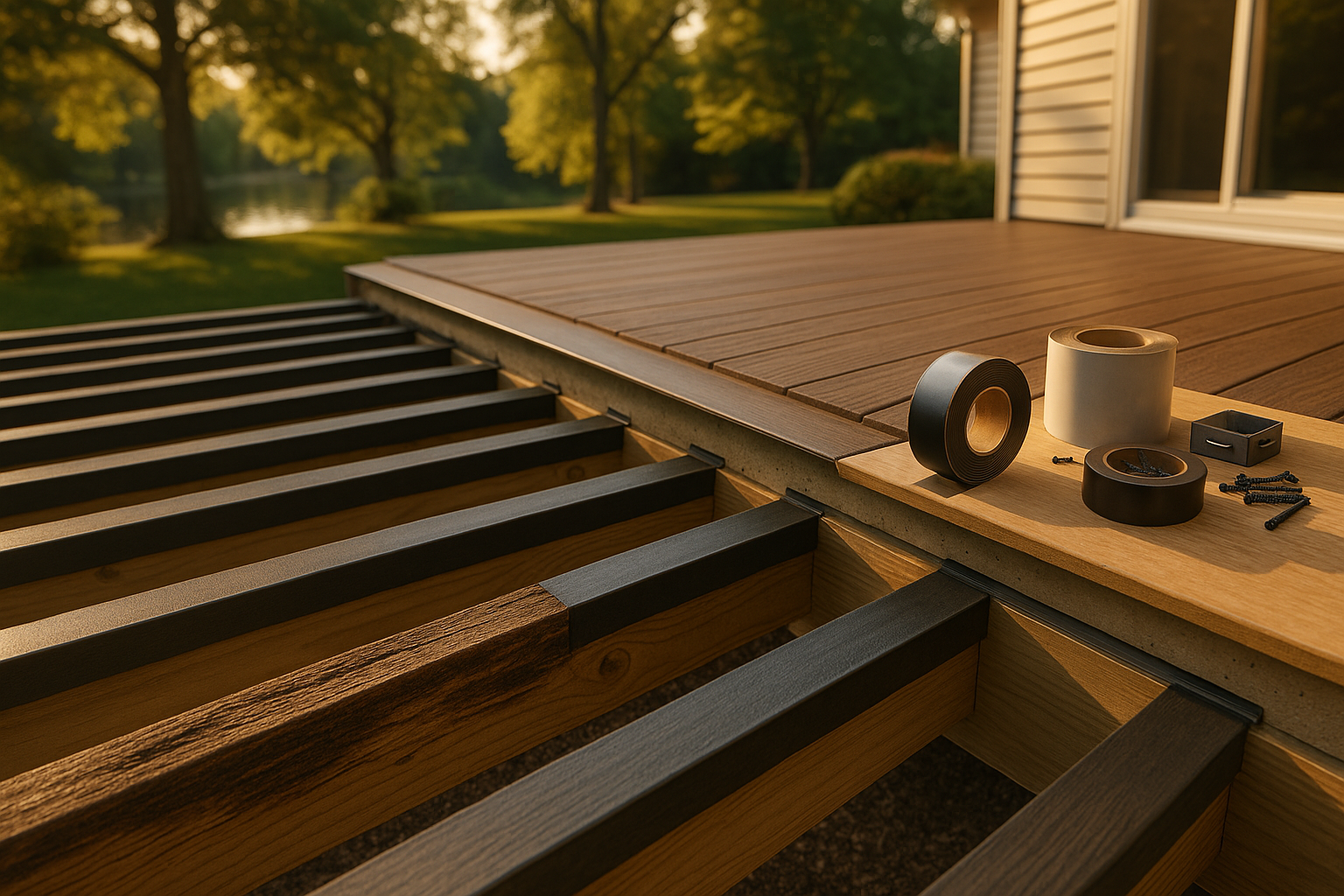
Deck joist tape is a peel-and-stick flashing you put on top of floor joists, beams, and the ledger board before decking goes on. Most good tapes are butyl-based. They stick to lumber, stay flexible, and stop water from sitting on the flat tops of joists. That's where rot starts. Water wicks into fastener holes and the end grain, then freeze-thaw cycles in Indiana make it worse. The tape self-seals around screws and nails. So when you drive a fastener through the tape, it hugs the shank. That keeps water from sneaking in.
Why Indianapolis Weather Is Tough on Deck Frames
Spring rains, humid summers, and winter freeze-thaw. Water gets into the top of a joist, then freezes and expands. That tiny crack gets bigger. Next rain, more water gets in. Over time, the wood turns spongy. If you live in Meridian-Kessler or Irvington with big shade trees, your framing stays damp longer. Same for lakeside homes near Geist or Eagle Creek. Morning condensation and wind-driven rain add moisture. All of that makes deck joist tape a smart move.
When we build a deck, footings need to go below frost depth. But the above-ground frame needs protection too. (Check out our post on deck footings and frost depth in Indiana for more on that.)
Butyl vs. Asphalt: Which One Sticks Around?
There are two common types: butyl and asphalt. Butyl tape adheres better to pressure-treated lumber, stays flexible when it's cold, and doesn't ooze in July. Asphalt flashing tape is cheaper, but it can get soft and messy in summer heat. It can also get brittle when temps drop. For Indianapolis, butyl is the better choice. It costs a little more, but you're putting it down once. Asphalt tape is fine for a quick patch, but I wouldn't trust it for 20 years under a composite deck.
Where You Need to Put Joist Tape (And Where Not To)
On top of every joist, wrap it down about 1 to 1.5 inches on each side. Put it on top of beams and rim boards too. Around the ledger board, you still need metal flashing. Joist tape is not a replacement for that. But you can use it under the metal flashing or on top of the ledger after the metal is in. It helps with capillary wicking. Skip taping the bottom of joists — that doesn't help and can trap moisture. Also, clean and dry the lumber first. If you put tape on wet or dirty wood, it won't bond.
"Will It Trap Moisture?" And Other Worries
That's the biggest objection I hear. People think tape will seal moisture in. It won't, if the wood is dry when you tape and the tape covers the top and sides. Water that lands on top runs off to the sides. It doesn't get between the tape and the wood. Now, if you leave tape exposed to sun for a couple months, it can degrade. But normally the decking goes on right after. And under composite decking, the frame stays shaded. That's actually one of the best uses — composite holds moisture, so the tape gives the frame a break.
Resurfacing? That's the Perfect Time to Add Tape
A lot of folks in Hendricks and Johnson Counties are ripping off old wood deck boards and putting down composite. If the frame is still solid, we inspect every joist, sister any soft ones, then tape the tops before new boards go down. Adding deck joist tape during a resurface is maybe a few hundred bucks. It's the cheapest insurance you'll ever buy for that frame. And if you're comparing composite vs wood lifespan, this is one of the details that closes the gap. (We wrote a whole post on deck lifespan for Indiana.)
What It Costs and Whether It's Worth It
Butyl tape runs about $20 to $40 per 50-foot roll. A typical 12x16 deck framed 16 inches on center will use five to seven rolls, depending on layout. So materials are around $100 to $250. Labor is minimal if done during the build. Compare that to replacing a single joist a few years later, which can run a few hundred dollars each. And that's if you catch it early. If the whole frame goes, you're looking at a full demo and rebuild. To me, deck joist tape is a no-brainer for anyone building a deck they want to keep.
Fasteners, ACQ, and Installation Notes
Use hot-dipped galvanized or stainless steel fasteners. The copper in ACQ-treated lumber eats standard steel. Good butyl tape is compatible with ACQ. When installing, do it on a warm, dry day. Most tapes bond best above 50°F. Overlap the seams 1 to 2 inches. Cut slits around joist hangers cleanly. Roll it down firm to get rid of bubbles. Don't leave it exposed to sun for more than a few days if you can help it.
What About Railings, Fences, and Patio Enclosures?
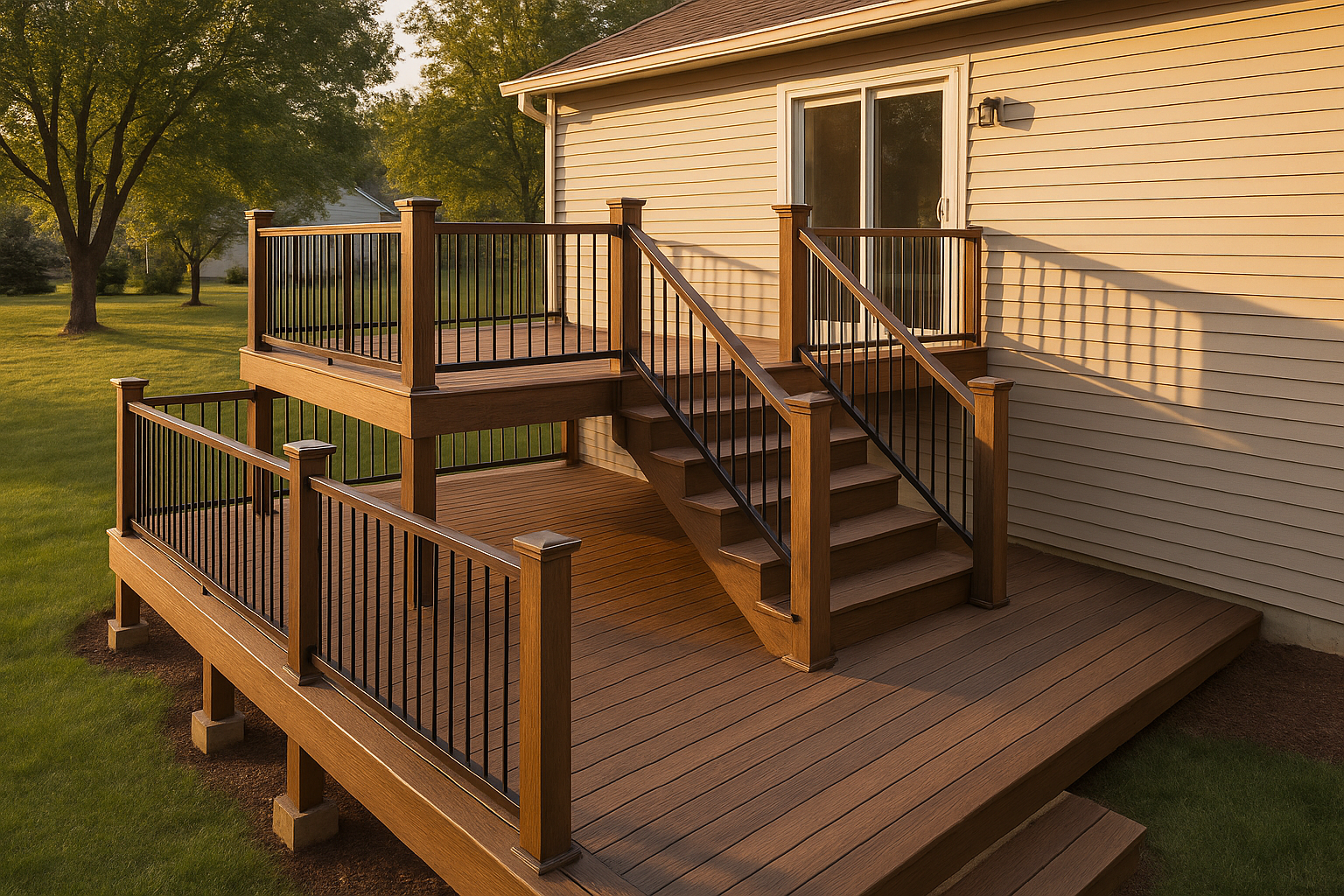
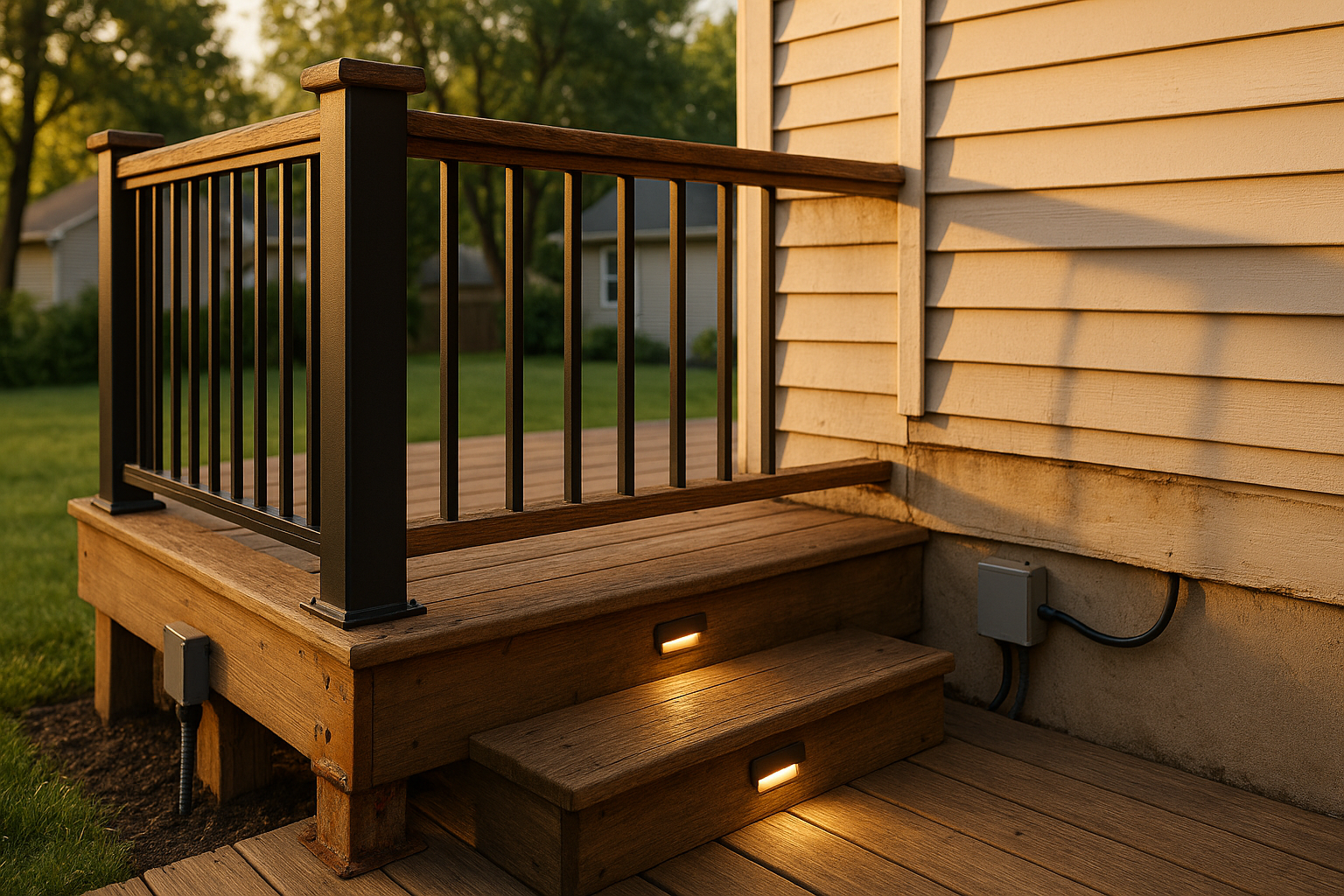
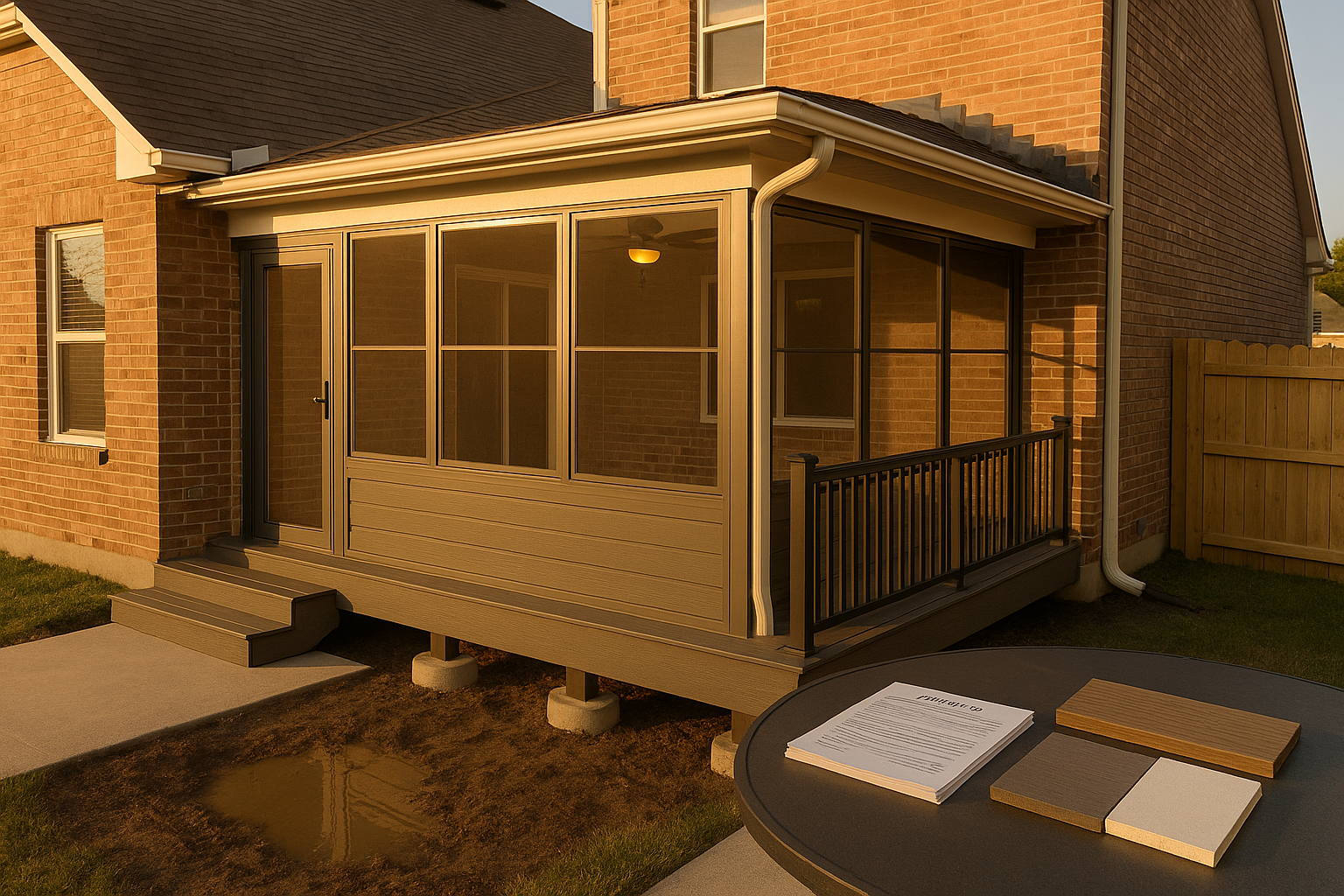
Railing posts? They punch through the deck surface and create another spot for water to get into the frame. When we install railing posts, we make sure the area around the base is flashed properly. If you're adding a railing later, a railing contractor should coordinate with the deck builder so the joist tape isn't punctured carelessly. The same principle applies to a fence: if you're putting in fence posts near a deck, keep water from pooling at the base. And for patio enclosures, roof runoff often drains onto a deck. Good drainage and taped joists go hand in hand.
The Bottom Line
Deck joist tape won't make a rotten frame good. But it will keep a good frame from getting rotten. If you're building a new deck in Indianapolis, Carmel, Fishers, Zionsville, Westfield, Noblesville, Greenwood, Brownsburg, Avon, or Plainfield, add it to the scope. It's a small line item. Big payoff. Want us to take a look at your existing deck or quote a new one with joist protection? Get a free on-site assessment. We'll tell you exactly what tape we'd use, how many rolls, and where we'd put it. No pressure. Just a plan.
Thinking about your own deck or pergola?
Free in-home design consultation, 3D rendering, and a written quote — no pressure.