Last spring, I was over at a buddy's house in Fishers. He'd just had a composite deck put on the back of his place, and he was showing it off. Looked great from a distance. But up close, every few inches you saw a little dimple of a screw head. Some were slightly stripped, a couple sat proud because the driver slipped, and a few had little plastic caps that didn't quite match the board color. He sighed and said, "I wanted that clean, premium look, but it ended up looking like a construction site." That's when I told him about hidden deck fasteners. He'd never heard of them. And a lot of Indianapolis homeowners haven't, either. So let's talk about what they are, how they hold up in our weather, and whether they're worth the extra cash on your composite deck.
What Are Hidden Deck Fasteners?
Hidden deck fasteners are little metal clips that lock into the groove on the side of a composite board and screw down into the joist below. The next board slides over the clip, hiding both the fastener and the screw. No screw heads on top. No caps. Just clean, even lines between boards. Most composite boards made these days have a groove on both sides, so you can use hidden deck clips from start to finish. You'll need starter clips at the outside edges (against the house or the rim joist) and universal clips for the field. Some clips are plastic, some are stainless steel. In Indiana, you want stainless steel screws at minimum because our winters and humidity like to eat cheap coated screws.
Why Homeowners Make the Switch
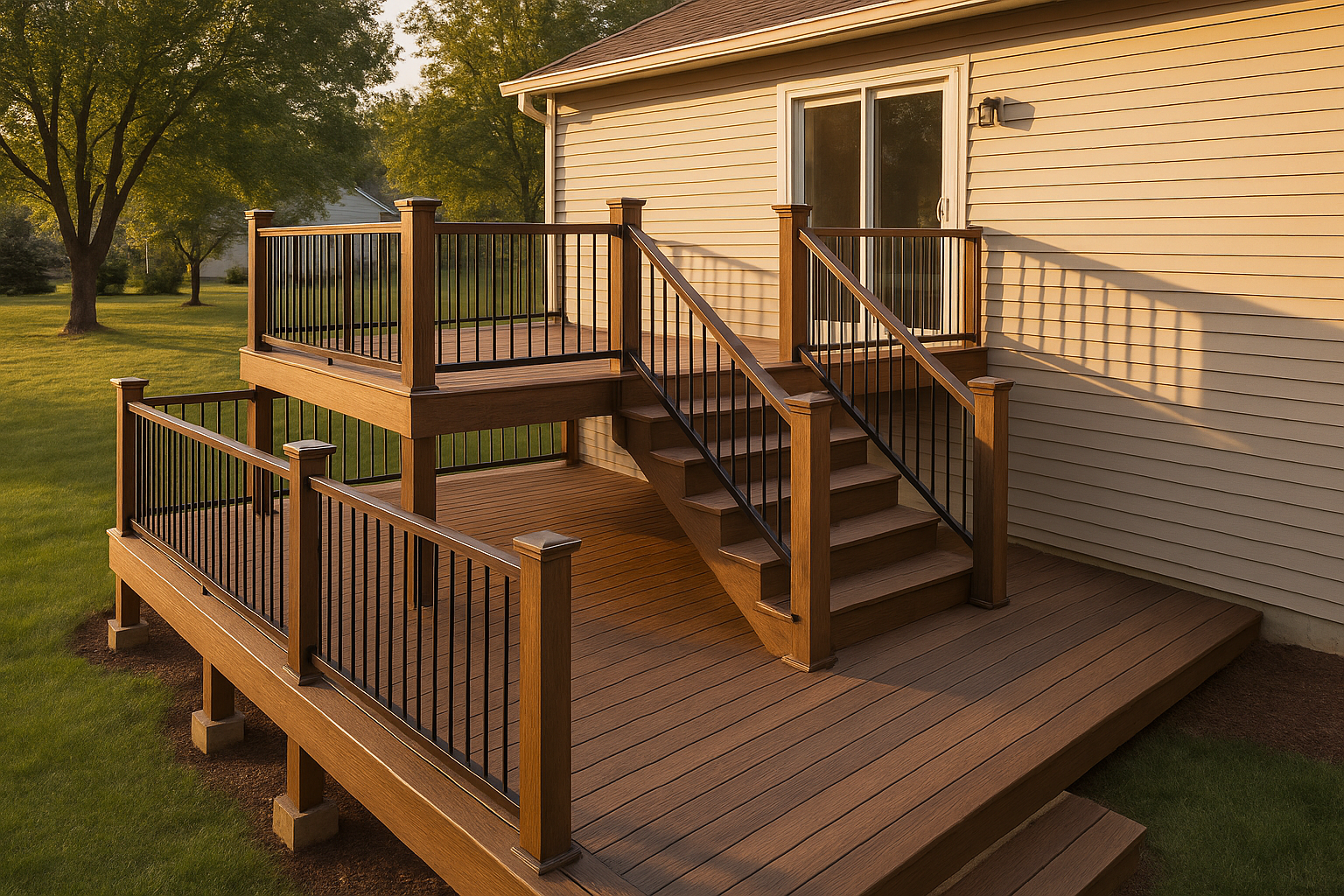
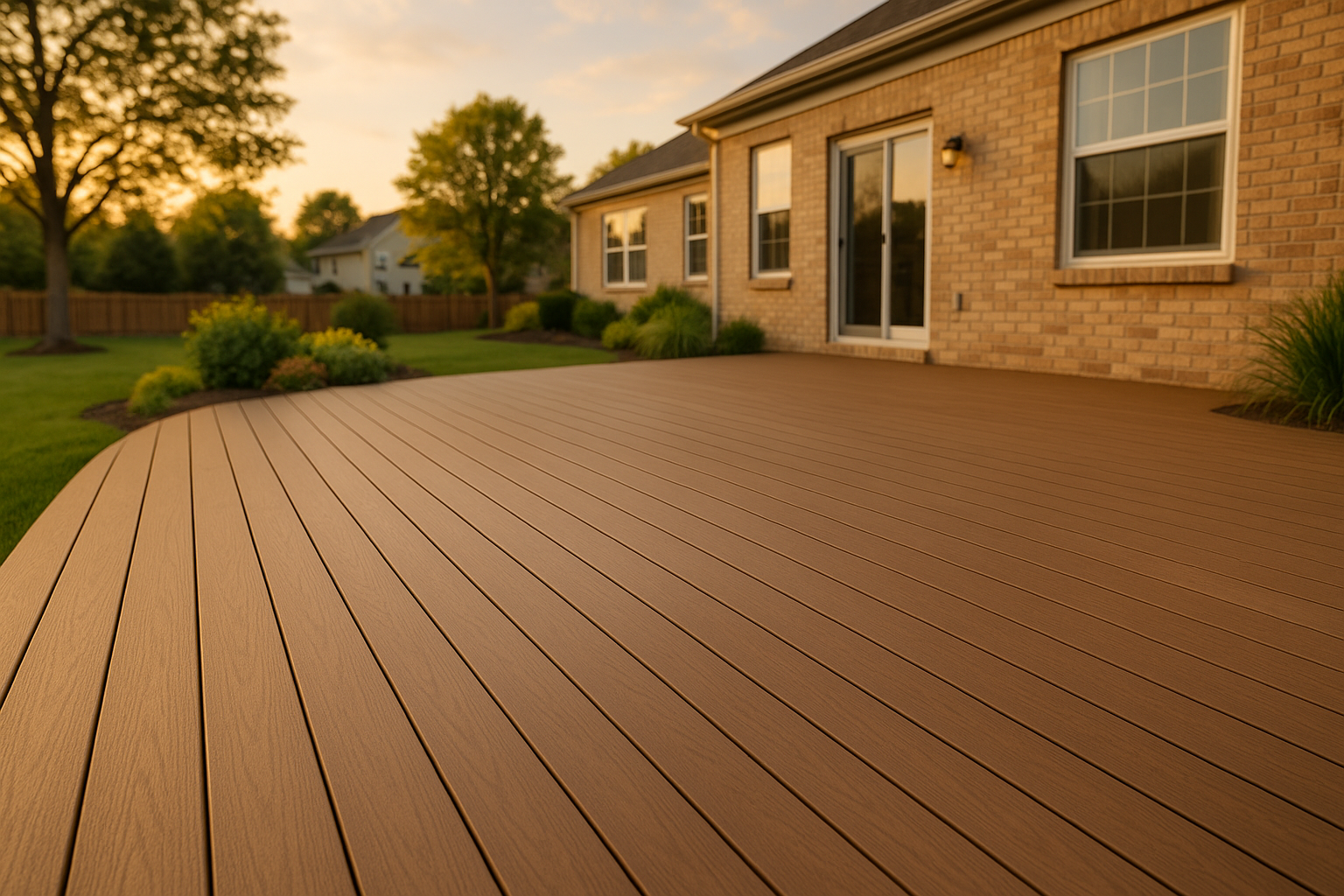
The biggest reason? Looks. A composite deck with hidden fasteners looks like a million bucks. No screw heads catching the light or catching your bare feet. No little plastic caps that fade at a different rate than the boards and leave polka dots after two summers. And because the clips hold boards at a set gap, you get perfectly consistent spacing everywhere. That matters when you're dealing with expansion and contraction. See, composite boards move with temperature and moisture. Face screws basically nail the board down too tight, and the board can't move the way it wants. Over time, that can cause warping, buckling, or screws popping up. Hidden clips allow the board to expand and contract a tiny bit while still staying put. It's a better system for our Indiana freeze-thaw cycles.
I've had a client in Carmel tell me she could finally walk barefoot on her deck without stubbing a toe on a raised screw. She also said sweeping was way easier because there were no little bumps to catch the broom.
But Do They Hold Up in Indiana Winters?
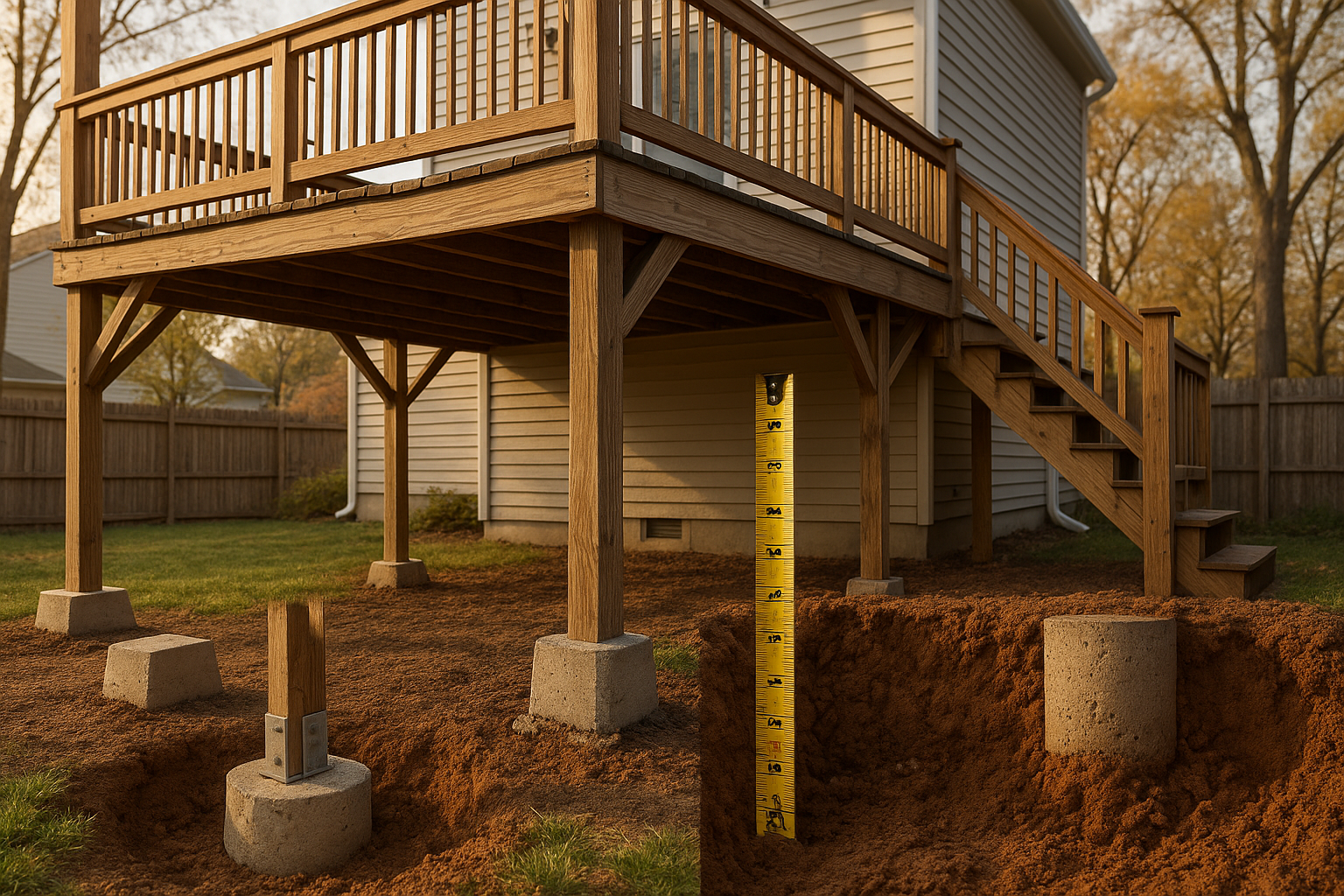
Short answer: yes, if you install them right. The clips themselves are not the weak point. The weak point is almost always the framing and the spacing. In Central Indiana, we get days below zero in January and 90 degrees in July. Composite boards will expand and contract more than you'd think. If you butt boards too tight or don't leave enough gap at the edges, you'll see buckling or boards pulling away from the house. Hidden fasteners actually help here because they give the board room to move. But you also need proper deck board spacing—usually 3/16 to 1/4 inch between boards, depending on the manufacturer. And you need ventilation. A deck with no airflow underneath holds heat and moisture, which makes expansion worse. That's why we always check the ground clearance and air movement under low decks in places like Broad Ripple or Irvington, where lots are flat and decks can sit close to the ground.
A few years back, a guy in Greenwood ignored our advice and put hidden fasteners on a near-grade deck with no ventilation. First hot spell, some boards started to buckle. He had to tear off a section and add more air vents. Don't be that guy.
And while we're talking about moisture, make sure you use joist tape over your treated lumber before you install clips. It keeps water from pooling around the clip screws, which can cause rot and galvanic corrosion. We wrote a whole thing about it here.
What Hidden Fasteners Cost—and When Face Screws Still Win
Here's the honest answer: hidden deck fasteners cost more than a box of face screws. A lot more, per linear foot. You're paying for the clips, the stainless screws, and usually a bit more labor because you have to set each clip just right. On a typical 400-square-foot deck in Zionsville, hidden fasteners might add anywhere from $800 to $1,500 to the total project, depending on board brand and complexity. But that's not a hard number. It depends on how many starter clips you need, whether you're doing picture-frame borders, how many stairs and angled cuts you have. The best way to get a real price is to have us walk the site and give you a line-item quote.
Are there times when face screws still make sense? Yep. The outer edge of a picture frame board usually gets face-fastened with color-matched plugs because you can't clip a board that only has one groove. Same with stair treads—you want a solid screw and plug there for safety. Fascia boards get screwed on from the side. And railing posts? Those need big lag bolts into the framing, not hidden clips. If you're adding a railing later or working with a railing contractor, they'll want solid blocking underneath. That's something we plan for even when we're using hidden fasteners in the field.
Also, if you're planning to add a patio enclosure or screened porch later, hidden fasteners won't get in the way. In fact, a clean deck surface with hidden clips makes it easier to run new posts or walls without worrying about screw heads in the way. We've worked with patio enclosure suppliers in Carmel and Westfield, and they love a deck with no surface fasteners to work around.
And if you have a fence line right up against the deck, sometimes we'll face-screw the last board or two so we can trim them tight to the fence posts. That's a detail we work out with the fence contractor or do ourselves, since we handle those too.
What Could Go Wrong—and How to Avoid It
People ask me, "What if I need to replace one board later? Is it impossible with hidden fasteners?" Not impossible, but it does take some forethought. If you install boards from one side to the other, you can usually slide a damaged board out the end after removing the edge trim. But if the board is trapped between a picture frame border and a wall, you might have to cut it out and use a repair clip. That's why we plan the install order ahead of time. And we keep a few extra boards from every job in case a replacement is needed down the road.
Squeaks? Hidden fasteners don't cause squeaks if the joists are flat and the clips are snug. Most squeaks on composite decks come from joists that aren't level or from boards rubbing against the joist tape. We check all that before we start clipping.
One big thing: warranties. Every composite board manufacturer has a list of approved fasteners. If you use the wrong clips or, say, some generic stainless screws from the hardware store without checking, you can void the board warranty. That's a bad day, especially on a $20,000 deck. We always follow the manufacturer's approved fastening system, and local inspectors around Indianapolis, Fishers, Noblesville, and Greenwood expect to see that. DeckPros pulls permits and makes sure every fastener meets code and manufacturer specs, so inspections go smooth.
If you're comparing composite vs. wood, we have a whole article on that—deck lifespan and costs for Indiana homeowners.
Maintenance: Easy, But Not Zero Effort
Here's the thing: hidden deck fasteners don't make your deck maintenance-free. They make it easier. You still get leaves, pollen, and all the gunk that falls from Indiana trees in October. But because there are no screw heads, you can sweep or use a leaf blower without catching on anything. Still, you need to keep the gaps between boards clear. If gunk packs into those spaces, water can't drain, and you get standing water, which invites mold and makes boards slick. In the fall, especially in wooded areas like around Eagle Creek or along the Monon Trail, you'll want to blow off the deck weekly or so. We wrote a whole fall maintenance checklist you can grab.
And don't go crazy with a pressure washer. Composite boards don't love high pressure; it can fuzz up the surface and force water under the clips. Just use a hose, a soft brush, and some mild soap.
Is It Worth It? My Take
For most Indianapolis homeowners, yes. If you're spending the money on composite decking, you're already paying for low maintenance and a premium look. Hidden deck fasteners complete that look and actually help the boards last longer by allowing movement. The extra cost is usually a small percentage of the total project, and it pays off every time you walk out barefoot and don't curse at a popped screw.
But don't just take my word for it. The best way to know is to have us look at your actual deck site. We'll check your joist spacing, your ground clearance, your drainage, and tell you straight up if hidden fasteners make sense for your situation. We'll show you the clip options for the board brand you like, give you a mock-up of the gap aesthetics, and put together a line-item quote that breaks down materials and labor. If you need help with railing, fence coordination, or even planning for a future screened porch, we can handle all that too—we're not just deck builders, we're a full-service contractor for outdoor projects.
Ready to talk it over? Head over to our contact page and schedule a short planning call. We'll come out, measure, and give you real numbers. No pressure, no nonsense. Just good advice from folks who've built a lot of decks in Indianapolis, Carmel, Fishers, Zionsville, Westfield, Noblesville, Greenwood, Brownsburg, Avon, and Plainfield.
Thinking about your own deck or pergola?
Free in-home design consultation, 3D rendering, and a written quote — no pressure.