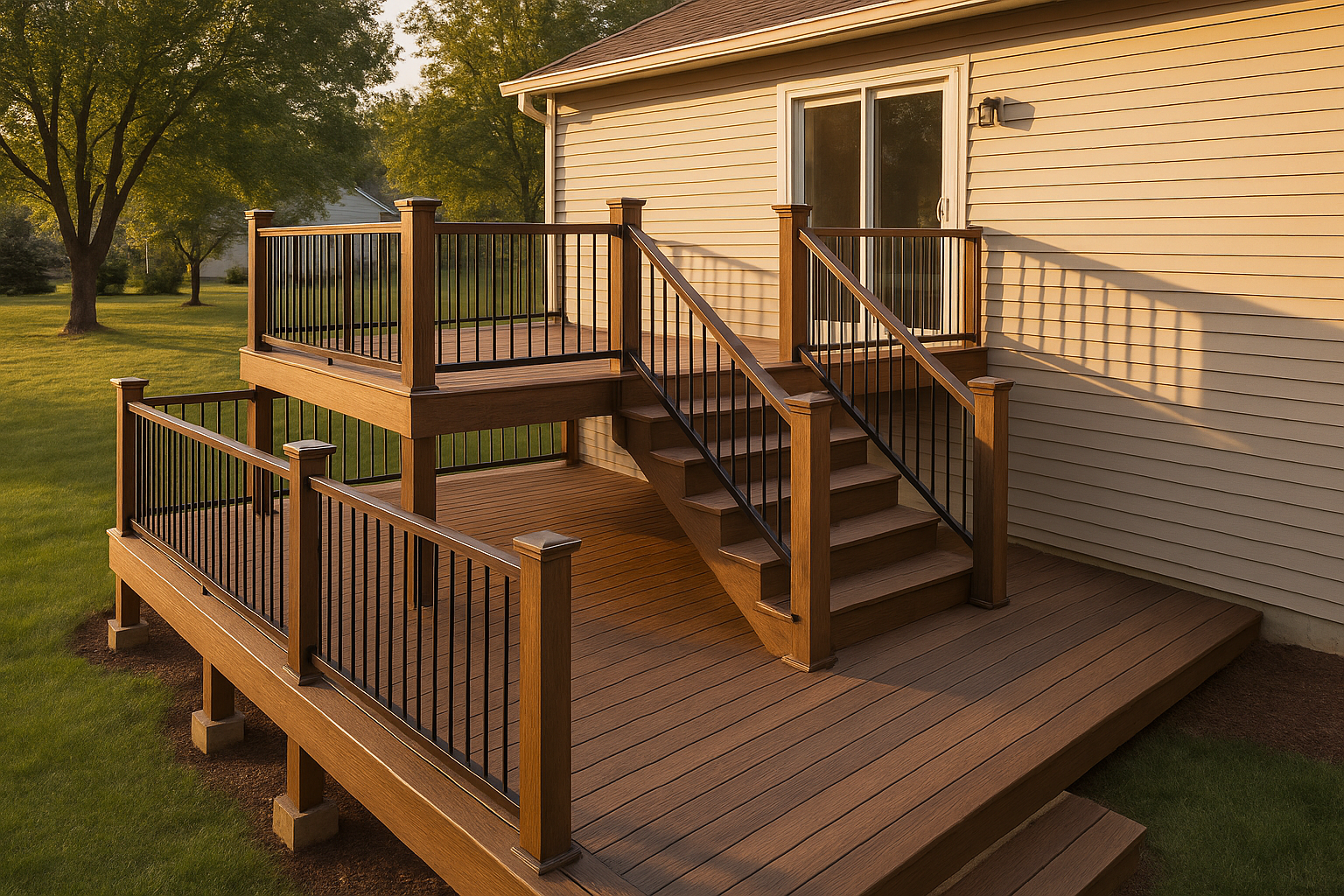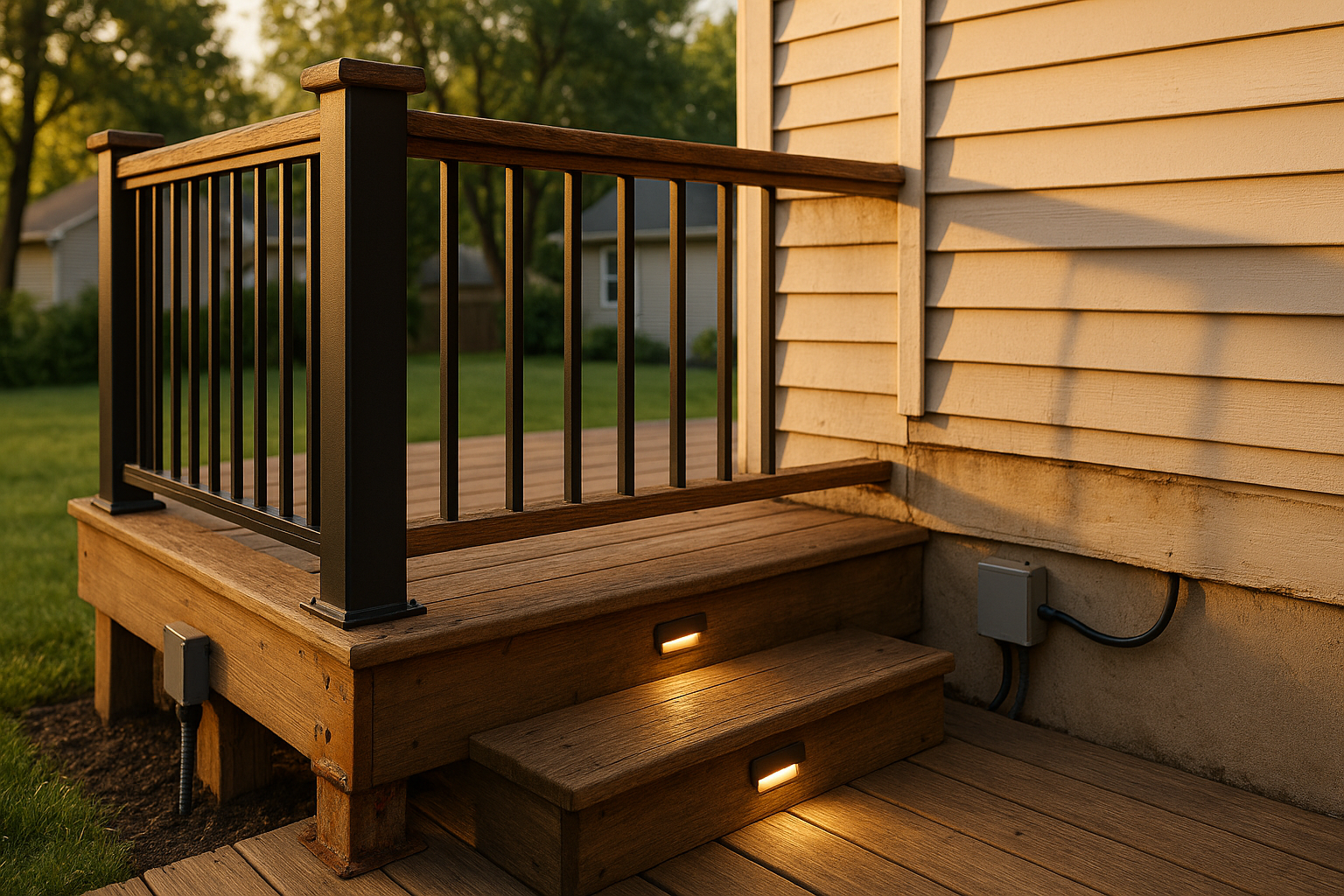
Last summer my buddy Tim in Fishers sent me a photo of his deck at 6 p.m. — sunlight blasting straight into his kitchen, the composite boards too hot to walk on, and his kids hiding inside. He'd bought a cheap patio umbrella, but a gust of wind snapped it in half. That's when he started looking at deck shade ideas that actually hold up in Indiana weather.
First, decide what kind of shade you want
Before you pick a structure, think about your main goal. Do you want dappled shade that still lets some sun through? Near-full shade for hot afternoons? Or actual rain protection so you can sit outside during a summer thunderstorm? That choice drives everything else.
Most Indianapolis decks get hammered by the late afternoon sun, especially if they face west. If you’re in Carmel or Zionsville with a west-facing deck, you know the struggle. You can angle pergola rafters or slats to block that low sun while keeping your sliding door from feeling like a cave. It’s a simple trick but it works.
Pergolas: open rafters, retractable canopies, louvers, and solid roofs
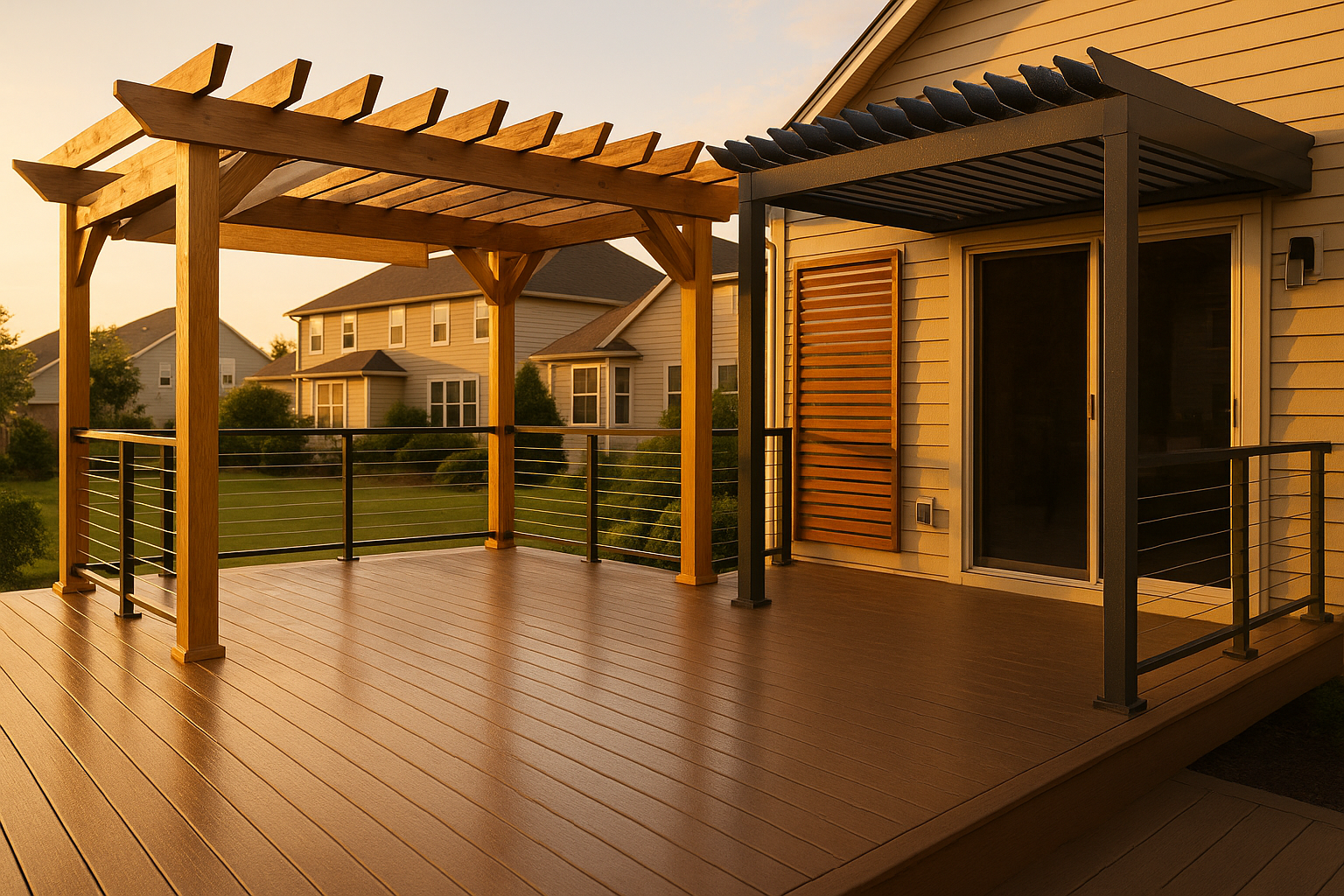
Pergolas are the go-to deck shade solution for a reason. You can build them attached to the house or freestanding, and they fit almost any deck size. Here are the main styles:
Open rafter pergolas
This is the classic look. Wood or aluminum beams run across the top, giving you partial shade that shifts as the sun moves. You can grow climbing vines on it for extra seasonal shade in summer, but that takes a few years. Open rafters don’t block rain, so keep that in mind.
Retractable fabric canopies
If you want flexibility, add a retractable canopy to a pergola frame. On a scorching July day, pull it closed for full shade. On a cool October morning, open it back up. The fabric needs to be UV-stable and wind rated — cheap canopies rip fast in Indiana gusts. You also need to retract it before big storms and in winter to avoid snow load damage.
Motorized louvered pergolas
This is the premium option. Louvers rotate to control light and shade, and many systems close tight enough to shed rain. You press a button and the whole thing shifts. In winter, open the louvers to let snow fall through instead of piling up. Aluminum louvered pergolas in Indianapolis are popular because they handle freeze-thaw cycles without rusting. They cost more, but if you want a deck you can use even in light rain, it’s worth comparing to a full patio enclosure.
Polycarbonate roof panels
Want rain protection without making your deck feel like a basement? Clear polycarbonate panels let light through but keep water out. You’ll need a drip edge or small gutter to move runoff away from the deck boards and your door threshold. These panels can get scratched over time, but they’re a solid mid-range choice for a dry, bright space.
Shade sails, awnings, and pavilions: other deck shade ideas
Not sold on a pergola? A shade sail over your deck can work if you have strong anchor points — either a sturdy house wall and posts, or two posts set in concrete. But shade sails flap in high wind, and they don’t hold snow. Retractable awnings attached to the house are great for small decks, but they won’t cover a large area and can’t handle heavy snow unless retracted.
If you want full rain and sun protection, a freestanding pavilion might be the better call. Pavilions have a solid roof and open sides, giving you a dry, shaded room outside. Check out our breakdown of gazebo vs pergola vs pavilion to see how they compare in real life.
Can your deck handle the extra weight? Structure first
Here’s the part people skip: adding a pergola or pavilion means extra dead load, wind uplift, and snow load on your deck. A 10x10 wood pergola can weigh several hundred pounds, and when wind hits it, the uplift force can pull posts loose if they’re not bolted right.
If you’re attaching to the house, the ledger needs flashing and proper lag screws — bad flashing causes rot behind your siding. If you’re building freestanding, footings need to go below the frost line (about 36 inches in central Indiana) or the whole thing can heave in winter. We wrote a whole post on deck footings and frost depth that’s worth a read before you dig.
A quick test: if your deck bounces when you walk on it, or if the posts are just sitting on concrete blocks, you’ll need to reinforce before adding overhead structure. A deck contractor (like us) can check the framing and tell you straight what’s needed. Don’t guess on this.
Materials that survive Indiana weather
Your two main material paths are wood and aluminum/steel. Cedar or pressure-treated lumber looks warm and natural, but you’ll be re-staining it every couple years. Aluminum or powder-coated steel is sleek and low maintenance, but it costs more up front. For fabrics, look for high UV rating and solution-dyed acrylic — that’s the stuff that won’t fade or mildew fast.
Maintenance isn’t a big deal if you stay on top of it. Clean fabric canopies with mild soap each spring, re-seal wood before the first frost, and winterize any retractable parts. Leaves and pollen will gather on top of solid roofs, so plan for a quick rinse-off in the fall. We’ve got a fall deck maintenance checklist that covers the basics if you need a reminder.
HOA rules and permits in Indianapolis suburbs
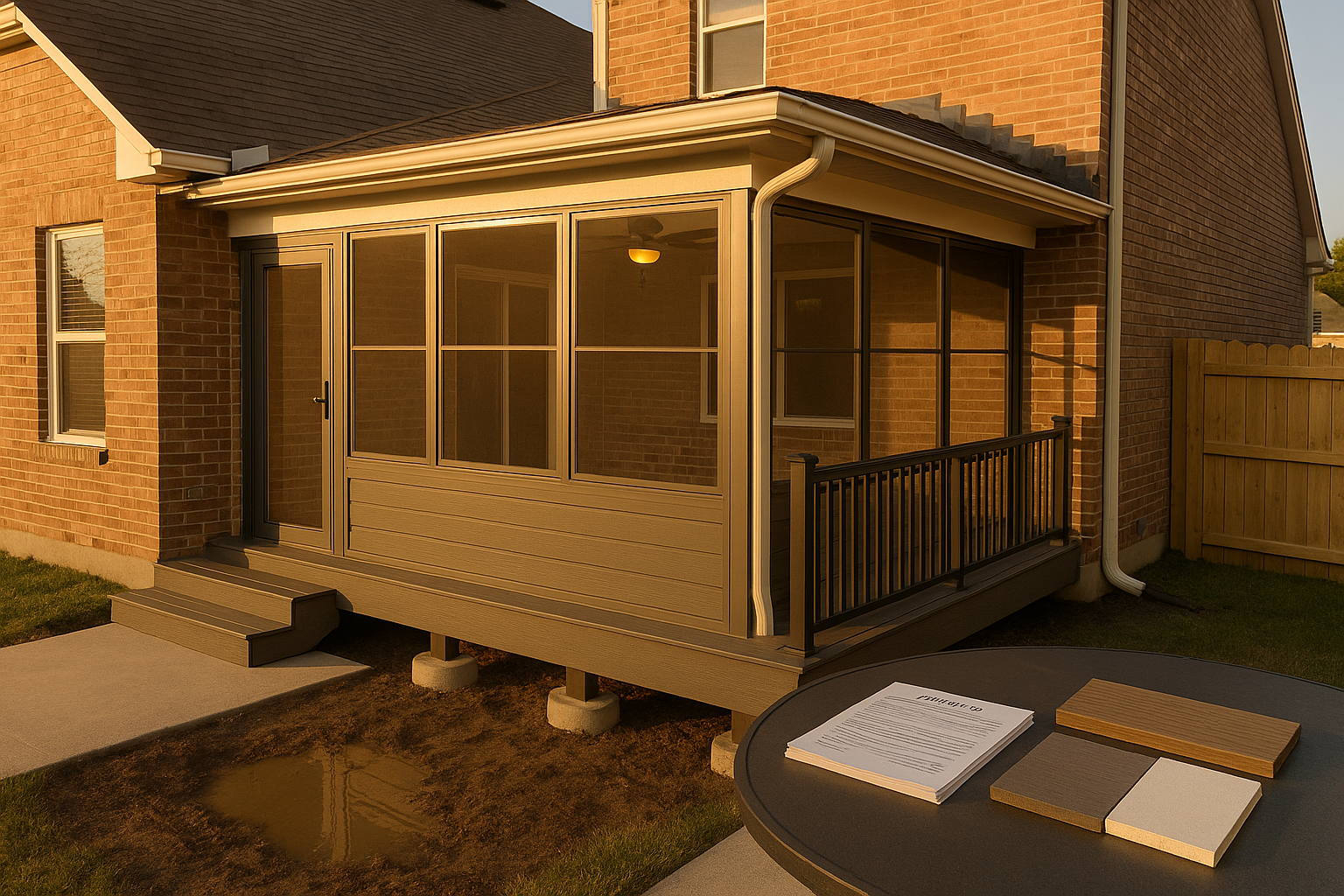
If you live in Carmel, Fishers, Westfield, or Zionsville, your HOA probably needs to approve any new overhead structure. They’ll want to see drawings, materials, and sometimes even color samples. In Marion County, an attached or roofed pergola usually triggers a building permit, and the review can take a couple weeks. Start early so you’re not stuck waiting in peak building season.
We help homeowners with this paperwork all the time. It’s not fun, but it beats ripping out a pergola because the HOA said no.
Privacy screens, railing, and fence contractor touches
Shade isn’t just overhead. A slatted privacy screen on the west side of your deck blocks low-angle evening sun and gives you a little seclusion from neighbors. You can build these as part of the pergola, or add freestanding panels. A fence contractor can build a matching privacy fence or lattice trellis if you want a more permanent screen.
And if your deck railing is getting wobbly or you want to switch to cable railing for a cleaner look, a railing contractor can coordinate that with the pergola install so everything matches. Some clients also use us as a patio enclosure supplier when they want a three-season room instead of just a shade structure — it’s a bigger project, but the logic is the same: keep the sun and rain off.
What it costs and how to get started
Ballpark, an open wood pergola on a deck might run $3,000–6,000. A pergola with retractable canopy or added privacy screens lands in the $8,000–15,000 range. A motorized louvered aluminum pergola or a full pavilion usually starts around $20,000 and goes up from there. These are rough numbers, not quotes — your deck size, material choices, and structural work will move the needle.
If you’re tired of your deck being a no-go zone in July, let’s talk. We’ll come out, look at your sun path, check the deck frame, and put together a clear plan with a few deck shade ideas that fit your budget. No pressure, no sales pitch. You can request a quote here and we’ll get back to you within a day or two.
Thinking about your own deck or pergola?
Free in-home design consultation, 3D rendering, and a written quote — no pressure.