Last summer I got a call from a homeowner in Fishers who was ready to pull the trigger on a backyard project. She'd spent three weekends staring at Pinterest, torn between a pergola and a gazebo, and her husband was about to lose it. 'I just want shade, but I don't want to feel closed in,' she said. That's the exact moment I realized most people in Indianapolis don't need a structure, they need the right structure. And that's where the gazebo vs pergola debate gets real.
The Big Three: Pergola, Gazebo, Pavilion
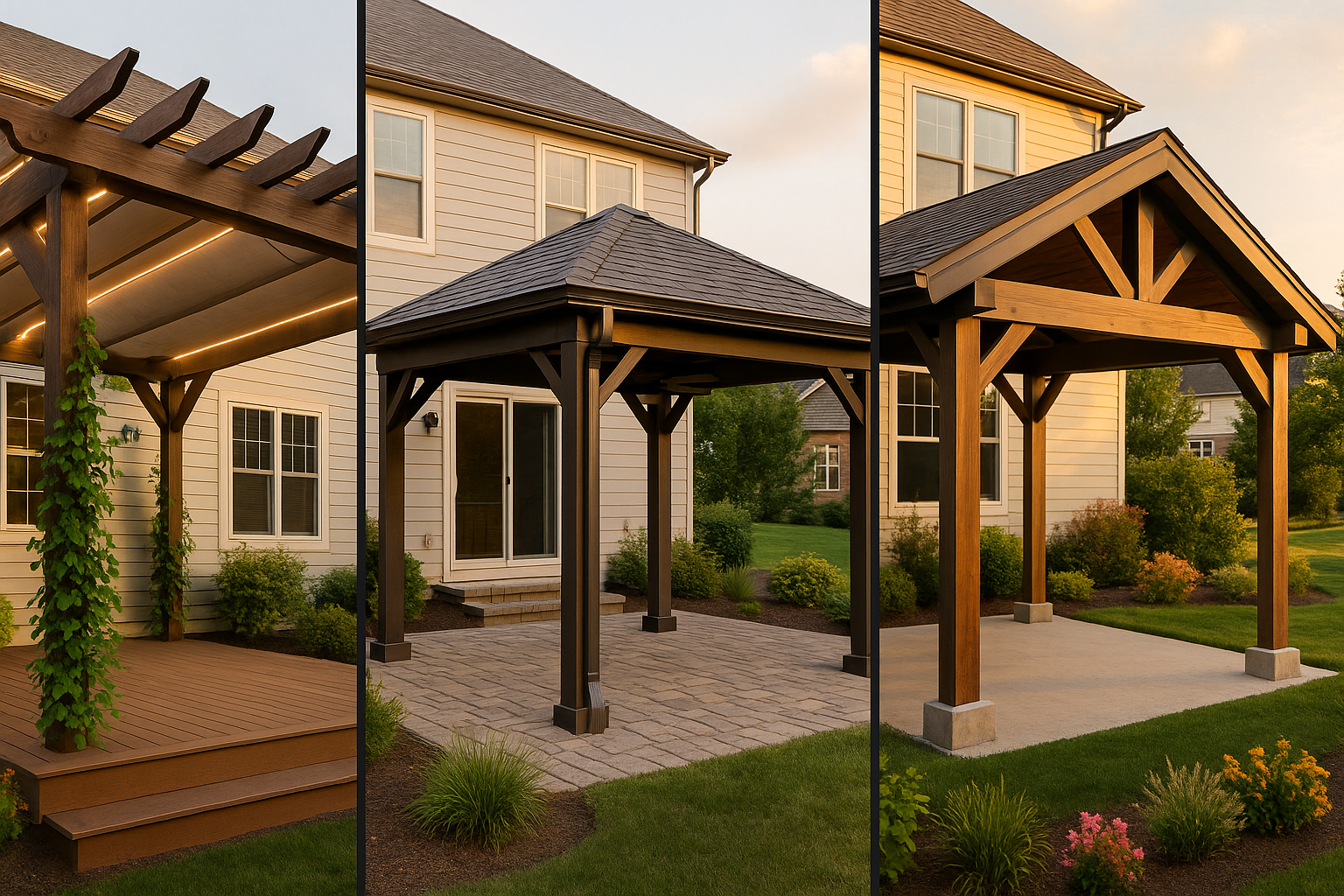
Let's clear up the basics. A pergola is an open-roof structure with cross beams or slats. You get filtered shade and plenty of airflow, but if it rains, you're getting wet. A gazebo has a solid roof, often with railings or partial walls, so it gives you true shade and rain cover. A pavilion is kind of in between: open sides but a solid roof, like a mini outdoor room without walls.
So what is a pergola really? It's a frame for sunlight and climbing plants, not a shelter. And what is a gazebo? Think of it as a permanent outdoor umbrella that can handle a downpour. The pergola vs gazebo vs pavilion comparison usually comes down to one question: do you want to sit outside when it rains, or just when the sun's out?
In Indianapolis, a lot of folks default to a pergola because they see them on decks. But a gazebo might make more sense if you're tired of dragging chairs under the eaves every time a summer storm rolls through Carmel or Westfield.
Indianapolis Weather Doesn't Mess Around
Our climate is not gentle. Hot humid summers, freeze-thaw winters, heavy clay soil, and wind bursts that come out of nowhere. That changes how you should think about a backyard structure.
Frost depth is a big deal. Most of Central Indiana needs footings down around 36 inches to get below the frost line. If you skip that, your new gazebo or pergola could heave like a bad sidewalk after the first winter. I've seen decks shift an inch because the footings weren't deep enough. You can read more about that in our guide on deck footings and frost depth in Indiana.
Wind is another factor. We get fast-moving storms that whip through Greenwood and Brownsburg. A poorly anchored pergola can turn into a kite if the posts aren't sized and braced right. That's why we always spec post bases, lateral bracing, and sometimes heavier posts than you'd see in a milder climate.
Snow and ice? Open pergolas handle that fine because there's no roof to catch the load. But a solid-roof gazebo or pavilion needs to shed snow properly. A louvered pergola can be closed tight or left open to dump snow, and good guttering keeps meltwater off your deck.
Matching the Structure to Your Actual Goal
Here's what I tell homeowners: skip the Pinterest board and ask yourself three questions.
How much shade do you really need? If you want dappled light while you grill, a pergola works. If you burn easily and want to eat lunch outside without an umbrella, go gazebo or pavilion. Hybrid options like a louvered pergola Indianapolis homeowners love because you can adjust the slats from full sun to full shade in a minute.
Do you care about rain? This is the dealbreaker. A pergola with no canopy is a fair-weather friend. A gazebo with a solid roof means you can keep the patio furniture out and not panic when the radar turns green.
What about bugs? Mosquito pressure from May through September is real. I've had clients in Avon and Plainfield who wouldn't step on their deck until we added screens or at least overhead fans. A gazebo or pavilion with screening keeps the mosquitoes out way better than an open pergola. Privacy screens on a pergola can block a nosy neighbor, but they won't stop the bugs.
If your deck can't support a full roof, a pergola might be the only option without major framing work. And if you're building over a paver patio, a gazebo on its own footings is often simpler than reinforcing a deck. That's where a floating deck vs attached deck decision comes into play too.
Materials That Won't Quit in Indiana
Cedar is the classic choice for a pergola. It smells great, looks warm, and handles our humidity if you keep up with staining. Aluminum is the low-maintenance star—powder-coated finishes don't peel, and it's lighter than steel but strong enough for our wind. Pressure-treated lumber is budget friendly but it moves a lot; expect cracks and twists after a few freeze-thaw cycles.
Vinyl pergolas are another option. Vinyl vs wood pergola? Vinyl won't rot, but it can get brittle in extreme cold and it doesn't have that natural grain. If you're building on a composite deck, an aluminum or cedar pergola usually blends better than vinyl. Our deck lifespan guide for composite vs wood explains why the deck material matters for post connections.
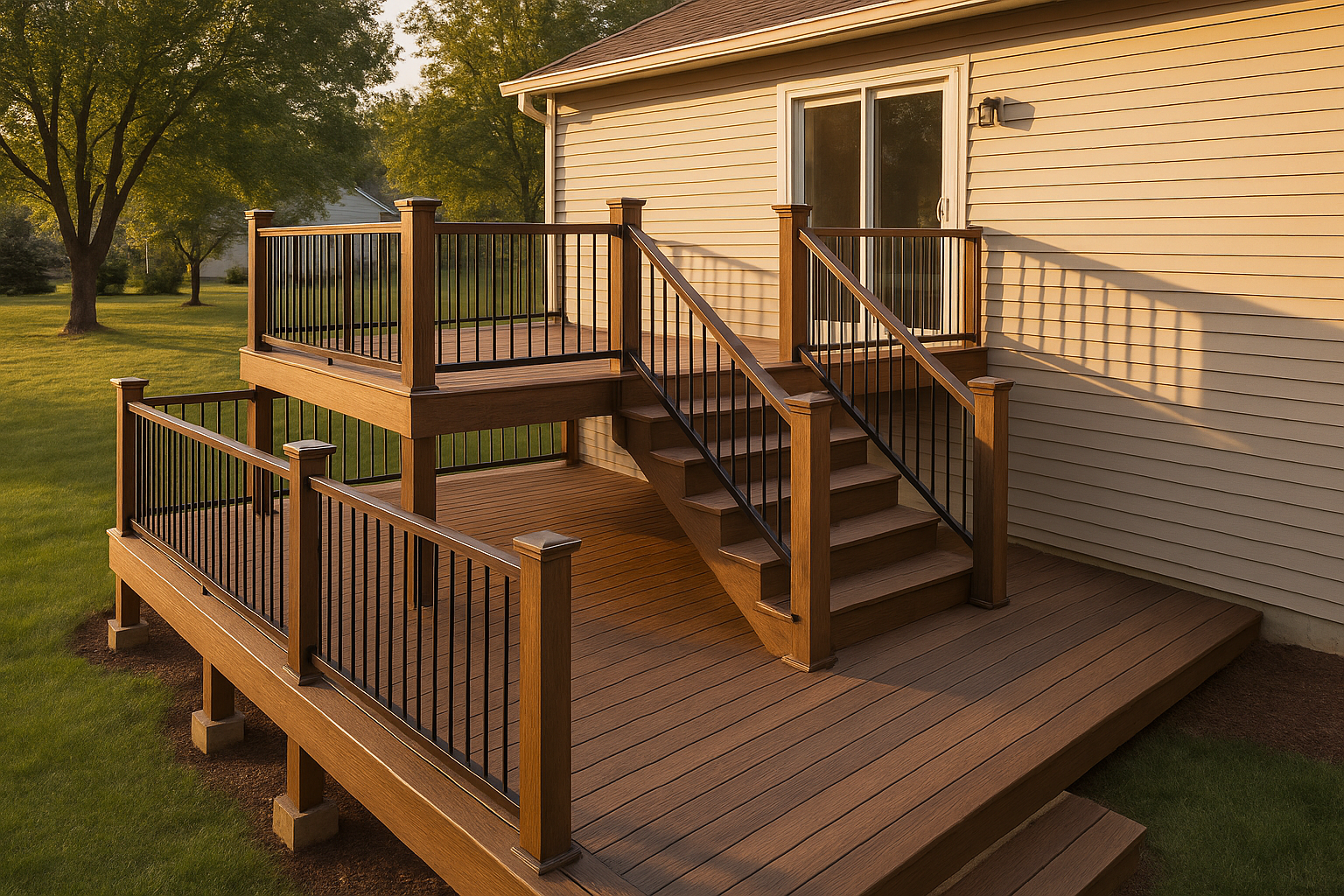
And don't forget the railings and fence. If you already have a cedar fence, a cedar pergola ties the yard together. If you're updating deck railings at the same time, matching the post style and color to your pergola makes the whole project look planned, not patched. That's where a good contractor thinks like a railing contractor and a fence contractor at the same time.
The Not-So-Fun Stuff: Permits, HOAs, and Deck Support
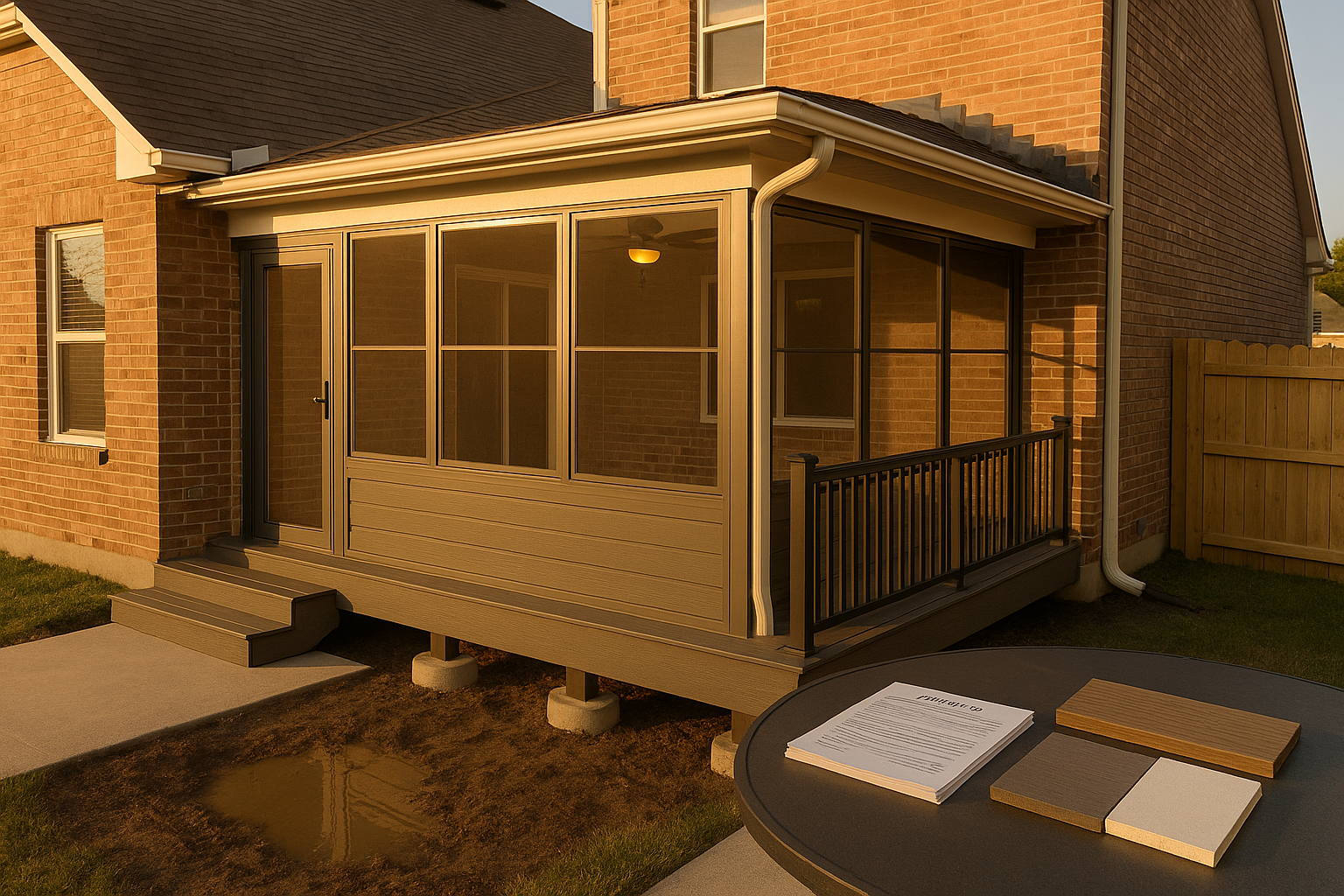
Most suburbs in Hamilton and Johnson County want a permit for any structure over a certain size or height. Carmel, Noblesville, Zionsville, Greenwood—they all have their own rules. And HOAs often need drawings, material samples, and color swatches before you even break ground. HOA approval pergola or gazebo can take a few weeks, so plan ahead.
Call 811 before you dig. Utilities can be shallow near patios and fences, especially in older neighborhoods with mature trees.
Now, the deck support question. Can your existing deck hold a pergola? Maybe not. A standard deck built for a grill and a couple chairs might not handle the uplift and lateral loads of a pergola with a solid roof. We often have to add blocking, sister joists, or pour new footings directly under the posts. If you're attaching to the house, flashing the ledger correctly keeps water out of your siding. And if you're thinking about a pavilion with screens or even a full screen room, that enters patio enclosure territory—you need a supplier who understands screening, doors, and weatherproofing, not just four posts and a roof.
Comfort Add-Ons and the Maintenance Reality
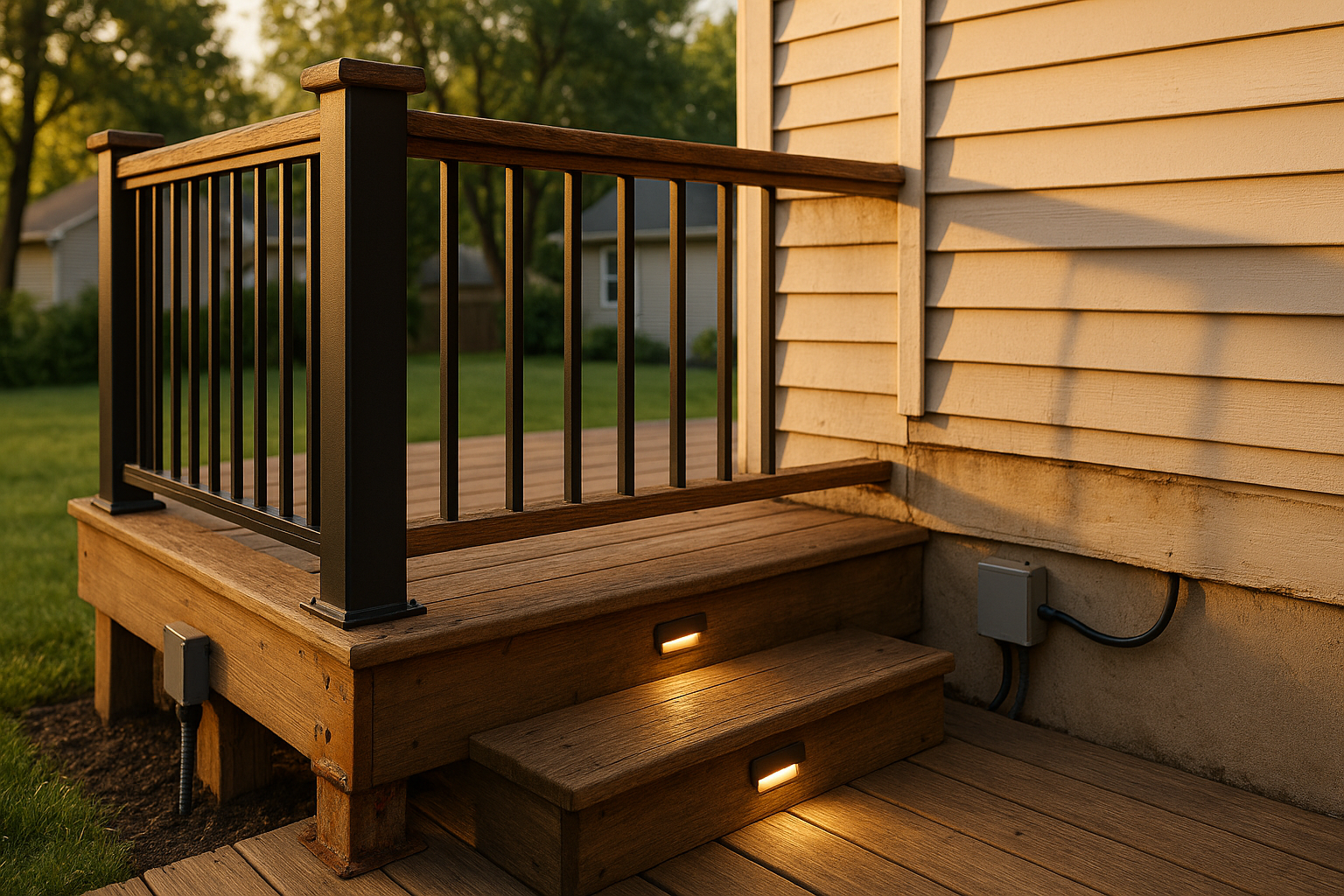
Retractable canopies, louvered roofs, privacy screens, integrated lighting, ceiling fans, heaters—these add-ons make the space usable from spring through fall. For a gazebo, gutters and downspouts are a must to direct water away from the deck. For an open pergola, a fabric canopy gives you shade when you want it and open sky when you don't.
Maintenance is part of the deal. Cedar needs staining every two to three years; skip it and it turns gray and starts to check. Aluminum just needs a wash and a check on the hardware. After a freeze-thaw winter, walk around and tighten bolts, look for movement at the base plates, and clean out any debris in the roof channels. Our fall deck maintenance checklist covers some of the same ground for the deck itself.
A Quick Decision Guide
- If you want shade but still feel the breeze, go pergola.
- If you want to sit outside during a summer rainstorm, go gazebo or pavilion.
- If you want flexibility and don't mind spending more, go louvered pergola.
- If bugs are your main problem, go screened gazebo or pavilion.
- If HOA rules are strict, a freestanding louvered pergola often passes easier than a roofed structure.
- If your deck is older, assume you'll need reinforcement; get a pro to look before you buy the kit.
Cost drivers are pretty simple: size, material, roof type (open vs solid), foundation work, electrical, screens, and accessories. The more you change your mind mid-build, the more it costs. A clear written scope from the start keeps you from surprise invoices.
So if you're stuck between a gazebo and a pergola (or a pavilion), the best next move is to have someone actually look at your yard, your deck, and your HOA rules. At DeckPros, we do a planning-first site consult, give you a clear written scope, and build it so it survives Indiana winters without drama. Whether you're in Indianapolis, Brownsburg, or Westfield, we've seen the good, the bad, and the heaving footings. Request a site consult here and we'll come out and tell you straight what makes sense for your place.
Thinking about your own deck or pergola?
Free in-home design consultation, 3D rendering, and a written quote — no pressure.