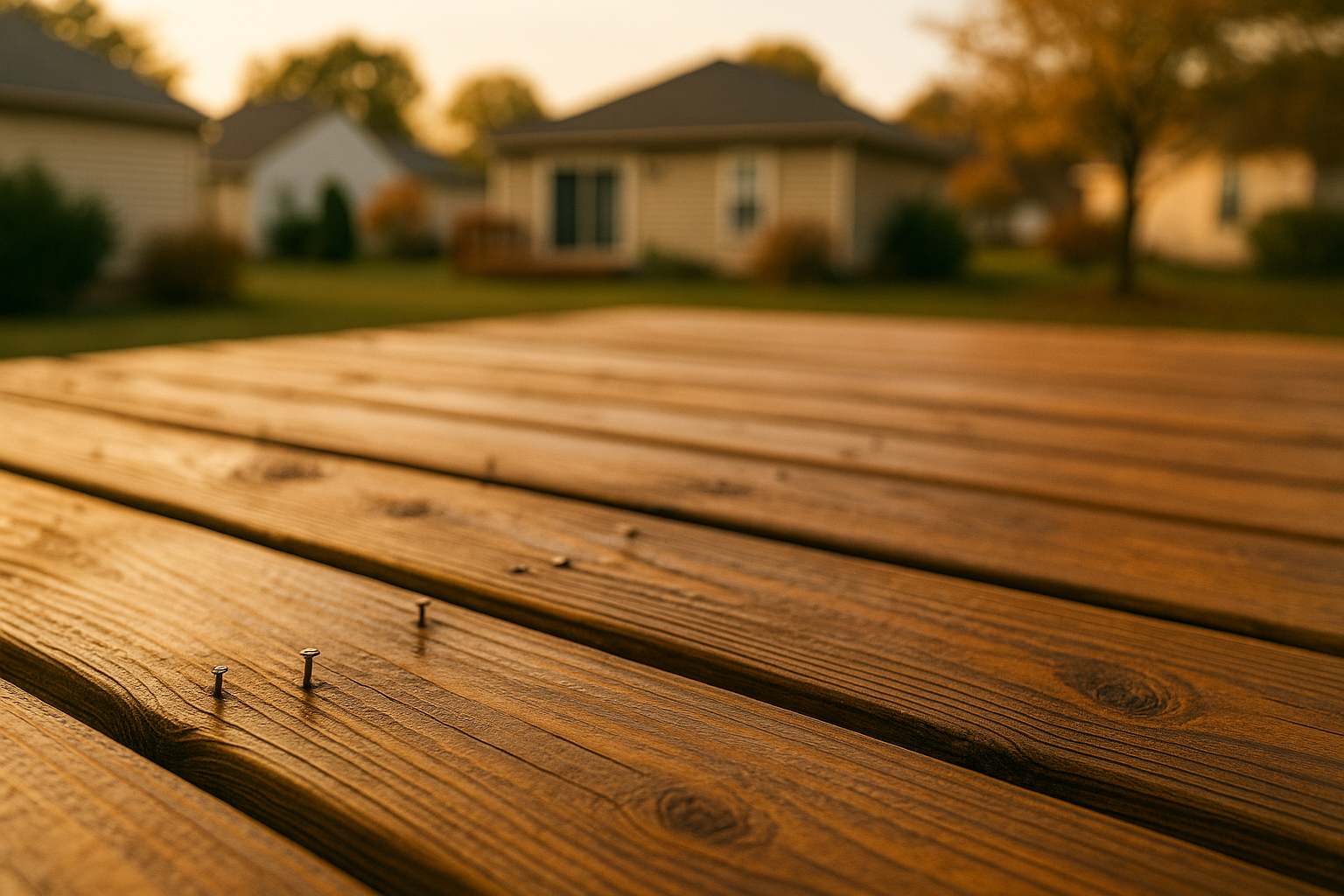
Last summer, I got a call from a guy in Fishers. He’d been out on his deck in bare feet and caught a nail with his big toe. It ripped the nail right out of the board, and he had to limp inside for a bandage. The deck was only six years old. When we got there, we found a dozen more nails poking up just waiting to do the same thing. He’d been hammering them back down every spring, but they kept coming back. That’s the thing about deck nail pops — they don’t stop on their own.
Why Deck Nail Pops Happen Here in Central Indiana
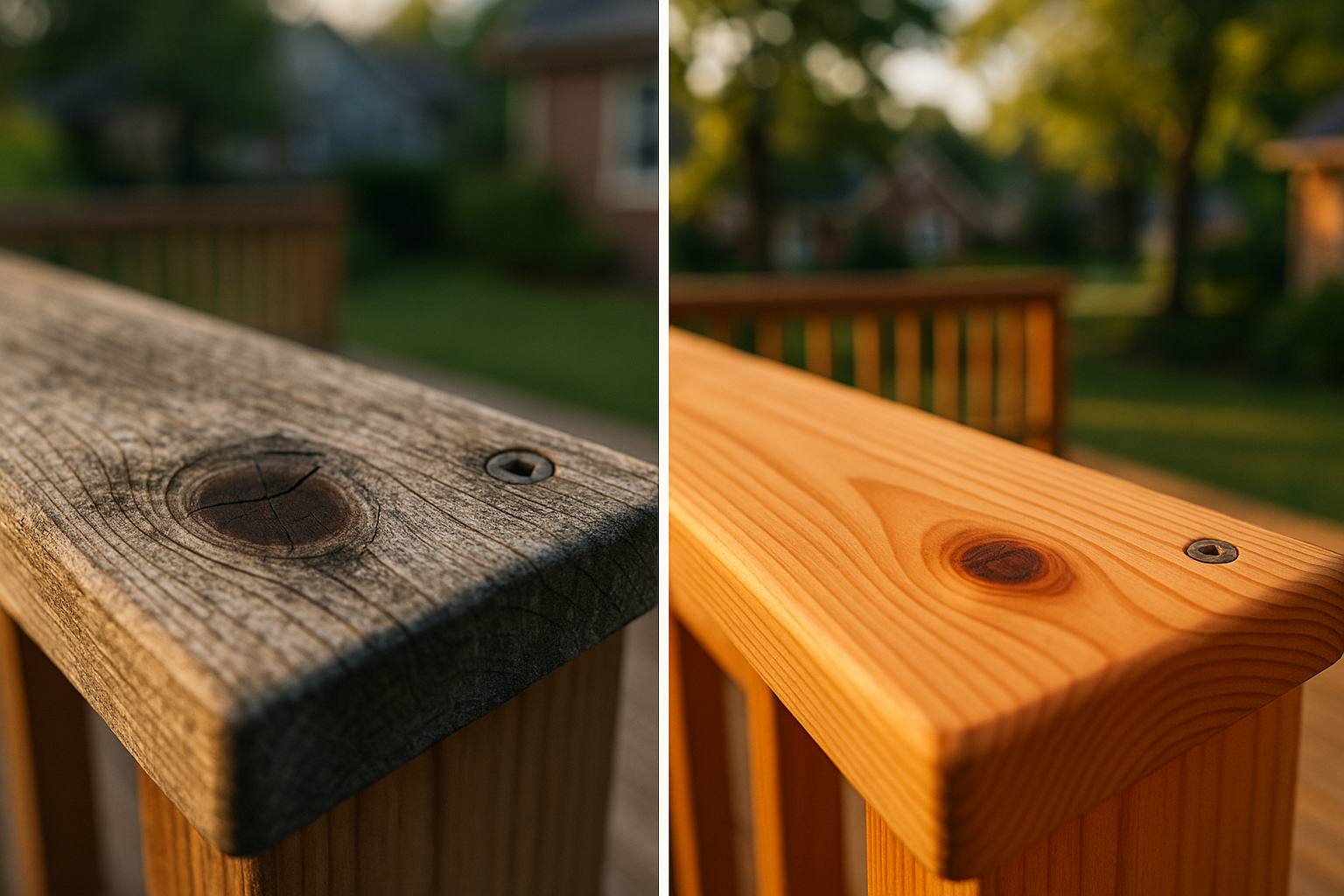
Around Indianapolis, we get the full weather menu. Freezing winters, hot humid summers, and plenty of rain in between. Wood decks soak up moisture in the summer and dry out in the winter. That makes the boards expand and contract, over and over. Nails don’t stretch. So the wood works its way up the nail, and the nail head slowly pops above the board. It’s like the deck is trying to push the nail out.
Most decks around here are built with pressure-treated southern yellow pine. That wood is wet when it’s first installed. As it dries out over the first few years, it shrinks. And it doesn’t shrink evenly. The boards lose width, and the nail holes get bigger. That lets nails slide up even more.
Add in smooth-shank nails — the kind most builders used 10 or 20 years ago — and you have a perfect storm. Smooth nails rely on friction to stay put. But friction doesn’t last when the wood moves. In places like Carmel or Greenwood, where decks bake in the summer sun, the top of the board dries faster than the bottom, causing cupping. Cupping pries nails up even faster. And if the builder didn’t leave enough gap between boards, the wood pushes against itself, forcing fasteners loose. You can read more about deck board spacing and gapping here.
Fix It Right: Screws Over Nails
So what do you do when you see a nail pop? A lot of homeowners grab a hammer and pound it back down. That works for about a week. Maybe until the next rain. Then the nail pops again, because the wood is still moving. You’re not fixing the problem. You’re just playing whack-a-mole with your deck.
The real fix is to pull that nail out and replace it with a corrosion-resistant deck screw. Screws have threads that bite into the wood. They don’t back out the same way nails do. I’ve seen decks where we switched every nail to a screw and the pops stopped for good. That’s what we call a deck refastening job. We go board by board, remove the old nails, and drive in stainless steel or coated screws. Stainless costs a little more, but it won’t rust, even with Indiana’s wet winters and de-icing salts tracking onto the deck.
But not all screws are equal. Cheap galvanized screws can still corrode and snap. And they don’t hold as well as a good structural screw. A deck contractor worth their salt won’t just hammer the nail back in. They’ll check the framing underneath. If the board is soft or split, you might need to replace that single board before refastening it. Here’s how we handle replacing a single rotten deck board.
For one or two isolated pops, you can do this yourself. Pull the nail, drill a pilot hole, and drive a screw. But if you have a dozen or more nails popping, or if the boards feel spongy, that’s a sign of bigger problems. The same movement that lifted those nails might have loosened your whole deck.
When Nail Pops Mean Your Deck Needs More Than a Quick Fix
Loose railings are even more dangerous than nail pops. The same wood movement that pushes nails up can loosen the bolts that hold your rail posts to the deck frame. Indiana code says guardrails have to be 36 inches tall and strong enough to handle a fall. If your railing wobbles when you lean on it, that’s a bigger red flag than a popped nail. A railing contractor (that’s us too) will check the post connections, the lag bolts, and the condition of the wood behind them. You can check out our guide on deck guardrail height code in Indiana for more details.
And it’s not just the deck. The same freeze-thaw cycles that move deck boards also shift fence posts. We’ve fixed plenty of fences in Avon and Plainfield that started leaning after a few winters. If your deck is close to a fence, you might notice both moving at the same time. DeckPros handles fences too, so we can check both while we’re out. It’s all the same wood, the same weather, the same soil.
Also, if you’re thinking about adding a screened porch or patio enclosure someday, a solid deck with hidden fasteners gives you a much better base. You don’t want to enclose a deck that’s full of loose nails and gaps. We can make sure the structure is ready before you enclose it. In the meantime, if you have nail pops, keep foot traffic away from the worst spots, especially on stairs. A popped nail on a stair tread is an emergency waiting to happen.
One more thing: pressure washing might seem like a good way to clean your deck, but it can actually make nail pops worse. The high pressure lifts wood fibers and loosens fasteners. If you do wash your deck, keep the PSI low and avoid hitting nails directly. We wrote about the right pressure for Indiana decks here.
Preventing Nail Pops for Good: The Composite Option
If you’re tired of fixing nail pops every year, it might be time to think about switching to composite decking. Composite boards don’t absorb water like wood, so they don’t expand and contract nearly as much. And most composite decks are installed with hidden fasteners — little clips that hold the boards from underneath. No nails on the surface. No pops. Ever.
Some homeowners worry that composite gets too hot in the sun. We tackled that question in our article on whether composite decking gets hot barefoot. The short answer: it can get warm on a scorching July afternoon, but newer composite boards are much better than the old ones. And you can pick lighter colors to keep them cooler.
You can resurface your existing deck with composite instead of rebuilding from scratch. If the framing is still solid and meets code, we can pull up the old wood boards, check the joists, and lay down new composite with hidden fasteners. That’s often faster and cheaper than a full rebuild. But if the framing is rotted or the deck wasn’t built to code, a full rebuild is the smarter long-term move. We’ll tell you which one makes sense for your deck.
Before any structural work, we also make sure you call 811 to mark underground utilities. That’s required for new footings. We cover that step in our article on calling 811 before deck footings in Indiana.
Nail pops are annoying, but they’re also a warning sign. Your deck is moving, and it’s trying to tell you something. The good news is, you don’t have to guess what to do next. DeckPros offers a no-pressure deck inspection. We’ll come out to your home in Indianapolis, Carmel, Fishers, Zionsville, Westfield, Noblesville, Greenwood, Brownsburg, Avon, or Plainfield, and give you a straight answer: fix the fasteners, or upgrade to composite. You can get a quote and schedule an inspection here.
Thinking about your own deck or pergola?
Free in-home design consultation, 3D rendering, and a written quote — no pressure.