Last spring I was at a friend's place in Meridian-Kessler, sipping coffee on her back deck. She had a gorgeous Western Red Cedar deck, but under every planter and outdoor rug, there were dark, blotchy rings that looked like someone spilled coffee and left it for a week. She'd scrubbed with dish soap, but those deck water stains just laughed at her. Sound familiar? Cedar decks in Indianapolis see this all the time—heavy spring rains and humid summers don't help.
Why Your Cedar Deck Gets Water Stains (and How to Tell Them Apart)
Water stains on cedar show up in a few different flavors. Knowing which one you're dealing with saves you from using the wrong cleaner.
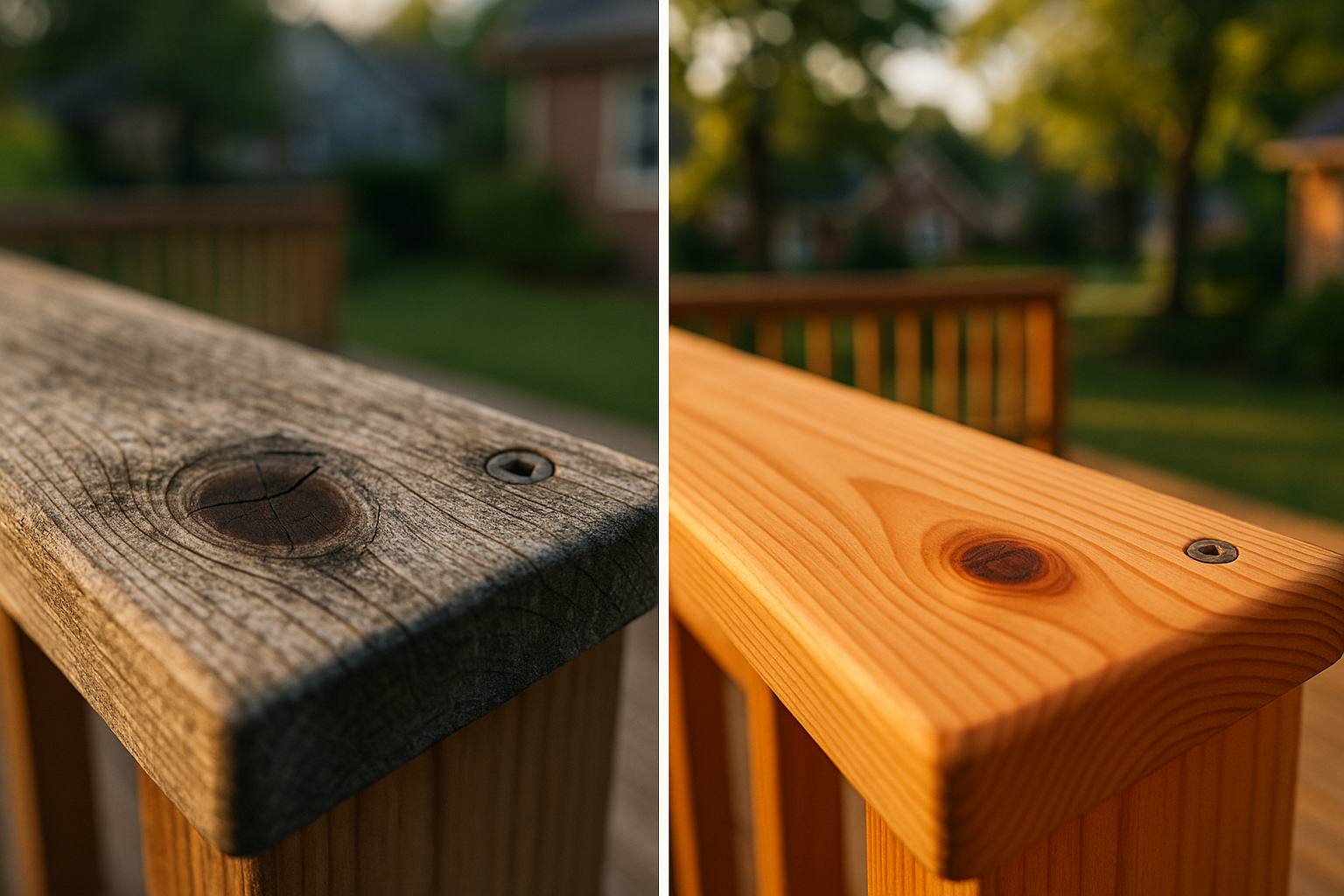
- Black or dark gray near screw heads: That's usually tannin bleed mixing with iron from fasteners. Western Red Cedar is full of tannins—natural compounds that give the wood its color. Water sitting on the wood pulls them out, and rust from nails adds black streaks.
- Gray-green film in shady spots: That's mildew or algae. In Carmel and Fishers where mature maples and oaks cast shade, decks never fully dry, so mildew moves in.
- White or chalky crust: That's mineral buildup from hard water. Sprinkler systems hitting the deck, especially in Zionsville or Westfield where some wells have hard water, leave white spotting.
- Rings under rugs, planters, or furniture: Trapped moisture. The water can't evaporate, so it wicks into the wood and leaves a watermark. I've seen perfectly good cedar decks ruined by a welcome mat that never moved.
(We have a whole post about decks under mature trees—it covers leaf stains and sap. Worth a read if you've got big shade trees.)
The Right Way to Clean Water Stains Off Cedar (Don't Crank the Pressure Washer)
I get it—a pressure washer feels like a magic wand. But cedar is soft. Hit it with 3,000 PSI and you'll fuzz the grain and push water deep into the wood. Here's the safe order:
- Let the deck dry for 24–48 hours so cleaners soak into stained fibers.
- Sweep off leaves, dirt, and pollen.
- Test any cleaner in a small, hidden spot first.
- Use a low-pressure wash (500–800 PSI) with a wide fan tip, nozzle moving, 8–12 inches off the surface.
- Pick the right cleaner: - Mildew/algae: oxygenated cleaner (oxygen bleach) is safe on cedar. - Tannin bleed and iron/rust stains: oxalic acid (wood brightener) breaks the bond and brightens the wood. Use carefully—it can irritate skin and harm plants if it runs off. - Black fastener streaks: a specialized rust remover (often oxalic-based) applied directly to the stain. - Avoid strong chlorine bleach—it turns cedar gray and breaks down fibers.
- Rinse thoroughly. Leftover cleaner attracts dirt or reacts with stain later.
- Let the deck dry completely before sealing. In Indy humidity, that might take 2–3 sunny days. Sealing too soon traps moisture and causes peeling.
Sometimes after cleaning, the wood looks fuzzy. Light sanding (80–100 grit) on stained spots evens it out. Then re-brighten the whole deck so color is consistent. Dust off and apply a penetrating semi-transparent stain with UV inhibitors. Check wood moisture under 15% before coating—late spring or early fall in Indianapolis works best.
Preventing Water Stains Before They Start (Simple Fixes)
Once your deck is clean and sealed, you don't want to do it again next summer. A few habits go a long way:
- Fix gutter and downspout issues. Clogged gutters overflow and send water onto deck edges, leaving parallel drip lines. Add splash blocks or extend downspouts.
- Adjust sprinkler arcs. Sprinklers hitting the deck cause hard water stains and rings around posts. Point them away.
- Use a ventilated grill mat under your grill. Grease drips plus water equal stubborn dark stains. (We've got a post on grill placement and clearance that'll save your boards.)
- Raise planters on feet or risers. That lets air circulate under the pot and prevents planter halos.
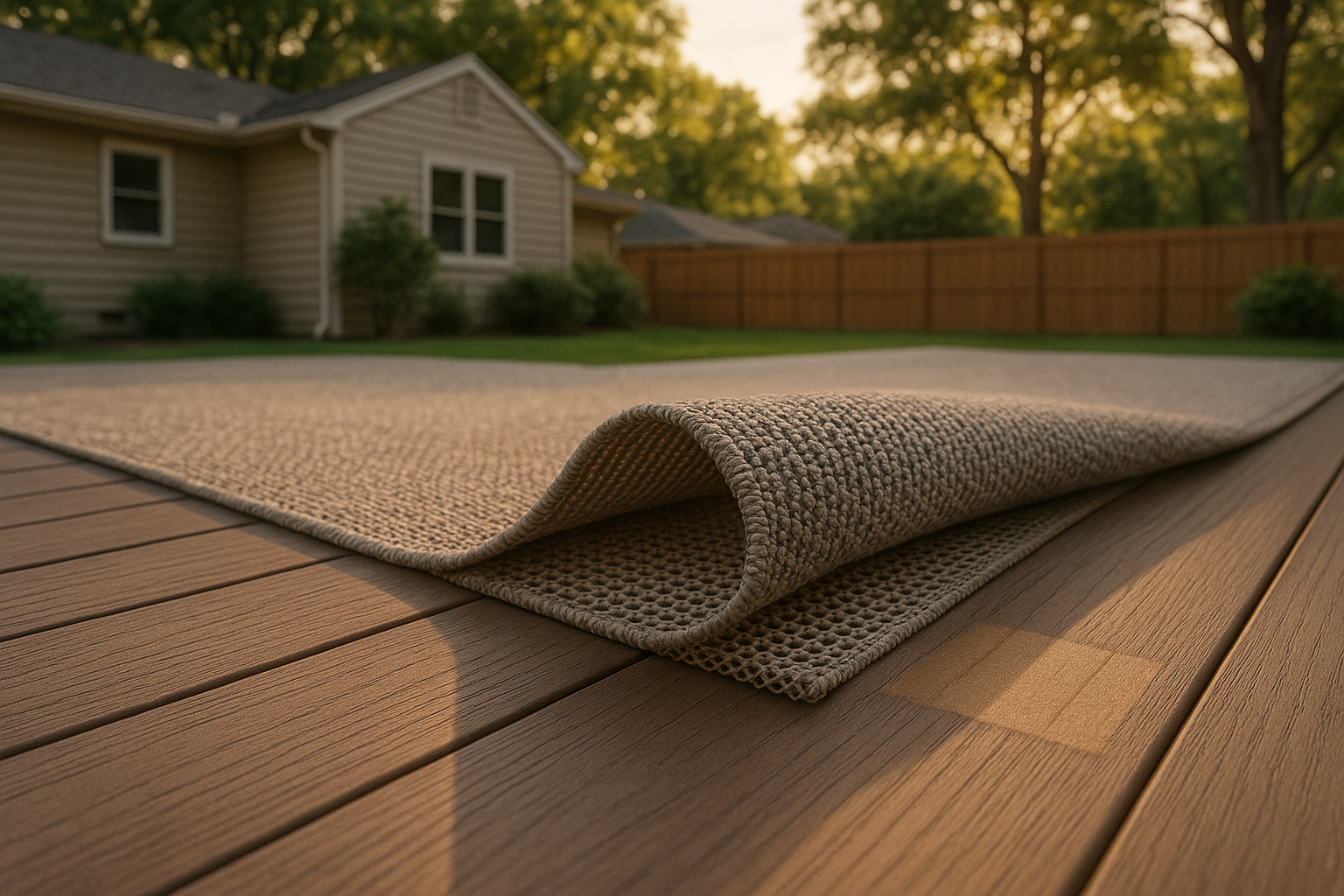
- Move outdoor rugs weekly. Yes, weekly. Let the area dry out. (If you have a composite deck, rules are different—check our post on outdoor rugs on composite decks.)
- Keep board gaps clear. Leaves and pine needles packed in gaps hold water and stain the wood. Clean after fall leaf drop.
If you're building new or doing major repair, think about under-deck ventilation (at least 18 inches), proper board spacing (1/8 to 1/4 inch for dry cedar), sealed end grain, and corrosion-resistant screws. Those details stop a lot of deck water stains before they start.
When Stains Spread: Fences, Railings, and Enclosures
Water stains don't stop at the deck boards. If you have other structures attached, they can be the source.
Fence: If your cedar deck butts up against a wooden fence, especially a shared post or older fence, tannins from the fence can drip onto the deck when it rains. Rusting nails or brackets on the fence add iron stains below. Sometimes you need to clean the fence and deck together, or the stains keep coming back. DeckPros handles both.
Patio Enclosure: A screened porch or patio enclosure attached to your deck creates more shade and trapped humidity, and water runs off the roof or walls onto the deck. The area right under the drip edge often gets a line of mildew or mineral stains. Proper flashing and overhangs help, but you might need to adjust drainage.
Railing: Old railings, especially pressure-treated ones or those with steel brackets, can shed black streaks down onto deck boards. That's tannin + iron bleed from the railing. If the railing is the source, cleaning alone won't fix it—you may need to replace or reseal the railing or its hardware.
General Contractor: Sometimes stains are a symptom of bigger issues: cupped boards trapping water, poor deck slope, or failing fasteners. If you've got widespread blackening or spongy boards, cleaning won't cut it. After a big storm, water gets driven under boards and into fastener holes. Check for damage—we have a guide on deck inspection after Indiana storms.
DIY vs Hiring a Pro for Cedar Deck Stain Removal
DIY is tempting to save money. But cedar is expensive to replace. One wrong move with a pressure washer or harsh chemical, and you've got a fuzzy, splotchy mess. I've seen homeowners use muriatic acid (for concrete) on cedar and ruin the finish. And overspray from cleaners can kill nearby plants.
Pros bring the right cleaners, protect your landscaping, use low-pressure equipment, and apply a stain that lasts in Indiana's UV and moisture cycles. We also do a test spot first so you see results before committing.
It's time to call us if: blackening is widespread, fastener bleed keeps coming back, rug or planter halos reappear within weeks, your stain is peeling, or boards are cupped.
Get Your Deck Water Stains Assessed (Simple Next Step)
We work in Indianapolis, Carmel, Fishers, Zionsville, Westfield, Noblesville, Greenwood, Brownsburg, Avon, and Plainfield. We'll come out, diagnose the exact kind of stain you're dealing with, and give you a written plan—what we'll use, how long it'll take, and what it costs. No pressure, no scare tactics.
If you're tired of looking at those dark rings and greenish patches, click over to our quote page and book a quick assessment. We'll bring a moisture meter and a test patch, so you'll know exactly what you're dealing with—and you can finally say goodbye to deck water stains.
Thinking about your own deck or pergola?
Free in-home design consultation, 3D rendering, and a written quote — no pressure.