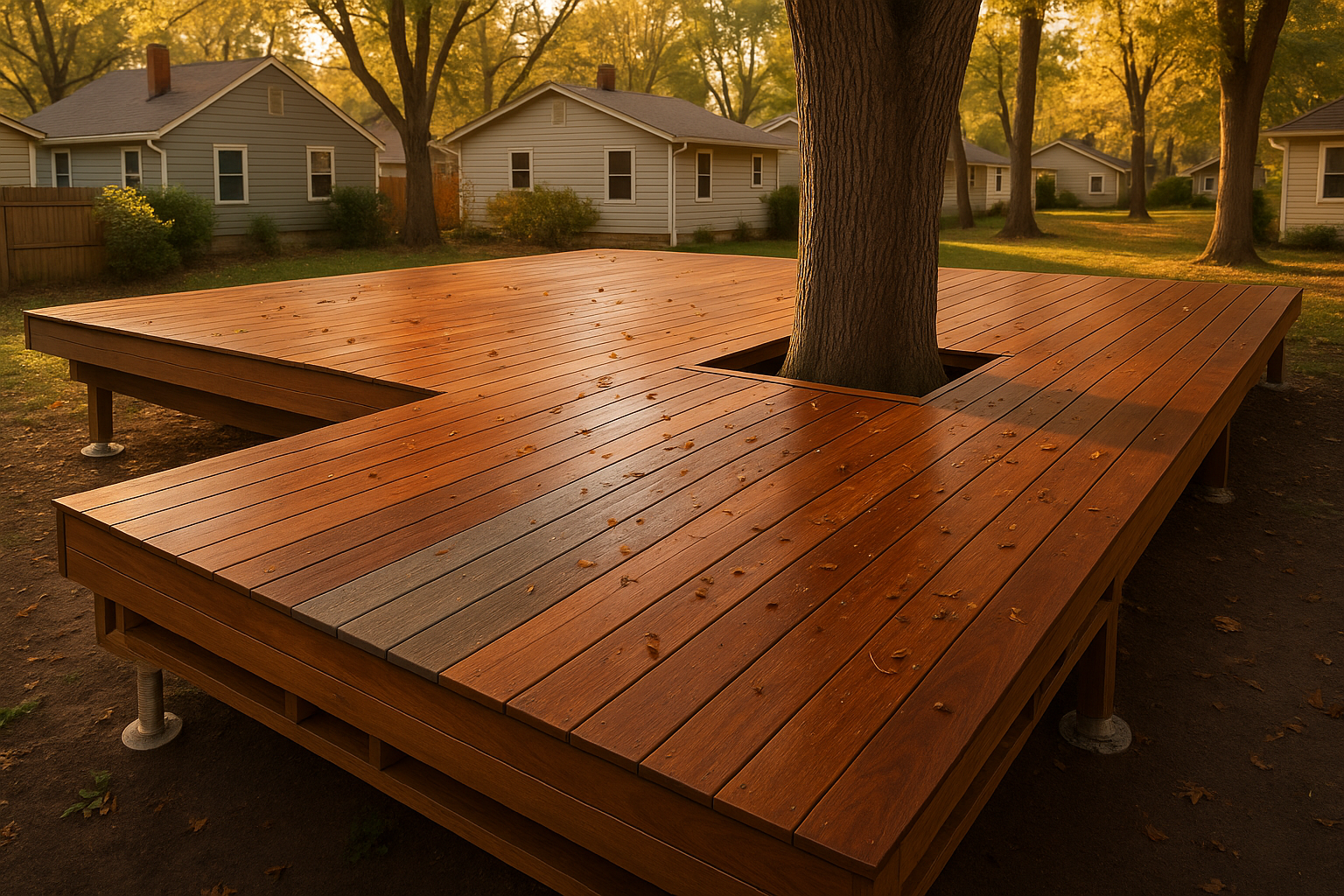
Last fall, a homeowner in Meridian-Kessler called us about her big maple tree and the deck underneath it. Every October, leaves would pile up, get wet, and turn her cedar deck into a slimy, stained mess. She was tired of scrubbing sap and tripping over slick boards. So she asked us what would actually hold up. That's the reality of a deck under trees—beautiful shade, but a whole different ballgame for materials and design.
Indianapolis neighborhoods like Broad Ripple, Butler-Tarkington, and Irvington are full of mature oaks, maples, sycamores, and walnuts. Those trees give you privacy and cool summer afternoons, but they also drop leaves, seed pods, sap, and the occasional branch. Add in our freeze-thaw cycles and heavy spring rains, and you've got a perfect storm for deck rot, mildew, and slippery surfaces. But done right, a deck under trees can last decades and look incredible.
The Good, the Bad, and the Squirrel-Proof Plan
First, the good stuff. Shade keeps the deck cooler in July—no more burning your feet on hot composite. Trees block wind and give you a sense of enclosure. And let's be honest, a deck nestled under a big canopy just looks right.
But the challenges are real. Leaf litter clogs gaps, holds moisture, and stains the surface. Sap drips from maples and pines. Branches fall during storms—Indianapolis gets microbursts and ice events that can drop limbs without warning. And constant shade means the deck dries slowly, which invites mildew and algae.
We've seen decks under sycamores that looked like a science experiment by April. The key is planning for these realities from day one, not fighting them later.
Why Ipe Handles Shade Better Than Most Decking
When a homeowner says they want a deck under trees and asks what material to use, I usually point to Ipe. Yeah, it costs more than pressure-treated pine or even most composites, but under a canopy it earns its keep.
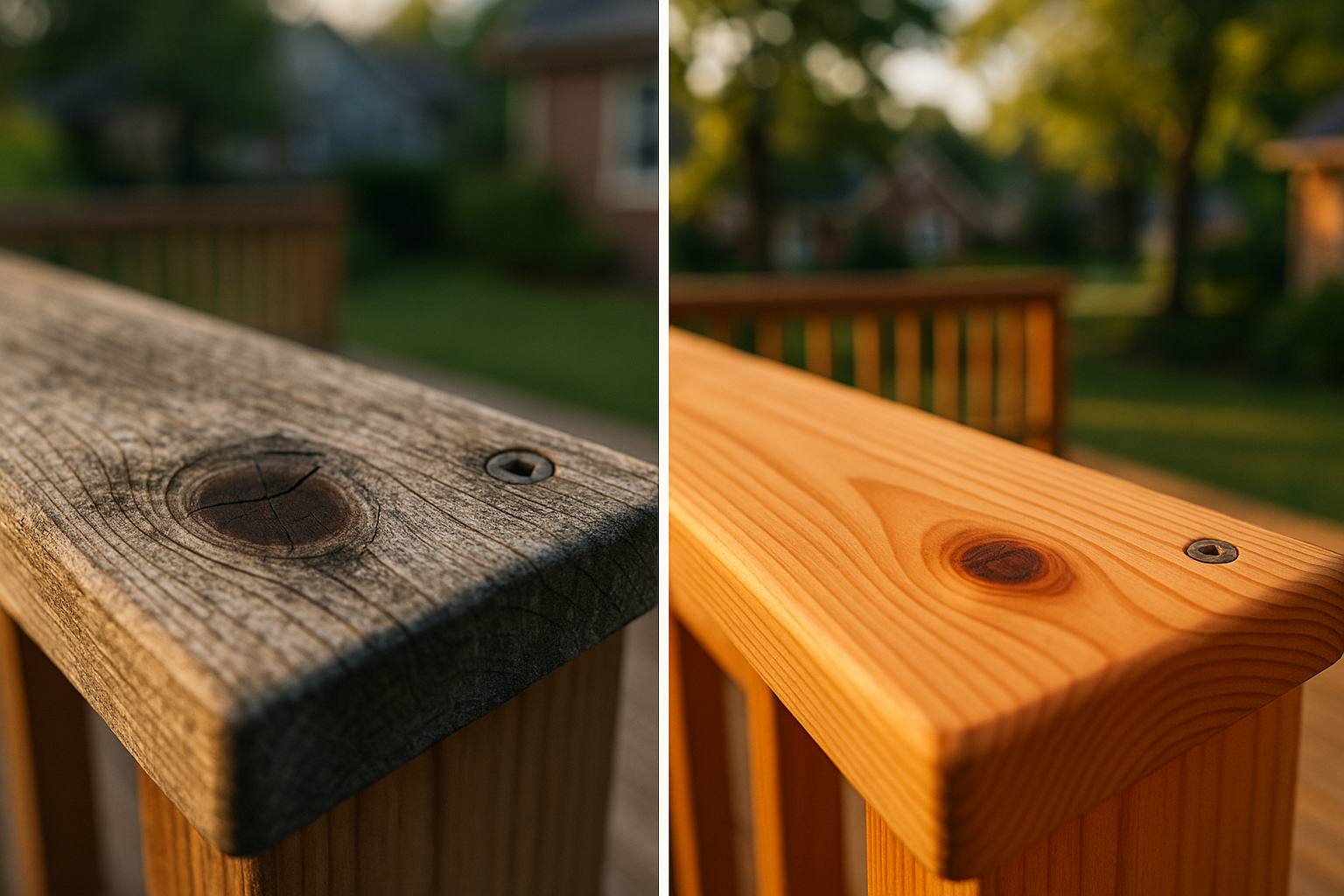
Ipe is incredibly dense—so dense it sinks in water. That density means rot and insects can't get a foothold. It also means the boards don't warp or cup as much when they get wet and then bake in the occasional sun patch. Composite decking can work under trees, but some brands get slick when wet and can hold leaf stains. Ipe weathers to a silver-gray if left alone, or you can oil it to keep the rich brown. For a low-maintenance hardwood deck under shade, Ipe is hard to beat.
As a deck contractor, I've also seen how Ipe handles impacts—falling twigs and small branches don't dent it like softer woods. That matters when you're under a mature walnut tree that sheds like a golden retriever.
Spacing and Drainage: Let the Leaves Fall Through, Not Pile Up
One of the biggest mistakes people make with a deck under trees is using tight board gaps. You want wider gaps—around 3/16 of an inch—so leaf debris and seed pods can fall through instead of sitting on top. We also recommend narrower board widths, like 4 inches instead of 6, because they dry faster and cup less in constant shade. Check out our guide on decking board widths for more on that.
Ventilation is huge. Under a tree canopy, air movement is already limited. Box in the under-deck space with skirting and you trap humidity, which rots framing fast. Keep the under-deck area open, with at least 18 inches of ground clearance if possible. We wrote a whole article on under-deck ventilation and airflow—worth a read if you're planning a low deck.
Now, some folks think about enclosing the space under the deck to make a patio room or storage. As a patio enclosure supplier, we'd tell you to be careful under trees. A full enclosure blocks the airflow that keeps the framing dry. If you must enclose, use open lattice or a well-ventilated system, and plan for easy leaf cleanup underneath. Otherwise, you'll create a mold factory.
Roots, Footings, and Giving the Tree Room to Grow
The biggest fear I hear from homeowners is, "Will this deck kill my tree?" The answer is: not if you respect the root zone. Mature trees have roots spreading well beyond the dripline, and cutting through them for concrete footings can stress or even kill a tree.
We use helical piers or pin footings near trees whenever we can. These screw into the ground with minimal excavation, preserving the fine roots that feed the tree. Sometimes we cantilever the deck framing to avoid a major root altogether. And we never—ever—fasten a deck into a tree trunk. That's a recipe for rot and failure.
When a tree trunk needs to pass through the deck, we leave a 2-3 inch gap all around and use a removable surround panel with flexible trim. That way the tree can sway and grow without ripping the deck apart. If there's a railing nearby, our railing contractor can build a custom section that fits around the trunk and still meets code for safety.
If your deck sits close to an existing fence line, we've got fence contractor experience too. We'll coordinate footing placement so we don't disturb fence posts or underground lines. And if you want a privacy fence around the deck area, we can plan that into the same project without double-digging.
Cleaning Sap, Tannins, and Keeping Shade Decks Slip-Free
Shade means less sun to dry things out, so algae and mildew love a deck under trees. To keep it safe, we recommend a slip-conscious finish plan—like a light broom finish on Ipe or adding non-slip strips to stair treads. Regular cleaning with a leaf blower and a gentle deck wash (not a pressure washer on full blast) goes a long way.
Sap and tannin stains are common. For fresh sap, scrape off what you can, then use a mild soap and water. Tannin stains from oak or walnut leaves usually fade with time or a gentle wood cleaner. Don't obsess over perfection—a deck under trees will show some character. That's part of the deal.
After a big storm, do a quick walk-around. Look for lifted boards, loose fasteners, or branches that scraped the surface. We have a guide on deck inspection after Indiana storms that's worth bookmarking.
Permits, Budgets, and Getting a Tree-Aware Plan
In Indianapolis and Marion County, building a deck close to mature trees often requires a permit and sometimes a site plan showing tree protection measures. HOAs in places like Carmel, Fishers, and Zionsville may have their own rules about tree removal or deck placement. If the tree is significant, we'll recommend bringing in an arborist to mark the critical root zone before we dig.
Budget-wise, expect to pay a premium for a tree-aware deck. Helical footings cost more than concrete, and custom passthrough panels or extra ventilation take time. But spending a bit more up front protects both the deck and the tree for years.
Here's how DeckPros handles it: we start with a site assessment where we walk the yard, check drainage, locate utilities (811 is standard), and map out roots. Then we give you a written plan with our footing recommendations, board spacing, and maintenance handoff. No surprises.
If you're thinking about a deck under trees and want a plan that won't kill your oak or your weekends, hit the quote button below or give us a call. We'll come out, look at your roots and drainage, and write it all down. We serve Indianapolis, Carmel, Fishers, Zionsville, Westfield, Noblesville, Greenwood, Brownsburg, Avon, and Plainfield.
Thinking about your own deck or pergola?
Free in-home design consultation, 3D rendering, and a written quote — no pressure.