Last summer my neighbor in Carmel called me over, panicking. He'd just bought a shiny new gas grill and wheeled it onto his brand-new composite deck. Within two weeks, the boards under the grill looked wavy and slightly brown—like someone left a curling iron on a vinyl floor. He'd used a thin grill mat he got free with the grill. Big mistake. That mat trapped heat and moisture, and the deck paid for it.
The good news? You can absolutely put a grill on a deck, even a composite one. But you have to plan the spot, the surface, and the overhead clearance. I'll walk you through what actually works in Indianapolis, from Zionsville to Greenwood.
First, Can You Grill on a Deck Safely?
Yes, as long as you follow basic clearances. Most fire codes and grill manufacturers want at least 10 feet from the house siding, railings, and anything that can burn. That number changes with wind and grill type, so check your manual and call the Indianapolis Fire Department if you're unsure. I know 10 feet sounds like a lot for a small deck in Fishers, but it's not just about flames. It's about radiant heat. Even a grill that's not touching anything can slowly discolor vinyl siding or crack composite boards over time.
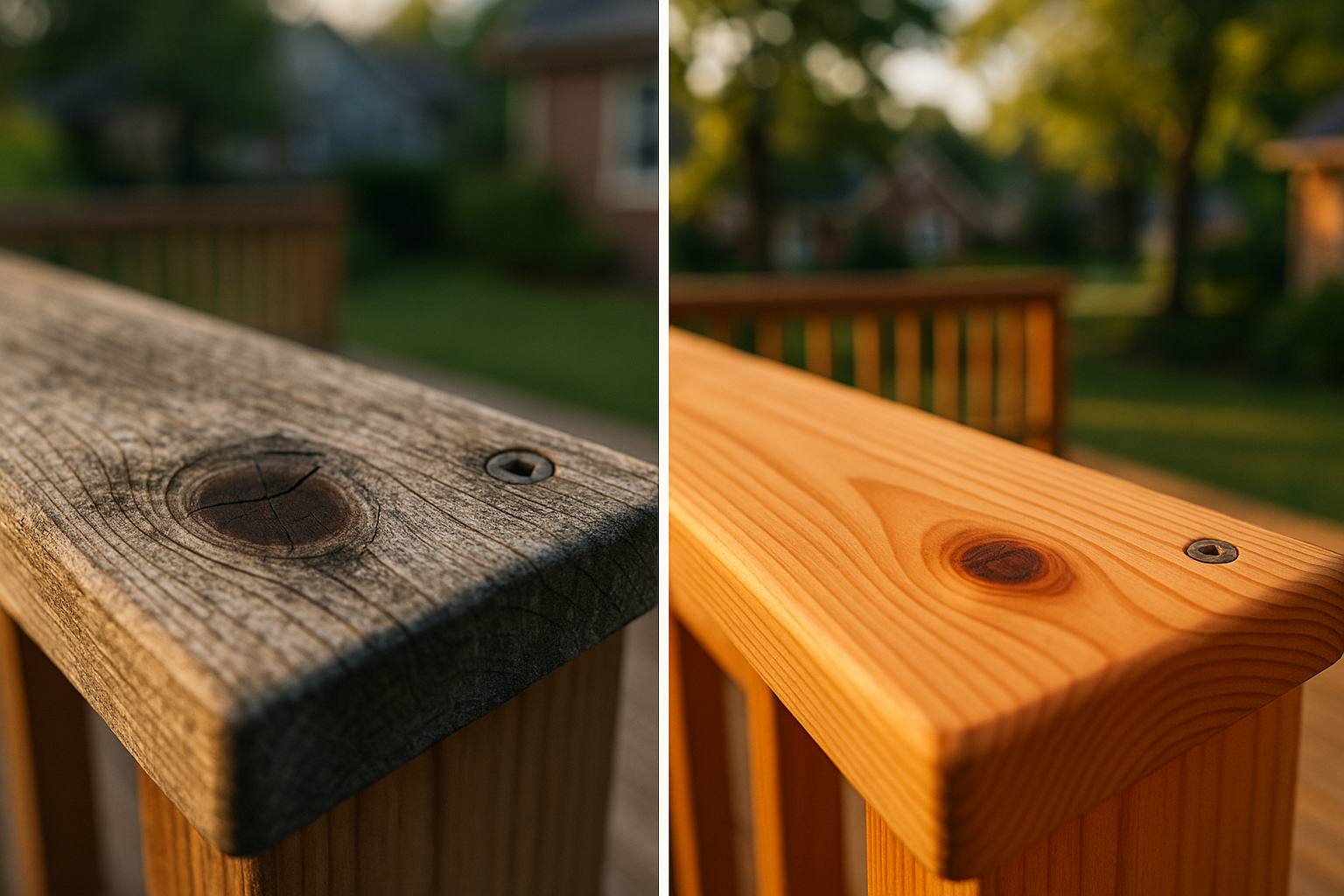
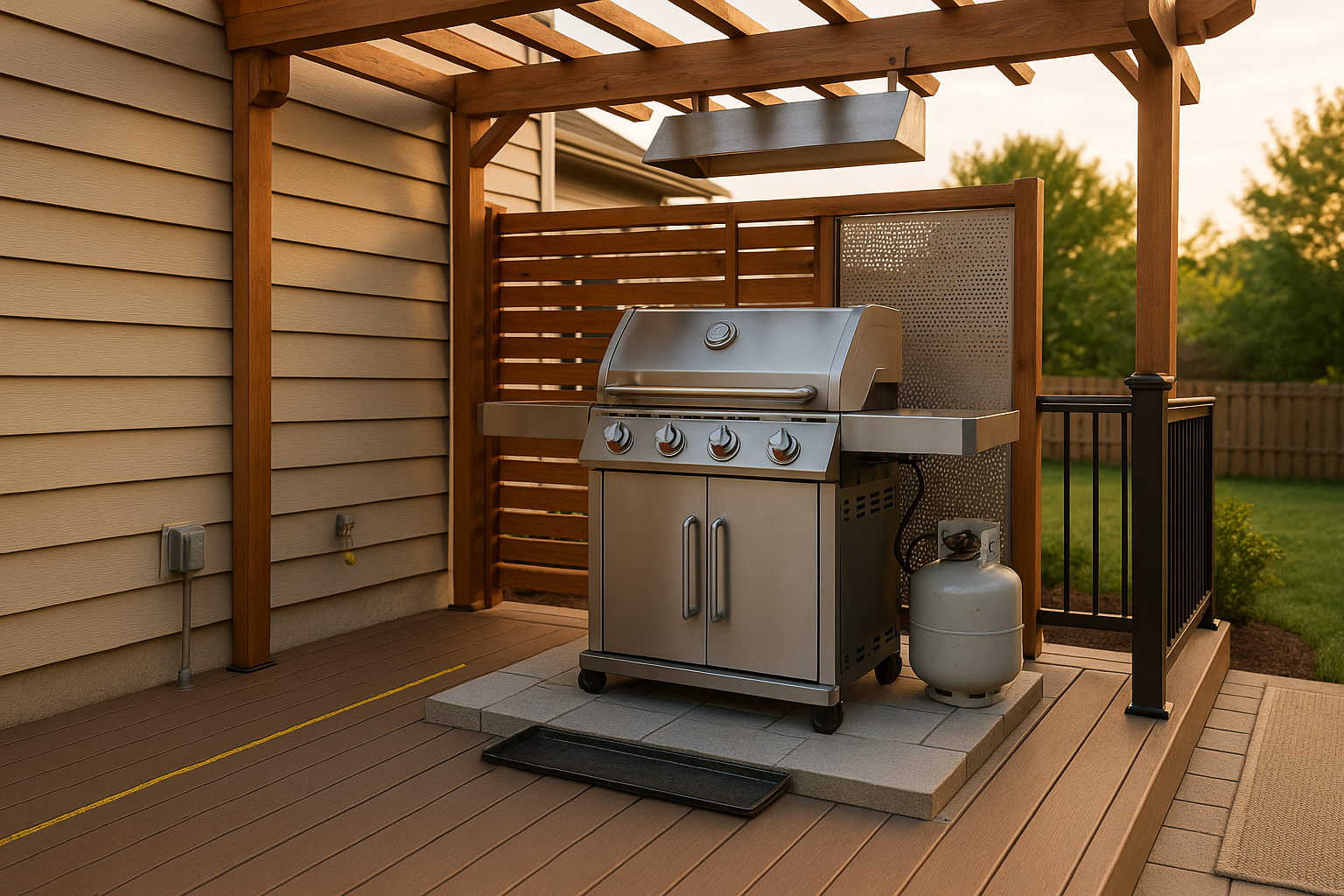
So yes, you can grill on deck, even in Indianapolis, as long as you treat it like a cooking appliance, not a lawn ornament. And a grill on deck needs a non-combustible pad or paver inlay underneath, whether the boards are wood or composite. Wood can scorch just as fast as composite. Don't rely on those thin fabric grill mats that claim to protect composite decking. I've seen them fail in Indiana humidity—moisture gets trapped, and the deck underneath still gets too hot. A thick stone or concrete pad that sits proud of the decking works better. And if you're building a new deck, have a contractor frame a dedicated bay with non-combustible paver blocks. That's a real upgrade.
Where to Put the Grill: Wind, Smoke, and Traffic
Indiana summers bring mostly west-southwest winds. So if you set the grill on the west side of your house, smoke will blow into your back door every time you flip a burger. Point the smoke away from the house, your neighbor's fence, and the seating area. I've watched a Brownsburg homeowner fight this for two years before moving the grill ten feet to the east. Now his back door stays open all summer.
Think about foot traffic too. The grill shouldn't block the stairs or the gate. Lid open, a typical 4-burner grill is about 45 inches deep. Leave at least 36 inches for people to walk behind the cook. If you have kids or pets, that path matters even more. A deck gate safety plan is a good idea if your grill sits near the edge. Learn more about deck gate safety for toddlers and pets. And if you need a wind screen, don't build a solid fence right behind the grill. A slatted wood screen or a metal panel with air gaps works better—it breaks the wind without creating a backdraft. A fence contractor can add offset privacy panels if you're also dealing with a nosy neighbor or HOA rules about propane tanks. In Noblesville, where lots are wider, you might have more room, but the wind still decides where the smoke goes.
The Pergola Question: Cooking Under Cover
You can grill under a pergola, but only if the overhead clearance doesn't cook the pergola before the food. Open-air pergolas with no roof are fine, as long as the beams sit at least 8 to 10 feet above the grill surface. Check your grill's manual for exact clearance. I put a metal heat shield on the underside of the beam above my own grill in Westfield. It looks clean and gives me peace of mind.
If you have a solid roof or a covered patio right next to the grill, smoke and heat can get trapped. That's when a patio enclosure supplier can help you design a partial screen or vent system so the space still feels open but doesn't become a smoke box. Same for pergola rafters—spacing them wider or using a louvered system helps heat escape.
Gas Lines, Outlets, and the Utility Side
If you use propane, swap tanks outside and keep them away from the hot zone. If you want natural gas, don't run the line yourself. In Marion County, a natural gas stub for a deck grill often requires a permit and a licensed plumber. Citizens Energy will set the meter and shutoff location. Call Indiana 811 before any digging for pergola footings or gas lines. And always add an accessible shutoff valve outside the hot zone. I've seen too many homeowners tap a gas line off the back of the house and hide the shutoff behind a planter. When you need it, you need it now.
Electrical is the other piece. If you want a pellet grill or an outdoor fridge, install a GFCI outlet with an in-use cover near the grill, but not directly behind it. A general contractor can handle the wiring and any trenching so everything is up to code.
Keeping the Deck Clean: Grease, Stains, and Winter
Grease splatters. It's part of grilling. On composite decking, use a quality grill mat rated for high heat and grease, but don't leave it down 24/7 in summer because it can trap moisture. I pull mine up after each cook and hose it off. For wood decks, use a metal drip pan or a paver tray with a lip to catch drips. Ash from charcoal needs a metal bucket with a lid, and don't dump it near the deck until it's been cold for at least 48 hours.
Indiana winters are rough on any outdoor cooking setup. Freeze-thaw cycles will split cheap pavers and rust cheap hardware. Use stainless steel fasteners and low-porosity stone or porcelain around the grill. If you leave the grill on the deck all winter, seal off the gas line and cover the grill with a breathable cover. In Avon and Plainfield, the snow piles up and melts into every crevice. If you have a built-in grill island, make sure water drains away from the frame.
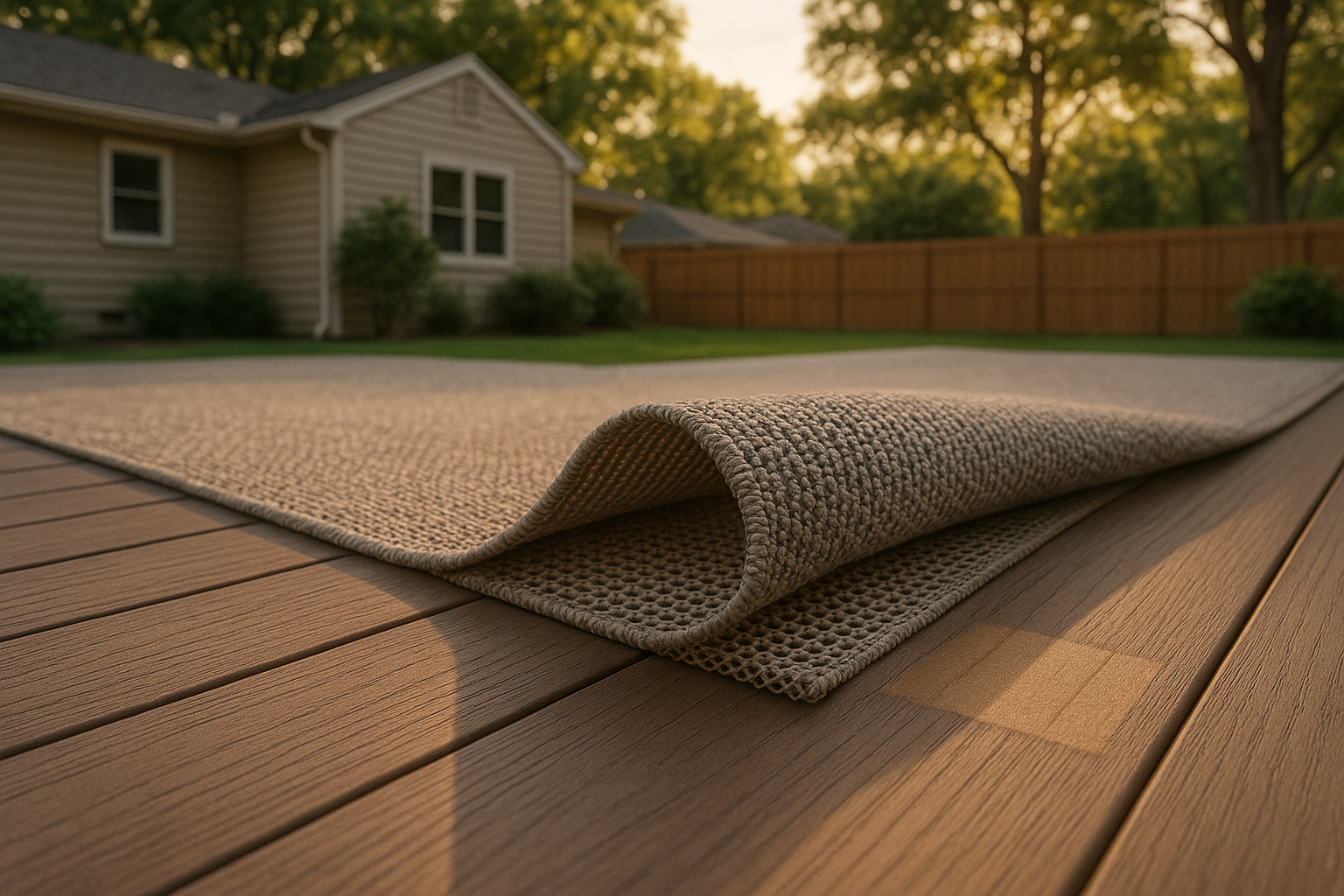
Don't put an outdoor rug under the grill. I see that mistake all the time. Rugs can melt, trap grease, and smell terrible. If you want a rug near the seating area, check out our guide on outdoor rugs and composite decks.
Railing and Safety: Don't Block the Path
The railing around your grill zone can make or break the layout. If the railing is too close, it can scorch. If it's too high, you can't see the kids running around while you cook. A railing contractor can add a short section of metal baluster railing with a higher heat tolerance near the grill. That also helps with code compliance because wood or composite balusters too close to a heat source can warp. And remember, the gate can't swing into the grill. If your deck gate opens toward the cooking area, you need to reverse it or move the grill. Not worth a scraped shin or a grease fire.
What It Costs vs. Patio Grilling
A lot of people ask me, 'Why not just keep the grill on the patio?' If you have a ground-level patio, that might be fine. But if your deck is off the kitchen, walking down stairs with a platter of raw chicken is annoying. Moving the grill to the deck means you'll actually use it more. And adding a dedicated paver pad, a small pergola, and a gas stub usually costs less than a full deck remodel. Think of it as buying back your summer evenings. A deck remodel vs. full rebuild comparison might help if your deck is already toast.
At DeckPros, we do this all the time—come measure your deck, check clearances, and draw up a plan that fits your space and budget. No pressure. Schedule a consult here.
Thinking about your own deck or pergola?
Free in-home design consultation, 3D rendering, and a written quote — no pressure.