Last spring my neighbor called me over in a panic. Her two-year-old had crawled toward the top of the deck stairs while she was grilling. She grabbed him just before he reached the edge, but her dog wasn't so lucky—he slipped on the wet composite and tumbled down three steps. Nothing broken, but she knew she needed a gate. That's a call I get all the time from homeowners in Carmel, Fishers, and Zionsville. A deck gate isn't just a nice add-on; for a lot of families with little kids or dogs, it's the difference between a relaxing evening and a trip to urgent care.
Let's talk about what actually matters when you're putting a gate on a deck in Indianapolis. Not the fluff—the stuff that keeps your gate from sagging, freezing shut, or looking like an afterthought.
Why a deck gate makes sense here
If you have a raised deck, the stairs are the main drop-off. A childproof deck gate at the top stops crawlers and early walkers before they get near the edge. Same for a pet gate for deck stairs—dogs chase squirrels, toys, or the mail carrier, and they don't always see the steps. A deck stair gate at the bottom also works if you want to keep kids or pets from climbing up unsupervised.
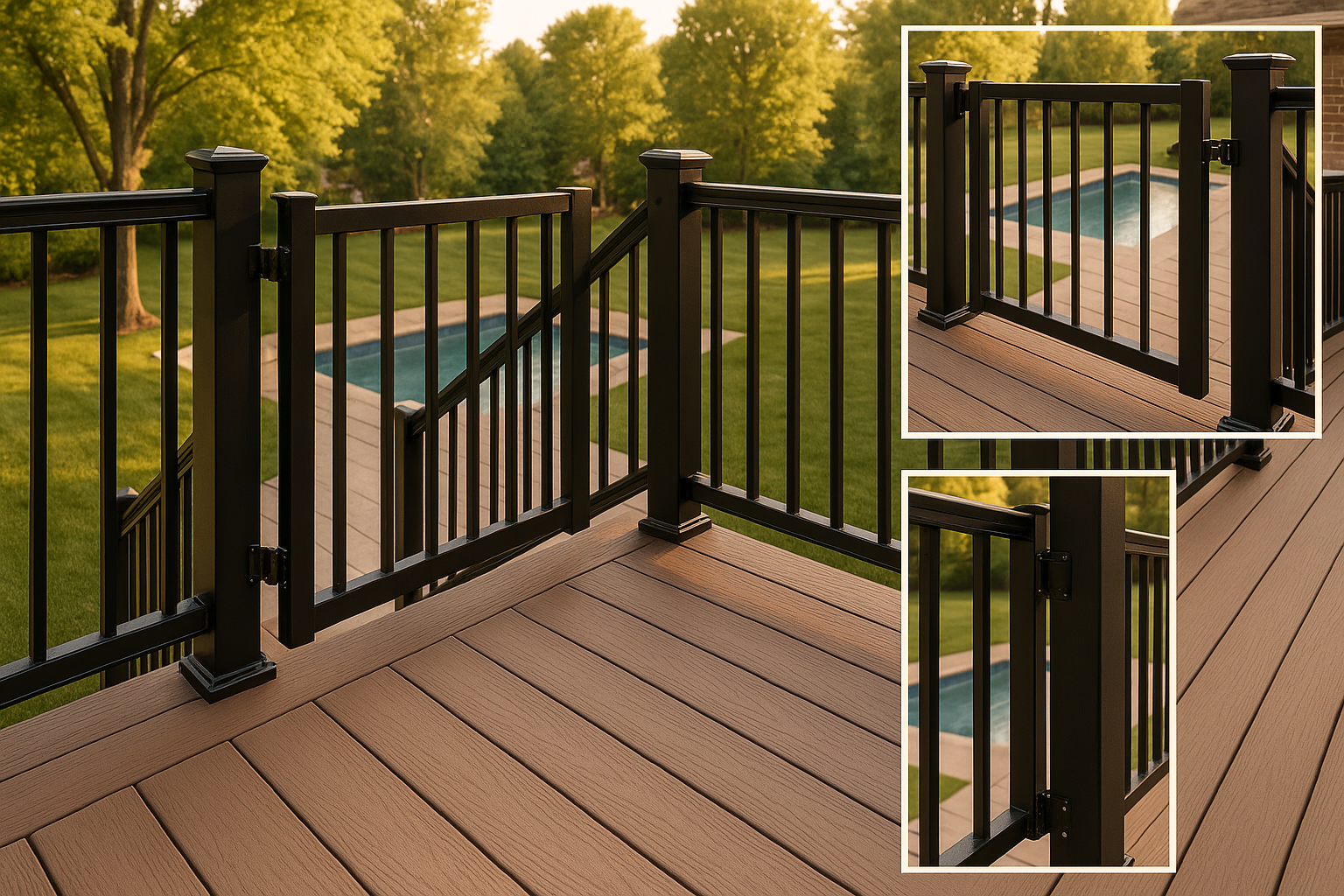
Around Indianapolis, many backyards also have pools. If you're within Marion County or a nearby suburb like Greenwood or Avon, a pool-compliant gate often means a self-closing deck gate with a latch mounted high enough that little hands can't reach. I've seen plenty of homeowners realize too late that their HOA actually requires that gate hardware for insurance purposes. Don't let that be you.
Planning before you pick a style
First thing I tell people: check your local code and HOA rules before you buy anything. Neighborhoods like Meridian-Kessler, Broad Ripple, and Geist often have specific rail and gate style guidelines. A deck gate Indianapolis inspector will look at height, latch type, and swing direction—especially near stairs and pools. You want the gate to swing away from the hazard, not over the top step. Gate swing direction is one of the most common mistakes I see. Wrong swing means you have to reach across the opening or step backward onto the stairs to open it. That's dangerous.
Next, think about where the gate lives. Top of stairs is the most common spot. But you might also need one between deck zones—say, separating a dining area from a pool or hot tub. Some people put a gate at the bottom of the stairs too, to keep a dog from running up and tracking mud all over the deck.
Sizing matters for moving furniture, grills, or a big cooler through. I always recommend at least a 32-inch clear opening for a standard walk-through gate, but 36 inches is better if you have a wide path or a big dog. If you're a Contractor like me, you know that a narrow gate gets annoying fast.
Materials and hardware that survive Indiana weather
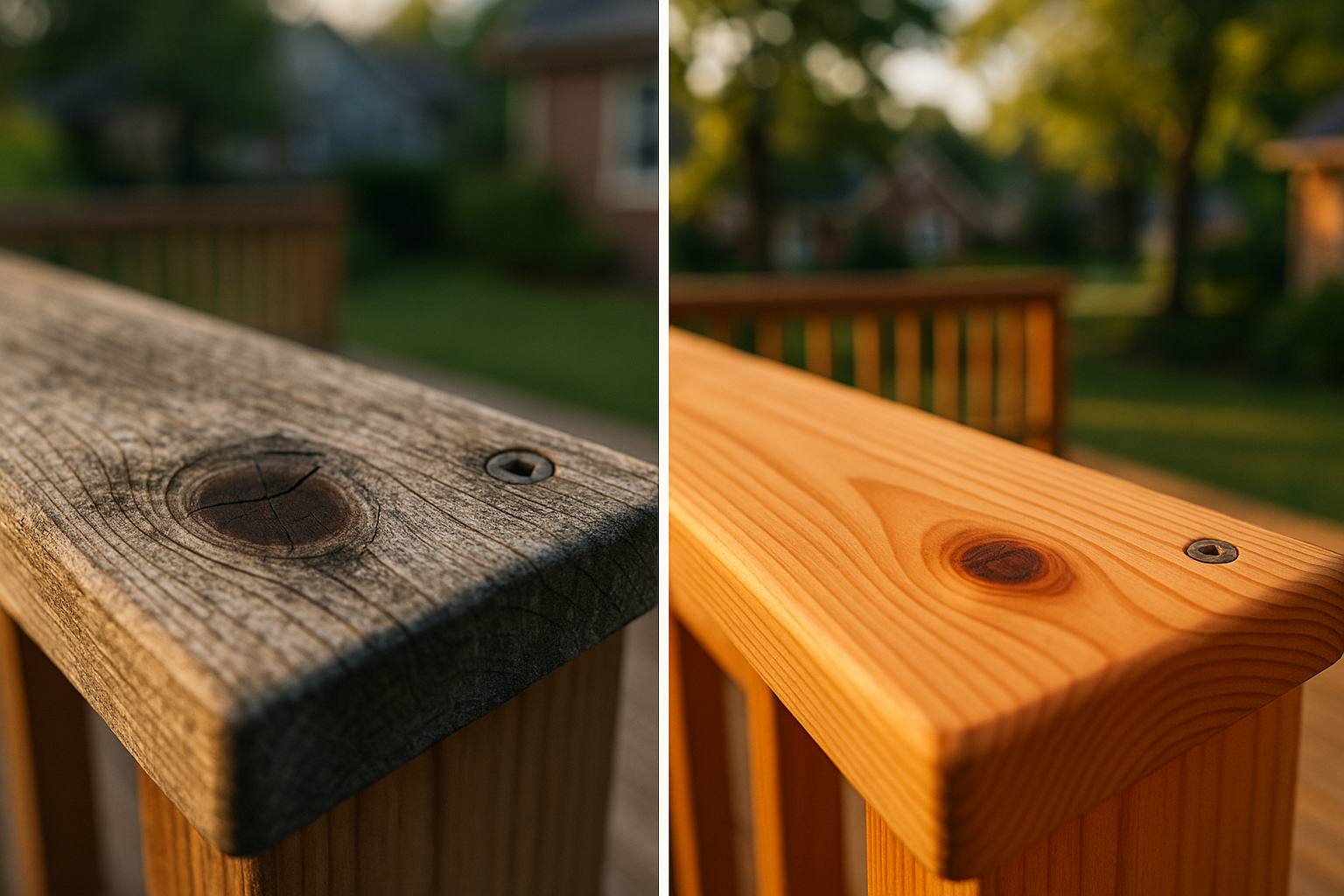
You've got three main choices for a deck gate in the Midwest: aluminum, composite, or wood. Powder-coated aluminum is my top pick for low maintenance. It won't rust, the finish holds up to UV and freeze-thaw cycles, and you can match most existing railings. Composite deck gate frames are great if you have a composite deck and want that seamless look—no fading, no splinters. A wood deck gate is classic and cheaper upfront, but it needs yearly sealing and will eventually sag if you don't reinforce the frame. I've replaced enough sagging cedar gates to know.
More important than the material is the hardware. Get stainless or marine-grade fasteners. Use self-closing hinges rated for cold weather. A magnetic or gravity latch beats a spring latch in snow and ice. I've had customers in Noblesville tell me their old gate froze shut every winter because the latch trapped water. A good freeze-thaw durable hardware setup means you won't be chipping ice off the latch in January. Also add a gate stop on the closing side. It protects the latch from over-travel and keeps the gate from slamming into the railing.
If you're adding a gate to an existing deck, you're probably working with a railing contractor's mindset. The gate needs to blend with the picket spacing, color, and top rail profile. If your deck has black aluminum railings, a black aluminum deck gate with matching hinges looks factory-installed. Same for composite—many composite railing brands sell matching gate kits. As a deck builder, I always check if the existing posts are strong enough. A gate hanging off a wobbly 4x4 will sag no matter how good the hinges are.
Integrating with stairs, lighting, and enclosures
Sometimes a gate is part of a bigger project. If you have a screened patio or a three-season room, you might need the gate to work with a patio enclosure supplier's frame. In that case, we coordinate the gate hardware so it doesn't interfere with the screen door or the enclosure's track. Same thing if you have a fence line that meets the deck—some homeowners need a deck railing gate that connects to the yard fence. A fence contractor would normally handle the yard portion, but the deck gate itself has to be anchored to the deck structure, not just the fence post. I've seen people bolt a gate to a fence post on the deck and wonder why it wobbles.
Stair and railing lighting is another thing to plan ahead. A gate at the top of dark stairs is a hazard at night. Adding a low-voltage step light or a small post-cap light near the gate makes a big difference. You don't need new wiring if you use solar or battery-powered fixtures, but if you want hardwired, we can run a low-voltage line under the deck. Just make sure the bulb color matches your existing lights—mixing warm and cool white on a deck looks off.
Cost, timeline, and getting it approved
You're probably wondering what a deck gate installation cost looks like. For a basic aluminum gate with self-closing hinges and a latch, expect somewhere in the $400–$900 range installed, depending on the post work and hardware. Composite runs a little higher because the gate material costs more. A custom wood gate might be $300–$600 if you already have solid posts, but you'll be sanding and staining it every couple years. If we have to add a post or rebuild a stair landing, that adds to the price and the timeline. Usually we can finish a simple gate in one visit, but if the HOA wants drawings or a permit, plan for an extra week or two.
For HOAs, a simple drawing showing the gate location, swing direction, materials, and color usually does the trick. DeckPros can put that together for you. And if we're digging new post holes anywhere, we're calling 811 first. Indiana law requires it before any excavation. I've written about that before on the blog—call 811 before you dig for deck footings.
Maintenance and long-term reliability
Once the gate is in, don't ignore it. Check the hinges and latch every spring and fall. Tighten fasteners. If you use ice melt near the stairs, get a pet-safe version that won't corrode the aluminum. Avoid piling snow against the gate bottom—that trapped moisture is what causes paint to bubble on metal gates. If you have a self-closing deck gate, test the close speed. If it slams, adjust the tension. A gentle close is safer for little fingers.
One more thing: if you ever want to switch from a kid gate to a full privacy panel or add a locking deck gate for a pool, make sure the post spacing can handle the new load. A wide gate panel on a windy lot in Westfield or Plainfield can flex. Reinforce the hinge side post or use a heavier-duty hinge.
The best deck gate is one you forget about because it just works. It opens smoothly, closes on its own, keeps the dog and toddler where they belong, and looks like it came with the deck. If you're in Indianapolis or the surrounding suburbs and want a quote for a properly engineered gate—lights and all—get in touch for a site visit. We'll measure, talk through materials and options, and give you an itemized price. No pressure, just a straight answer.
Thinking about your own deck or pergola?
Free in-home design consultation, 3D rendering, and a written quote — no pressure.