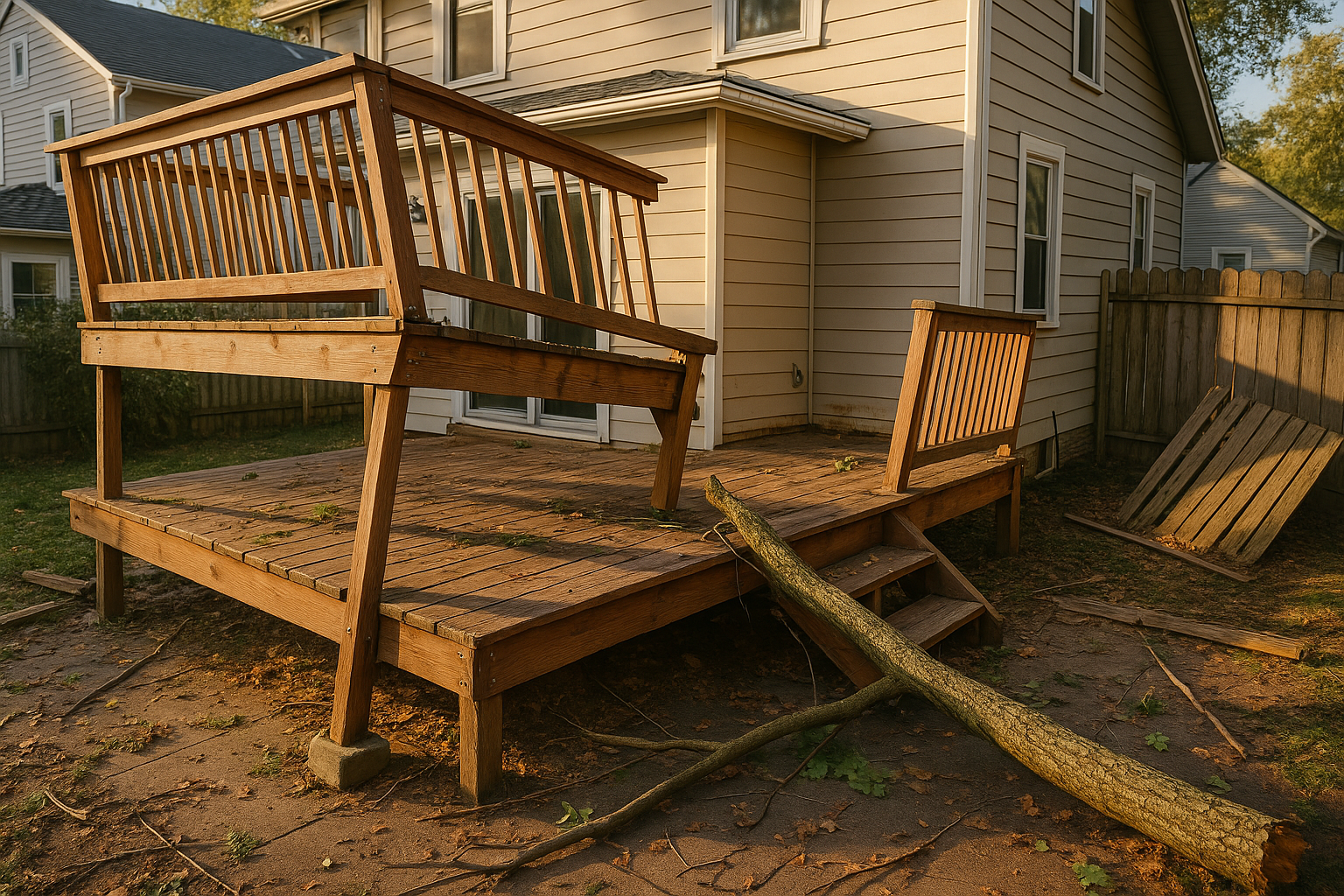
Last spring, a guy in Fishers walked out his back door after a midnight microburst and found his two-story deck looking like a kid's Lego project after a tantrum. The upper rail was leaning hard, one post had shifted off its base, and a chunk of the ledger—where the deck attaches to the house—was pulling away. He didn't know whether to call his insurance first or a contractor. Most people don't. That's exactly the kind of storm damage deck we see all over Indianapolis and the donut counties after a big blow.
What Storms Actually Do to Multi-Level Decks
Central Indiana doesn't get hurricanes, but straight-line winds over 60 mph and hail the size of quarters are common. Those winds can rack a deck frame like a cheap bookshelf. If you've got a multi-level deck, the problem compounds. An upper level's posts carry load down to the lower level's footings—if one post twists or lifts, that stress transfers to the whole stack. I've seen a single wind-damaged railing on an upper deck that ended up loosening three lower rail posts by the next storm.
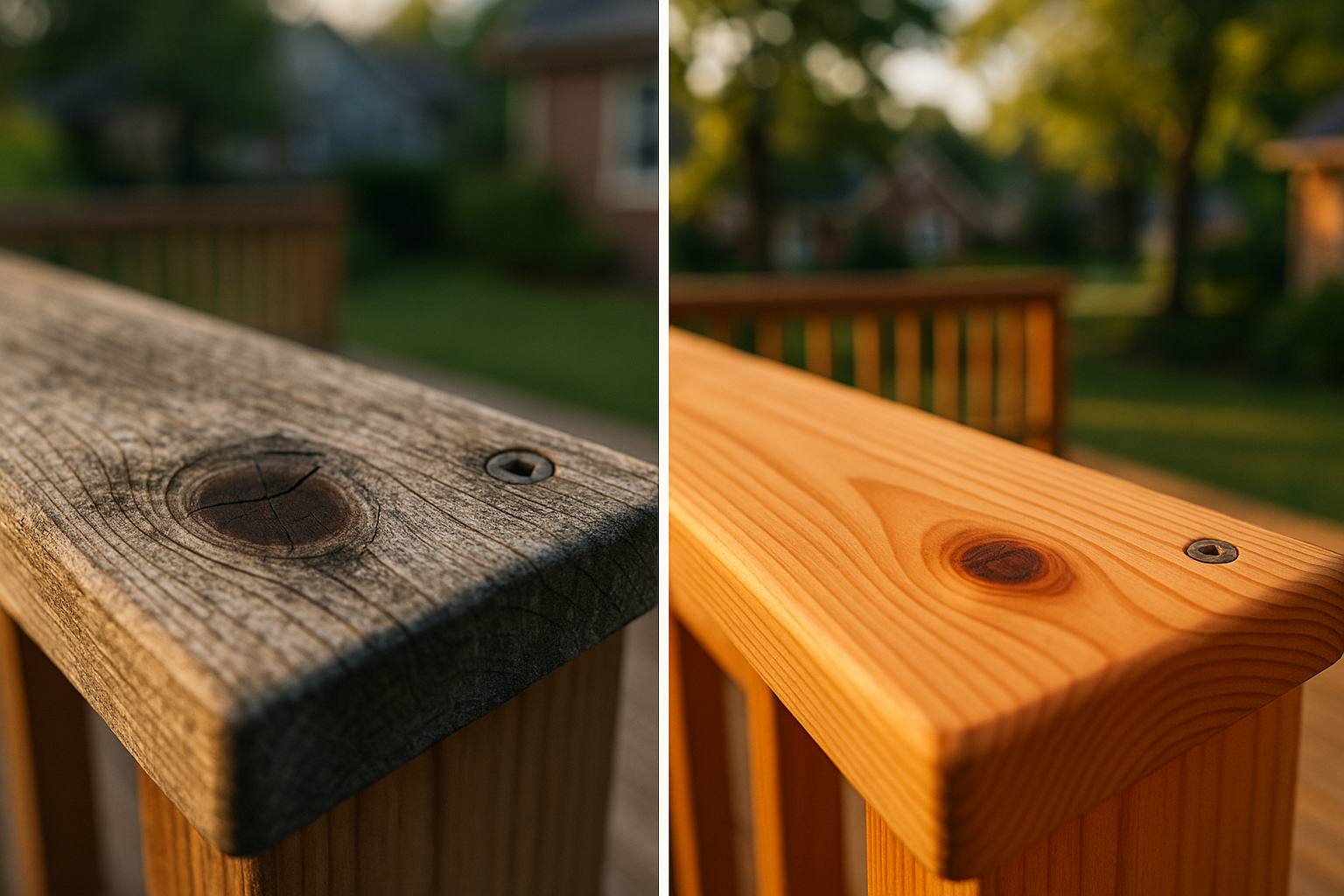
Hail is another silent killer. Hail damage deck boards look like tiny craters, especially on softer wood like cedar or pressure-treated pine. Composite boards can scuff or crack, and metal rail caps get dimpled. Water intrusion is the third big one. Wind-driven rain forces its way behind flashing, and if that ledger flashing fails, water soaks the rim joist and the house wall. Over time, that's rot, mold, and a deck that's quietly separating from the house.
Fallen limbs from mature trees—plenty of those in Broad Ripple, Meridian-Kessler, and Irvington—can crush rails, split joists, or punch through decking. And don't forget the fence. If your storm took down a section of fence next to the deck, that's a separate headache. DeckPros also handles fence repairs, so you're not juggling two contractors.
Your First Walk-Around: What to Look For
Safety comes first. If any post wobbles, if the railing feels loose, if the stairs bounce or the ledger is pulling away from the house, stay off the deck. Seriously. A deck that's compromised can drop without warning. Take photos before moving any debris. Insurance adjusters love photos of the original mess.
Here's a quick checklist for your own storm damage deck inspection:
- Posts and footings: Look for gaps between post bases and concrete, cracks in the concrete, or posts shifted off-center.
- Railing: Give each section a firm push. It should not move. If it does, that's wind-damaged deck railing and it needs attention fast—a loose rail is a fall hazard.
- Ledger board: Check where the deck meets the house. Look for gaps, rust streaks, or cracked caulk. If you can slide a butter knife behind the ledger, call a pro.
- Deck boards: Watch for nail pops, soft spots, or boards that feel spongy. Nail pops are common after storms because the wood flexes. You can read more about fixing nail pops and loose fasteners on our blog.
- Under the deck: Look for water stains, sagging joists, or standing puddles. If your upper deck drips onto a lower patio, that's a flashing failure water intrusion problem.
If any of those red flags show up, don't try to fix it yourself. Temporary shoring can make things safe, but a proper repair needs a structural look.
When to Call a Pro (and What We Actually Do)
As a deck contractor, DeckPros sees storm damage all the time. We start with a full deck safety inspection Indianapolis homeowners can rely on. That means we check every joist, every post base, every piece of hardware from the ledger to the stairs. We use a moisture meter to find hidden rot in framing—just because a board looks fine on the outside doesn't mean it's not mush inside.
We also look at the ground. Clay-rich soil around Indianapolis and the suburbs absorbs water and heaves. Footings that were flush in May can shift by July if the ground got saturated and then froze. Typical frost-depth footings around 36 inches help, but a storm that dumps rain can still cause deck footing frost heave later in the year.
We document everything with photos and a written report. That report helps with insurance claim deck repair because adjusters want line-item detail, not vague guesses. We'll note whether the damage is structural or cosmetic, what can be saved, and what needs replacing. If your HOA needs drawings or permits, we handle that too—Marion County and most surrounding towns require permits for ledger work, structural repairs, or significant railing replacement.
One thing people often miss: that under-deck space. If you've got a patio under an upper deck, a proper under-deck drainage system can keep it dry so you can actually use the space. That's where our patio enclosure supplier side comes in—we can install drainage troughs and gutters that redirect water away from the lower level. It's not just about fixing storm damage; it's about making the whole setup work better.
Repair or Rebuild? How to Decide
Sometimes storm damage is limited to a few broken boards or a section of railing. That's a straightforward fix—we can match existing stain or composite color closely. Replacing a single rotten deck board is often enough if the framing is solid. But if the ledger is separating, or if multiple posts are compromised, or if the frame has been racked out of square, you're looking at a bigger job.
Here's how we decide with you:
- Age of the deck: If it's 15+ years old with original hardware, rebuilding might be cheaper long-term than piecemeal patching.
- Code updates: Older decks often lack hurricane ties, proper post bases, or through-bolted ledger connections. A code-compliant deck rebuild Indianapolis homeowners trust means bringing everything up to current standards.
- Material upgrades: If hail trashed your wood decking, switching to composite decking upgrade after storm damage might make sense. Composite resists hail dents better than softwood, and it never needs staining. Stainless and galvanized hardware resists rust from repeated wetting.
- Cost and timeline: A minor rail repair might take a day. A full rebuild with permits and material lead times could take 3–6 weeks. We give you a clear breakdown before starting—no surprise change orders.
Yes, winter repairs are possible in Indianapolis. Freeze-thaw cycles are hard on concrete, but we can do structural work in cold weather as long as the ground isn't frozen solid for footings. It's slower, but safe.
Storm-Proofing Tips for the Next Round
You can't stop Indiana weather, but you can make your deck less likely to fail next time.
- Annual fastener check: Walk the deck with a screwdriver and tighten any loose screws. Check rail posts and stair connections.
- Clear gutters over the ledger: Overflowing gutters dump water right onto the ledger flashing. Clean them every fall.
- Reseal cut ends: Pressure-treated wood wicks water at cut ends. A quick coat of end-cut preservative every couple years helps.
- Check under-deck ventilation: If your lower level stays damp, read our guide on under-deck ventilation and airflow to stop rot before it starts.
- Look at post caps: Loose or missing post caps let water into the post grain. Deck post caps and trim finishing details matter more than people think.
Get a Straight Answer from a Local Pro
If your deck took a beating from an Indiana storm, don't guess. Schedule a storm-damage deck safety assessment with DeckPros. We'll come out, take photos, check everything from the ledger to the footings, and give you a straight answer on what needs fixing—and what can wait. No pressure, no fearmongering. Just a clear plan from a local contractor who knows how Central Indiana weather treats a deck. Get a quote here.
Thinking about your own deck or pergola?
Free in-home design consultation, 3D rendering, and a written quote — no pressure.