Last spring, my neighbor Tom in Carmel had a “brilliant” idea: rent a gas-powered pressure washer and blast the green film off his composite deck before his Memorial Day party. He figured more pressure meant cleaner boards. An hour later, he had swirl marks etched into the cap layer, and a deck that looked worse than when he started. The manufacturer’s guide said don’t use a pressure washer at all — and Tom’s deck now has permanent stripes that catch the afternoon light. If you’re thinking about pressure washing a deck, especially composite, there’s a right way and a wrong way. This guide is for the rest of us who don’t want to learn the hard way.
Why Pressure Washing a Composite Deck Can Go Wrong
Composite decking isn’t wood. It’s a mix of plastic and wood fibers with a solid outer shell (the cap) that resists stains and fading. That cap is tough, but not indestructible. High-pressure water can chew into the surface, leaving dull spots or etching you can’t fix. Some brands say pressure washing is a no-go; others allow it with strict rules. Before you even think about renting a machine, check your decking brand’s care guide. Trex, for example, has specific cleaning instructions, and they mostly recommend a garden hose and a soft brush.
If you’re asking “can you pressure wash composite decking?” — sometimes yes, but only with low pressure, a wide fan tip, and a careful hand. The best psi for composite deck cleaning is often zero: a soft wash is safer for most capped boards. Power washing vs pressure washing deck: power washing uses heated water, which can soften the cap. Stick with cold water, or better, a soft wash approach.
The Safe Way to Pressure Wash (If You Must)
If your manufacturer allows pressure washing, follow these rules like your deck depends on it (because it does).
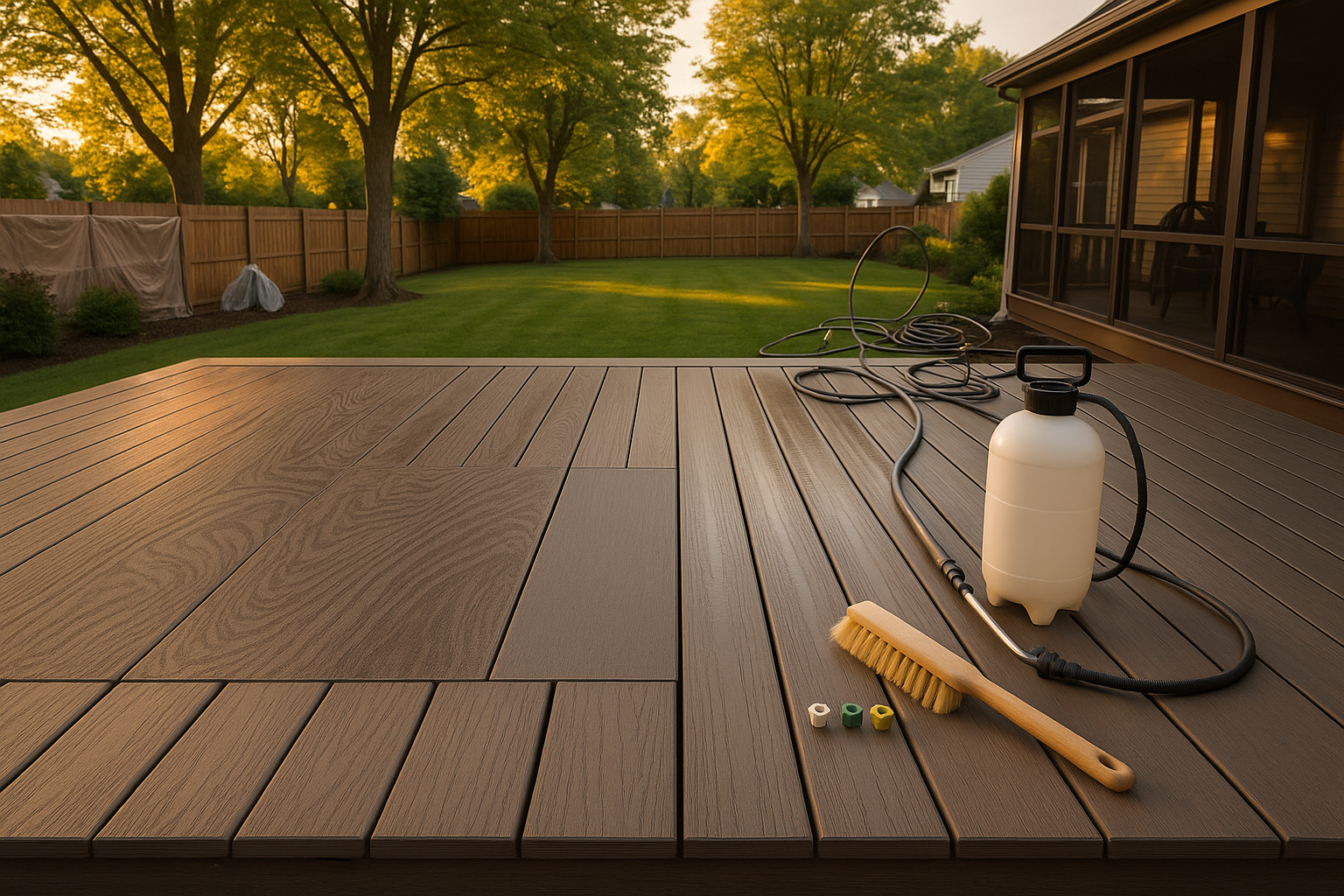
Use a wide fan tip — 25 to 40 degrees. The nozzle for pressure washing deck should be white, green, or yellow, never red (0-degree) or a turbo nozzle. Those pinpoint streams can carve lines into the cap like a hot knife through butter.
Keep the nozzle moving. Don’t stop in one spot. Hold the wand at least 12 inches from the boards, spray at a 45-degree angle so water sheets off instead of digging in.
Start gentle. Rinse the deck with a garden hose to get loose dirt off. Then apply a composite-safe cleaner. Many good ones are eco-friendly deck cleaner for composite, available at any hardware store. Let it sit a few minutes, then scrub with a soft-bristle brush (a broom works great). Only after scrubbing should you consider a low-pressure rinse. That’s basically soft wash composite deck technique — and honestly, 9 times out of 10, hand agitation does the job without any pressure at all.
Avoid bleach on composite decking. Harsh chlorine bleach can strip color or break down the cap over time. Same goes for solvent-based cleaners and wire brushes. They’ll scratch the surface and make future staining worse. (We wrote a whole post on deck cleaning products to avoid if you want the full list.)
A Simple Step-by-Step
- Clear the deck: furniture, planters, anything that traps moisture.
- Rinse with a garden hose to remove pollen, cottonwood fluff, leaf bits.
- Mix your cleaner according to the label, or use a pump sprayer with pre-mixed composite cleaner.
- Spray a small section at a time. Let it dwell 5–10 minutes, but don’t let it dry out.
- Scrub with a soft brush, working with the board grain.
- Rinse thoroughly with a wide fan at low pressure, or just the hose.
- Move on to the next section.
Indianapolis Weather Creates Deck Grime You Can’t Ignore
If you live in Indy, you know the drill. Our humid summers turn shaded backyards into mold and algae farms. Mature maples and oaks in neighborhoods like Fishers, Noblesville, and Greenwood drop leaves, sap, and pollen that stick to damp boards. Then there’s the hard water from irrigation systems — sprinkler overspray leaves white mineral spots that bake on in the sun. And don’t forget cottonwood fluff in late spring that clings to everything like spiderwebs.
That green or black stuff isn’t just ugly — it’s slippery. Spring and fall are the best times to tackle it. Do a thorough clean once in spring, then a lighter rinse after the leaves fall in October or November. That pre-winter cleanup matters because leaf litter traps moisture, and freeze-thaw cycles push that moisture into board gaps, encouraging more growth and even board movement. If your deck has tight board gaps, check our guide on deck board spacing and gapping to see why drainage helps.
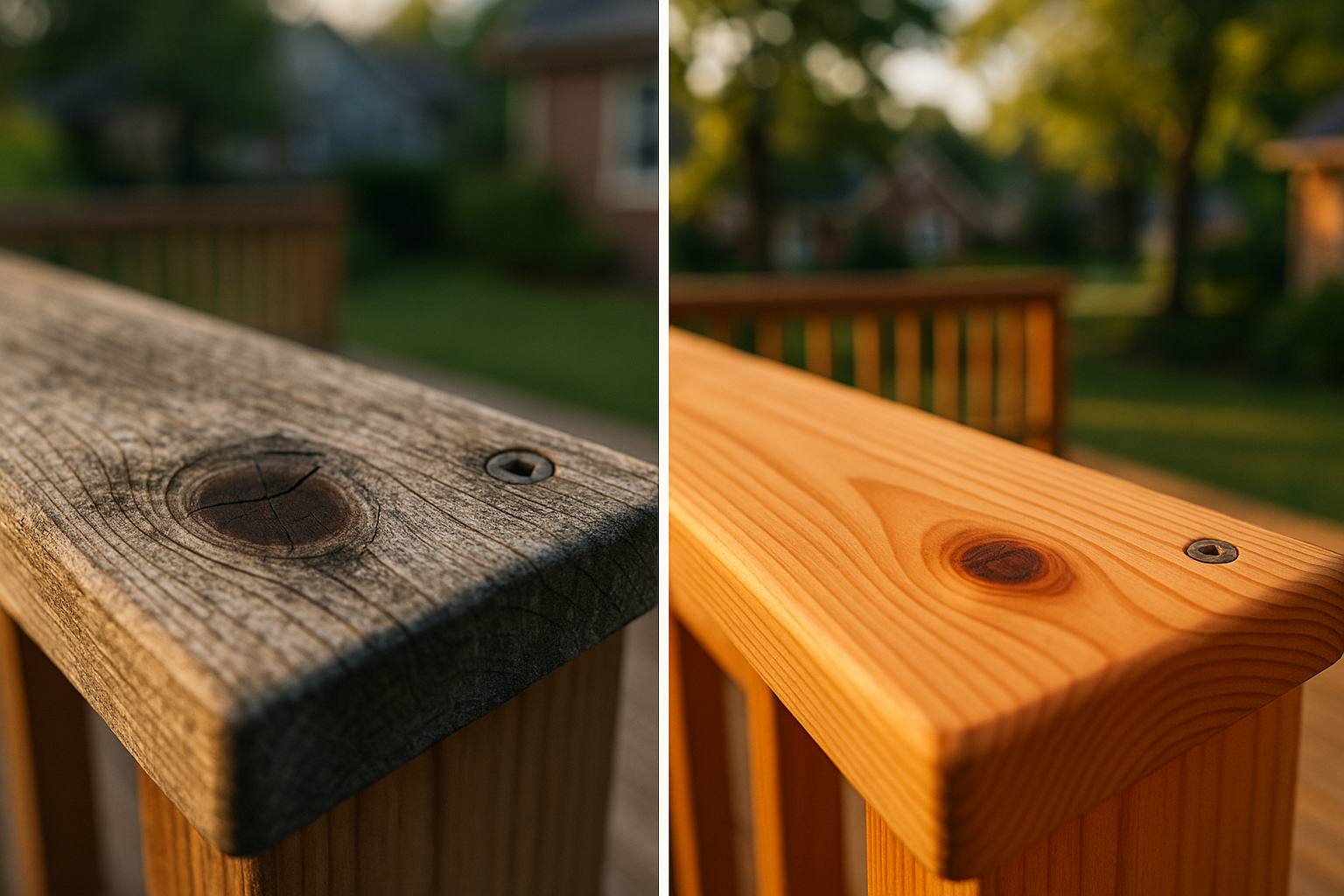
While you’re at it, check your railings. Composite railings often have grooves that collect gunk. Spray them with the same cleaner and scrub gently with a soft brush. Metal or aluminum railings can handle a light rinse, but keep the wand moving and avoid the screws. If the railing is wobbly or deteriorating, that’s a separate job — a railing contractor can inspect and fix it properly.
If your deck butts up against a fence, be careful with overspray. High-pressure water can blast stain right off a wood fence or leave streaks on vinyl. Wet the fence down first or cover it with plastic. Or clean the fence first, then the deck, keeping distance. (And if the fence needs more than a rinse, a fence contractor can help with repairs or staining.)
Some decks in Indy have a screened porch or patio enclosure attached. Cleaning the deck surface is one thing, but don’t forget the enclosure’s floor track, screens, and frame. Those areas trap pollen and mold too. Use a mild cleaner and hose, not a pressure washer, on screens. If you’re adding a pergola or awning for shade, that changes how much sun your deck gets — less sun means more moisture and algae. We’ve got thoughts on deck shade solutions if you’re considering one.
When to Call a Pro (Instead of DIY)
Renting a pressure washer for $80 seems cheaper than hiring someone. But use the wrong tip, wrong pressure, or wrong cleaner, and you’re looking at permanent damage that costs thousands to fix. Composite boards aren’t cheap, and replacing a section often means color mismatch because the old boards have faded.
A professional deck cleaning in Indianapolis usually involves more than pressure. They’ll inspect the deck for loose fasteners, rotting joists, and drainage issues. They’ll know what your specific deck brand recommends. They’ll have commercial-grade soft wash equipment and eco-friendly cleaners safe for your lawn and landscaping. And they’ll cover your plants and electrical outlets so nothing gets fried.
DeckPros does exactly this. We come out, look at your deck, identify the board brand and finish, and test a small area before a full cleaning. We use a manufacturer-compliant process — usually a soft wash with brushing, not high PSI. We also clear the gaps between boards so water drains properly. If we find structural issues like joist tape failing, we’ll let you know. (Here’s why joist tape matters.) We serve Indianapolis, Carmel, Fishers, Zionsville, Westfield, Noblesville, Greenwood, Brownsburg, Avon, and Plainfield.
If you’re not sure whether your deck can handle pressure washing, or you just don’t want to risk it, give us a call or request a quote. It’s a lot cheaper than replacing a board — or an entire deck.
A Little Maintenance Goes a Long Way
Composite decks are low-maintenance, not no-maintenance. A quick rinse with the hose after heavy pollen or cottonwood season takes five minutes and prevents a lot of buildup. Sweep off leaves and dirt regularly, especially in fall. If you see a green tint starting, don’t wait until it’s a science experiment — scrub it with a composite cleaner and a brush before it sets in.
One more tip: if your deck is near a lawn with irrigation, adjust the sprinkler heads so they don’t spray directly on the boards. Mineral deposits from hard water are a pain to remove, but prevention saves elbow grease.
So, can you pressure wash a composite deck? Yes, but carefully — and often it’s better to soft wash. If you’d rather spend your weekend drinking sweet tea instead of wrestling with a pressure washer, DeckPros is here to help. Schedule a cleaning and maintenance consultation, and we’ll give you a clear, written scope and a deck you’ll be proud of.
Thinking about your own deck or pergola?
Free in-home design consultation, 3D rendering, and a written quote — no pressure.