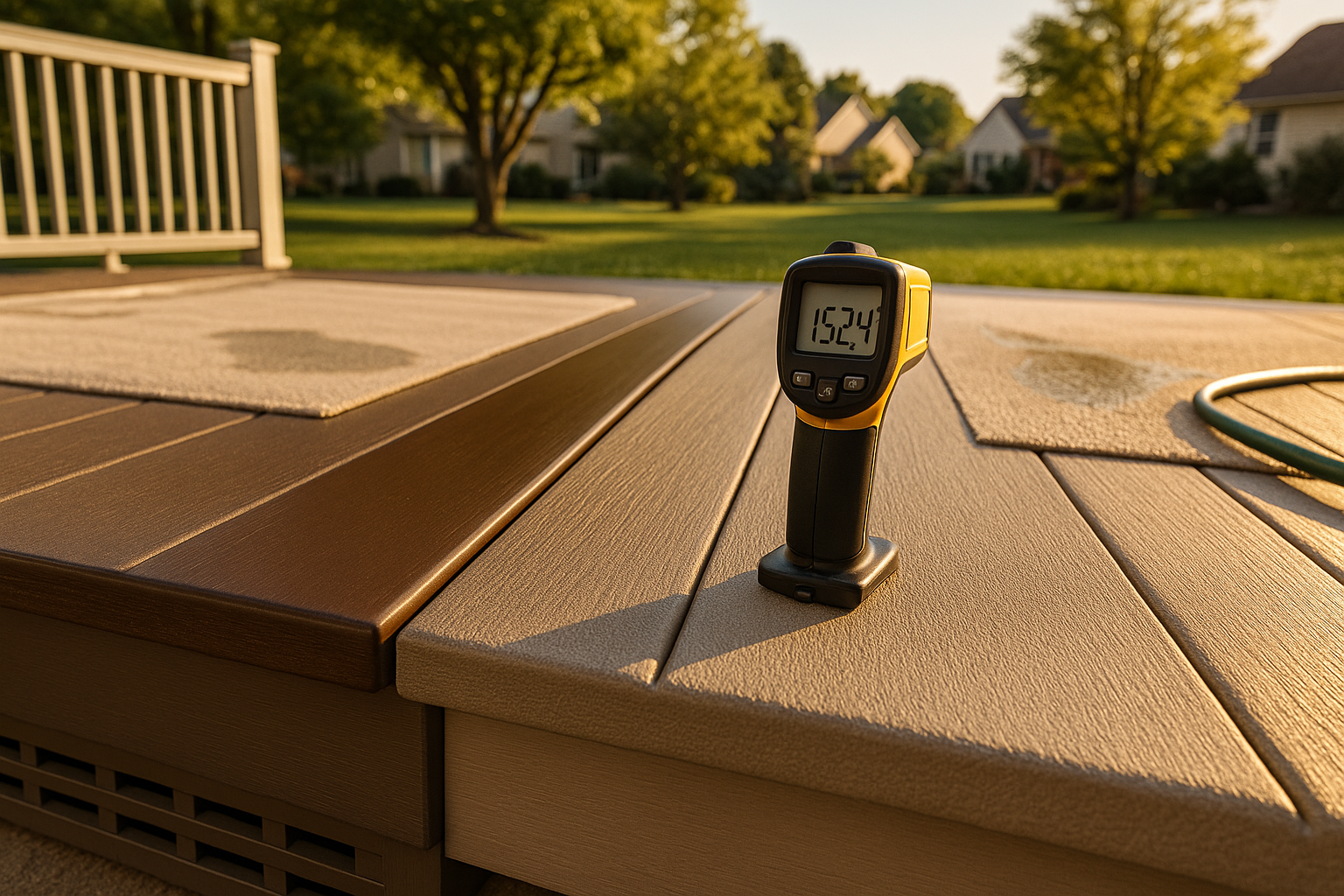
Last July, a buddy of mine in Fishers sent me a text with a photo of an infrared thermometer pointed at his new dark brown composite deck. It read 147 degrees. His kids wouldn't walk outside without shoes, and his wife singed her feet trying to grab the garden hose. He was ready to rip the whole thing out.
Does composite decking get too hot to walk on? Sometimes, yeah. But it's not a simple yes. The heat you feel depends way more on color, texture, and shade than on the word "composite." Let me explain.
The Real Story on Composite Decking Heat
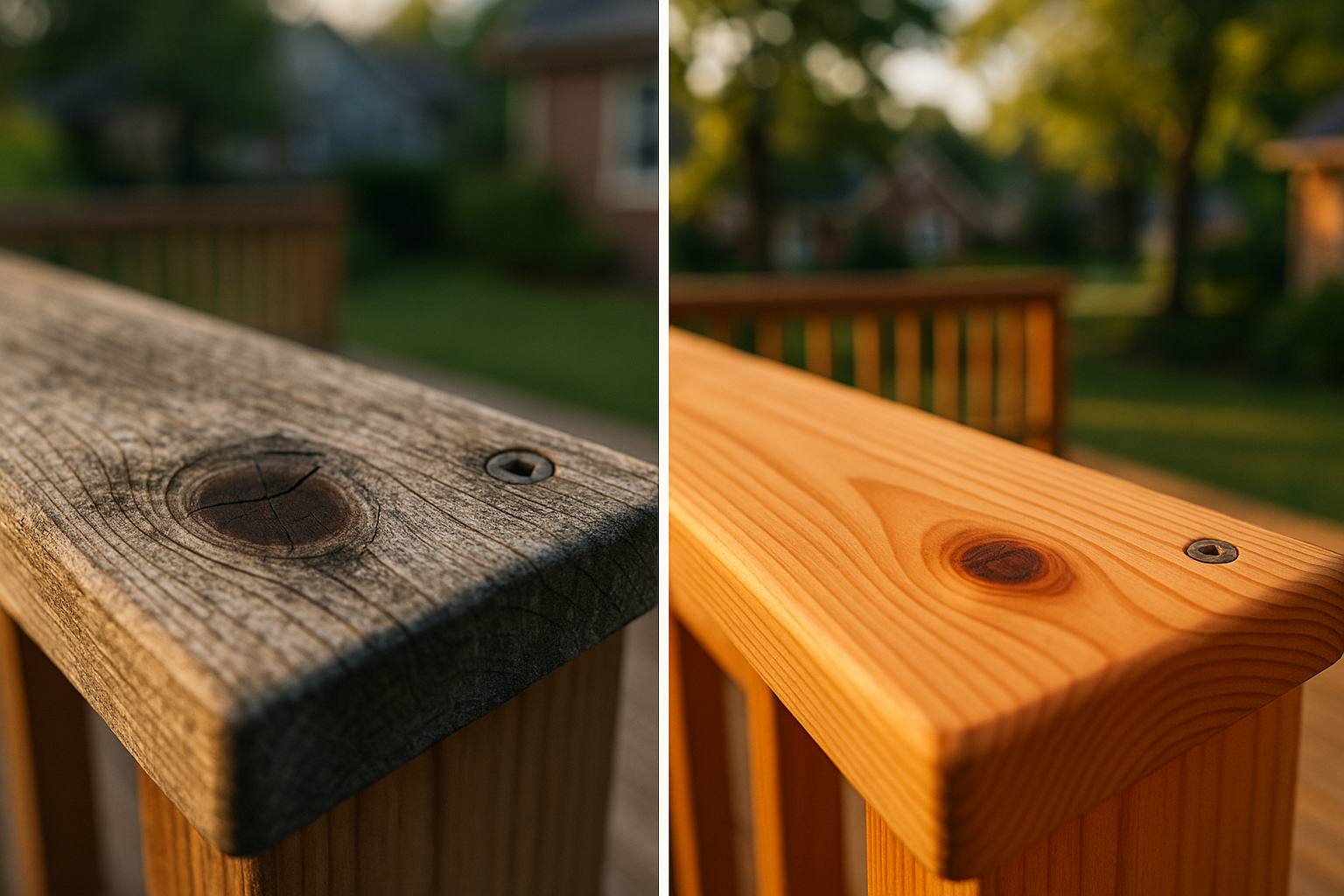
Composite boards are made from a mix of recycled wood fibers and plastic. They absorb the sun's rays and hold onto that heat. Dark colors soak up more warmth than light ones, just like a black car baking in a parking lot. But here's the kicker: wood gets hot too. A pressure-treated pine deck on a 90-degree July day in Indianapolis can easily hit 125 degrees. The difference is composite often feels hotter on bare feet because the plastic in the board transfers heat differently. And if the cap (that outer shell) is smooth and glossy, it can feel even hotter than a textured matte board of the same color.
That's a big deal around here. Indianapolis summers bring sticky humidity, and the heat index often runs 10 degrees above the air temperature. If your deck faces west or southwest? The sun hammers it from early afternoon until sunset. In neighborhoods like Broad Ripple or Fountain Square, the urban heat island effect can nudge things even higher.
Light vs Dark Composite Decking: Which Is Cooler?
Here's the short answer: light colors stay way cooler. A light gray or tan composite board with a matte finish might read 20 to 30 degrees lower than a dark brown or black board sitting right next to it. That's a massive difference for bare feet and pet paws.
But you can still get a rich look without roasting. Look for mid-tone boards with a variegated pattern—those little color streaks help hide dirt and break up the surface so it doesn't absorb heat as evenly. And avoid glossy caps. A textured, matte cap scatters light and gives your foot a little air gap, which makes a surprising difference.
Railings matter too. If you pick a dark metal railing, it turns into a branding iron by 4 p.m. As a railing contractor, I always steer people toward light-colored aluminum railings. They stay cool to the touch and they don't turn into a maintenance headache.
Design Tricks to Beat the Heat on a West-Facing Deck
You don't have to just accept a scorching deck. Shade is your best friend.
A simple shade sail stretched over a seating area can drop the deck surface temperature by 15 degrees in full sun. We've installed a lot of those in Zionsville and Carmel backyards. A pergola with a retractable canopy is a bigger investment but gives you control—open it on cloudy days, close it when the sun starts cooking.
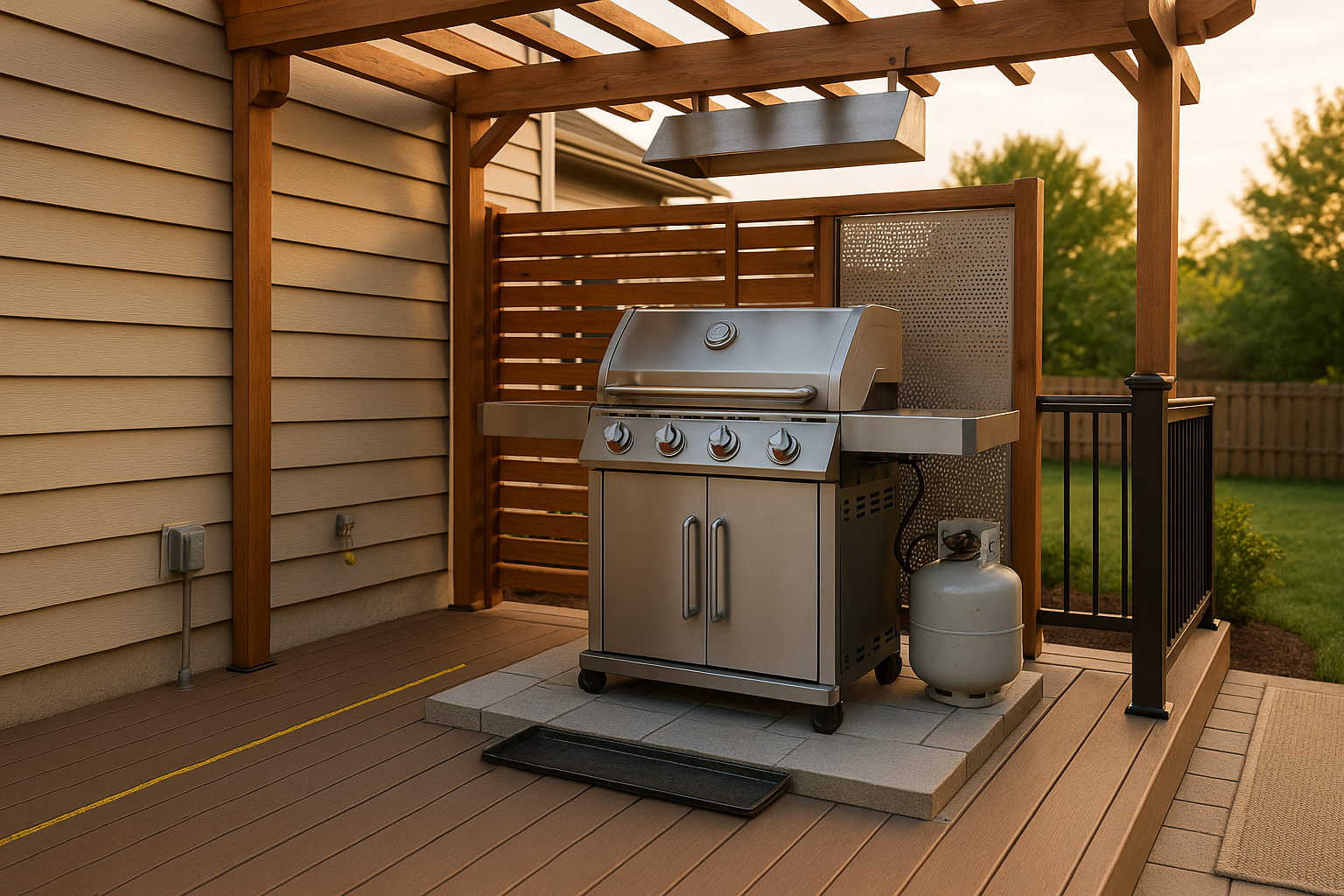
Privacy walls do double duty, especially on those lots where your deck backs up to a neighbor. As a fence contractor, we've built slatted privacy walls in Noblesville that block that low evening sun while still letting a breeze through. They also give you a little privacy from the people behind you. If you want some ideas, we wrote a whole post about deck privacy wall ideas in Noblesville [link to /blog/deck-privacy-wall-ideas-noblesville/].
And if you're looking for something more substantial, a partial patio enclosure might be the way to go. A screened porch or a pavilion with a solid roof takes the sun completely off the deck surface. As a patio enclosure supplier, we help homeowners compare options from simple sunshades to full enclosures. It's not always cheap, but for a west-facing deck that's unusable in August, it can be a game-changer.
Ventilation and Board Spacing Matter More Than You Think
Here's something most people forget: composite expands when it gets hot. If the boards are installed too tight, that expansion has nowhere to go, so you end up with peaking, buckling, or squeaks. Indiana's weather swings from subzero winters to 90-plus summers, so you need correct board spacing and fastening from day one.
We follow manufacturer specs for gapping—usually between 1/8" and 1/4", but it depends on the temperature at install. We wrote a full guide on deck board spacing and gapping [link to /blog/deck-board-spacing-gapping-guide/]. Under-deck ventilation helps too. If your deck is low to the ground, don't seal off the skirting completely. Use vented fascia or lattice so hot air can escape. That not only reduces heat buildup but helps the boards cool off faster after sunset.
As a contractor, I've seen DIY decks where the boards were butted tight, and by mid-July the whole thing looked like a roller coaster. Don't skip the spacing.
Quick Fixes for a Hot Deck Right Now
If you already have a composite deck that cooks in the afternoon, try these:
- Rinse it down with a hose. Evaporative cooling can drop the surface temp by 30 degrees in seconds. Just don't blast it with a pressure washer—that can damage the cap. We have a guide on safe pressure washing PSI for Indiana decks [link to /blog/deck-pressure-washing-safe-psi-indiana/].
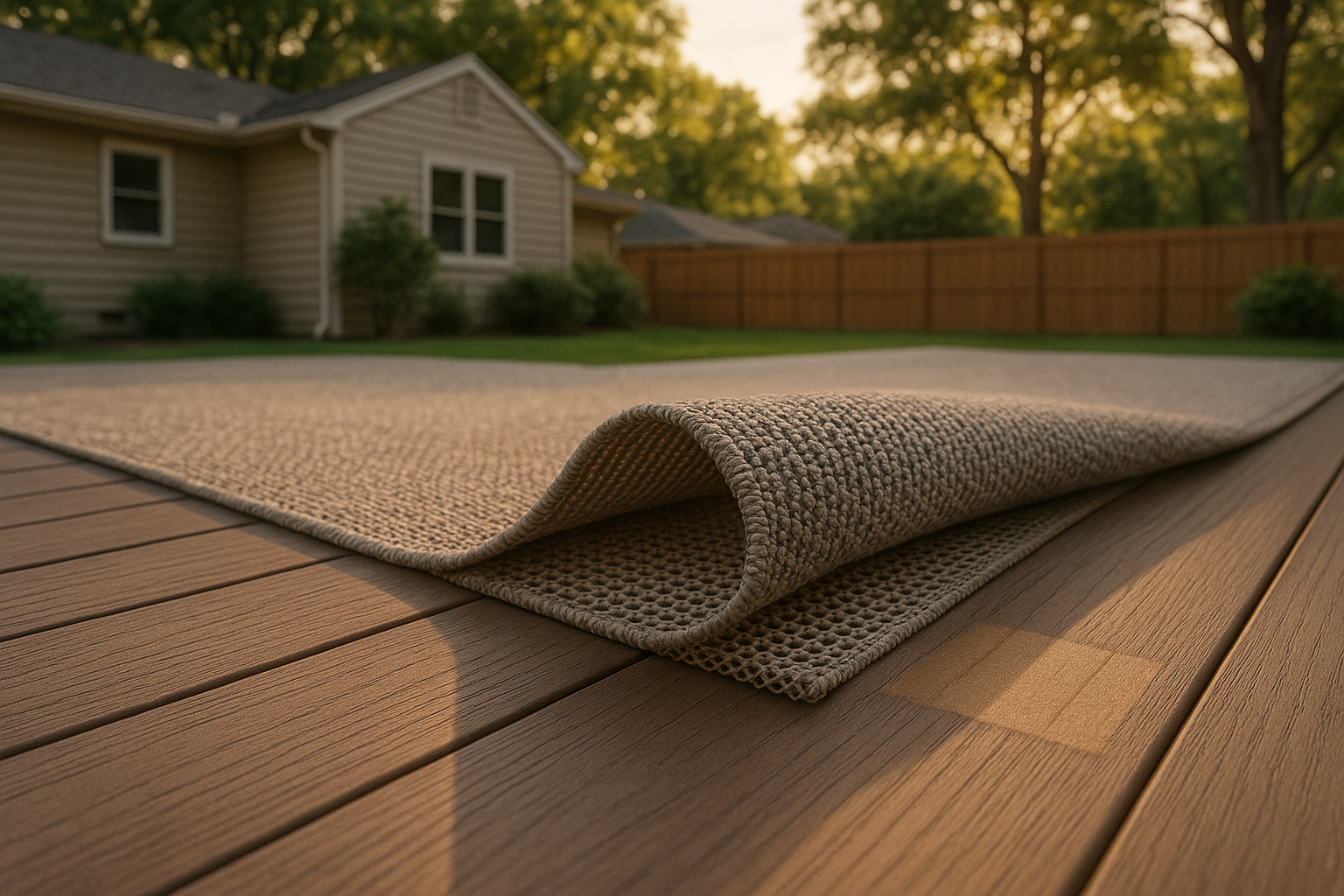
- Lay down a light-colored outdoor rug in the main traffic areas. Avoid black rubber mats; they trap heat and can even stick to the deck.
- Swap out dark furniture cushions for lighter, breathable fabrics.
- If your railings are too hot to touch, consider upgrading to light aluminum.
So, Should You Skip Composite Because of Heat?
Honestly? No. Composite decking heat is a solvable problem. If you love the look of dark decking, you can still have it—just plan for shade and maybe use a lighter color for the high-traffic zones. Many homeowners in Greenwood and Brownsburg are surprised how much difference a light board with a matte cap makes.
PVC decking is another option. It doesn't have wood fibers, so it tends to stay a bit cooler than dark composite, though a light composite with a matte cap is usually comparable and often less expensive.
The best move is to plan your deck around your yard's actual sun path. At DeckPros, we do that for you. We'll walk your yard in the afternoon, check where shade falls, and recommend board colors, textures, and shade structures that fit your budget. Request a custom quote here [link to /#quote].
Don't settle for a deck you can only use after dark.
Thinking about your own deck or pergola?
Free in-home design consultation, 3D rendering, and a written quote — no pressure.