Last summer I was on a job in Carmel where a homeowner had just replaced his deck railings himself. They were beautiful—wide, flat top rails you could set a drink on. But when the inspector came, he got a correction notice. Not because the rails were weak, but because they didn't meet the deck railing height code for stairs. He'd used the same 36-inch guard height on the stairs, but the code wants a graspable handrail between 34 and 38 inches, and his flat top wasn't graspable. He had to rip them off and start over. It was a bummer, but it's a mistake I see all the time. So let's cut through the confusion and talk about what Indiana actually requires for deck railings, handrails, and spacing.
When Do You Even Need a Guard?
First, figure out if your deck needs a guard at all. The rule is simple: if the walking surface is more than 30 inches above the ground—measured within 36 inches horizontally from the open edge—you need a guard. That's straight out of the 2018 IRC, which Indiana adopts with a few local tweaks. A lot of homes in Indianapolis have walk-out basements, so the deck out back might be way over that 30-inch line without you realizing. A deck that's just a couple steps up from the lawn might not need a guard, but add a little slope and suddenly you're over. And if you're building or replacing stairs, you need a handrail no matter the height. That's separate from the guard. So don't skip this step—measure from the deck surface to the grade below at the worst point.
The Numbers: Height, Spacing, and Handrail Grip
Now for the good stuff. These are the exact numbers you'll see on an inspection sheet.
Guard (Railing) Height on Level Decks
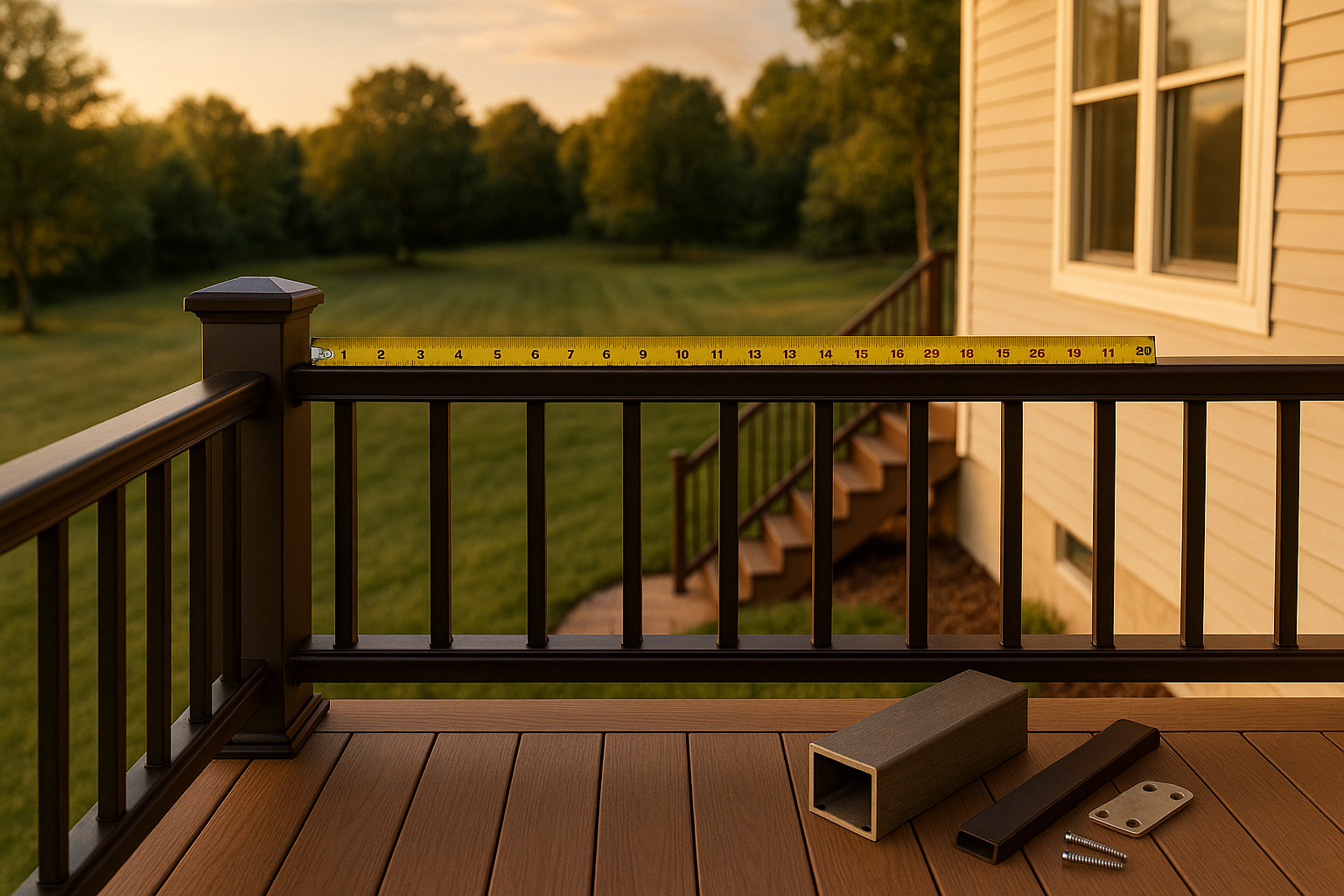
On a flat deck, the top of the guard needs to be at least 36 inches above the deck surface. That's the residential guardrail height, and it's not a suggestion. Indoors or out, that number keeps people from tumbling over. So if you're replacing an old rail that's only 30 inches, you're not up to code.
Handrail Height on Stairs
Stair handrails are a different beast. They need to sit between 34 and 38 inches, measured vertically from the stair tread nosings—the little bumps on the front of each step. That's the stair handrail height Indiana goes by. And they have to be continuous for the full flight, with returns at the ends so you don't snag your coat or catch a purse strap. No gaps, no shortcuts.
Graspable Handrail Profiles
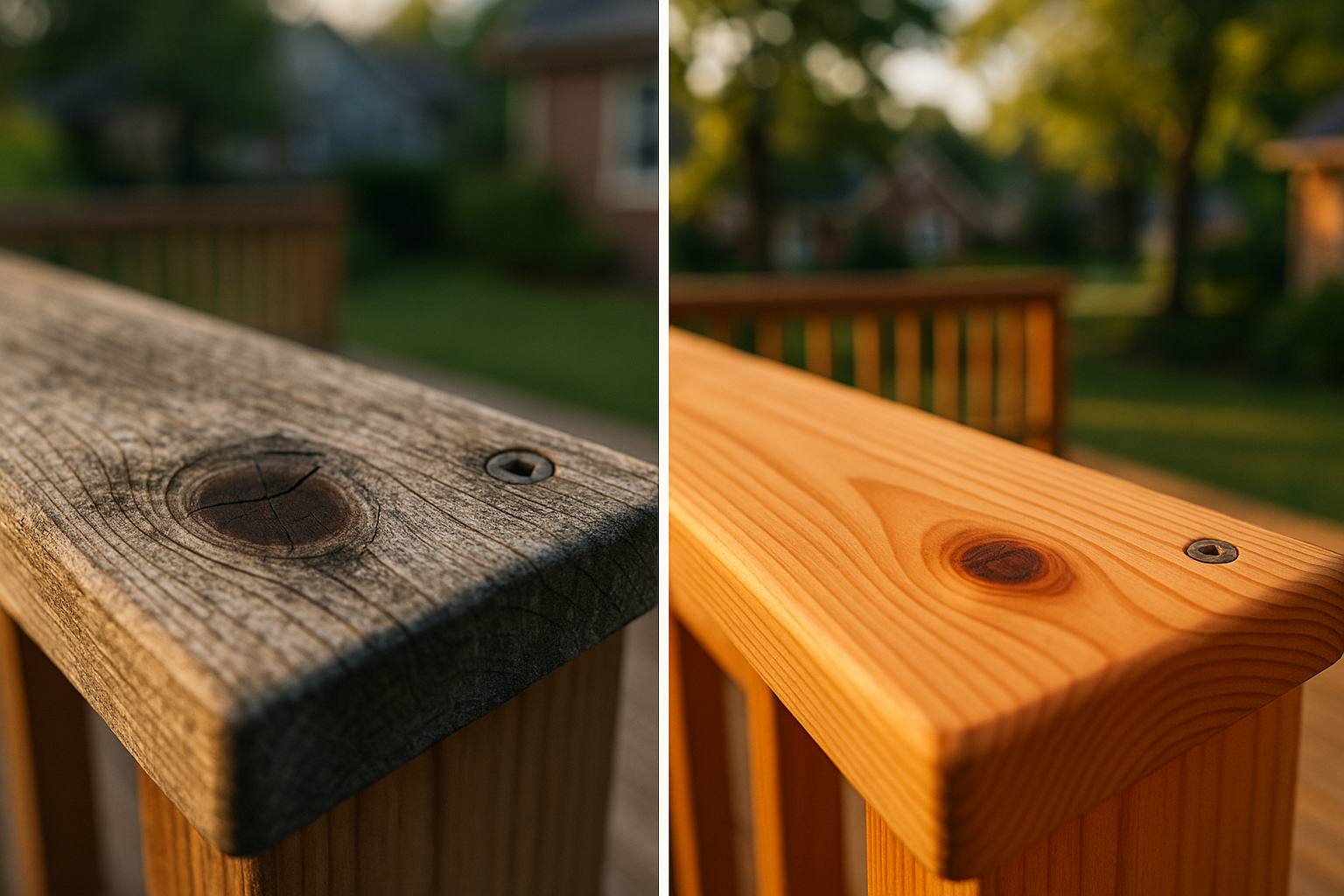
This is where a lot of people get tripped up. A big flat top rail might feel nice to lean on, but the code wants a handrail that's graspable—you need to be able to wrap your fingers around it. Type I and Type II profiles are the common go-tos. So if you want a wide top rail for looks on a level deck, fine, but on stairs you need a separate graspable handrail. That's a key part of deck stair railing code, and it's exactly what my Carmel client missed.
Baluster and Opening Spacing
Let's talk about gaps. On a level guard, the opening between balusters can't let a 4-inch sphere pass through. That's the baluster spacing 4 inch rule—imagine a baseball, and if it can squeeze through, you fail. On stairs, it's a little looser: a 4-3/8-inch sphere. And that triangle formed by the tread, riser, and bottom rail can't let a 6-inch sphere through. For cable railing, this is where tension matters. Cable railing code compliance is doable, but you need the right posts, the right tensioners, and a close eye on cable sag. If the cables get loose, that sphere will find a way.
Load and Post Connections
Your guard has to hold up to real force—200 pounds of concentrated load at the top, in any direction. That means your posts and connections need to be solid. Weak notching, rusty brackets, or reused old 4x4 posts might not cut it. Engineered post-to-frame hardware and proper blocking are your friends. I've seen too many decks where a good shove on the rail makes the whole thing wiggle. That's a red flag, and an inspector will catch it.
Materials That Work in Indiana (And Who You Might Need)
Indiana weather is rough on decks—freeze-thaw cycles, summer humidity, and UV rays. So pick materials that can take it. Powder-coated aluminum railing is a smart choice around here. It's low-maintenance, won't rot or splinter, and comes in profiles that meet height and graspability rules. If you're looking for low-maintenance aluminum railing Indianapolis pros recommend, that's your winner. Composite sleeves with metal cores also hold up well, and stainless or coated fasteners are a must to avoid rust streaks.
But here's the thing: code-compliant railing isn't just about the rail itself. It's about how it ties into the deck, the stairs, and sometimes the rest of your outdoor space. That's where different contractors come in.
A railing contractor—like the team at DeckPros—can help you pick profiles, infill options, and hardware that look sharp and pass inspection. We do this every day, so we know what the Indianapolis reviewer wants to see.
If you've got a screened porch or three-season room that opens onto a deck, a patio enclosure supplier can coordinate the uprights and screen tracks so the guard height stays consistent and the door thresholds stay safe. You don't want a step-down hazard right at the screen door.
And if your deck butts up against a privacy fence, a fence contractor might need to tie into the deck's guard system. Sometimes that fence section has to meet guard height too, not just fence height. It's a detail that's easy to overlook but matters for safety and code.
At the end of the day, a good contractor who knows decks should handle all the moving pieces. DeckPros is right in the middle of that—we do the whole thing from footings to final inspection, and we understand how the railing code fits with the rest of the structure. You can check out our guide on deck footings and frost depth for Indiana if you're curious about the foundation side of things.
Permits and Inspections in Indianapolis and Nearby
Here's the part nobody likes: permits. Most new decks, structural railing replacements, and stair rebuilds need a permit. In Marion County, that's handled by the Department of Business and Neighborhood Services. In Hamilton County—Carmel, Fishers, Noblesville, Westfield—the process might be through the city or county. Same for Hendricks County (Brownsburg, Avon, Plainfield). The core heights and spacing are the same everywhere because Indiana uses the IRC, but local reviewers can have slight differences. That's why you should always verify with your local building department before you start.
And yes, even if you're just replacing old railings, you might need a permit. Some people think "I don't need a permit for just replacing railings," but if you're changing the guard system or altering the height, you probably do. An inspector will want to see that the new rails meet code, and they'll check the post connections, baluster spacing, and handrail profile. Better to plan for it than to get a stop-work order.
If you'd rather skip the guesswork, get a code-compliance assessment from DeckPros. We'll measure your existing deck, check the railings, handrails, and stairs, and give you a clear plan. No pressure. Just real numbers and honest advice. Book a time at /#quote and we'll walk you through it. And if you're worried about cost, we've got financing options outlined over on our blog.
Thinking about your own deck or pergola?
Free in-home design consultation, 3D rendering, and a written quote — no pressure.