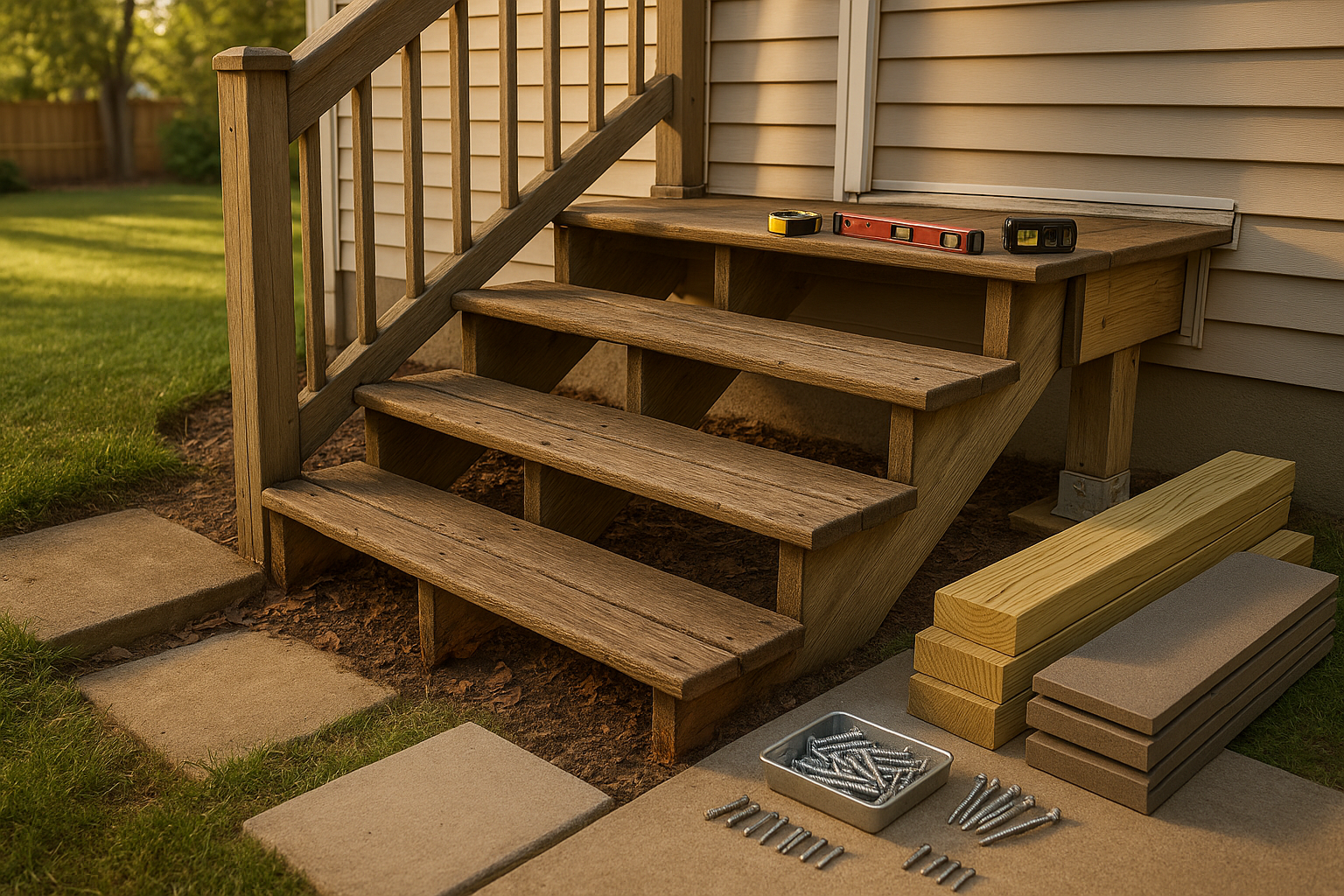
Tom called me on a Tuesday morning. He’d just hosted a cookout for his daughter’s birthday in Fishers, and one of the guests noticed his deck stairs wobbled every time someone stepped. Embarrassed and worried, he tightened a few screws himself — but the wobble came back in a week. He wanted to know what it would take to make those stairs solid again, and fast.
Stories like Tom’s are common around Indianapolis. Our freeze-thaw cycles and clay soils mess with stair footings. Shaded yards in Broad Ripple or Meridian-Kessler keep stringers damp and rotting. And older homes in Irvington or Fountain Square often have stairs built to no code at all. The good news? Most wobbly stairs can be fixed without a full rebuild. Let’s walk through what’s probably wrong and how DeckPros handles it.
Why Deck Stairs Get Wobbly
Nine times out of ten, it’s one of these:
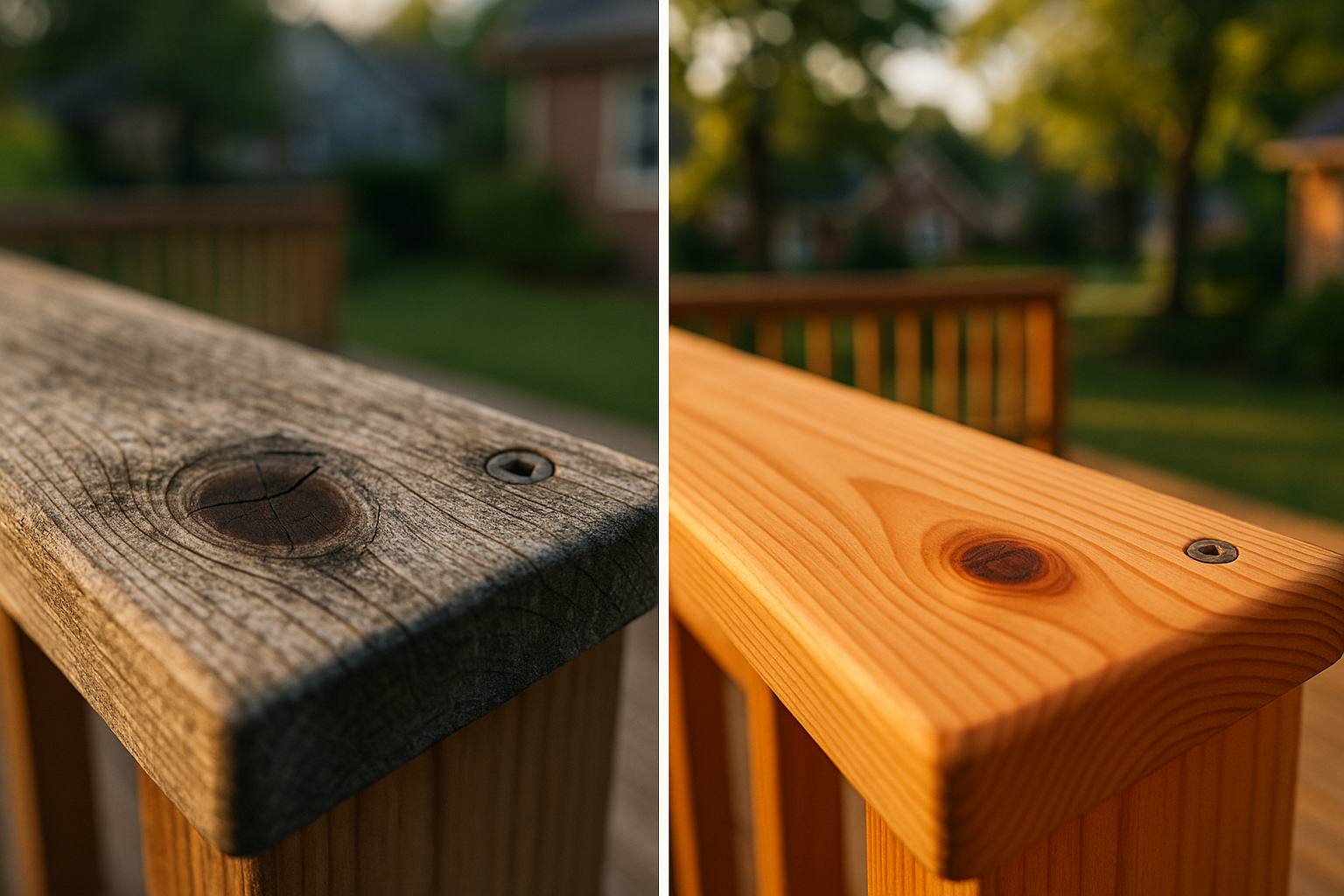
- Rotted stringers – the angled boards that support the treads. If they sit on damp ground or don’t have good drainage, they rot from the bottom up.
- Bad footings – the concrete pads at the base. If they’re too shallow or too small, frost heave lifts them, making the whole stair frame wobble.
- Corroded fasteners – standard screws and brackets rust out, especially if you use de-icing salts. Deck stairs take a lot of movement, and loose connections mean wobble.
- Loose rail posts – if the handrail is attached only with deck screws into the stringer, it will loosen over time.
Each of these problems needs a different fix. Some are quick — replace a few connectors — others require new footings or full stringer replacement.
Safety and Code: What Matters in Indianapolis
Indiana follows the International Residential Code (IRC), which sets rules for stair rise and run, tread depth, landing size, handrail height, and baluster spacing. If your stairs were built before 2000, there’s a good chance they don’t meet current code. Common issues: too-shallow landings, handrails that aren’t graspable, or balusters spaced too far apart.
When DeckPros inspects your stairs, we look at every safety element, not just the wobble. We’ll point out what needs fixing and what can wait. If structural parts change — like replacing stringers — we help you navigate Indianapolis/Marion County permitting. We’ve done it a hundred times, so it’s not a headache.
The DeckPros Approach: Diagnose First, Fix Smart
We start with a thorough on-site inspection. We poke suspect areas with a probe, look for soft wood or corrosion, measure deflection (how much the stairs bounce), and check every connection. If the footings are heaved, we’ll suggest new ones. If only the treads are loose, we can often tighten and reinforce without tearing everything out.
After inspection, you get a written plan with photos, material choices (pressure-treated wood or composite), and a clear timeline. Most stair repairs take one to two days once materials are ready. Permits, if needed, add a few days for approval — but we handle the paperwork.
Repair Options: From Quick Fixes to Full Replacements
Tightening and Hardware Upgrades
If the stringers are sound but the treads or handrails wobble, we upgrade to hot-dip galvanized or stainless steel structural screws and brackets. Goodbye corrosion. This is a fast, affordable fix for newer decks where the wood is still solid.
Stringer Replacement
When the stringers are rotted or cracked, we cut them out and install new ground-contact treated lumber, properly supported at top and bottom with metal brackets and concrete footings. This is the most common repair for decks built in the 1990s and 2000s in suburbs like Carmel, Zionsville, and Westfield.
Footing Replacement
If the landing pad is cracked, heaved, or too small, we dig footings to the local frost depth — usually 30 to 36 inches — and pour concrete. This stops the wobble for good. We call 811 for utility locates before any digging, especially in tight city lots.
Full Stair Replacement
Sometimes the whole stair is beyond saving: rotted stringers, bad footings, wrong dimensions. In that case, we build new stairs to code, using composite treads and risers if you want a look that lasts. After a heavy season of freeze-thaw in Greenwood or Noblesville, this is the cleanest solution.
Handrail and Guard Post Reinforcement
A wobbly rail is a red flag. We reinforce rail posts with through-bolts and interior blocking so they can handle real-world loads — like someone stumbling or leaning hard. Handrails are set to proper height (34 to 38 inches) with graspable profiles and returns at the end. This is a common upgrade when we’re already repairing stairs.
Material Choices That Work in Indy’s Climate
Composite treads (with anti-slip nosing) are becoming popular because they don’t rot, splinter, or need staining. But match them well to your existing deck so the repair blends in, not sticks out. If you’re on a budget, pressure-treated wood with a high-quality sealant still performs fine for many years. Just keep leaves and snow off to reduce moisture.
Anti-Slip Options for Winter
Ice and snow love smooth surfaces. We can add grip strips or textured treads to any stair — wood or composite. This is a cheap upgrade that makes a huge difference when you’re carrying groceries in February.
Why Proper Footings Matter Here
Indianapolis clay soils expand and contract with moisture, and frost can push small pads around like toys. A stair landing that’s just sitting on a 4x4 post notched into concrete will heave and wobble within a few years. We install footings that are sized for the load and deep enough to sit below frost line. That’s the right way.
If you’re in an older neighborhood like Irvington, you might see original stairs with no footings at all — just posts stuck in dirt. That’s a complete tear-out and replace, but the result is rock-solid.
Permits and HOA Coordination
Replacing structural stair parts usually requires a permit from the City of Indianapolis or Marion County. We’ll guide you through it and provide any drawings needed. If your HOA has appearance rules — say, in Avon or Plainfield — we coordinate with them to make sure materials and colors are approved before we start.
How Long Does It Take?
From inspection to finish, most stair repairs take a week. Inspection one day, permitting a few days (if needed), then one to two days to build. We stage materials neatly and protect your yard. Noise is minimal — just fasteners and a saw. Your stairs might be out of use for a couple days, but we can often leave a temporary stair or ramp.
Keep Them Solid Year After Year
After repair, a little maintenance goes a long way. Check fasteners each spring, clear debris from stringer ends, and use deck-safe ice melt in winter. If you see any new wobble, call us — small issues are cheap to fix early.
Tom’s stairs ended up needing new footings, reinforced stringer brackets, and composite treads. We finished the job in two days, and his wife said it was the first time the stairs felt safe in years. He told me, “I should have called DeckPros first instead of trying to fix it myself.” That’s why we’re here: to make your stairs right, the first time.
Ready for a Solid Stair Fix?
If your deck stairs wobble, don’t wait until someone gets hurt. We’ll come out, inspect everything, and give you a clear plan and price — no surprises. Request your on-site stair safety inspection here and we’ll get you on the schedule. Serving Indianapolis and all surrounding areas: Carmel, Fishers, Zionsville, Westfield, Noblesville, Greenwood, Brownsburg, Avon, Plainfield.
More Helpful Reading
- Signs Your Deck Ledger May Be a Problem
- How to Know If Your Old Deck Is Still Safe
- Composite vs Wood Decking for Indiana Homes
- Before & After: Basic Platform Deck to Outdoor Room
- Why Deck Boards Cup, Crack, or Feel Soft
- Deck Ideas for Fishers Homes with Open Yards
Thinking about your own deck or pergola?
Free in-home design consultation, 3D rendering, and a written quote — no pressure.