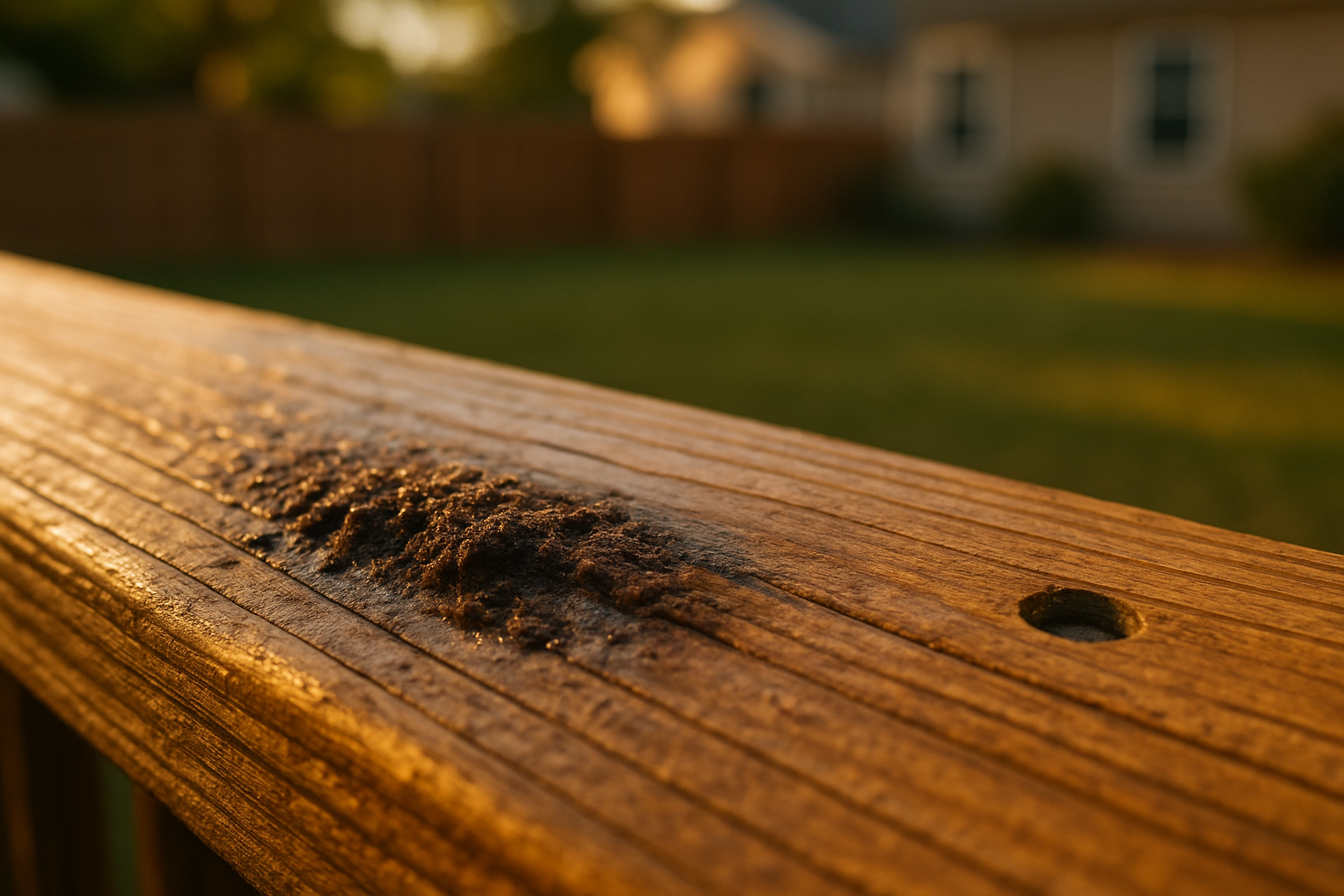
A few weeks back, I got a call from a homeowner in Fishers. She said her deck felt "like walking on a sponge" after every rainstorm. She’d even tried painting it twice that year—thinking it would seal things up—but the soft spots kept spreading. She wasn't sure if she needed a new deck or just a few boards swapped out.
That's a super common question around here. And honestly, if you're in Indianapolis or any of the surrounding suburbs—Carmel, Zionsville, Greenwood—you've probably noticed a similar thing after a wet spring or a humid summer.
So why do deck boards feel soft in Indianapolis homes? And more importantly, what do you actually do about it?
The Real Cause of Soft Deck Boards
Almost always, that soft or spongy feeling comes from moisture. I mean, water is decking's #1 enemy. And in central Indiana, we get a lot of it—spring downpours, humid air that never dries out, then freeze-thaw cycles in winter that force water deeper into the wood.
When moisture gets trapped, it feeds fungus that rots the wood from the inside. The top of the board might still look good, but a few millimeters down it's like wet cardboard. That's why you get that bouncy feeling even though the surface appears solid.
But here's the thing: it's not always the boards themselves. Sometimes the real problem is underneath. Rotted joists, a failing ledger board, or even just undersized framing can make the whole deck feel soft. Especially with composite decking—if the joists are too far apart, the composite flexes underfoot and feels bouncy. That's not rot, but it's still wrong.
Another big culprit? Corroded fasteners. Old galvanized screws or nails rust over time, especially after a few Indianapolis winters. They get loose, and the boards start moving. Every time you step on them, water works its way into that hole and rots the wood around it. So you end up with soft spots right around every fastener.
What About Insects?
Carpenter ants and termites? They're a possibility, but around here moisture-related rot is way more common. If you're seeing soft boards, it's probably water damage, not bugs.
How to Tell if It's Serious
You can check a few things yourself before calling a pro. Grab a flat-head screwdriver. Gently poke the soft area. If it sinks in easily—like a spoon into peanut butter—that's rot. Also, look for dark stains, cupping (edges curling up), or any greenish-black fuzz.
But the real test is checking underneath. If you can crawl under your deck, look at the joists near the house where the ledger is. That's a common failure point. Also check the end grain of boards—that's where rot often starts.
Safety note: If the deck feels soft near the railing posts, that's urgent. Rail posts anchored into rotted framing can give way under pressure. Don't let kids or heavy loads near those areas until a pro inspects it.
Fixing Soft Decks for Indianapolis Weather
So what's the solution? It depends on how bad it is. If it's just a few boards and the framing is solid, we can swap them out. That's a targeted fix. We'd use kiln-dried treated lumber—or upgrade to composite if you want less maintenance down the road. But with composite, make sure the joist spacing is right (16 inches on center for most brands, not 24). Otherwise, you'll get bouncing again.
If the joists are rotten, you need to sister them (nail a new joist alongside) or replace them. And if the ledger is failing—or if the flashing between the deck and the house was never installed correctly—that's a bigger job. In older homes, especially in neighborhoods like Meridian Kessler or SoBro, ledgers were often attached without proper flashing, and that leads straight to rot.
We also see problems from gutters that discharge right onto the deck. In many Carmel homes with mature trees, gutters get clogged and overflow, soaking the deck for days. That's a cheap fix—just extend the downspout away from the deck—but it's worth catching early.
A Note on Permits
If we're replacing structural parts (like joists or the ledger), local permits might be needed. Regulations vary across Marion, Hamilton, and Hendricks counties. In Carmel, for example, any structural work over a certain size requires a permit. DeckPros handles permitting and inspections for you. We've dealt with every town in the metro, so that's one less thing to worry about.
Can You Just Replace One Board?
Sure, if the rest is fine. But if the problem is caused by trapped moisture that hasn't been solved, you'll see the same soft spot next year. It's like patching a hole in your roof but ignoring the leak.
Choosing the Right Material for Indiana
Pressure-treated pine is still the standard, but it needs regular sealing—especially in our climate. Composite is great for low maintenance, but you have to install it right. We've seen a lot of "bouncy composite decks" in Westfield and Noblesville because the builder used wood deck spacing. Composite needs tighter joist spacing and sometimes solid blocking under seams.
Winter Repairs
People ask: "Is it too cold to fix my deck in January?" Nope. We can still replace boards and framing in winter. The only thing that doesn't work well is staining or sealing—those need dry, above-50°F weather. So we can do structural repairs now and schedule sealing for spring.
Bottom Line – What to Do Next
If your deck feels soft, don't ignore it. Fixing a few boards now costs way less than rebuilding the whole thing later. The goal is to figure out exactly what's going on—so you can decide what's urgent, what can wait, and what will just waste your money.
That's where we shine. We'll come out, inspect every part of the deck, document what we find with photos, and give you a clear repair plan with options and prices. No pressure, just honest advice on what makes sense for your deck and your budget.
And if you're still unsure, check out our blog post on deck safety for more signs to look for.
Ready to get that spongy spot checked out? Schedule a consultative inspection with DeckPros today. We serve all of Indianapolis—from Avon to Zionsville and everywhere in between. We'll tell you exactly what's wrong and what it'll take to make it right.
Thinking about your own deck or pergola?
Free in-home design consultation, 3D rendering, and a written quote — no pressure.


