A friend of mine lives over in Stonegate, and his backyard drops off like a ski slope. For years, he had this sad little concrete pad off his walk-out basement—nothing but a chair, a grill, and a view of the neighbor’s fence. Every time it rained, the water pooled at the door, and he’d mutter, "I just wish I could use this space." Sound familiar? A lot of Zionsville homes sit on these beautiful rolling lots, but that slope can feel like a curse. Until you start thinking in levels. A multi-level deck isn’t just a stack of platforms—it’s the smartest way to turn a tricky grade into the feature of your yard.
Why a multi-level deck works so well in Zionsville
Walk through neighborhoods like The Willows or Holliday Farms, and you’ll notice the same thing: basements that walk right out to the grass, and yards that pitch down toward a pond or tree line. A single-level deck would either hover way up high or sit buried in the slope. But a tiered design follows the land. You get distinct zones without a massive footprint—say, an upper deck for grilling and dining off the kitchen, a mid-level lounge with a fire pit, and a lower patio or covered space for shade on those sticky July afternoons. Plus, you won’t be staring at the back of your neighbor’s house; the elevation changes can actually give you more privacy when you position the levels right.
I’ve heard from more than one homeowner who started out asking for a simple platform, then realized a two-tier deck only added about 15-20% to the cost but doubled their usable space. And when you’re dealing with HOA rules in places like Stonegate or Holliday Farms, a well-designed multi-level deck can slip through architectural review easier because it looks intentional, not like an afterthought.
Planning the layout: stairs, sightlines, and those 42-inch footings
Before you get excited about composite colors, you’ve got to look at the dirt. Zionsville’s clay-heavy soil swells with spring rain and heaves when it freezes. That’s why footings here need to go down at least 42 inches—below Indiana’s frost line. A good builder will walk the site, spotting drainage patterns, utility easements, and where the sun hits in the afternoon. From there, you plan the deck levels and the stairs connecting them. On a narrow lot, switchback stairs or wrap-around steps save space and look sharp. Wider landings break up the climb and make it easy to carry a platter of burgers up to the top.
Railings are where most people overthink, but for a multi-level deck, less is often more. Slim aluminum or cable rail systems keep your sight lines open to those wooded backyard views—something you’ll value if you’re near Starkey Nature Park or the Rail Trail. (DeckPros happens to be pretty fussy about railings—they’re a railing contractor that handles everything from powder-coated aluminum to glass inserts, so you’re not stuck with bulky wood balusters that block the view.) And if you like to host, ask about a drink rail: it’s a flat cap on top of the railing where guests can rest a glass, no side table needed. We’ve broken down the pros and cons of cable vs aluminum rail for modern decks here.
That dry, usable space under the deck
Here’s a complaint I hear all the time: "We built this big deck, but everything underneath is a mess—dripping water, mud, and spiders." If your walk-out basement opens to a patio area under the upper deck, you need an under-deck drainage system. Think of it as a sloped ceiling membrane that catches rainwater and sends it to a gutter, keeping the lower level bone-dry. DeckPros actually supplies and installs these patio enclosures, so you can turn that space into a screened porch, a workout area, or just a shady spot for the kids’ toys. With a few ceiling fans and string lights, it becomes the best hangout on a rainy Saturday. And since they’re also a fence contractor, they can tie in a privacy fence or a planted screen to block the view of the neighbor’s trampoline, all while keeping the design cohesive.
Materials that laugh at Indiana winters
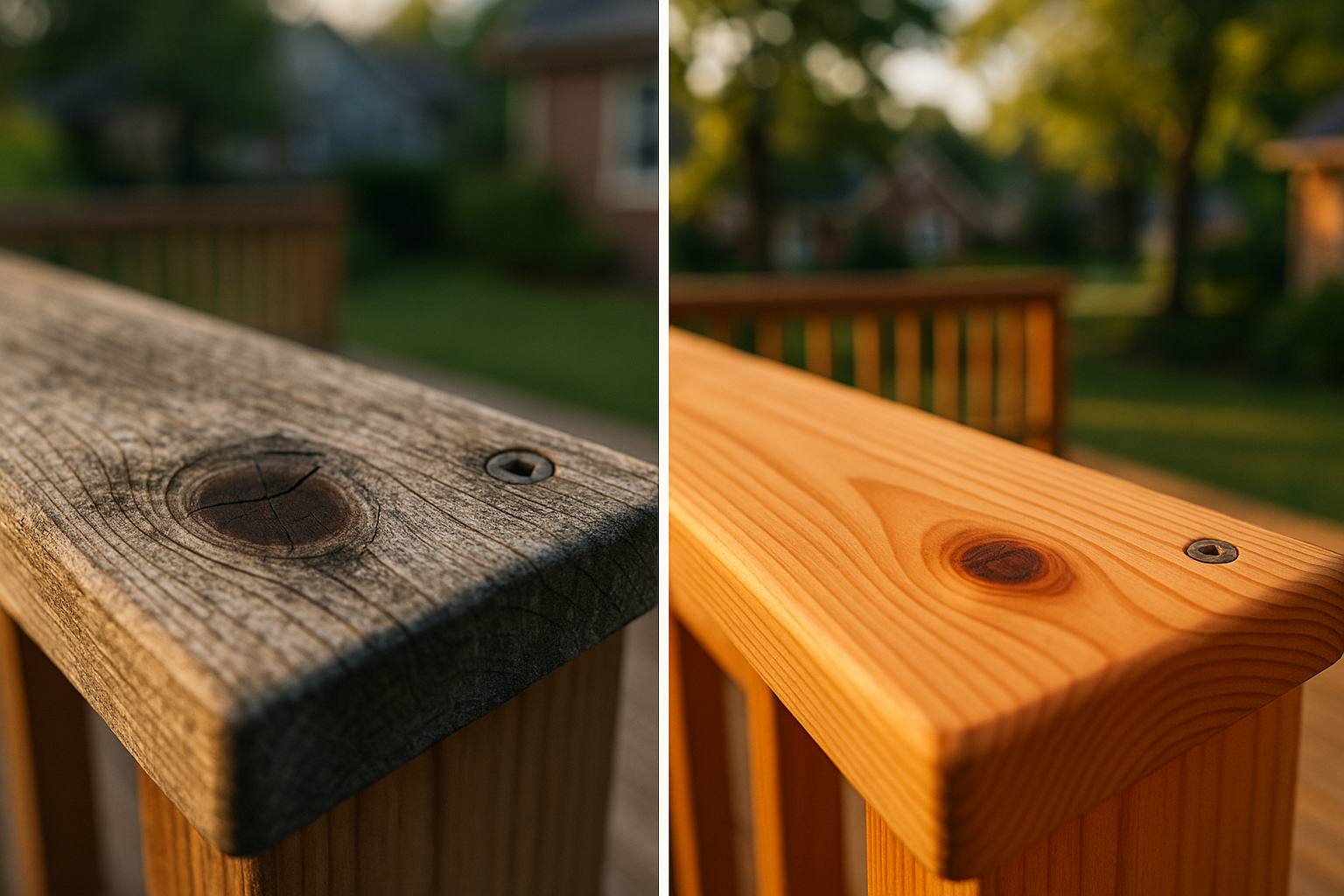
I’m not going to tell you there’s one perfect deck board. But if you’re tired of staining every spring, skip the pressure-treated pine. Capped composite (like TimberTech or Trex) and PVC decking shrug off freeze-thaw cycles without warping or fading. They’ve got a slight texture that stays grippy even with a dusting of snow. Ipe hardwood is gorgeous and rock-solid, but you’ll need to oil it once a year to keep that deep brown color—some people love the ritual, others don’t. For the Zionsville climate, a hidden-fastener composite deck feels like the no-brainer choice. No popped screws, no splinters, and a quick wash with soapy water in the spring. (If you want to dive deeper into the material debate, we wrote a whole post on composite vs wood decking in Indianapolis. For winter-specific picks, check out the best decking for Indiana winters.)
The extras that make it feel like a destination
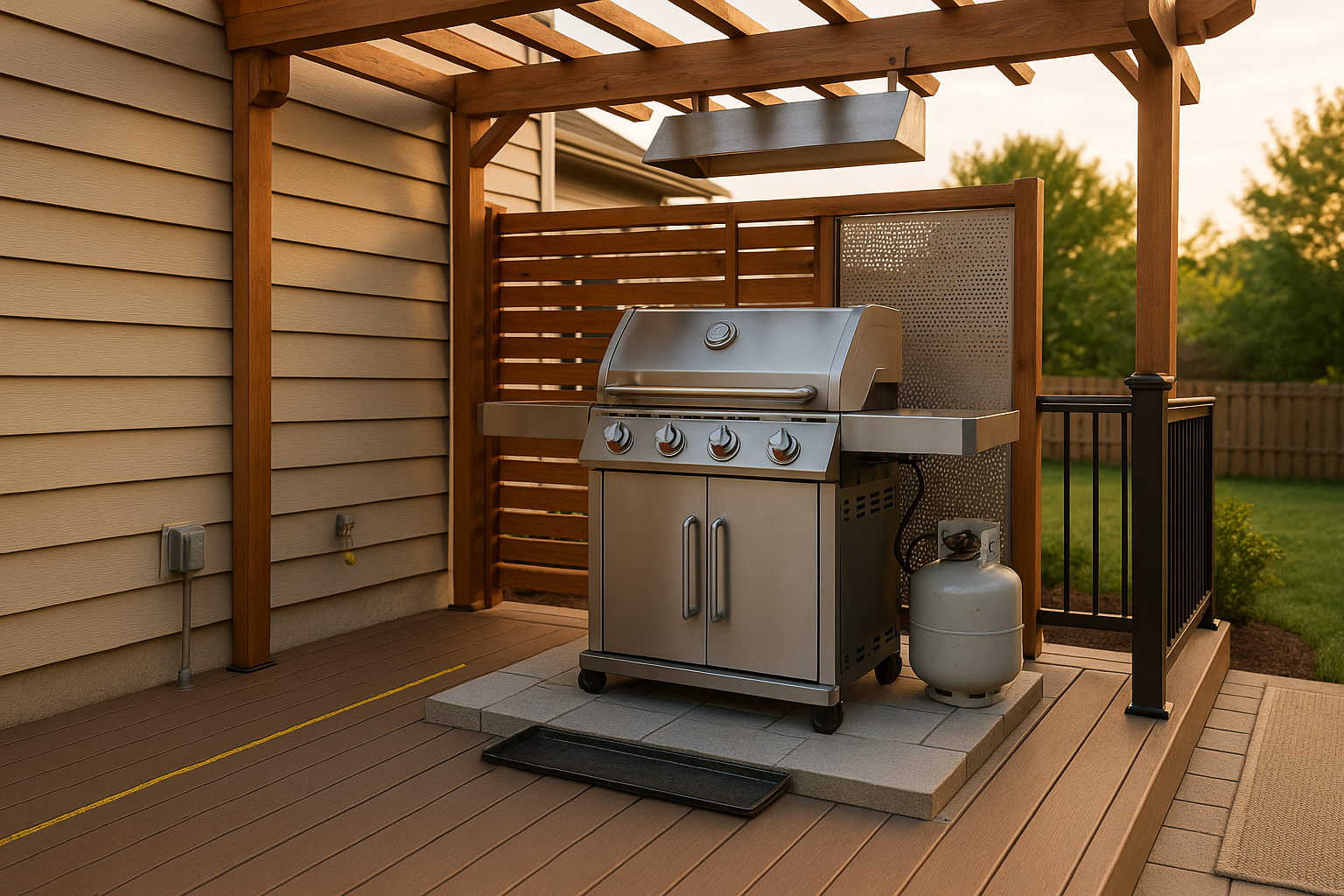
Once the bones are in, you can layer in the fun stuff. An outdoor kitchen nook on the upper level works great if you run a gas line for a built-in grill and leave clearance for heat and smoke. A hot tub on a lower deck needs reinforced framing, but it’s totally doable—just tell your contractor upfront so they beef up the joists. Pergolas and louvered screens cut the summer sun and give you a sense of enclosure without building walls. And don’t forget lighting: small, recessed step lights and post cap lights not only look elegant but also keep you from tripping on those stairs when you’re carrying a tray of s’mores at dusk.
Permits, HOAs, and the reality of building in Zionsville
Let’s be real: no one gets excited about permits. But here’s how it usually goes. For a multi-level deck in Boone County, you’ll need a building permit, and the plans have to show the footing depth, structural details, and guardrail heights (which must be 36 inches for residential, by the way). DeckPros handles the permit drawing and submission, so that’s off your plate. If you’re in an HOA—Stonegate, The Willows, Holliday Farms—you’ll also need architectural committee approval. They’ll want to see the decking material, rail profile, and colors. Best to start that early; it can add a few weeks. But a good contractor will have seen it all and will present the package in a way that makes the board nod along. For more on local rules, check out our guide to deck permit requirements around Indianapolis.
What does this cost, anyway?
I get it. A multi-level deck sounds expensive. And it isn’t cheap—but neither is an unusable backyard. On average, a thoughtfully designed two-tier composite deck in Zionsville might run from $25,000 to $50,000 or more, depending on size, materials, stairs, and add-ons like a dry-below ceiling. Simple rectangle platform? Maybe $15,000. So you’re paying for the engineering and the vertical connections. But here’s a thought: phase it. Build the main levels and stairs first. Add the under-deck enclosure or outdoor kitchen a year later. DeckPros’ designs can be phased so you don’t have to swallow it all at once. (We’ve got a full breakdown in our deck building cost guide for the Carmel area, but the numbers are similar here.)
Ready to stop staring at a hillside of weeds?
You don’t need to have it all figured out. That’s actually the point of a good design consultation: someone walks the slope with a laser measure, listens to how you want to live outside, and sketches a few options that fit your lot and your HOA. No obligation, no high-pressure pitch. Just a clear plan for a deck that works in three dimensions. If you’re in Zionsville, Fishers, Carmel, or anywhere around Indy, reach out and we’ll get boots on your grass. Let’s see what your slope can do. Book a free on-site estimate here.
Thinking about your own deck or pergola?
Free in-home design consultation, 3D rendering, and a written quote — no pressure.