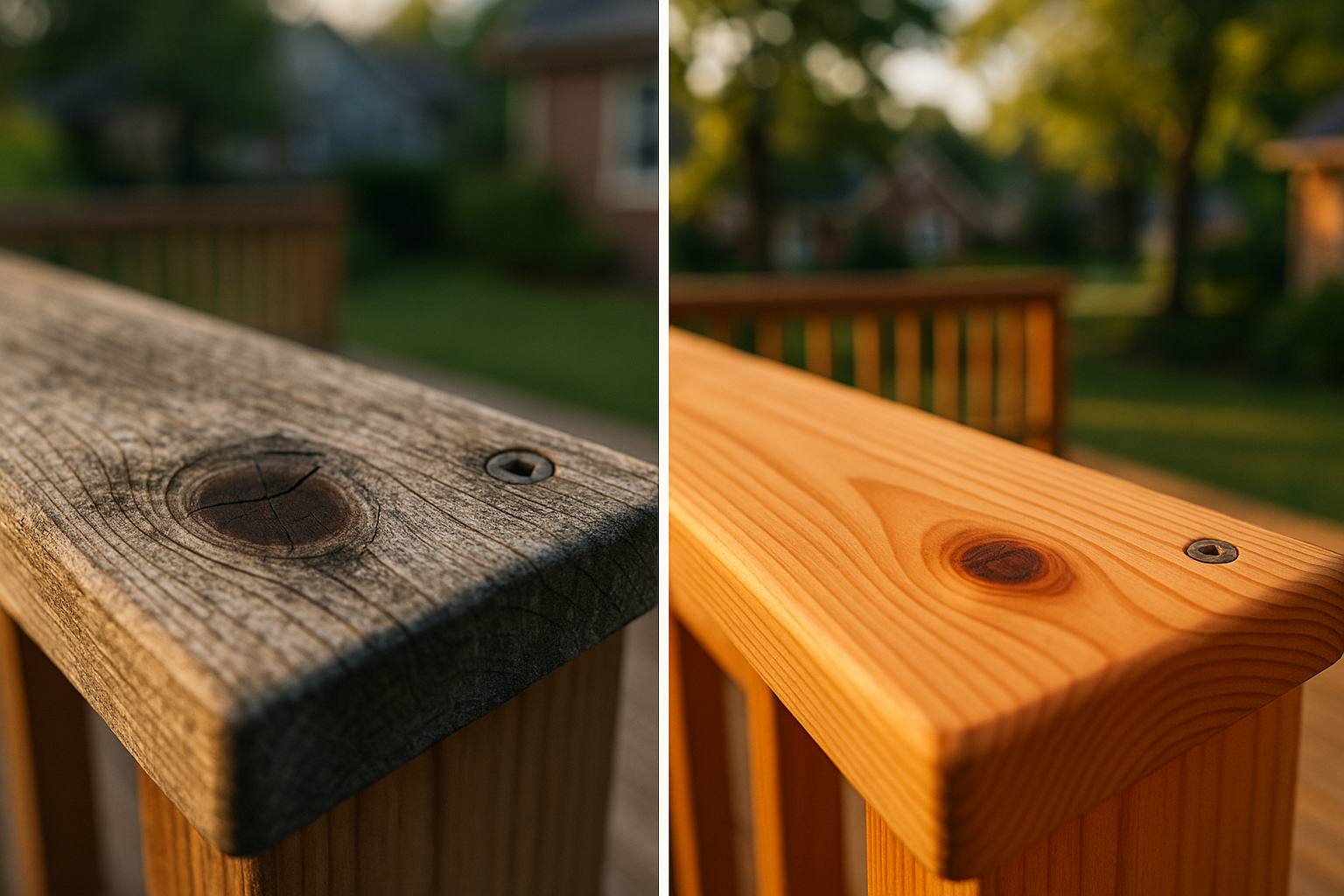
Last spring, my neighbor in Carmel called me over, looking at his backyard with that mix of hope and dread. He'd been saving to replace his 20-year-old deck—the boards were spongy, and the rail felt like it'd give way if you leaned too hard. But after a few online searches, he was more confused than ever. One site said $20 per square foot, another said $60, and a third asked for his address and then went silent. He just wanted a real number from someone who'd actually build the thing, not a calculator that didn't know about Carmel's frost depth or his HOA's rules about railing colors. That's the moment I told him, "Let's walk through what goes into a deck price here, not some national average." And that's exactly what I want to do for you.
So, What's a Deck Really Cost in Carmel?
If you want the quick number, here it is. For a professionally built deck in Carmel—pulled permits, everything up to code—you're looking at about $35–$55 per square foot for pressure-treated wood. Composite runs $60–$95 per square foot, and premium PVC goes $70–$110+. That's per square foot of deck surface, not your whole yard, and it includes the frame, railings, stairs—the whole shebang.
Let's put that into real sizes you'd actually build. A simple 12'x16' pressure-treated deck with code-compliant rails? Think $9,000 to $14,000. The same size in composite with a clean aluminum rail? Now we're talking $16,000 to $28,000. Bump up to a 14'x20' composite deck with stairs, a picture-frame border, and a few lights, and you're easily in the $25,000 to $40,000 ballpark. These numbers aren't pulled from thin air—they're based on real permits, real frost-depth footings, and real labor in Hamilton County.
Where the Money Goes: The Stuff That Adds Up Fast
Deck pricing isn't just about the boards. There are a bunch of pieces that can swing the total by thousands, and most online calculators skip right over them.
Size and Shape: Simple Is You're Friend
The bigger the deck, the more materials, obviously. But every jog, angle, or multi-level section means more framing, more cuts, more labor. A clean rectangle costs way less than a deck that snakes around a bay window. Keep the footprint straightforward if you want to keep the budget down.
Height and Stairs
A deck just a step or two off the ground needs hardly any rail or stair. Once you get more than 30 inches up, building code demands sturdy guardrails, and that adds a lot of linear feet—and dollars. Stairs, especially wide ones with landings, are another big line item. Don't be shocked if a nice stair run adds $2,000 or more.
The Real Cost of Rails
Railing can eat up 15–30% of your deck budget. A basic pressure-treated wood rail with balusters is cheapest. Aluminum systems are durable and crisp-looking, costing more but lasting forever. And cable rail, that modern, airy look? It's the premium pick, often doubling or tripling the rail cost versus basic wood. Since we're a railing contractor ourselves, we spec this stuff daily and can show you how to get the look without wasting cash—like mixing aluminum posts with cable infill only where it counts.
Footings and What's Under Your Soil
Carmel building code means digging down around 36 inches to get below the frost line. Standard concrete footings work for most yards, but if you've got the clay-heavy soil common in places like Zionsville or newer subdivisions off 146th Street, water doesn't drain great. Helical piers—basically giant screws into the ground—add about $1,500 to $4,000 depending on how many you need, but they're rock-solid in bad soil and won't heave. Worth it if your yard stays soggy.
Material Choices That Handle Indiana Winters
Pressure-treated wood is the budget-friendly starter. It looks good with stain, but you'll be cleaning and resealing every couple of years. Composite (like Trex or TimberTech) costs more up front, but you basically hose it off once a year. PVC decking takes it even further—no organic material, so it shrugs off our freeze-thaw cycles like a champ. If you hate maintenance, composite or PVC pay for themselves in time. We've got a whole breakdown on composite vs wood for Indiana homes if you want to nerd out on the details.
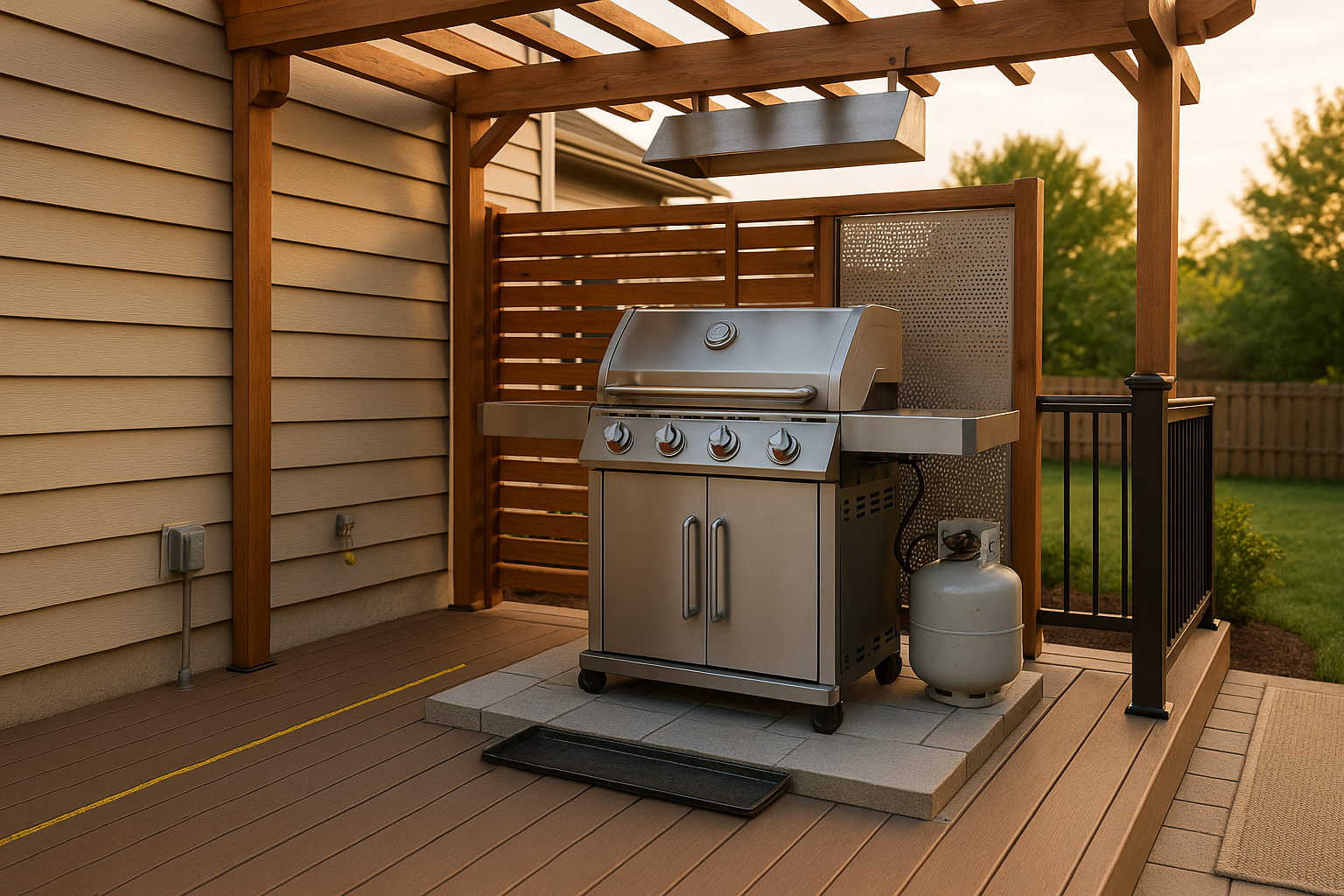
Sometimes folks ask about adding a matching fence or a screened-in enclosure down the road. As a fence contractor, we can build privacy panels or a simple boundary fence that ties in with your deck's style. And as a patio enclosure supplier, we can prep the deck footings now so a future sunroom or screened porch bolts right on—smart planning costs you nothing extra at this stage.
The Carmel-Specific Stuff: Permits, HOAs, and Frozen Ground
Carmel is not some generic suburb. Hamilton County and the City of Carmel have their own rulebook, and if you skip it, you'll pay later.
Permits: Not Optional
Almost any deck over 200 square feet or over 30 inches high needs a building permit. We pull those for you, including the drawings, inspections, and 811 utility locate before we ever dig. (Yes, 811 is required—your backyard probably has buried internet or irrigation lines.) You can read more about the whole permit dance in our Carmel deck permit guide.
HOAs: The Color Police
If you live in one of the many Carmel neighborhoods with a homeowners association, you already know they care about aesthetics. They'll want to see plans, maybe a sample board, and they'll have opinions on railing style and color. We've dealt with this in Fishers, Westfield, Noblesville—everywhere. We'll submit whatever they need so you don't get a nastygram after the concrete is poured.
Frost Depth and Site Stuff
Those 36-inch footings we mentioned? That's because the ground freezes that deep around here. Skimp, and your deck will dance every spring. We also watch for setbacks—many Carmel lots have easements along the rear property line that you can't build on. We're on top of all that.
Why Online Calculators Lie to You
You've probably seen a number like $25 per square foot on some website. That number usually assumes a ground-level deck with no rail, no stairs, no permit, and you're building it yourself with a buddy. It doesn't include tearing out your old deck, hauling away the debris, or the stainless steel hardware that won't rust out in five years. A real quote for a [deck building cost in Carmel Indiana] includes demo, disposal, flashing, the whole truth.
Here's a story. A guy in Brownsburg called us after another contractor gave him a low number, then showed up with a “change order” for an extra $3,000 once they found the old footing holes were full of rot. That's the kind of surprise you get when the initial quote is too vague. We'd rather tell you straight: demo and haul-away for an average deck usually runs $1,000–$2,500, depending on size and access. That's not a gotcha—it's just what it costs.
Getting a Quote That Won't Make You Sweat
The best way to get a real number is to have someone who knows Hamilton County walk your actual yard. They'll check the soil, measure the access path, peek over the fence for HOA clues, and then give you a line-by-line quote you can actually understand.
If that sounds like what you're after, shoot us a few photos of your space, rough dimensions if you have them, and any must-haves ("must have no-maintenance boards" or "I hate those thick rails, can we do cable?" or "I want a gate to the yard"). We'll put together a planning-first estimate—no pressure, no guesswork. You can grab a no-fluff quote right here. We cover everything from demo to final inspection, in Carmel and the whole metro: Zionsville, Greenwood, Plainfield, Avon, you name it.
And look, you don't need to have every detail locked in. We can help you sort out whether composite is worth the extra upfront, or if a simple pressure-treated deck with upgraded aluminum rails hits your sweet spot. That's our job as a local deck contractor: to talk you through the trade-offs so you feel good about the number you're writing down.
So don't let a glitchy online calculator or a vague forum post decide your backyard. Let's just get your real numbers, for your real yard. It's the only way to stop spinning your wheels and start planning the cookouts.
Thinking about your own deck or pergola?
Free in-home design consultation, 3D rendering, and a written quote — no pressure.