I remember talking to a guy in Fishers last spring. He'd built a pressure-treated deck three years earlier, sealed it every year, and it still looked like it'd been through a war. Splits, cupped boards, popped nails. He said, "I just want something that doesn't fight me every winter." That conversation stuck with me because it's the same story I hear over and over in Indianapolis.
Indiana winters aren't just cold — they're a constant freeze-thaw roller coaster. Temps swing above and below freezing dozens of times each season. Water gets into tiny cracks, freezes, expands, and does it again. That cycle destroys decking that isn't built for it. So what actually works here?
Why Freeze-Thaw Is So Hard on Decks
The problem is simple: water expands when it freezes, and it's really good at finding weak spots. In wood, that means checking, cupping, and splinters. In cheaper composites, you get surface cracking or delamination. Even fasteners can loosen as boards expand and contract.
But the right material choice and proper installation can handle it. I've seen composite decks in Carmel that were built ten years ago and still look great. The secret isn't magic — it's picking a board that resists moisture and moves predictably with temperature.
Top Contenders for Indiana Winters
Not all decking is created equal when the thermometer bounces around. Here's what I've seen work best in Central Indiana.
Capped Composite: The All-Rounder
Most capped composites have a solid polymer shell over a wood-plastic core. That cap blocks moisture, so the board doesn't soak up water and swell. Brands like TimberTech and Trex have come a long way — they're not hot like they used to be if you choose lighter colors, and the cap holds up to freeze-thaw much better than uncapped stuff.
I lean toward capped composite for most projects. It's durable, low-maintenance, and priced well for what you get. Just make sure you allow for proper ventilation underneath, and follow cold-weather gap specs (usually a little tighter than warm-weather installs). Lighter colors also help with summer heat — no one wants to walk barefoot on a 140°F surface.
Mineral-Based Composite: The Rock Solid Choice
Mineral-based composite (MBC) is newer but gaining popularity fast. It uses mineral fillers instead of wood fibers, so it expands and contracts way less than traditional composite. That makes it one of the most freeze-thaw stable options out there. I've seen MBC decks in Westfield with near-zero gapping change through multiple winters.
Downside? It costs more. But if you want maximum stability and don't want to think about gaps shifting, it's worth the premium. Plus, it runs cooler in summer since it's lighter in color often.
Premium PVC: Fully Synthetic, Fully Waterproof
PVC decking is all plastic — no wood at all. That means it won't rot or absorb water. Brands like Azek are excellent in cold climates because they're not affected by moisture. However, PVC expands and contracts more with temperature than composite. So you need to follow gap spacing exactly — no guessing. Install it on a warm day or adjust gaps for cold temps.
Another thing: some PVC textures can be slippery when wet or icy. Look for boards with a high traction rating. And use calcium magnesium acetate for de-icing, not rock salt, which can stain the surface.
Pressure-Treated Wood: The Budget Choice That Costs Long-Term
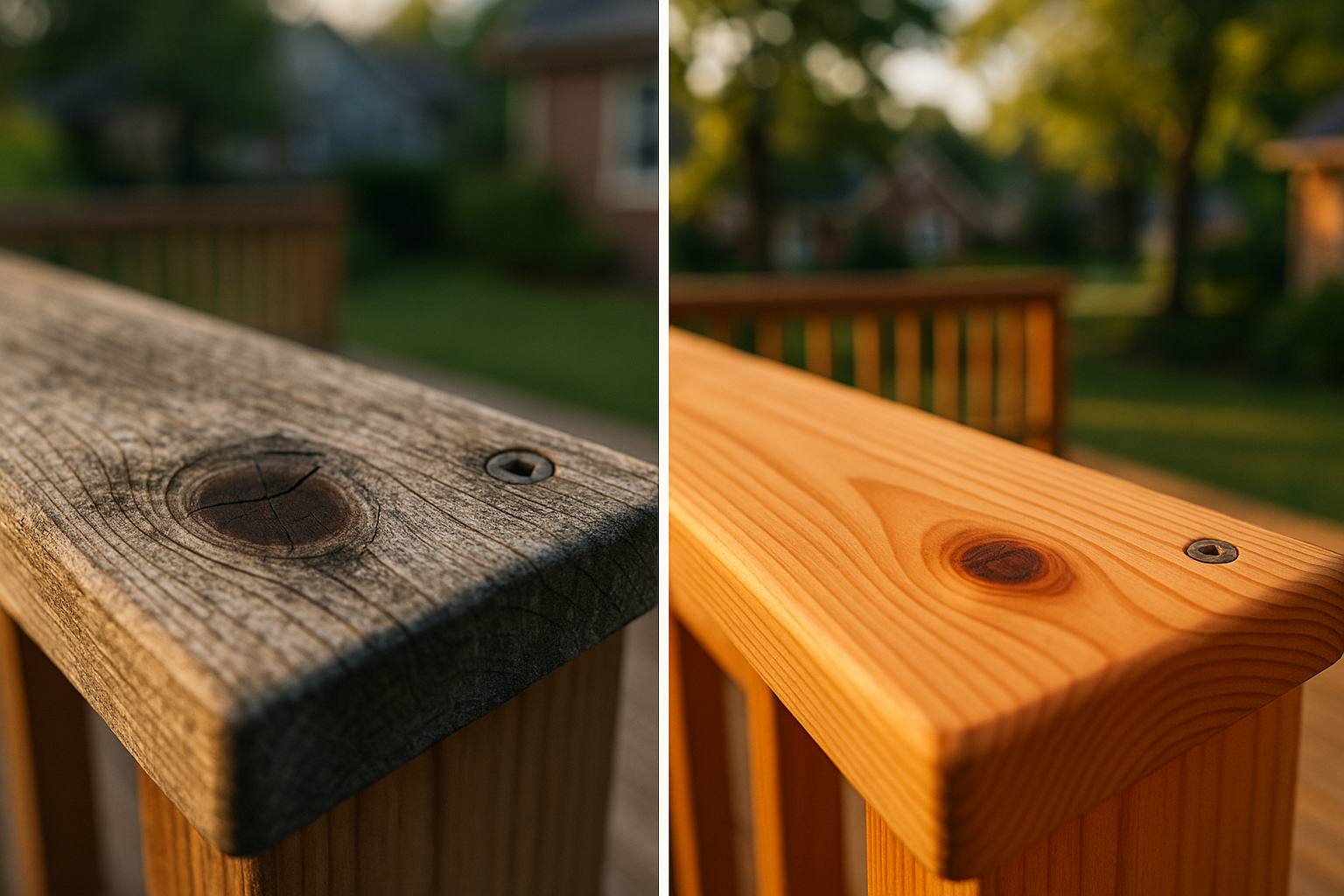
I get it — lumber is cheap. But in freeze-thaw cycles, wood checks, cups, and splinters. You'll be sealing it every year or two, and it still won't look as good as composite after a few winters. If you're set on wood, go with a dense species like ipe, but that's pricey and needs oiling too. Honestly, for most Indianapolis homeowners, the long-term cost and hassle of wood outweighs the upfront savings.
Aluminum: Premium and Stable
Aluminum decking is extremely durable, doesn't rot, and doesn't expand much. It's also expensive and less common. But if budget isn't a concern and you want something that will outlast everything else, aluminum is a solid option.
The Framing Matters Just as Much
You can put the best decking in the world on bad framing and it'll fail. Indiana's clay-heavy soil and frost depth (about 36-42 inches) mean footings need to go deep enough to avoid heaving. We always use helical piers or poured piers below frost line. Elevated post bases keep wood off concrete, reducing moisture wicking.
For joists, ground-contact pressure-treated lumber or steel framing works well. But here's a step I see skipped: joist-top flashing tape. That little strip of tape over each joist prevents water from sitting on the joist and rotting it out from under your decking. Use stainless or hot-dip galvanized hardware — the chemicals in treated lumber corrode standard fasteners.
And don't forget ventilation. Composite and PVC need airflow underneath to release heat and moisture. Maintain at least 18 inches of clearance under beams, and leave gaps between boards for air movement.
Moisture and Drainage Details
Slope your deck surface slightly away from the house — even a quarter inch per foot helps. Flashing the ledger board correctly is critical, especially on brick veneer homes common in Indianapolis neighborhoods like Meridian-Kessler. A metal flashing integrated with the weather-resistant barrier keeps water from getting behind the ledger.
On elevated decks, consider an under-deck drainage system. It turns the space below into a dry patio and prevents ice buildup from roof runoff. I've put systems like this in Greenwood homes where the yard slopes toward the house, and it made a huge difference in winter.
Winter Safety and Maintenance
Ice and snow happen. Plastic shovels are gentler than metal on composites and PVC. Broom off snow when you can. For de-icing, avoid rock salt — it can damage the cap and stain. Use calcium magnesium acetate or sand for traction. If you have a composite or PVC deck, check the manufacturer's recommendations.
Adding step and rail lighting helps prevent slips in the dark. We often recommend low-voltage LED strip lights under handrails or on stair risers.
Can You Build a Deck in Winter?
Yes, we build year-round. Cold weather affects how you gap boards — composite and PVC shrink in cold, so gaps should be tighter than summer installs. Manufacturers provide temperature-specific spacing charts. We also use fasteners designed for cold-weather installation. The key is planning around severe weather and ordering materials in advance to avoid delays.
Should You Resurface or Rebuild?
If your existing structure is sound — footings, ledger, beams, joists all pass inspection — resurfacing with composite or PVC can save money. But if there's rot, undersized framing, or improper ledger flashing, a rebuild is safer. We've seen too many homeowners patch a bad frame and end up with bigger problems later. A free on-site assessment can tell you which path makes sense.
What Most People Choose
After seeing hundreds of decks across Indianapolis and suburbs like Carmel, Fishers, Zionsville, and Noblesville, most homeowners go with high-quality capped composite. It balances cost, durability, and appearance. Mineral-based composite is gaining ground for those who want top stability. PVC is great for moisture resistance but requires careful installation.
Wood is still around, but the homeowners who pick it know they'll be sealing every year. And honestly, after a few freeze-thaw cycles, many wish they'd gone composite.
How We Work at DeckPros
We start with a planning-first site assessment. We bring samples, talk about your goals, and walk you through options. You get a line-item quote so you know exactly what you're paying for. We handle permits and inspections — no hassles for you. And we build with the details that matter for Indiana winters: correct footings, proper flashing, manufacturer-recommended fasteners, and careful gap spacing.
If you're thinking about a new deck or resurfacing, reach out. We'll help you pick the material that makes sense for your home and your budget. Schedule a consult and see what works for your yard.
Thinking about your own deck or pergola?
Free in-home design consultation, 3D rendering, and a written quote — no pressure.