My neighbor in Fishers spent three weekends staining his cedar deck a trendy light gray. Two summers later, half the boards looked like driftwood and the other half like dirty concrete. He stared at the mess and asked if picking deck stain colors even matters when everything fades to the same washed-out gray anyway. That question gets asked a lot around here, because Indiana weather doesn't play nice with color.
Don't Stains Work on Every Deck? (No, and That's a Good Thing)
If you have a capped composite deck, staining is almost always the wrong move. The outer layer on modern composite boards is a factory color that's designed to hold up. Putting stain on top usually ruins the warranty and creates a peeling mess. The better plan is to pick the board color you want when you buy, not try to change it later. Wood decks are a different story—there, semitransparent or solid deck stain colors can transform an old gray board into something you actually want to sit on. But make sure you know which surface you have. A DeckPros contractor can tell you in five minutes.
Colors That Work Around Indianapolis Brick and Limestone
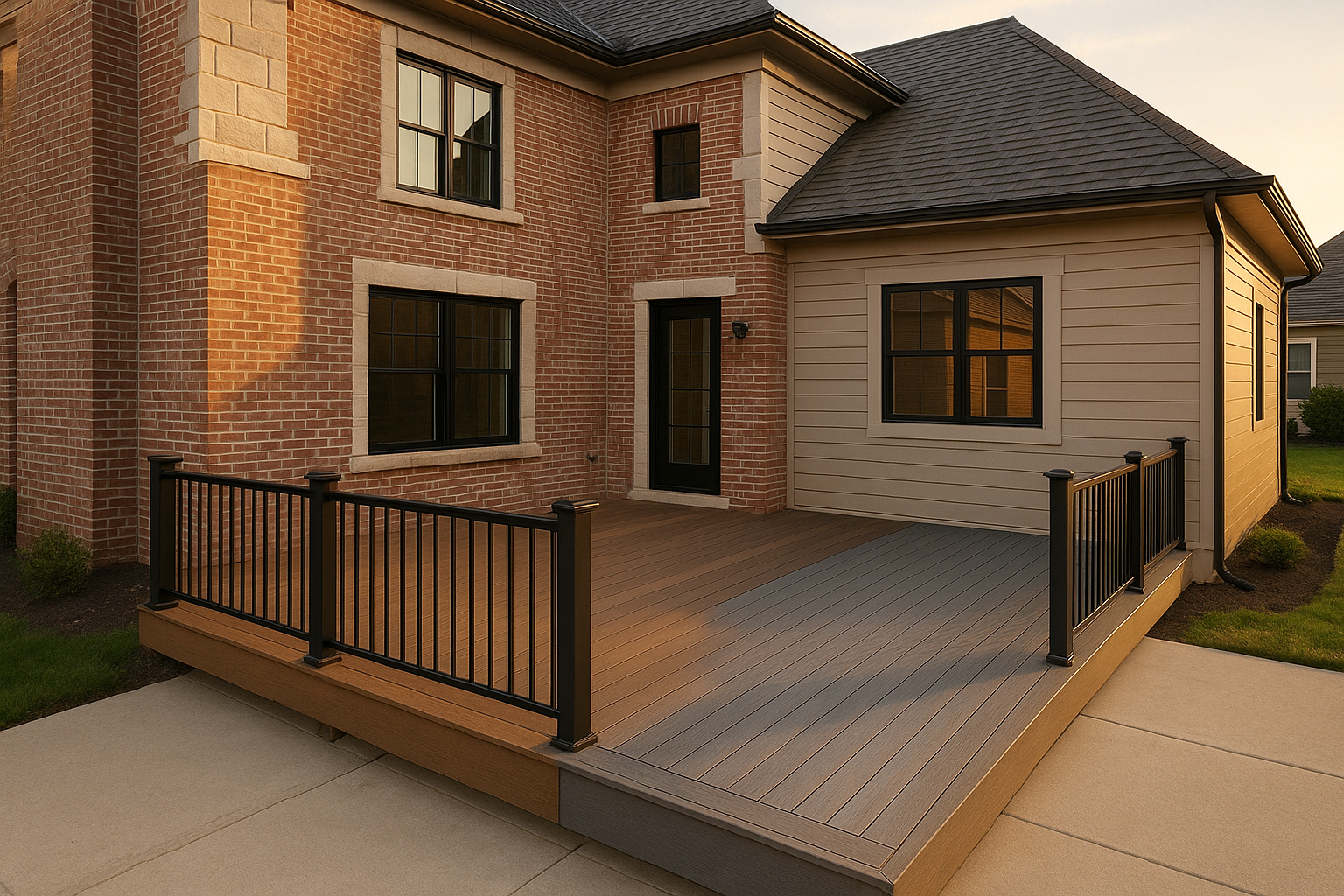
Drive through Carmel or Zionsville and you'll see a lot of red brick, limestone accents, and black window trim. The deck colors that look right on those homes tend to be warm browns, rich walnuts, driftwood grays, and muted taupes. A light, cool gray next to classic red brick can read as sterile, but a warm taupe with brown undertones pulls the brick and the boards together. That's not a rule, just what we see working most. If you live in a newer neighborhood in Westfield with neutral siding and black aluminum railings, a charcoal board looks sharp. If your house is all red brick in Irvington or Butler-Tarkington, go warmer.
South-Facing Decks, Sun, and That Oven Feeling
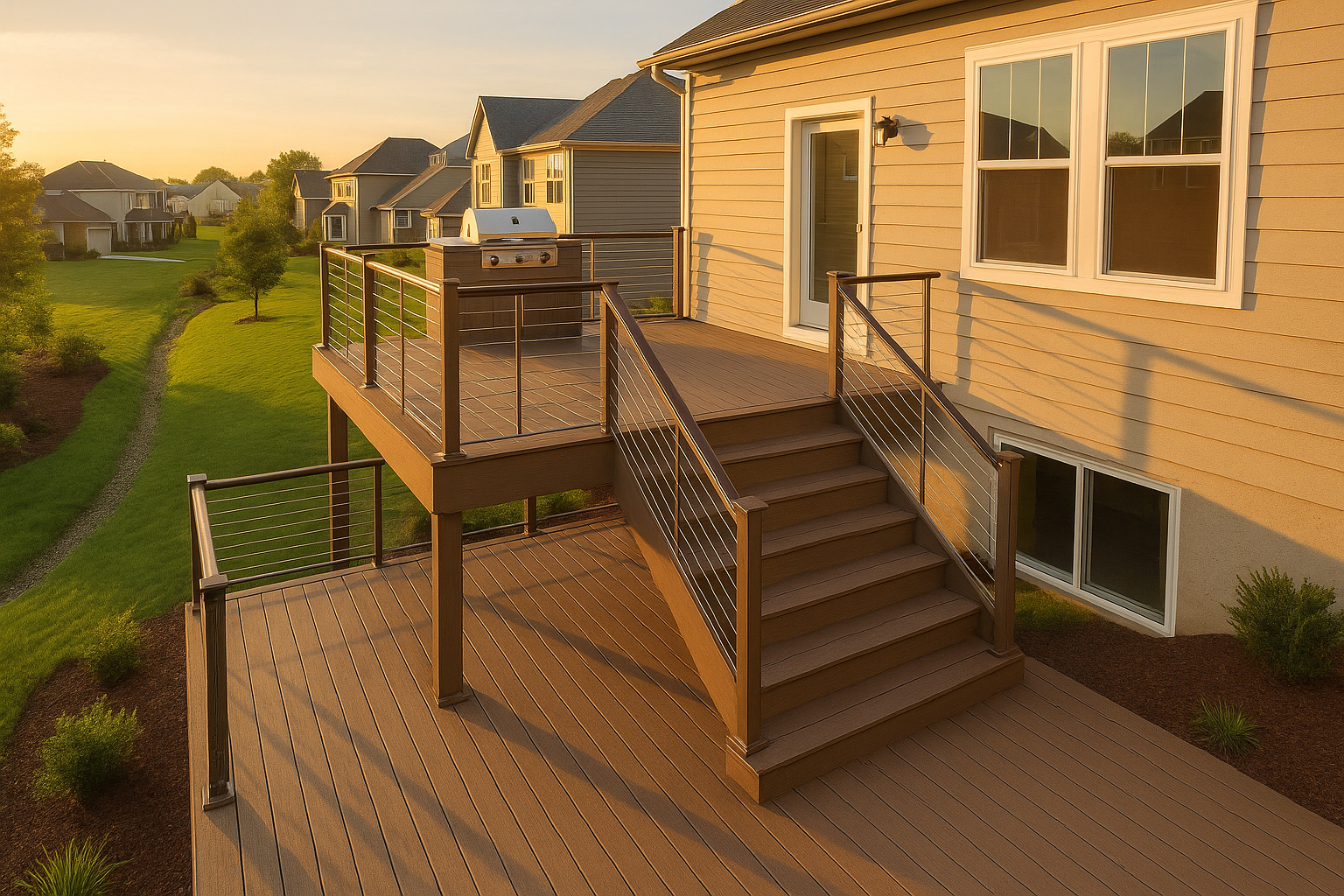
We get real sun here, especially on south- and west-facing decks. Darker boards—espresso, dark walnut, black-ish charcoal—hold heat like a skillet. I've had homeowners in Noblesville tell me they can't walk barefoot on their dark composite deck in July. If your deck gets afternoon sun, go mid-tone. A mid-tone gray or brown will stay noticeably cooler. And on a south-facing deck, color fades fastest. Composite brands claim UV resistance, but not all are equal. If you're choosing a board for a south side, look for fade-resistant lines and avoid super saturated colors. For more on that, check out how south-facing deck boards fade faster in Indiana.
Hiding Dirt, Leaf Stains, and the Solid vs Semi-Transparent Question
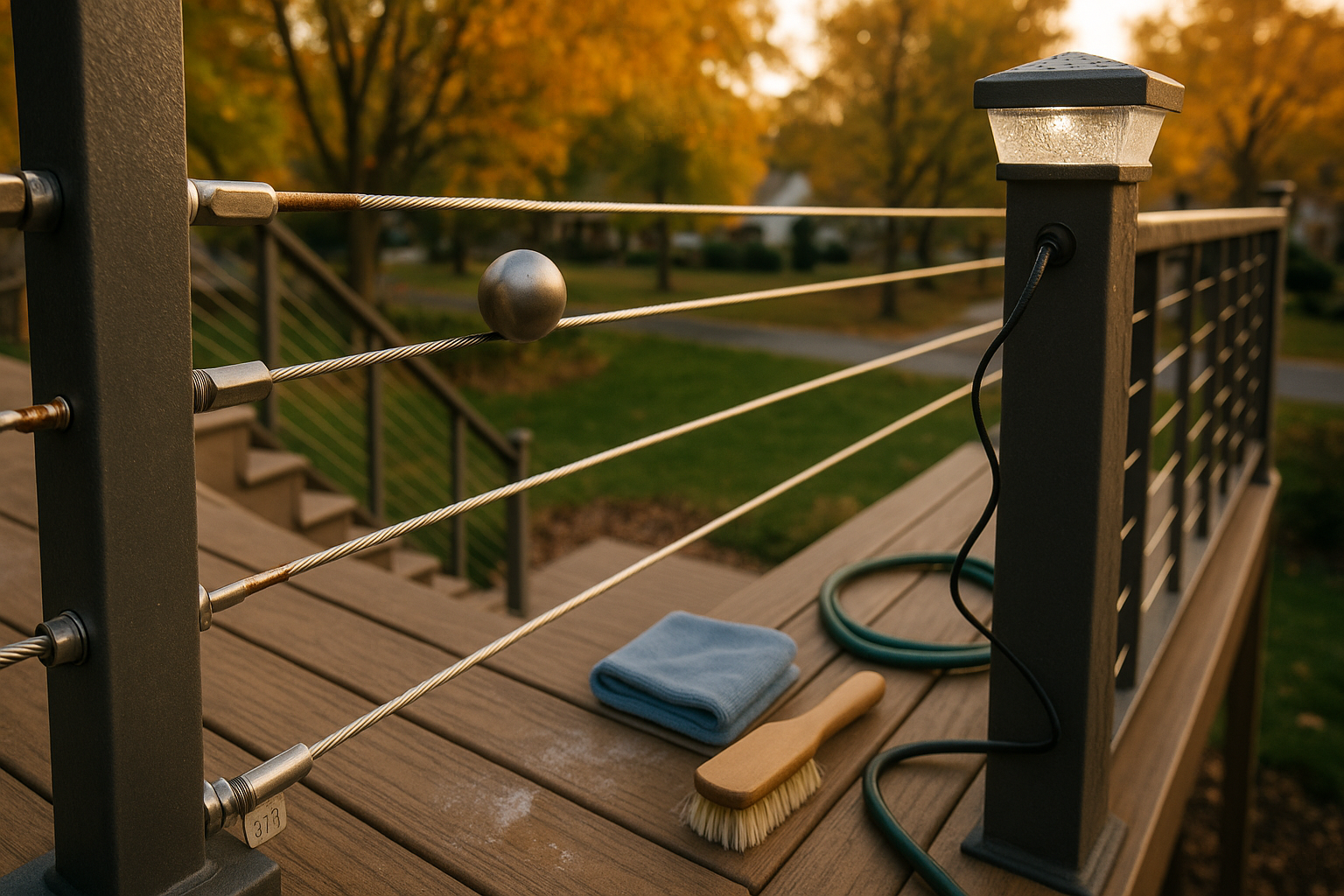
Indianapolis has trees—oak, maple, walnut. In fall, their leaves drop tannins that stain light deck boards yellowish-brown. A very light deck color will show every leaf mark. A very dark solid stain shows pollen and dust in spring. The sweet spot for hiding dirt is a mid-tone with some color variation. Think variegated brown or gray-taupe, not a solid flat color. If you have a wood deck, semi-transparent stain lets the grain show and weathers more gracefully, but it fades faster. Solid stains cover flaws and hide uneven boards, but they peel more and need thorough prep. Neither is always better—it depends on the condition of your wood. And composite boards just don't need this at all, which is why a lot of folks in Avon and Plainfield are switching. If you want to keep leaf staining under control year-round, see our guide on fall leaf removal before staining.
Railings, Fences, and Picture-Frame Borders: The Easy Upgrades
Color isn't just the deck floor. The railing is the first thing you see. Black aluminum railings are the most common choice around Indianapolis, and for good reason—they work with walnut brown, driftwood gray, and even a deep charcoal board. As a railing contractor, I tell people to match the railing to your window trim or door hardware, not necessarily the deck boards. Contrast is good. A bronze railing over a gray deck can look fancy without trying too hard.
If you have a privacy fence nearby, the fence stain color matters too. It doesn't have to match the deck exactly, but it should sit in the same color family. A gray deck next to an orange-toned cedar fence looks off. If you're building a deck over an existing concrete patio or adding a patio enclosure, the floor color needs to work with that transition too. We've helped folks in Brownsburg pick a board that flows from the covered patio to the open deck without a jarring line. Read more about building a deck over a concrete patio if that's your situation.
Test It Like You Live Here (Because You Do)
Never pick a color from a phone screen. Get real samples—stain swatches on your actual wood, or composite board samples from the manufacturer. Set them on the deck in full sun and full shade. Look at them at 8 a.m. and 6 p.m. Rinse them with water if you can. That's how you see what's true. Compare against your siding, brick, and trim. If you're in an HOA in Fishers or Westfield, get the palette approved before you order anything. Some HOAs have specific deck color lists, and they can be strict. Also check your guardrail height and color rules—we have a whole post on Indiana deck guardrail code if you need it.
When to Stain in Indiana and When to Skip It Entirely
If you're staining a wood deck, the best window around Indianapolis is usually late spring or early fall. You want dry weather, low humidity, and temps between 60 and 80 degrees. Avoid pollen season in May and the rainy stretches in October. Staining in July heat can cause the stain to dry too fast and look blotchy.
But honestly, if you're tired of re-staining every two to three years, composite is the low-maintenance answer. You pick the color once, and it stays. The upfront cost is higher, but you stop paying for stain, time, and frustration. A lot of homeowners in Greenwood and Carmel make the switch after their third deck staining.
The best next step is to have someone look at your actual deck and your home's exterior in person. DeckPros does local color and design consults for wood refinishing and composite deck projects around Indianapolis. We bring board samples to your house, set them next to your brick or siding, and give you a written estimate before you commit. If you're near Fishers, Zionsville, Brownsburg, or any of the surrounding towns, request a quote here and we'll come out.
Thinking about your own deck or pergola?
Free in-home design consultation, 3D rendering, and a written quote — no pressure.