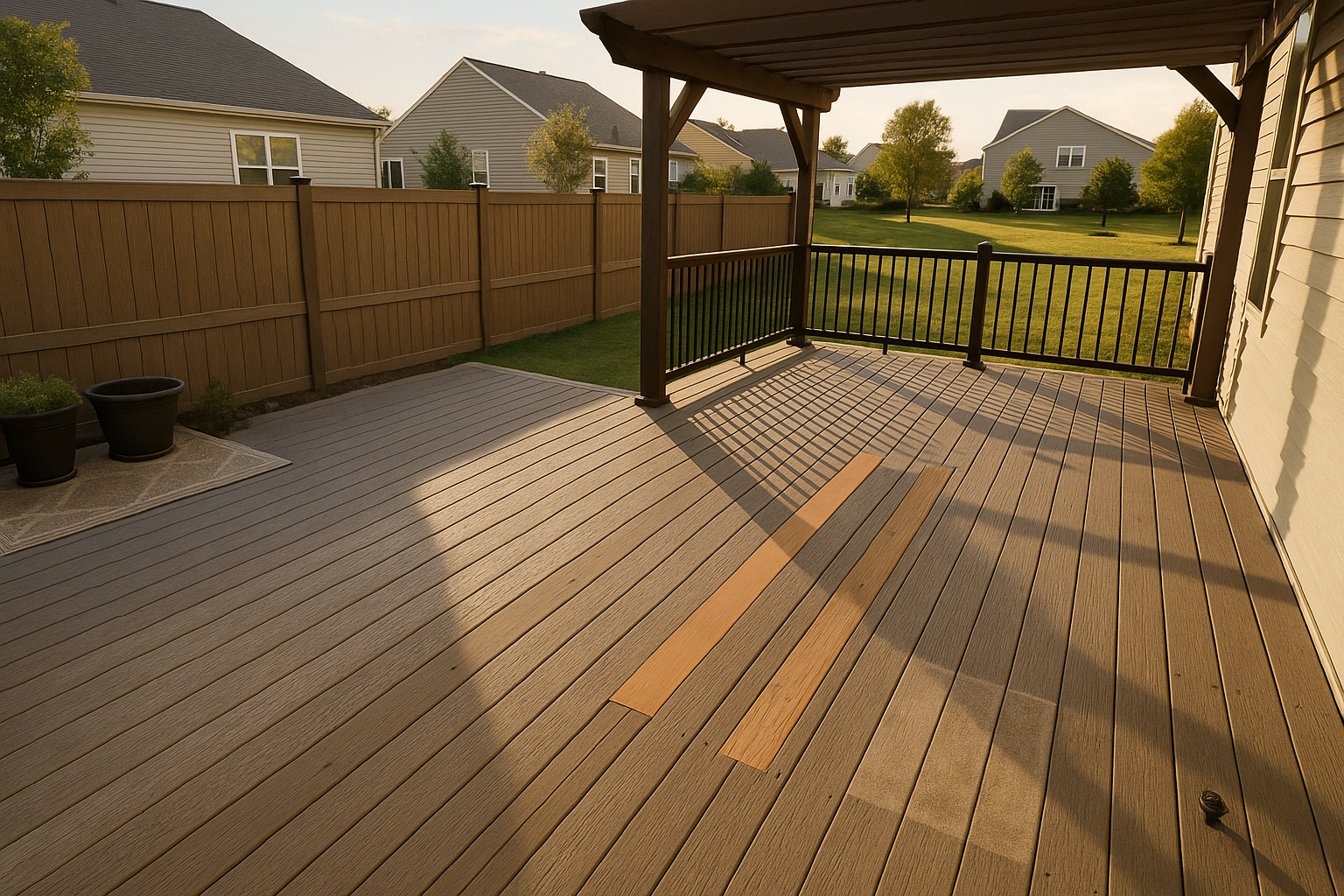
Last summer, my neighbor in Fishers gave up trying to understand why his new composite deck looked like it had tan lines. The boards by the house stayed a rich brown, but the ones out toward the yard, especially the ones facing south, turned a dusty gray-brown. He thought maybe he bought bad boards. Turns out, he bought average boards and put them in the worst spot for UV in Indiana. If you live in Indianapolis, Carmel, Zionsville, or anywhere around the metro, you've probably seen the same thing: one side of the deck fades faster than the other. That's not a fluke. It's physics.
Why South-Facing Decks Fade First in Indianapolis
South-facing and west-facing decks get the most direct sunlight all year. The sun beats down from late morning until sunset in summer. That UV light breaks down the pigments in composite decking over time. Darker colors absorb more heat, and heat speeds up that chemical breakdown. So a dark brown board on the south side can start to lighten within the first couple of years. Meanwhile, the north side or under an overhang stays darker. I've seen decks in Carmel where the shadow line from the house made a perfect straight edge between faded and unfaded boards. It looked like someone taped off half the deck.
Indianapolis isn't Arizona, but we get strong summer UV. Add in our freeze-thaw cycles, snow glare in winter, and high humidity, and you get a recipe for uneven color shift. Snow reflecting bright light back onto the deck can make south-facing boards fade a little even in winter. And the constant expansion and contraction from cold nights to warm days can stress the board surface, making color differences show up more over time.
Capped Composite vs. Uncapped: What Actually Resists Fading?
Not all composite decking fades the same. Older uncapped composites had color mixed all the way through. They faded fast and looked chalky after a few years. Newer capped composites have a hard outer shell, like a candy coating, that protects the color. That shell is loaded with UV inhibitors and pigments, so it resists fading much better. Premium capped composites can go 10 to 15 years with only slight, even color change.
Then there's PVC decking. PVC is pure plastic, no wood fibers. It generally offers the best fade resistance because the color is consistent and the material doesn't absorb moisture. But PVC costs more than capped composite. For most Indianapolis homeowners, a good capped composite hits the sweet spot between price and fade resistance. Check the manufacturer's fade and stain warranty before you buy. Most warranties cover "excessive fade" but define what that means—usually a certain Delta E value (a color difference measurement). Keep your original purchase records and photos from day one. If the fade gets outside the warranty range, you'll need them to file a claim.
Design Tips to Slow Uneven Fading on Your Indy Deck
You can't stop fade completely, but you can slow it down and make it less noticeable. First, think about color. Lighter boards reflect more sunlight and absorb less heat. They still fade, but the change is less obvious. Darker boards show fade more because the contrast between original and faded is bigger. Variegated boards with multiple tones hide gradual color change because the eye doesn't detect small shifts. If you want a dark look, consider a board with a bold grain pattern.
Shade is your friend. A pergola or shade sail over the south side can cut direct UV exposure dramatically. If you're considering a covered deck or screen room, working with a patio enclosure supplier can help design a roof that blocks most of the sun. Railings also create shadow lines on the deck surface. That's why you sometimes see darker stripes under the railing. When we install railings, we try to account for that by choosing colors that won't make the shadow pattern worse. A good railing contractor will think about how the railing interacts with the deck boards over time.
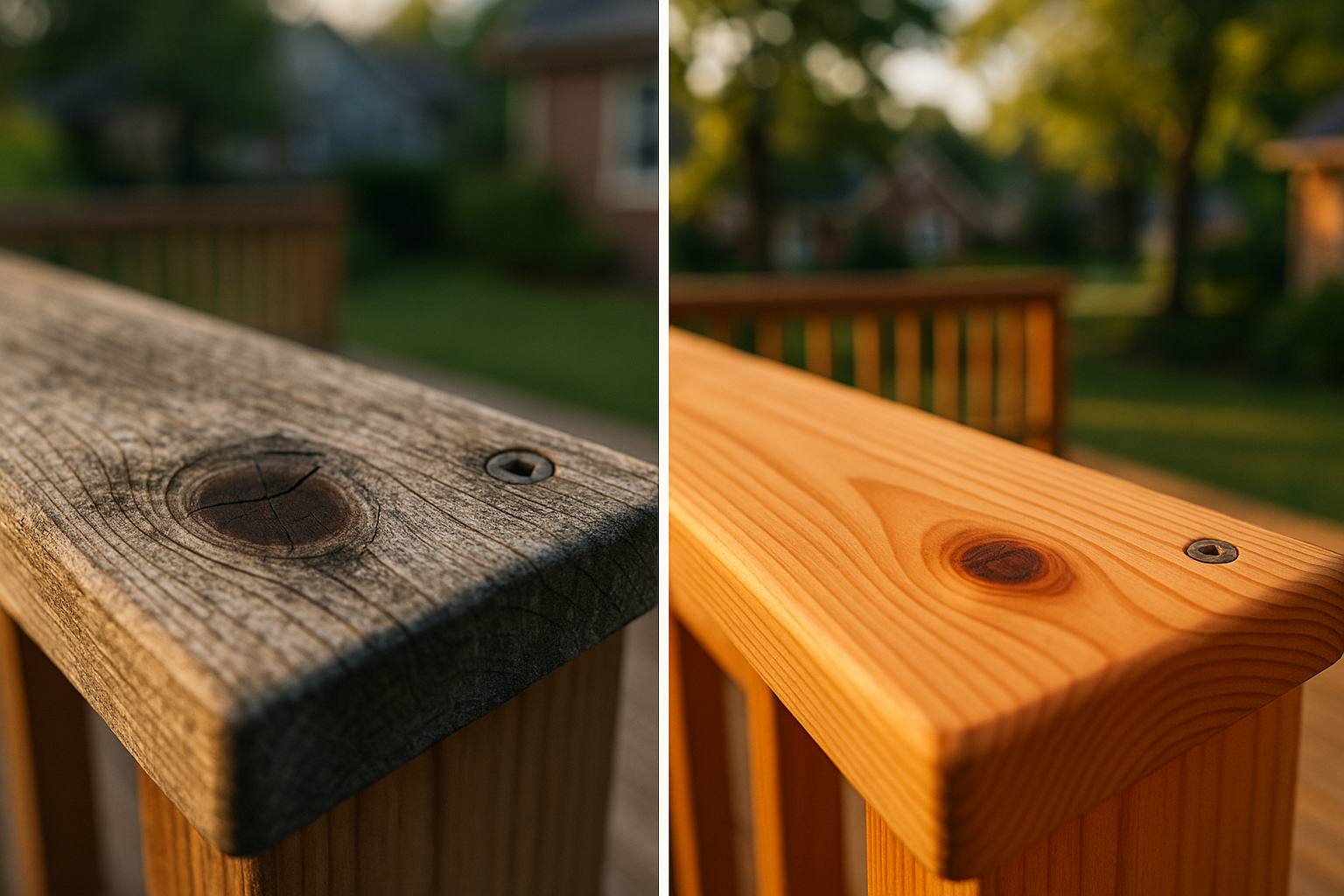
Hidden fasteners are another detail. Traditional face screws can create hot spots because the metal heats up and radiates heat into the board around the screw head. Hidden fasteners keep the surface cleaner and more uniform. Proper gapping and ventilation under the deck also matter. Hot air trapped under the deck can bake the boards from below. We wrote a whole post about under-deck ventilation that explains how airflow keeps the deck cooler and drier. And don't forget the finishing details like post caps—they protect the end grain of composite posts from moisture and UV damage. Check out our article on deck post caps and trim.
Easy Maintenance That Keeps Color From Getting Wonky
Maintenance for composite is pretty simple, but doing it right helps the color stay even. Twice a year, give the deck a gentle cleaning with warm water and mild dish soap. Use a soft brush or mop. Don't use chlorine bleach or harsh chemicals—they can strip the protective shell. If you pressure wash, keep the PSI low (under 1,500) and use a fan tip at least 12 inches from the boards. Too much pressure can etch the cap and make fading worse. We've seen homeowners try to "restore" color with a pressure washer and end up with a streaky mess.
In winter, be careful with ice melt. Calcium chloride or magnesium chloride are safer than rock salt, but still use them sparingly. Metal shovels can scratch the cap layer, which lets moisture in and causes discoloration. Use a plastic shovel or broom to clear snow. If you get a lot of snow, just brushing it off helps prevent ice melt from sitting on the boards and causing white residue.
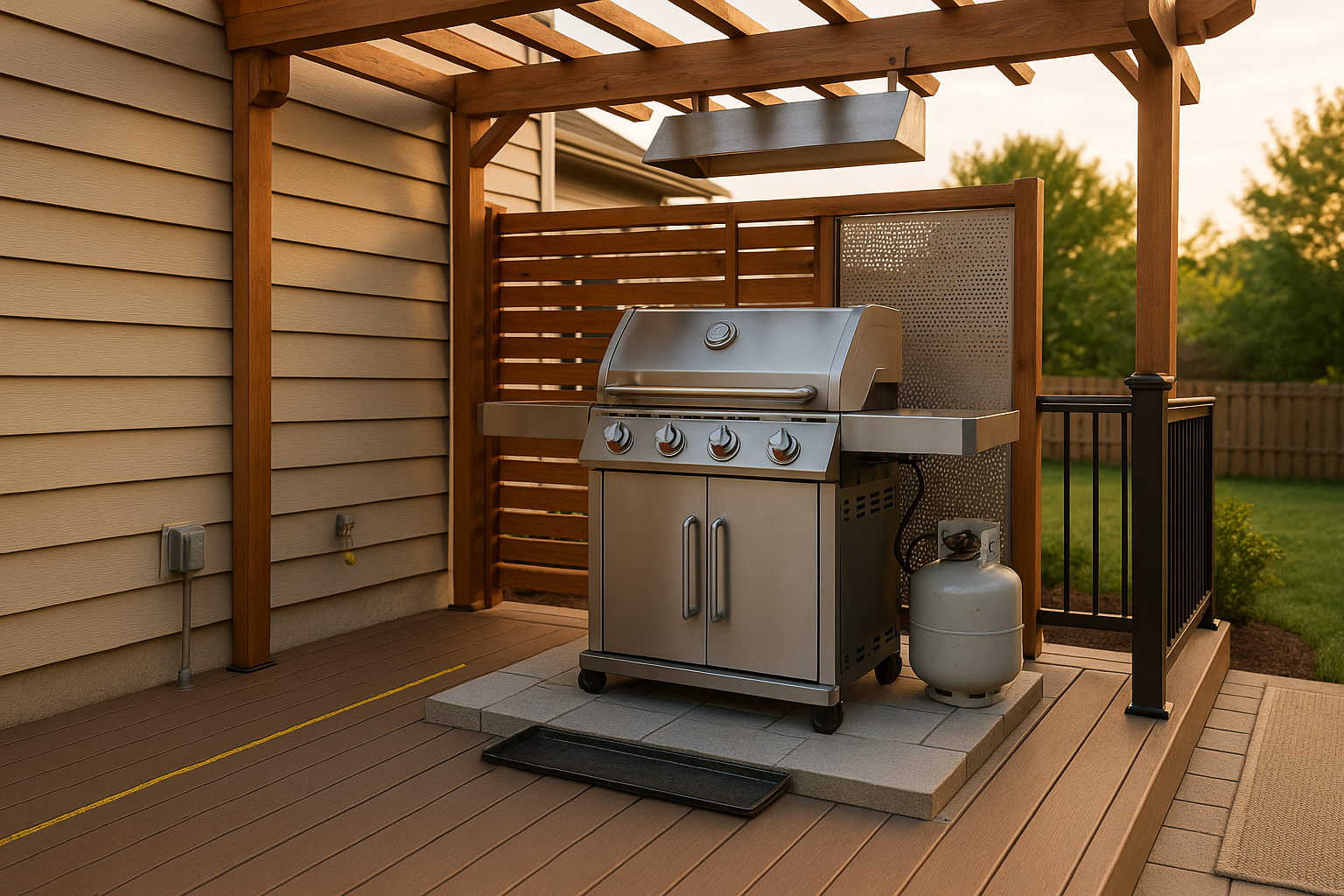
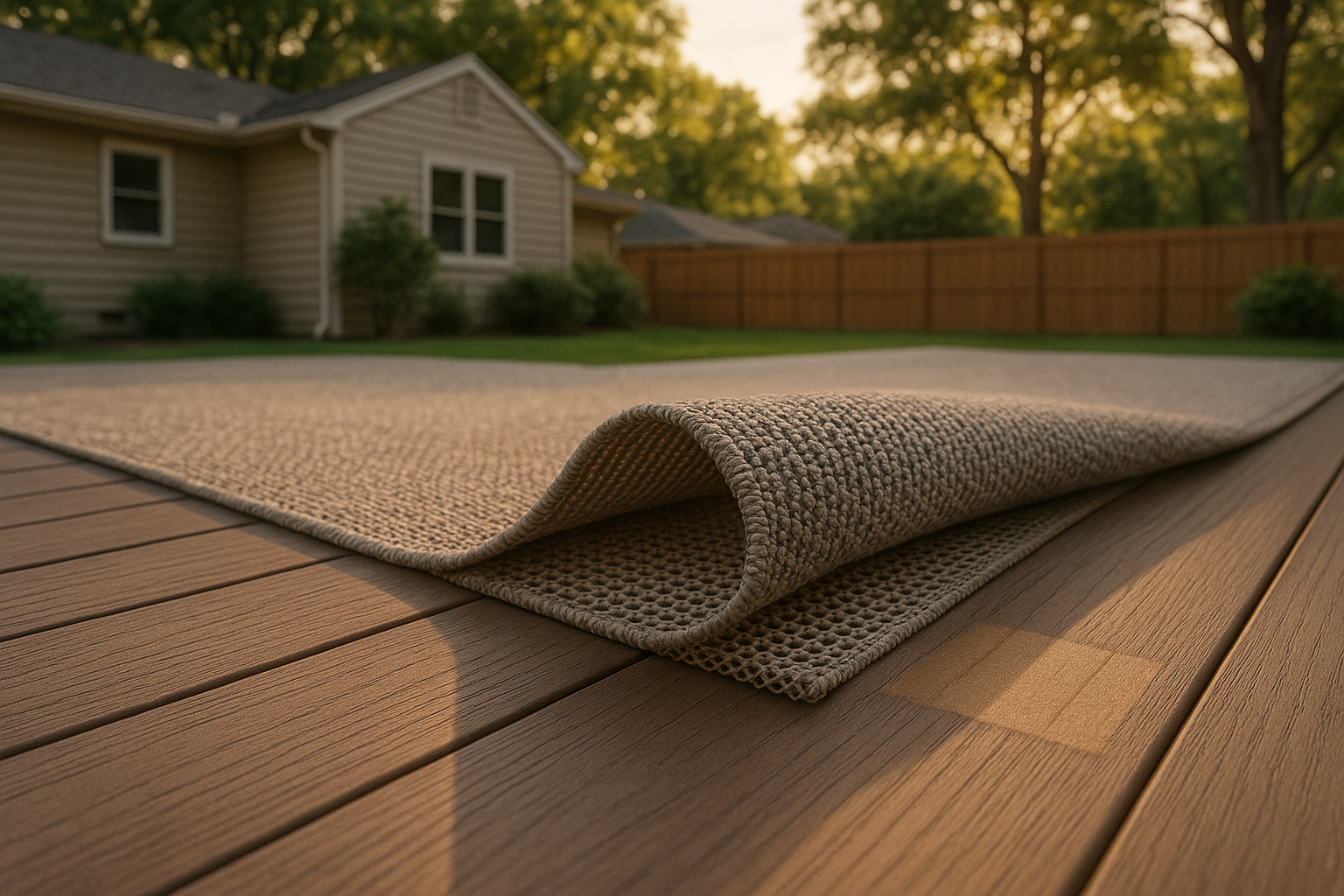
Furniture and planters can create permanent tan lines. Move them around every couple of weeks. If you have planters sitting directly on the deck, they trap moisture and block light. That's a recipe for uneven fading and maybe rot. We wrote a post about building deck planter boxes that keep plants off the boards. Outdoor rugs can do the same thing. If you use one, make sure it has a breathable backing—no rubber or latex. Those backings hold moisture against the deck and leave a dark, damp rectangle when you move the rug.
Sprinkler overspray is a big one in Indianapolis suburbs. Hard water leaves mineral deposits that highlight the fade and look like white spots. If your sprinklers hit the deck, redirect the heads or rinse the deck after they run. Over time, those minerals can etch the surface.
What Happens When You Need to Replace a Board Years Later?
Let's say a branch falls and damages a board, or a board gets a deep scratch. You call a contractor to replace it. The new board won't match the surrounding faded boards. That's just reality. Sometimes you can swap a board from a less-visible area (like under a grill or behind a planter) and put the new board there instead. If the deck is still under warranty, you might be able to order from the same production run, but that's rare. The best strategy is to plan for a slight color difference and let it blend over time as the new board fades. This is where working with a deck builder who has seen a lot of Indianapolis decks helps. We can set expectations and find the least noticeable fix.
As a contractor, we often coordinate with fence contractors when a homeowner is updating both the deck and the fence. Composite fences fade too, and you don't want the deck and fence to end up two different shades of gray. We can help pick materials that age similarly.
DeckPros serves Indianapolis, Carmel, Fishers, Zionsville, Westfield, Noblesville, Greenwood, Brownsburg, Avon, and Plainfield. We bring actual board samples to your site, check the sun angles and shade patterns, and recommend colors and materials that will hold up best in your specific backyard. We also pay attention to the details—proper gapping, hidden fasteners, picture-frame borders—so the deck looks good and fades evenly over time. If you're tired of watching your deck turn two-tone, let's talk. We'll give you a straightforward, itemized quote and a plan that fits your budget. Book a consult over on our quote page.
Thinking about your own deck or pergola?
Free in-home design consultation, 3D rendering, and a written quote — no pressure.