Last spring I got a text from a guy in Fishers. He sent a photo of a 65-inch TV swinging from the top rail of his second-story deck. The mount was bolted through the balusters—two of them were already bowed. Every time his teenagers went up the stairs, the screen shook like a flag in a March wind. Wires hung down through the deck boards, and the whole thing faced due west. By 6 p.m. in July, you couldn't see a single play through the glare. He asked if there was a way to make it look 'like the ones on Instagram.' Yeah, there was. It just meant tearing everything off and doing it right.
Planning the Spot: Sun, Structure, and Neighbors
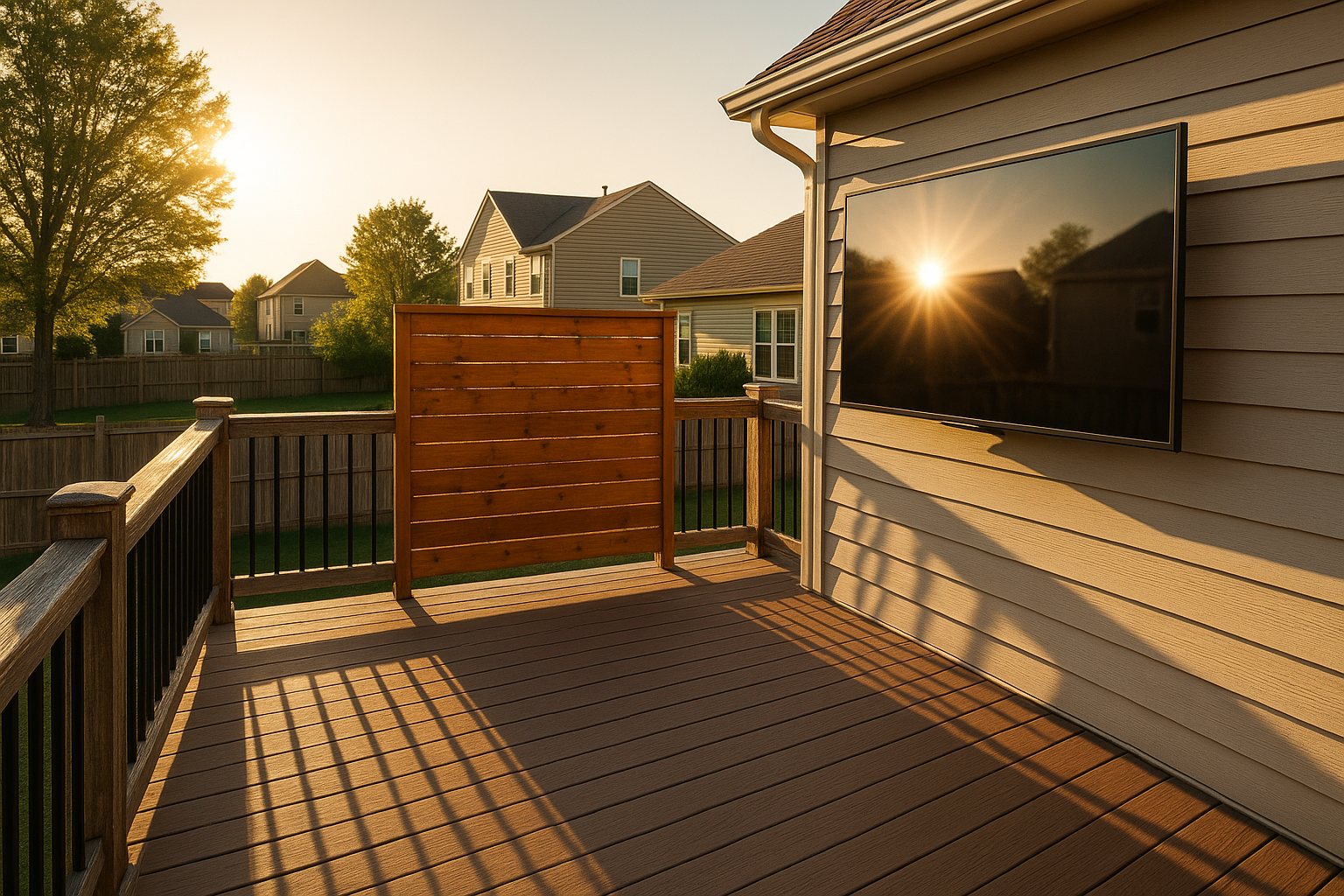
An outdoor TV on deck is a different animal than a wall-mount inside. Indiana weather swings from 90 degrees with 80% humidity to subzero with ice. Wood moves, fasteners corrode, and the afternoon sun can turn a $2,000 screen into a mirror. Before you buy anything, walk the deck at the times you'll actually use it. For most folks around Carmel, Fishers, and Zionsville, that's evening football or Saturday afternoon baseball. Track the sun path. West-facing is brutal. South and east are usually better. Look up—do you have a soffit overhang? A covered porch? A pergola?
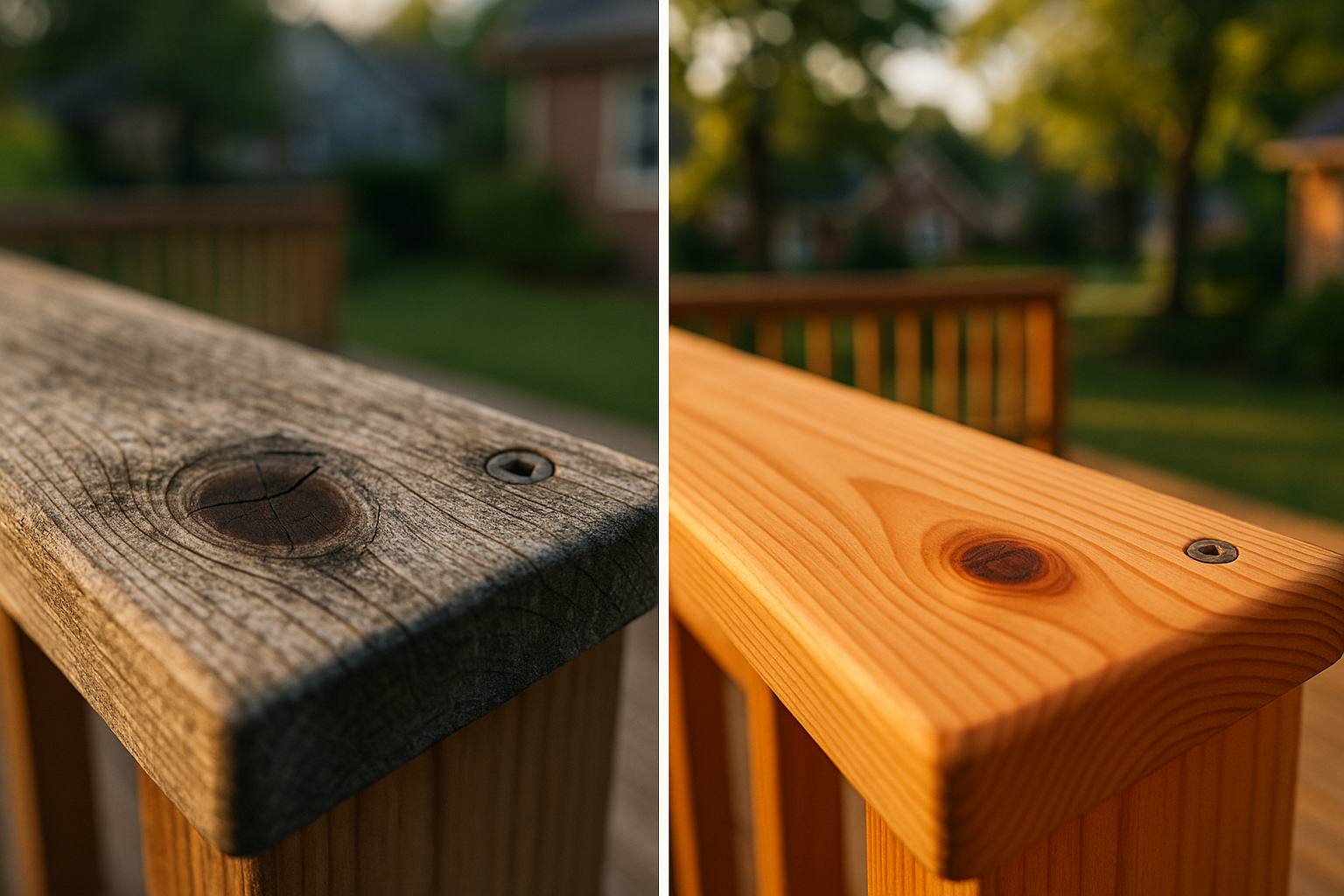
The best spots are: 1) on the house wall under a deep overhang, 2) on a dedicated structural post sunk into the deck framing, or 3) under a pergola or patio enclosure. Never, ever hang a TV from a guardrail. The top rail is designed to stop a person, not act as a TV stand. Vibration alone will rattle every connection loose. If a railing contractor ever suggests that, run. DeckPros replaces rails and posts all the time—we build a separate post or reinforce the rim joist so the TV doesn't torque the structure. Deck guardrails have minimum height and load requirements—check the Indiana guardrail height code before you modify any post.
Outdoor-Rated TV vs. an Enclosure: What Survives Indiana Weather
You've got two real choices: a weatherproof outdoor TV (designed for direct rain and temperature swings) or a regular indoor TV inside an IP-rated enclosure. Both work if you handle condensation. The outdoor units are brighter—up to 2,000 nits versus 300 for a budget indoor model—so you can actually see the screen in daylight. But they cost more. An enclosure keeps your existing TV safe from rain, pollen, and cottonwood fuzz, but it gets bulky and still needs airflow to prevent fogging. If you go with an enclosure, get one with a built-in heater or ventilation fan. Central Indiana's freeze-thaw cycles will test every gasket and seal.
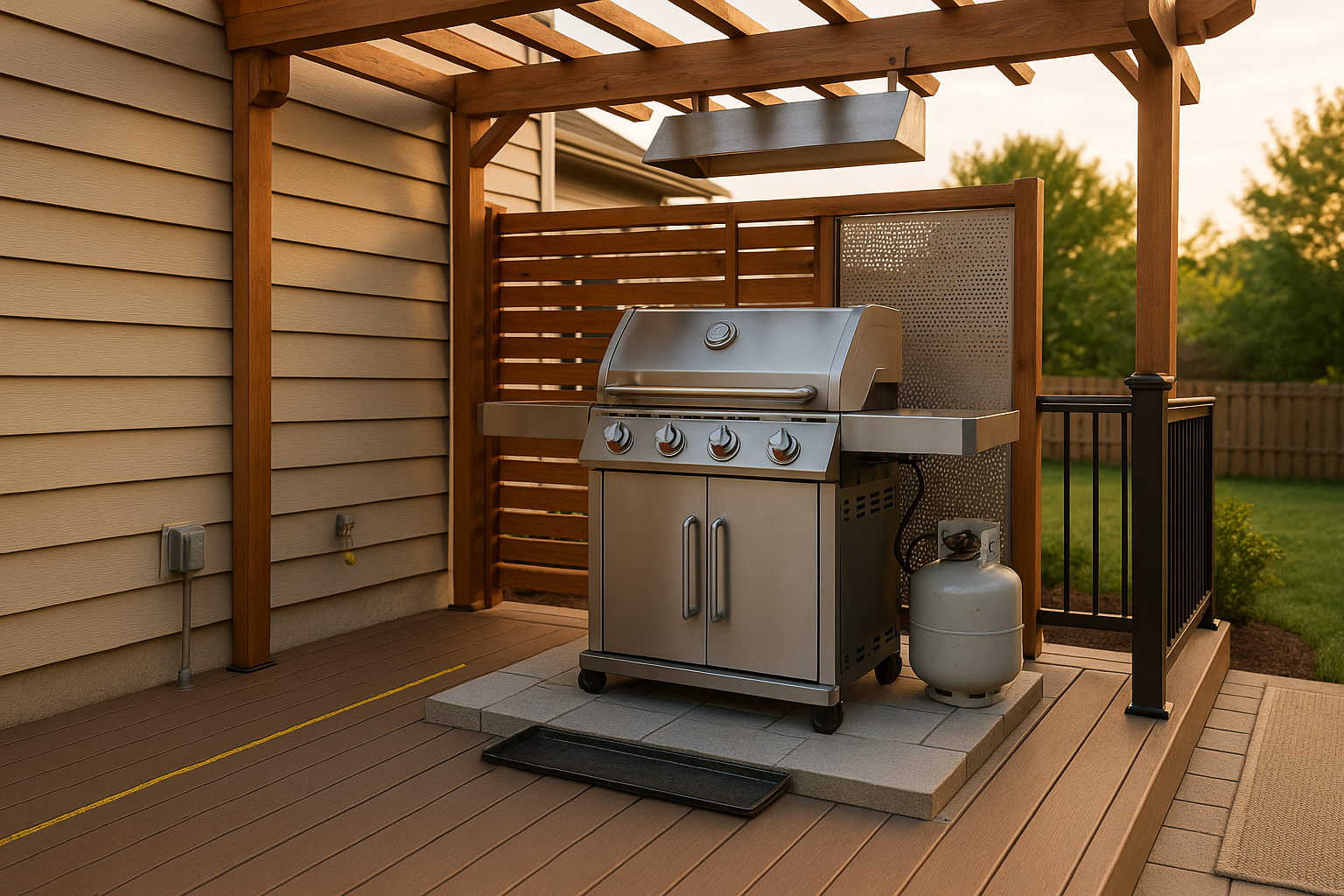
If you have the budget, consider adding a covered structure from a patio enclosure supplier. A solid roof or louvered pergola can solve rain, glare, and UV damage all at once. DeckPros works with several enclosure suppliers in the Indy area, and they'll integrate the TV mount into the header beam during construction so you don't have to retrofit later.
Wiring and Code: The Part Nobody Posts on Instagram
For a clean outdoor TV on deck, you need a dedicated outdoor-rated circuit with GFCI protection. That means an outlet with an in-use cover that can stay closed while a cord is plugged in. In Marion and Hamilton counties, most outdoor receptacle work requires an electrical permit. If you're not comfortable pulling wire through joist cavities, call a licensed contractor. Conduit along the exterior should be rigid PVC or EMT, with drip loops so water doesn't wick into connections. Add a point-of-use surge protector, but consider a whole-home surge device because Indiana storms love to dump lightning into the grid. AFCI protection is required for circuits feeding outdoor outlets in most new work—so don't skip it.
Streaming live games on deck Wi-Fi? Good luck if your router is in the basement. Hardwire an Ethernet cable to the TV, or at least add an outdoor access point. Running data inside conduit next to power is fine if you separate them by a few inches. Before trenching any conduit to a detached deck, call 811 to mark underground lines—we wrote about why in our guide to calling 811 before deck footings.
DeckPros is a full-service contractor, so we pull permits, schedule inspections, and keep the project moving without you playing phone tag with the city.
Hiding the Wires: Rails, Posts, and Little Tricks
The ugliest part of most DIY outdoor TV installs is the wire spaghetti. A railing contractor worth their salt will tell you that composite and aluminum railing systems have hollow posts or a top rail chase that can carry low-voltage wiring. You can hide the TV's power and data cables inside a structural post, as long as you use a gasketed exit and a strain relief. If you've got wood railings, we can route cables under the deck boards in painted EMT conduit, or inside a skirt board. For stairs, low-voltage step lights can run on the same circuit with a dimmer. Under-rail LED strips at 2700K give enough light to see your drink without washing out the screen.
Don't ever attach wire clips to the guardrail itself—it looks terrible and weakens the finish. Instead, use stainless steel cable staples on the underside of the joists.
Glare, Sound, and Lights That Actually Work
Evenings in July and August, the sun sits low in the western sky over neighborhoods like Avon and Plainfield. If your TV faces that direction, you'll need either a swivel mount that swings away, a shade sail, or a patio cover. I've seen homeowners put cheap blackout curtains on a pergola—looks fine if you keep them rolled up when not in use. For audio, skip the giant Bluetooth speaker. Use small weather-resistant speakers mounted under the deck rail, aimed down at the seating area. Decouple them with rubber grommets so bass doesn't buzz through the deck boards. Volume limiters are easy to set in the TV software; your neighbors in Brownsburg will thank you.
For stairs and rails, use dimmable low-voltage LED lights with warm color temperature. Avoid the bright white cool LEDs—they attract bugs and kill the movie vibe. Post cap lights are fine, but put them on a separate dimmer from the step lights.
Fences, Privacy, and the Neighbor Factor
If your deck is close to a neighbor's windows, a bare TV can feel like a billboard. A privacy fence or a slatted screen does double duty: it blocks late-night glare and gives you a backdrop for the TV. DeckPros is also a fence contractor, so we often build a cedar or composite privacy screen along the exposed side of a deck at the same time we mount the TV. If you already have a wood fence, we can hide the low-voltage wiring along the top rail and bring it into the deck through a sealed chase. Some HOAs in Carmel and Westfield have rules about visible electronics or screen sizes from the street—check before you buy.
Winterizing and Maintenance: Don't Just Leave It Out There
Indiana winters are not kind to electronics. At minimum, unplug the TV during severe storms and cover the screen with a breathable outdoor cover. If you used an enclosure, keep the vents clear of snow and leaves. Every spring, check the seal around the enclosure door and the mounting bolts. Tighten everything. Clean the screen with a dry microfiber—never glass cleaner. If the deck gets snow piled on it, shovel the stairs first; step lights can ice over and crack.
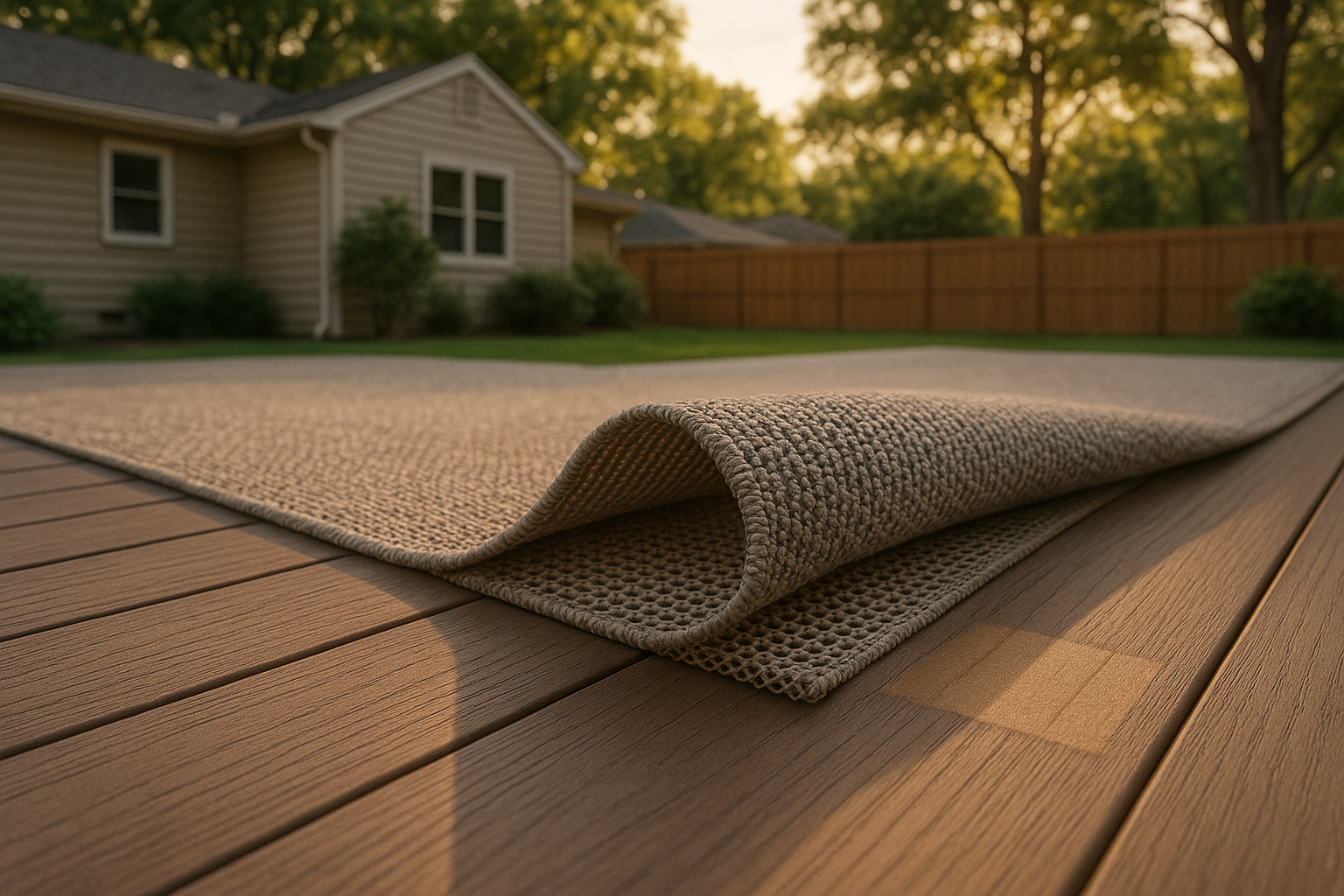
And if you've got composite decking, remember it gets hot in direct sun—walk barefoot on a sunny afternoon and you'll see why we wrote about hot composite decking. Plan your TV spot so kids aren't standing on hot boards while watching a movie.
What It Costs and How to Get Started
A simple wall mount under an existing overhang with a dedicated GFCI outlet might run $800 to $1,500 in the Indianapolis metro, assuming no major structural changes. Add hidden wiring through railing posts, dimmable stair lights, and outdoor speakers, and you're looking at $2,000 to $4,000 depending on the size of the deck. If you need a pergola or covered patio enclosure, the range goes up—custom structures start around $5,000 and can easily pass $12,000 with a premium roof and integrated lighting. Permits and HOA approvals add time, not always huge cost. Most towns around Indy take a week or two for a simple electrical permit. Plan the whole project for late winter or early spring if you want it done before Memorial Day.
The best move is to have someone who actually builds decks in Indiana walk your property, check the structure, and give you a line-item quote. DeckPros does free on-site planning consults—we'll show you exactly where the TV should go, how we'll run the wires, what lights make sense, and what it'll cost. You can schedule a quote right now. No pressure, no Instagram gloss—just a plan that survives your next party.
Thinking about your own deck or pergola?
Free in-home design consultation, 3D rendering, and a written quote — no pressure.