Last spring, my neighbor in Fishers grabbed the top of his deck railing and it shifted two inches. He said, “I’ll just tighten the screws this weekend.” Two weeks later, his grandson leaned on the same rail and it bowed like a wet noodle. Nobody got hurt, but that moment made it real: a loose deck railing isn’t a cosmetic thing. It’s a structural warning sign.
Why a Wobbly Railing Is a Safety Problem, Not a Style One
A railing has one job—keep people from falling. A loose deck railing can’t do that job. Think about your kids, your dog, your neighbor at the cookout. Even a little give at the top means the whole assembly is working loose. It’s not going to tighten itself back up. Left alone, freeze–thaw cycles and summer storms wiggle the fasteners further out. Then one day, someone grabs it and the whole section lets go.
We see this across Indianapolis, Carmel, and Fishers. Homeowners call us for deck railing repair Indianapolis after a scare—a kid hanging on the rail, a parent leaning over to grab something, a guest stumbling on the stairs. The fix isn’t hard when you catch it early. But ignoring a loose deck railing is like ignoring a toothache. It only gets more expensive and more painful.
The Usual Suspects: Freeze, Rot, and Corner-Cutting
Here’s what’s usually going on under the surface.
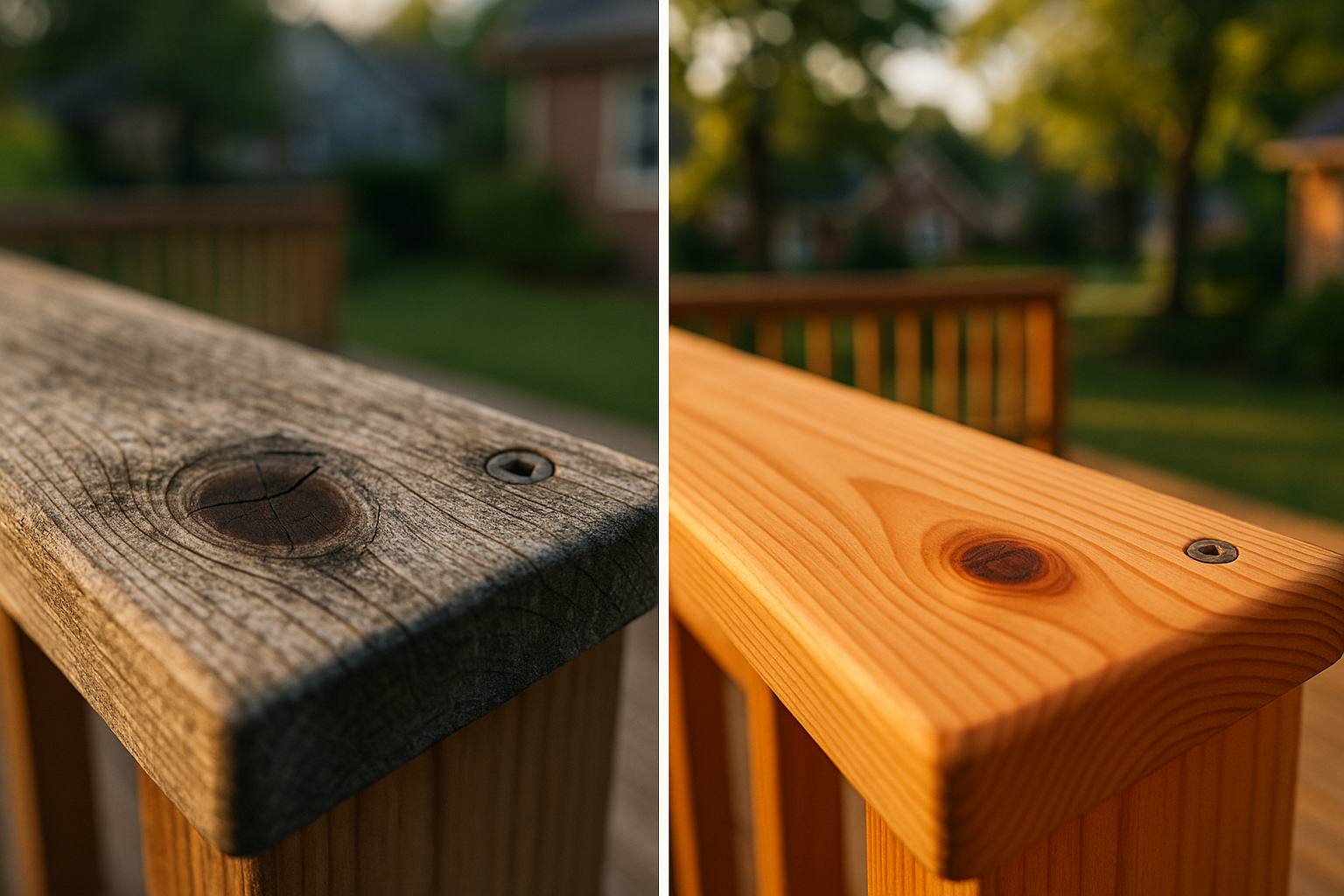
Freeze–thaw movement. Indianapolis winters freeze the water in screw holes and wood grain, expand it, and back out the fasteners. Then spring thaw leaves gaps. Repeat that for five years and your railing gets the shakes.
Post base rot. Water pools at the base of a deck post—especially if the post sits on the rim joist or in a bracket that traps moisture. I’ve pulled posts out of the ground and found the bottom six inches gone. That’s a structural fail waiting to happen, not a quick fix. If you have a fence nearby, you’ve seen the same rot on fence posts. A fence contractor will tell you the same thing: ground contact plus moisture equals decay. But deck posts have a bigger job—they hold people and a guardrail, not just a picket line.
Undersized or notched 4x4s. Older decks often use a 4x4 post notched to fit around the rim joist. That notch removes half the wood. Then someone drills a couple of lag screws through it. It’s a weak connection from day one. Railing contractors know the connection is the weak point. A good railing contractor looks at the bracket, the bolts, and the blocking, not just the pretty cap on top.
Corroded brackets and cheap hardware. Zinc-plated interior screws rust through after a few Indiana seasons. Then the bracket is just hanging on by paint. We replace all of that with hot-dip galvanized or stainless steel.
What a Real Fix Looks Like
You can’t just tighten the screws. Not if you want it to hold.
Through-bolt the posts. A lag screw into end grain doesn’t hold. We use through-bolts with washers on the other side, plus structural blocking inside the joist cavity. That gives the post something solid to grab.
Replace weak posts with 6x6s. If the post is rotted or notched, we pull it and install a full-height 6x6 post. That’s the standard for good reason. A 6x6 has four times the cross-section of a notched 4x4. It also gives you room for a proper post-to-framing connector—no more wood-on-wood with a couple screws.
Check the whole run. One loose section usually means the rest is on its way. We inspect every post, every bracket, every baluster. Baluster spacing matters too. Indiana code says the gap can’t be bigger than 4 inches—a toddler can squeeze through more than that. We fix that while we’re in there.
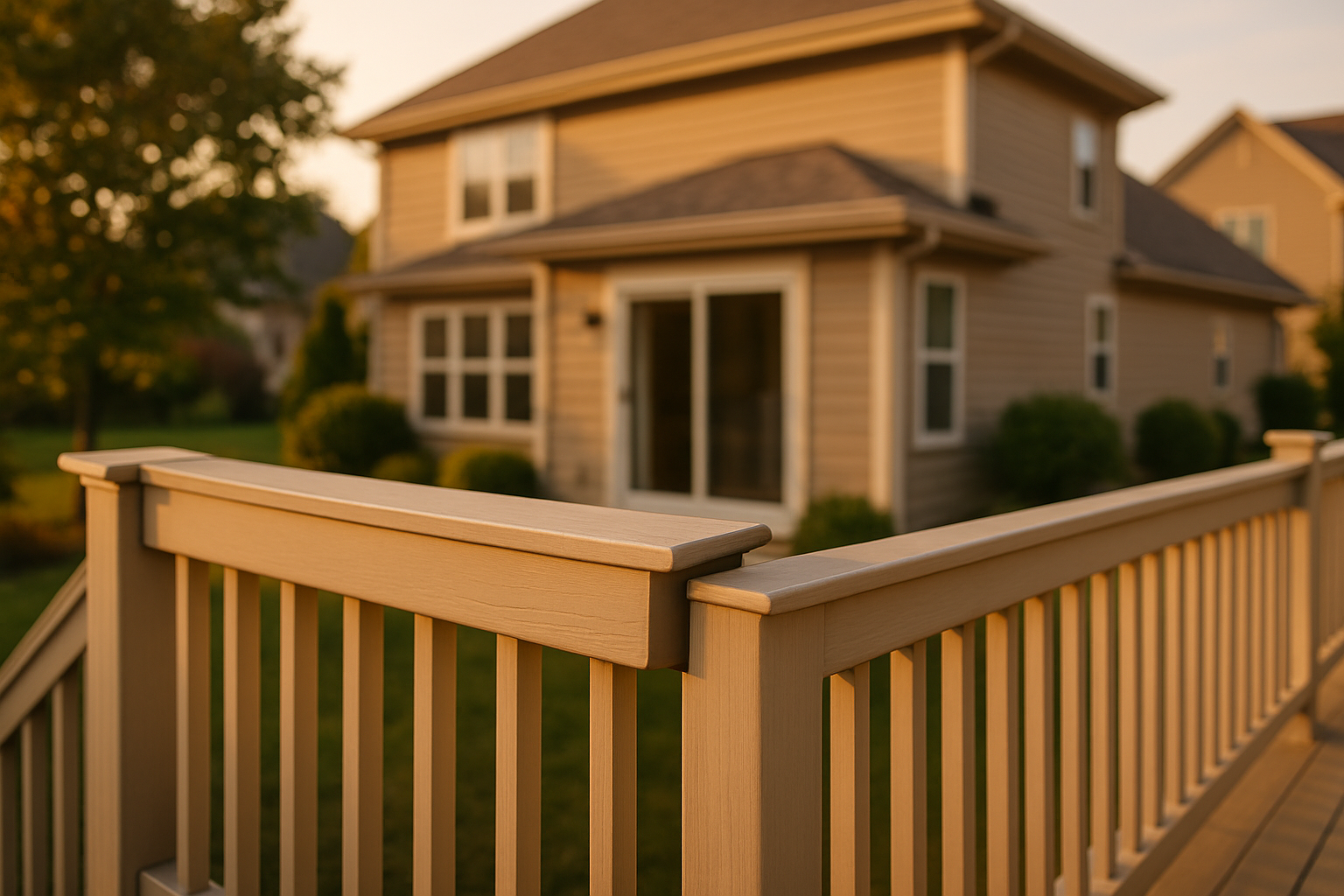
Stair railings are their own animal. A stair railing gets grabbed more than any other part. Loose newel posts at the top and bottom cause most stair railing wobbles. We anchor those posts to the stringer and the framing, not just the decking. Continuous, graspable handrails are code for a reason.
Materials That Actually Hold Up Here
You’ve got options.
Pressure-treated pine is cheap and strong, but it moves with the weather. Expect some seasonal tightening, or call us for a yearly check. Composite-sleeved posts look great and need less maintenance, but the core still has to be solid wood or a structural plastic. Aluminum railings are the stiffest and lowest-maintenance. Powder-coated aluminum doesn’t rust, doesn’t rot, and doesn’t warp in the sun. It’s my go-to for a deck that faces south or west in Carmel or Westfield, where UV bakes wood railings all summer.
If you’re thinking ahead to a patio enclosure or screened porch, the same posts have to carry more weight later. As a patio enclosure supplier, we see this all the time. A wobbly rail today means a wobbly screen panel or glass wall next year. Better to fix the structure now so you don’t pay twice.
Permits, Timelines, and Not Skipping the Boring Stuff
Here’s the part nobody likes but everybody needs.
Do you need a permit? In Indianapolis, if you’re changing the structural connection or replacing posts, yes. A simple bracket swap or screw replacement might not. But we always check with the city before starting. As a licensed contractor, I’d rather pull a permit than have an inspector flag your project later. We handle the paperwork and meet the inspector on site.
How long does it take? A typical railing repair on one section takes a day or two. A full deck railing replacement with new posts and aluminum rails can take three to five days, depending on size. We keep the yard clean, and you can usually stay home the whole time.
What does it cost? That depends on how many posts, the material, and whether we’re doing stairs too. But here’s my honest opinion: fixing a loose deck railing before someone gets hurt is always cheaper than the alternative. We’ll give you a straight quote after a 30-minute on-site look. No games.
One More Thing: Add Light While You’re in There
Since we’re already pulling railing sections apart, adding low-voltage LED post caps or step lights is easy. We hide the wiring inside the posts and under the rail. Warm white light on the stairs makes a real difference for winter evenings when it gets dark at 5 p.m. Plus, it looks sharp. This is also a good time to check your post caps and end grain—if they’re cracked or open, moisture gets in. We have a whole post on sealing post caps and trim that goes deeper.
Get a Safety Check Before Your Next Cookout
If your railing moves at all when you push on it, don’t wait. Give us a call or fill out the quote form. We’ll come out, take photos, and tell you exactly what’s loose, why, and what it’ll take to fix it. No scare tactics, no upsell to a full rebuild if you don’t need one. (If you’re genuinely torn between repairing or rebuilding, this cost breakdown is worth a read.) You can also read more about post-storm inspections or check how under-deck airflow affects post rot.
For now, remember: a loose deck railing is a structural problem. Fix it right, and it’ll be there when your grandkid grabs it hard.
Thinking about your own deck or pergola?
Free in-home design consultation, 3D rendering, and a written quote — no pressure.