Last spring, I walked a deck in Fishers that looked fine from the kitchen window. The owner said, "I just want a few boards replaced and maybe new railing." But when I got under there with a screwdriver, the ledger board was barely attached—just half a dozen nails into old siding, no flashing. A few more pokes and a joist end crumbled like wet cardboard. That deck wasn't a repair job. It was a safety hazard waiting for a party of ten. That's the thing about decks in Indiana: they can look okay on top while the real trouble hides underneath.
So how do you decide between deck repair vs replacement in Indianapolis? Let's walk through what actually matters for your home, your budget, and your peace of mind.
The Quick Decision Framework
Here's the short version: repair when the structure is sound and damage is limited. Replace when the frame is compromised.
When Repair Makes Sense
If your deck's framing—the ledger, beams, joists, and posts—is still solid and meets current code, repairs can be practical. Common fixes include: - Replacing a few cracked or cupped boards - Tightening corroded hardware or adding missing fasteners - Sistering a rotted joist end (splicing a new piece alongside the old) - Upgrading railings to meet height and baluster spacing rules - Fixing a stair stringer with minor rot
For example, a client in Carmel had two joist ends rotted from a leaky planter. We cut out the bad sections, sistered in new pressure-treated lumber, and replaced the damaged deck boards. Total cost was about $1,200. That deck is still good years later.
But here's the catch: those repairs only make sense if the rest of the frame passes a safety check. And that check needs to look at things homeowners often miss.
The Safety-First Checklist
Every deck in Central Indiana should be inspected for: - Ledger attachment and flashing – This is where decks fail most. The ledger should be bolted into the house rim joist, not just nailed to siding, and must have metal flashing to keep water out. - Footing depth – In Indiana, footings need to go below the frost line, typically 36 inches. Shallow footings heave in winter and settle unevenly. - Beam and joist spans – Current code (IRC R507) sets limits on how far lumber can span. Older decks are often undersized. - Guard and handrail integrity – Rails need to withstand 200 pounds of force. Wobbly rails are dangerous. - Hardware corrosion – Decades of freeze-thaw and de-icing salts eat away at nails and connectors.
If most of those check out, you're a candidate for repair. If not, replacement is the safer bet.
When You Need Full Replacement
Some problems can't be patched. You likely need a new deck if: - The ledger board is rotted or incorrectly attached. This is non-negotiable. A failed ledger can collapse the whole deck. - Multiple joists or beams are rotted or cracked. Sistering one joist is fine; patching half the frame isn't. - Footings are too shallow or heaving. You can't dig under an existing deck to fix one footing without major work. - The deck can't meet current code. For instance, if your joists are 24 inches on center but the new composite decking you want requires 16-inch spacing, you're looking at a full reframe. - Insect damage is widespread. Carpenter ants and termites love untreated cut ends and damp ledgers. I've seen decks in Greenwood that looked intact until you tapped a post and the center was hollow.
Resurfacing: A Middle Ground? Not Really
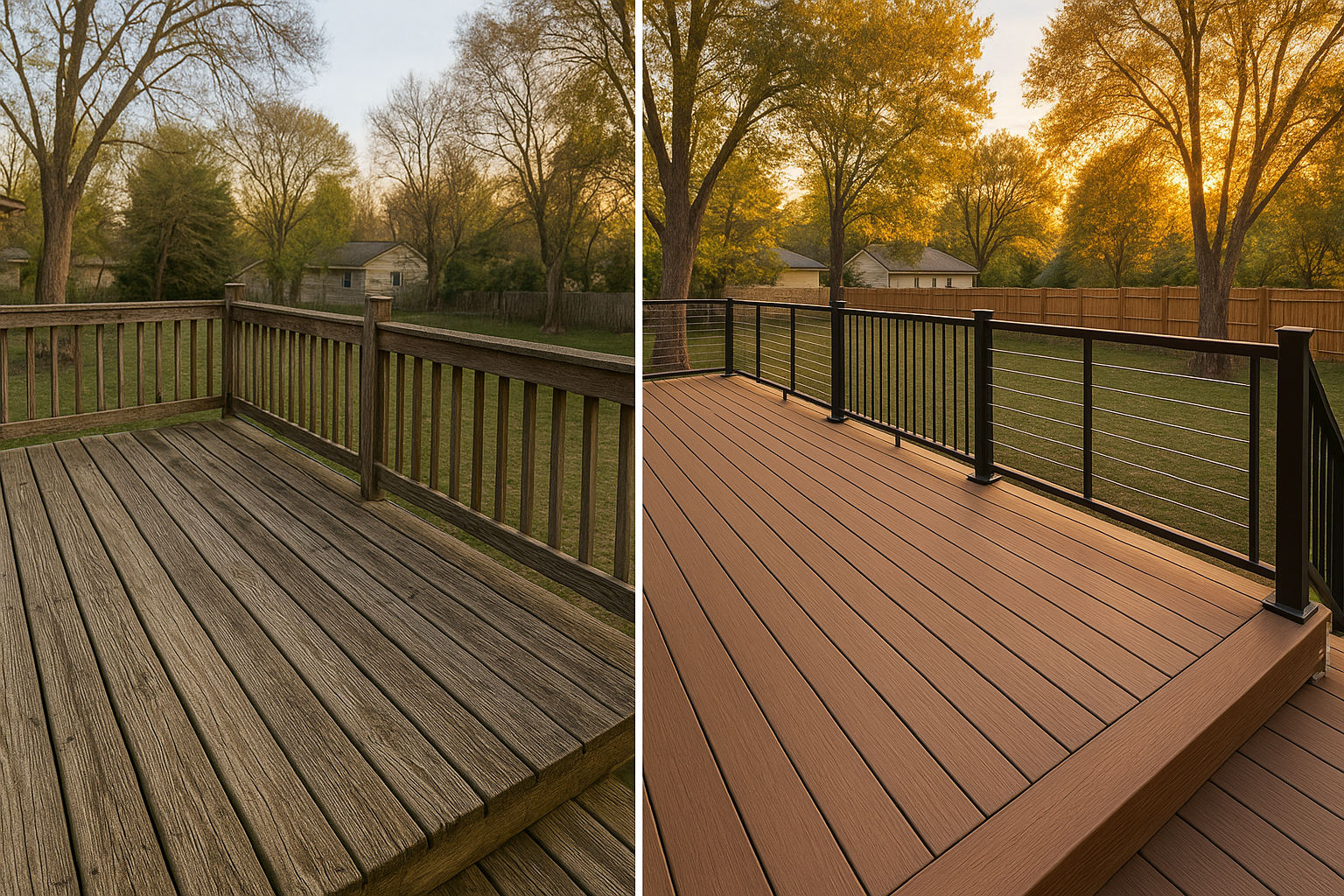
A lot of homeowners ask, "Can you just put composite over my old frame?" That's called resurfacing, and it only works if the frame passes inspection. But here's the reality: if your deck was built before roughly 2010, chances are it doesn't meet current spans or ledger requirements. So resurfacing often turns into a full replacement anyway. Our rule: if the cost to resurface exceeds about half the cost of a new deck, go with the full rebuild. You'll get a warranty, code compliance, and peace of mind.
Materials That Handle Indiana Winters
One of the biggest decisions in a replacement is what material to use. Indianapolis weather is tough on decks—freeze-thaw, humidity, summer UV, and winter de-icing salts.
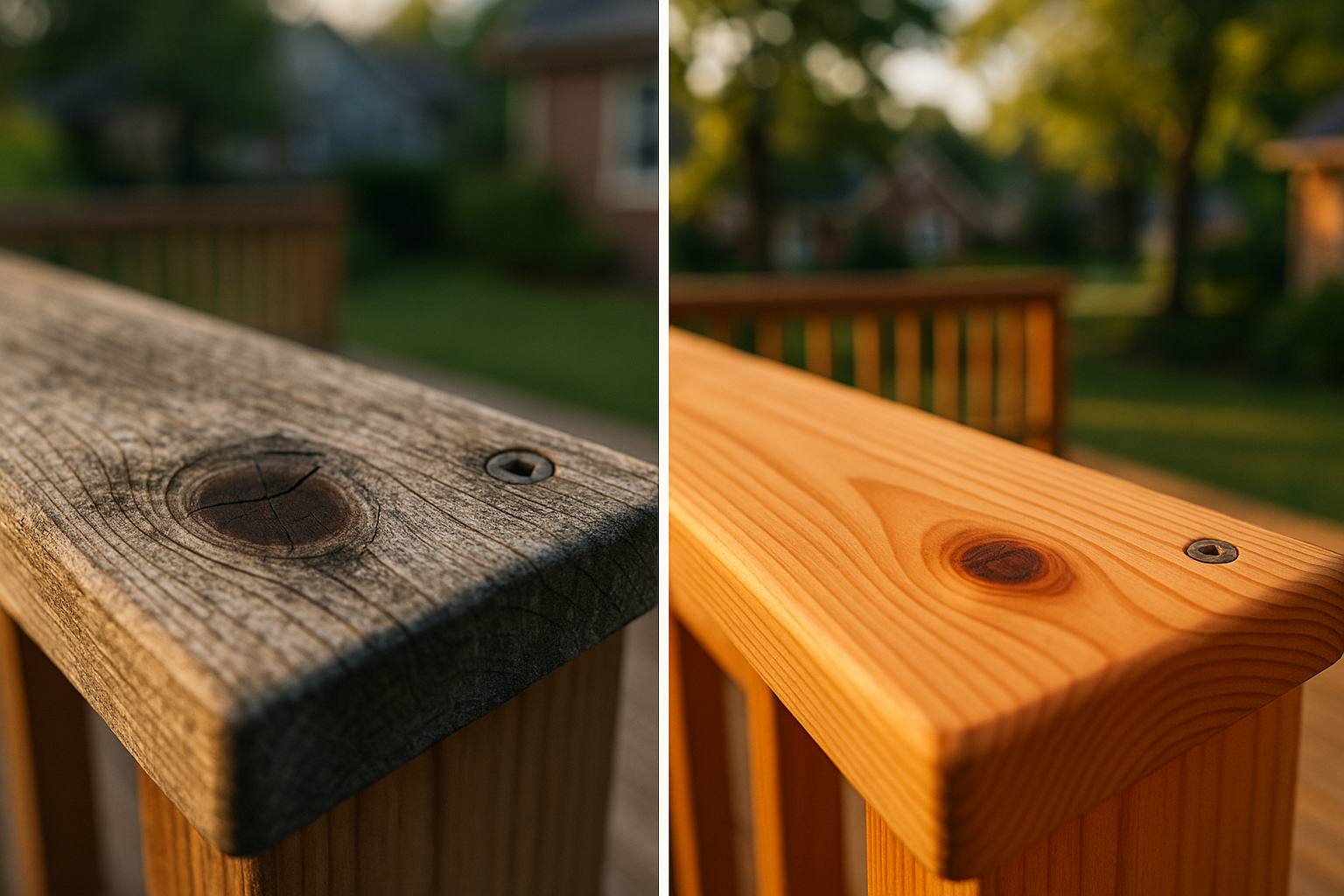
- Pressure-treated pine is budget-friendly and familiar. But it needs regular sealing and tends to cup, check, and crack over time. Expect to refinish every 1–2 years.
- Cedar looks warm and resists rot naturally, but it softens with age and requires similar upkeep.
- Composite and PVC are more expensive upfront but hold up better to Indiana winters. They don't rot, splinter, or need staining. Darker composites can get hot in direct sun, but for most of the summer, it's fine. Many homeowners in Zionsville and Westfield choose composite for low maintenance.
Code and Permits in Indianapolis
If you're doing structural work—new footings, replacing a ledger, or a full rebuild—you need a permit from Marion County or your local municipality. Permit officials will inspect footings before concrete is poured and do a final safety check. It's not as scary as it sounds. We handle the entire process for our clients, from plan review to final sign-off. One thing to know: permits add a few days to the timeline, but they ensure your deck is safe and legal. That matters for resale and liability.
Common Objections, Straight Answers
"Can you match my existing stain or board profile?" Sometimes we can, but if your deck is over 10 years old, the weather has faded it differently. A partial match might look obvious. We'll show you options before starting.
"Will repairs bring my deck up to current code?" If you change more than 50% of the structure, code typically requires the whole deck to meet current standards. We'll flag that during the inspection.
"What about HOA restrictions?" Many suburbs like Brownsburg, Avon, and Plainfield have HOAs that require approval on materials and colors. We've worked with dozens of them and can provide drawings if needed.
Why a Professional Assessment Pays Off
You wouldn't guess your car's engine problem by looking at the hood. Decks are the same. A proper inspection uses moisture meters, fastener testing, and span checks. Without that, you're guessing.
At DeckPros, we start every project with a planning-first site assessment. We test for moisture, check every connection, verify spans and footings, then give you a photo report with a clear repair vs replacement recommendation. No pressure, just facts.
Let's Figure Out What's Right for Your Deck
If you're tired of worrying about your deck—or wondering if that next party is safe—book a local assessment. We'll walk your property, run the safety checklist, and give you a written plan with line-item costs. No pushy sales, just honest advice from a contractor who knows Indianapolis building code and climate.
Schedule your deck assessment here.
Still not sure? Read more about common deck problems after Indiana winter or our guide to composite vs wood decking.
Thinking about your own deck or pergola?
Free in-home design consultation, 3D rendering, and a written quote — no pressure.