A couple of months back, I got a call from a homeowner in Meridian-Kessler. She’d noticed her deck stairs felt wobbly after a rough winter, and when she stepped on a corner board near the railing, it gave way under her foot. Scary stuff. She’d had the deck for fifteen years and never thought much about maintenance. That’s the thing with Indiana winters — they find the weak spots, and they find them fast.
If you’re noticing loose railings, soft spots, or a tilt in the deck you didn’t have last fall, you’re not alone. Central Indiana’s freeze-thaw cycles, spring rains, and clay soils make decks age faster than in milder climates. Here’s the down and dirty on what goes wrong, what to look for, and when to call a pro.
Why Indiana Winters Are Tough on Decks
We get serious temperature swings. One day it’s 40 degrees and raining, the next it’s 15 and frozen solid. Water gets into tiny cracks in wood, freezes, expands, and makes those cracks bigger. That’s called freeze-thaw damage. Then spring rains come and soak into the opened-up wood. Rot sets in fast once moisture can’t dry out.
And our soil? Clay-heavy, which moves when it gets wet and when it dries. That movement can push deck footings around if they weren’t set deep enough — and many older decks weren’t. The frost line around Indianapolis is about 36 inches. Footings shallower than that can heave up, tilt, or sink unevenly. I’ve seen posts that lifted three inches over one winter and cracked the joist ends above them.
The Top Five Deck Problems We Find After Winter
1. Frost-Heaved Posts and Footings
You can spot this one from across the yard. If deck posts look like they’re standing at different heights, or if there’s a visible gap under the post base plate, your footings probably moved. In neighborhoods like Broad Ripple and Fishers, where clay soils are common, this happens a lot. The fix often involves digging down to the footing, checking depth, and either resetting the post or adding a new footing. Sometimes the whole post needs replacing if it rotted from being in contact with wet ground.
2. Rotted Joists and Rim Board
Rot is sneaky. You don’t see it until you poke a screwdriver into a soggy spot. The rim board — the outer band of the deck frame — and joist ends near the house are most vulnerable. If your deck’s ledger board (where it attaches to the house) gets wet because flashing failed or was never installed right, water runs down inside the wall and rots the rim joist from the back. That’s a safety issue. We always check the ledger area first in spring inspections.
3. Loose Railings and Wobbly Stairs
Winter’s constant expansion-contraction loosens railing brackets and stair connections. A railing that wiggles under light pressure is a sign the bottom fasteners have pulled out or the wood around them has crushed. Stairs get worse because they’re used daily. If the stringers (the angled supports) aren’t secured well at the top and bottom, they can shift. One homeowner in Zionsville told me his stairs “danced” when his kids ran up and down. That’s a trip hazard waiting to happen.
4. Corroded Fasteners and Hardware
De-icing salts from your driveway or sidewalk get tracked onto the deck, and if you use salt melt on the deck itself, that accelerates corrosion. Galvanized nails and joist hangers can rust through in five to ten years of salt exposure. We’ve opened up deck frames where the hangers looked like orange lace. In Carmel, where salt use is heavy, stainless steel or coated structural fasteners make a big difference for longevity.
5. Split, Cupped, or Cracked Deck Boards
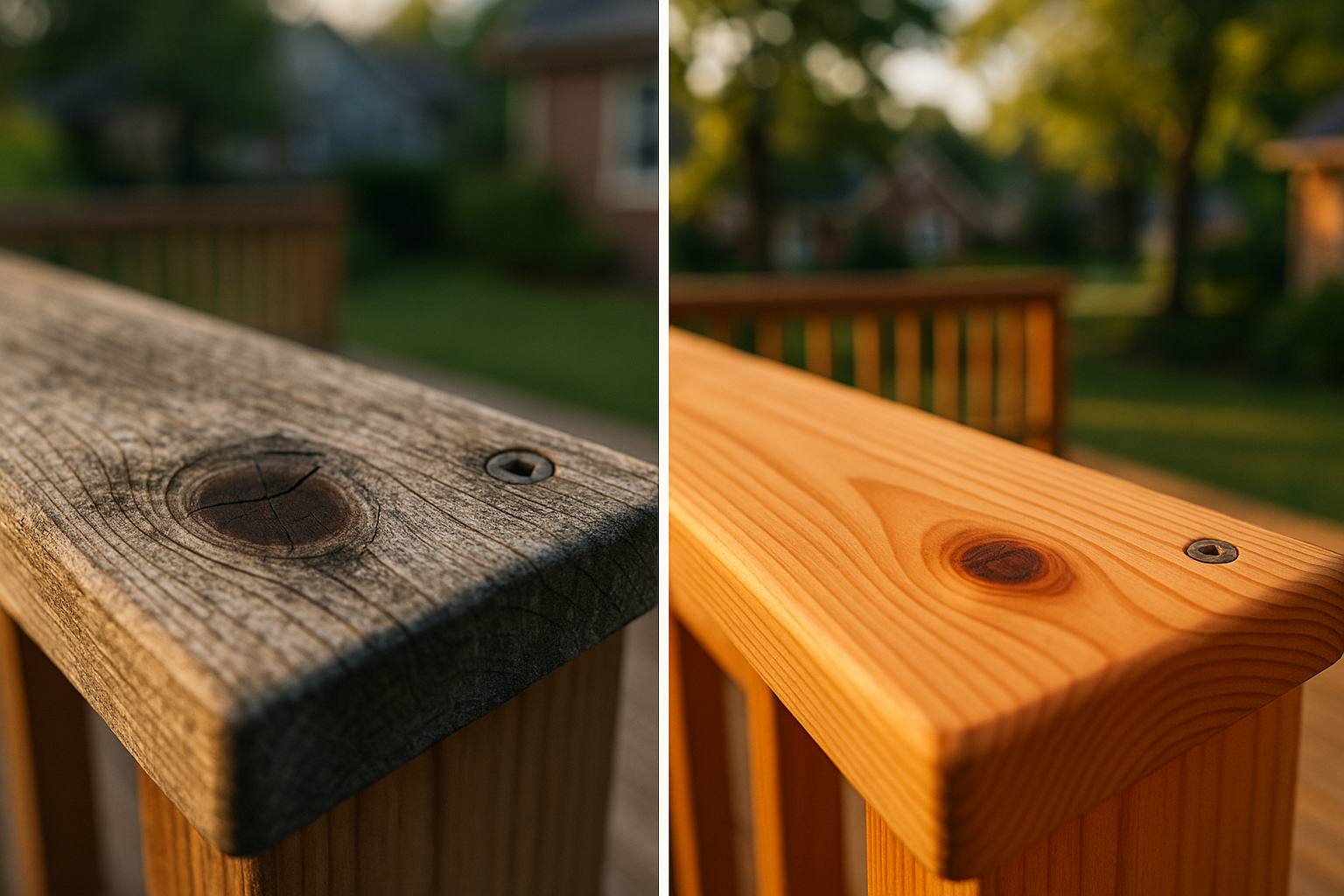
Wood moves with moisture. After a wet winter, you’ll see boards that have cupped (edges higher than center), split along the grain, or popped screws sticking up. Composite decks aren’t immune — they can warp or get surface cracks from extreme temperature swings if the product was lower grade, though quality composites like Trex or TimberTech handle it better. Most individual boards can be replaced easily. If the whole surface looks like a potato chip, it might be time to resurface.
What About Ice Melt Damage?
Yes, salt-based ice melts can stain wood and composite surfaces and corrode metal parts. For wood, it also dries out the fibers, leading to more cracking. If you used salt this winter, don’t panic: a thorough spring cleaning with a deck brightener and a fresh sealant can reverse a lot of the damage. But avoid using salt again next year. Sand or kitty litter gives traction without the chemicals.
When to Repair vs. Rebuild
This is the big question. If the ledger, multiple joists, and several posts have serious rot or movement, the cost of piecemeal repairs can approach half the price of a full rebuild. And with a rebuild, you get modern materials, better safety, and a longer life. But if the damage is limited to a few boards or one corner, we can patch it and you’ll get another ten years out of the deck. We always give homeowners a written scope with photos and pricing options — no pressure, just the facts.
A Quick Checklist for Your Spring Deck Inspection
- Check the ledger: Look for water stains, moss, or soft wood where the deck meets the house. If you see any crumbling wood, call a pro. Here’s a deeper look at ledger problems.
- Test railings: Push side-to-side and pull upward. Any movement over an inch means brackets are failing.
- Inspect stairs: Walk up and down slowly. Feel for shifting treads or swaying.
- Look at post bases: Are they sitting flat on concrete? Any rot at the bottom six inches of the post?
- Check fasteners: Pull one or two deck screws. If they come out rusty or crumble, hardware is compromised.
- Tread on questionable boards: Pressure with your foot — if it feels spongy, the joist under it may be rotten.
Preventing Next Winter’s Damage
A little fall maintenance goes a long way. Seal wood decks every two to three years with a good penetrating sealer. Clear snow with a plastic shovel (metal can scratch). Keep debris off the surface so moisture can dry. And consider an under-deck drainage system to keep water away from the frame. One homeowner in Noblesville installed a drainage system last fall and told me his basement stayed dry for the first time in ten years. That’s a win.
Spring is the best time to catch winter’s wreckage before heavy rains come. And honestly, we love doing these inspections because they catch problems early, saving homeowners money and stress.
How We Help Indianapolis Homeowners
At DeckPros, we start with a thorough inspection — moisture readings, photos, and a written scope with clear options and fixed pricing. We don’t push unnecessary work. If you only need three boards replaced and a railing tightened, we’ll tell you that. On the other hand, if your deck is structurally unsafe, we’ll explain why a full rebuild makes sense long-term. We work in Marion, Hamilton, Hendricks, Boone, Johnson, and Hancock counties, and we handle permits so you don’t have to.
If you have a fence that got damaged over winter too, we can take care of that in the same visit — though that’s a different kind of repair.
Ready to have your deck checked? Schedule your spring inspection and we’ll come out, show you what we find, and walk through your options. No pitch, just a plan.
Thinking about your own deck or pergola?
Free in-home design consultation, 3D rendering, and a written quote — no pressure.