Last fall, my neighbor Tim ignored his deck. By Thanksgiving, a half-inch crack ran the length of his favorite board, and the railing felt like a loose tooth. “I’ll get to it next weekend,” he kept saying, until the freeze hit and suddenly his deck looked ten years older. Tim’s not alone — around here, our winters are no joke for wood. If you want to avoid that heart-sink moment come March, winterizing your deck is the move. And honestly, it’s way simpler than you think.
Why Bother? Indiana’s Winter Loves to Wreck Decks
We don’t just get cold — we get freeze-thaw whiplash. One day it’s 40°F and raining, the next it’s 15°F and everything’s a sheet of ice. Water seeps into wood grain, freezes, expands, and pops fibers apart. Repeat that a few dozen times, and you’ve got cupped boards, raised grain, and fasteners that back out like corks. Add road salt tracked from driveways (especially in Indy neighborhoods with big oaks, where leaves trap moisture), and you’re looking at accelerated rot. It’s not about being precious — it’s about not throwing money away.
When to Pull the Trigger: The Fall Window
You want to winterize between late September and early November. The trick is catching a stretch when daytime highs stay above 50°F and you’ve got a 48-hour dry window. In Indianapolis, that could be a random Tuesday in October, so check the forecast and pounce. If you wait until December, the sealant won’t cure — it’ll just sit there, get milky, and fail. Same goes for cleaning: wood needs to dry out completely before you seal, or you’re trapping moisture inside. Trust me, I’ve seen guys in Carmel rush this after leaf cleanup, and the job peels by Christmas.
The No-Sweat (Okay, Low-Sweat) Winter Prep Routine
Clear the Decks and Give It a Bath
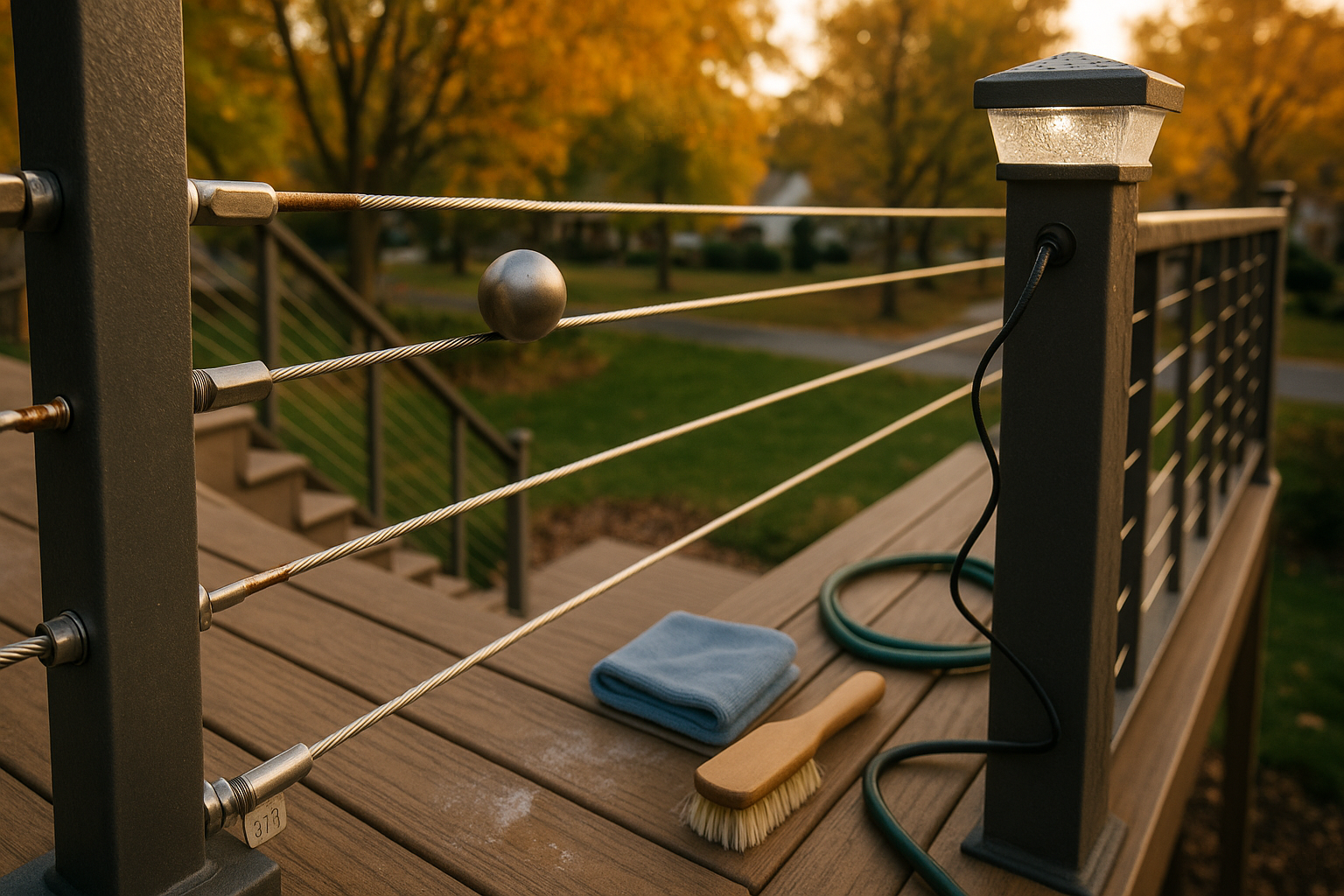
Pull furniture, planters, and grill off the surface. Sweep out leaves and acorns — those suckers hold dampness against wood like a sponge. Next, wash the deck with an oxygenated cleaner (nothing harsh, no bleach). A garden hose with decent pressure is fine; just don’t blast it. Rinse well, then walk away for a full day or two. The wood should look dry and feel thirsty.
Look for Trouble Spots
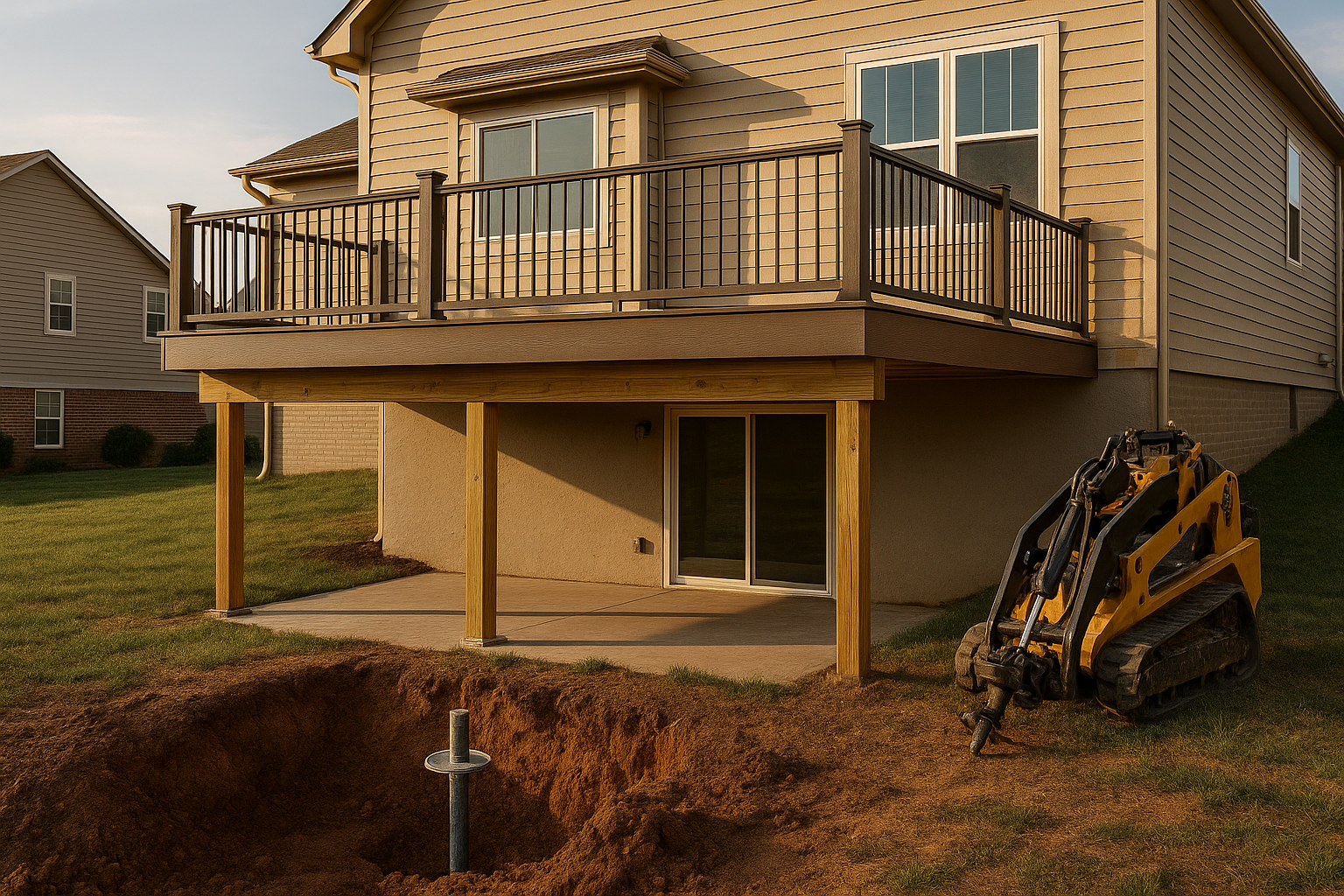
Grab a coffee and do a slow lap. Check where the deck meets the house — that ledger flashing should be tight, no gaps. Wiggle posts, push on railings, step on stair treads. If you find a soft spot, poke it with a screwdriver. Rotted boards, popped nails, loose joist hangers — now’s the time. Swap bad nails for coated or stainless screws. If the damage runs deeper, you might need a contractor. A lot of folks in Fishers and Noblesville call us for winter repairs because they’d rather not mess with structural stuff in freezing temps. Incidentally, if your railing is wobbly, that’s a hazard all year, but especially when hands are wet or gloved — a good railing contractor can tighten things up right.
If your deck butts up against a fence, check that too. A leaning fence post or missing picket can trap snow against the deck edge. Fence repairs are small potatoes now versus a whole section replacement later. Water pooling at the base is a recipe for ice dams.
Seal It Up Right (the Indiana Way)
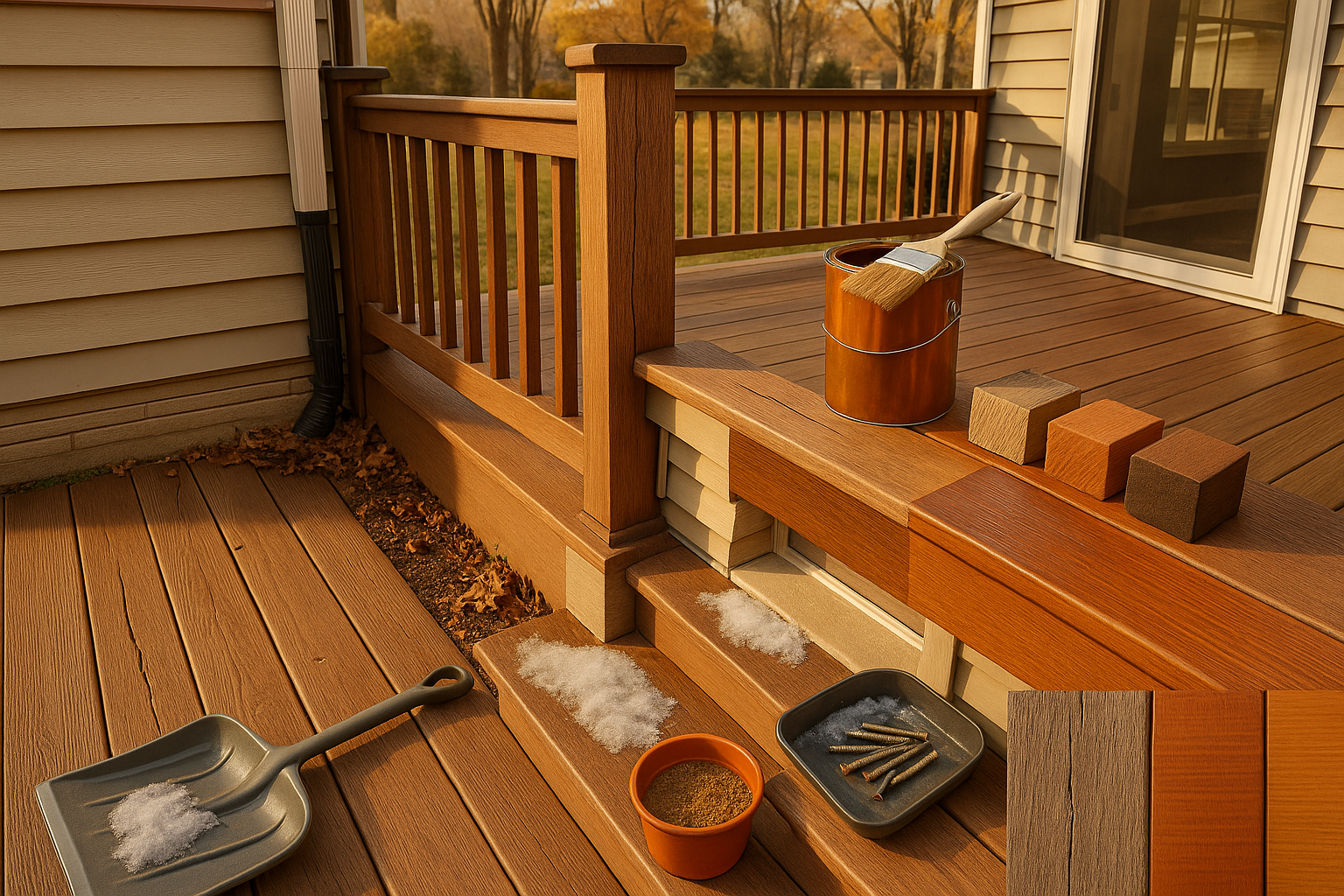
Skip the thick, glossy coatings that form a film. They peel like sunburn after a few freeze-thaw cycles. Go with a penetrating semi-transparent stain and sealer with UV blockers. These soak into the wood and let it breathe. Application tip: do it mid-day when temps are steady, back-brush to avoid lap marks, and treat the end grain like it’s a sponge — it’ll drink up twice as much. Don’t over-apply; a little goes a long way. And for goodness’ sake, stay off it for 24–48 hours, rain or shine. In Greenwood, we’ve seen people seal right before an overnight freeze and it’s a disaster — the product can’t cure.
Not all decks are the same. Cedar decks (popular in Westfield) soak up sealer differently than pressure-treated pine. Hardwoods like ipe (we see these in Fishers) barely absorb anything, so they need a specific penetrating oil. If you’re unsure, we’ve got a writeup on cedar and ipe maintenance that breaks it down.
Snow, Ice, and the Shovel You Pick
When the white stuff falls, use a plastic shovel and push parallel to the boards. Metal shovels gouge wood — I don’t care how careful you are. Don’t chop at ice; let it melt or use a non-staining de-icer. Rock salt is public enemy number one. It corrodes fasteners, stains wood, and kills plants. Magnesium chloride or calcium magnesium acetate works and is gentler. A bucket of traction grit on stairs can save a tailbone.
If your deck leads to a screen porch or patio enclosure, watch the transition area — water often sneaks under the sill and freezes. A bead of quality caulk and a sloped threshold block make a difference. DeckPros has supplied enclosure upgrades that cut winter wetting by a long shot.
Stuff You Absolutely Shouldn’t Do
- Don’t tarp your deck with plastic sheeting — it traps moisture and breeds mildew.
- Don’t power wash at high PSI — it raises grain and drives water deep. Stick to a fan tip and low pressure.
- Don’t seal cold or damp wood — the product will fail and you’ll just have to strip it later.
- Don’t assume composite decks need zero maintenance — they still need a good cleaning and snow management, but sealing isn’t part of the equation.
Quick Winter Check-Ins
After heavy snow, sweep it off. Look for icicle lines from clogged gutters dripping onto the deck — that’s a freeze-thaw hotspot. Tighten any loose railings; they wiggle more in cold because wood contracts. And if you’ve got south- or west-facing sun exposure (common in Zionsville and Brownsburg), the boards will dry and crack faster without that sealer.
When to Wave the White Flag and Call a Pro
If you find widespread peeling, soft ledger boards, or railing posts that move when you lean on them, don’t DIY. That’s structure and safety territory. DeckPros serves the whole metro — from Avon to Plainfield and up to Noblesville — with inspections and winter repairs. We’ll give you a straight-up plan and a no-obligation quote. If you’re thinking about upgrading to cedar or hardwood, or adding under-deck drainage to keep the area dry year-round, now’s the time to talk.
A little elbow grease in October beats a big invoice in April. Grab that dry weekend, and if you’d rather leave it to folks who do this every day, send us a note. We’ll make sure your deck survives whatever Indiana throws at it.
Thinking about your own deck or pergola?
Free in-home design consultation, 3D rendering, and a written quote — no pressure.