Last summer, a client in Carmel called us after their first big pool party. They had a beautiful in-ground pool, but the deck around it was original pressure-treated wood, probably fifteen years old. By mid-afternoon, the surface was so hot you couldn't walk barefoot. Then someone spilled a drink, and that spot stayed sticky for days. And when the kids ran from the pool to the grass, they left a trail of splinters. Their poolside deck was becoming a headache instead of a relaxation spot.
That conversation is pretty common around Indianapolis. A pool deck needs to handle a lot: water, chlorine or salt, constant foot traffic, and our Indiana weather. If you're thinking about adding or replacing a deck around your pool, here's what really matters.
Start with a Plan, Not a Material
Before picking boards or colors, you need a solid plan. A good deck contractor will do a full site assessment. They'll look at how the pool sits, where water drains, where utilities run, and what the existing coping looks like. They'll also check local codes — Marion County requires a permit for decks, and pool barriers have specific rules.
I remember a project in Fishers where the homeowner wanted a flush transition from deck to pool coping. That's a great look, but it meant we had to coordinate with the pool's structure and make sure the deck framing didn't put pressure on the pool walls. A plan-first approach catches things like that early.
Materials That Hold Up to Pool Chemicals and Indiana Winters
Not all decking works well around a pool. The two best options for a poolside deck in Indianapolis are capped composite and PVC. Both resist moisture, staining, and chemicals better than wood. Composite is a mix of wood fibers and plastic, usually with a protective cap. PVC is all plastic. Both are slip-resistant when you choose the right texture.
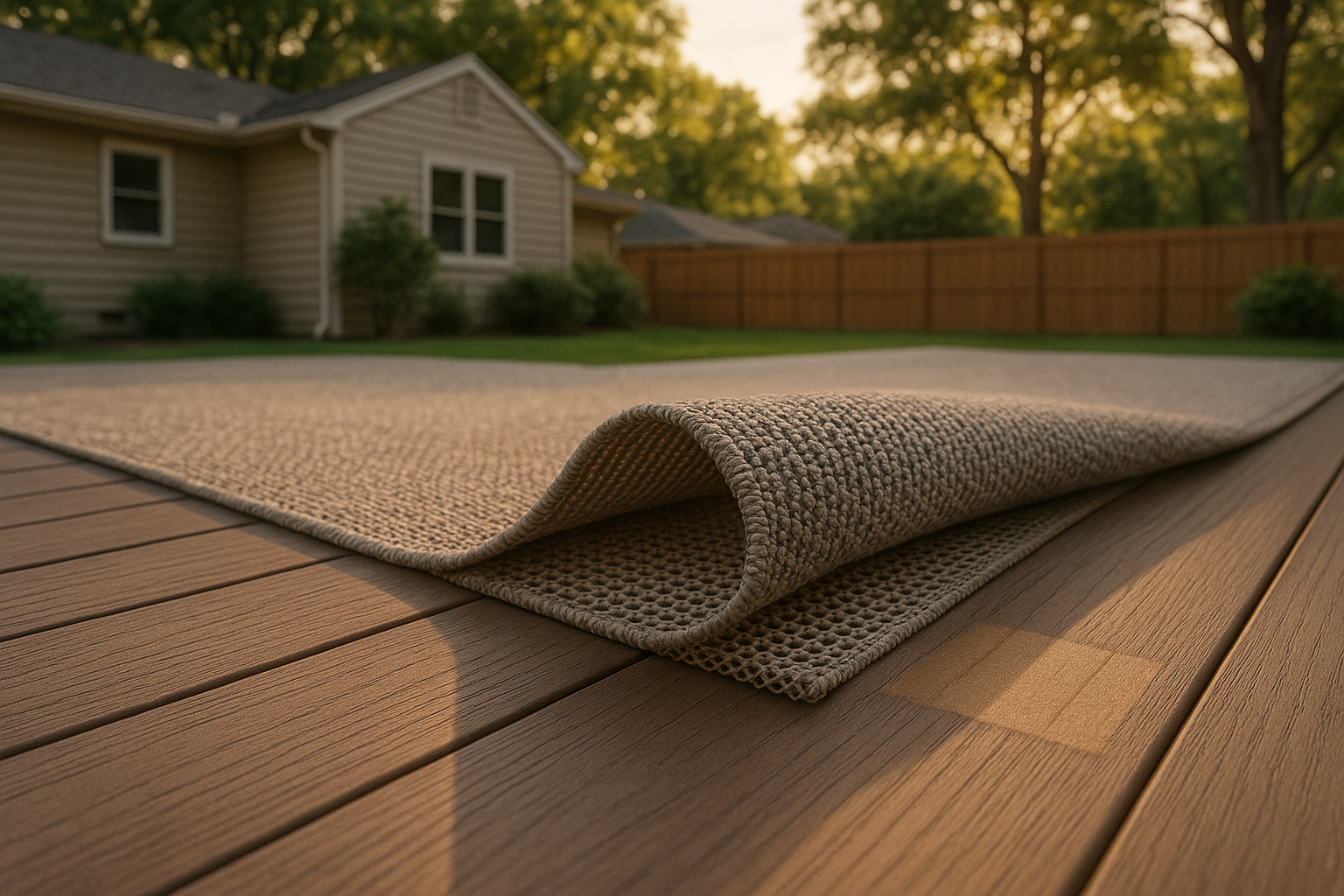
PVC decking (like Azek or similar brands) is great around pools because it resists chlorine and saltwater almost completely. It won't stain or fade easily. Composite (like TimberTech or Trex) is a little more forgiving on heat because it's less dense, but still performs well. The key is picking a light color — tan, gray, or beige — to keep the surface cooler. Dark decks absorb heat and can get too hot to walk on, especially in July.
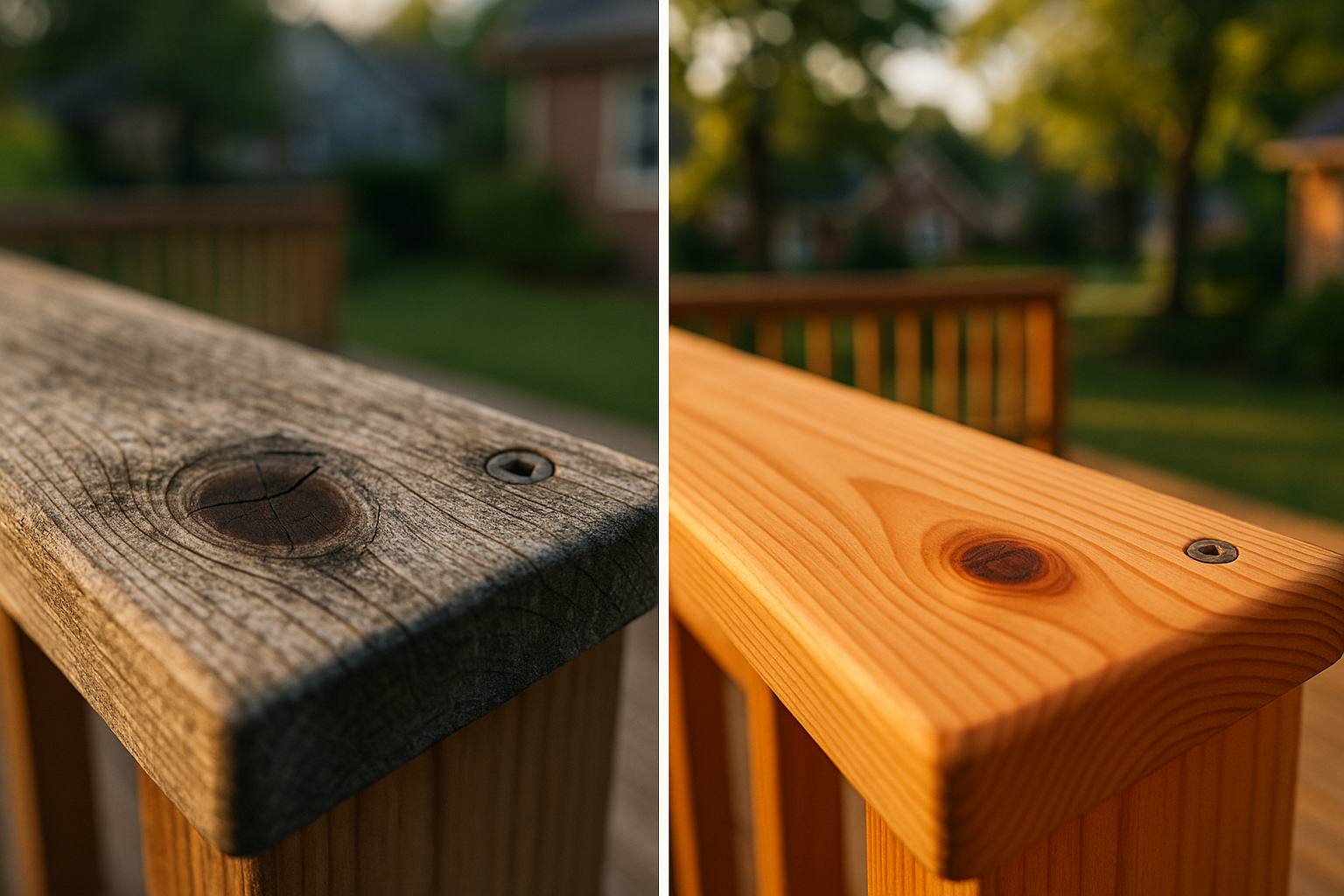
Pressure-treated wood is cheaper upfront, but in a pool environment it'll warp, crack, and splinter within a few years. Plus it needs regular sealing. For a low-maintenance pool deck, spend a little more on PVC or composite. You'll save money and frustration long-term.
Slip Resistance Matters
Wet surfaces are the number one safety concern around pools. Most composite and PVC boards come with a wood-grain texture that's slip-resistant, even when wet. Look for boards with a Class C or higher slip rating. We've used Ipe-style or brushed finishes that give good traction without being uncomfortable.
Building for Indianapolis Weather
Our climate here has freeze-thaw cycles, wet springs, and humid summers. That's tough on any deck, especially near a pool. The foundation has to be deep enough to avoid frost heave. In Central Indiana, footings need to go down 36 to 42 inches. That's a hole nearly four feet deep. If the deck isn't footed that deep, winter frost can lift the structure, crack the surface, and mess up the transition to the pool.
Also, the framing needs to be corrosion-resistant. Stainless steel or coated screws, galvanized hangers, and proper flashing protect the structure from moisture and pool chemicals. A lot of homeowners don't think about what's underneath, but that's where problems start.
Water management is another big one. The deck should slope away from the house and pool, with proper spacing between boards to let water drain. We also add deck drainage systems under raised decks — especially in neighborhoods like Meridian-Kessler where mature trees drop leaves into every gap. A drainage system keeps the area underneath dry and prevents algae.
Safety, Codes, and a Little Common Sense
Indianapolis pool barrier rules require a fence or wall at least four feet high around the pool. If your deck is part of that barrier — say it has stairs leading down — the gate and latch need to be self-closing and self-latching. A good Indianapolis deck contractor like DeckPros will handle all that code stuff, including getting the Marion County permit.
For railings, if the deck is more than 30 inches off the ground, you need a railing. Around pools, aluminum or cable railings are best because they don't rust and they're easy to clean. Avoid wood railings near water — they'll rot quickly.
Lighting is another safety factor. Low-voltage LED lights in steps, along the perimeter, and near the pool edge make a huge difference for nighttime use. Just make sure all fixtures are GFCI-protected and designed for wet locations. We've seen too many DIY jobs where lights short out after a rainy summer.
Design Features That Make Life Easier
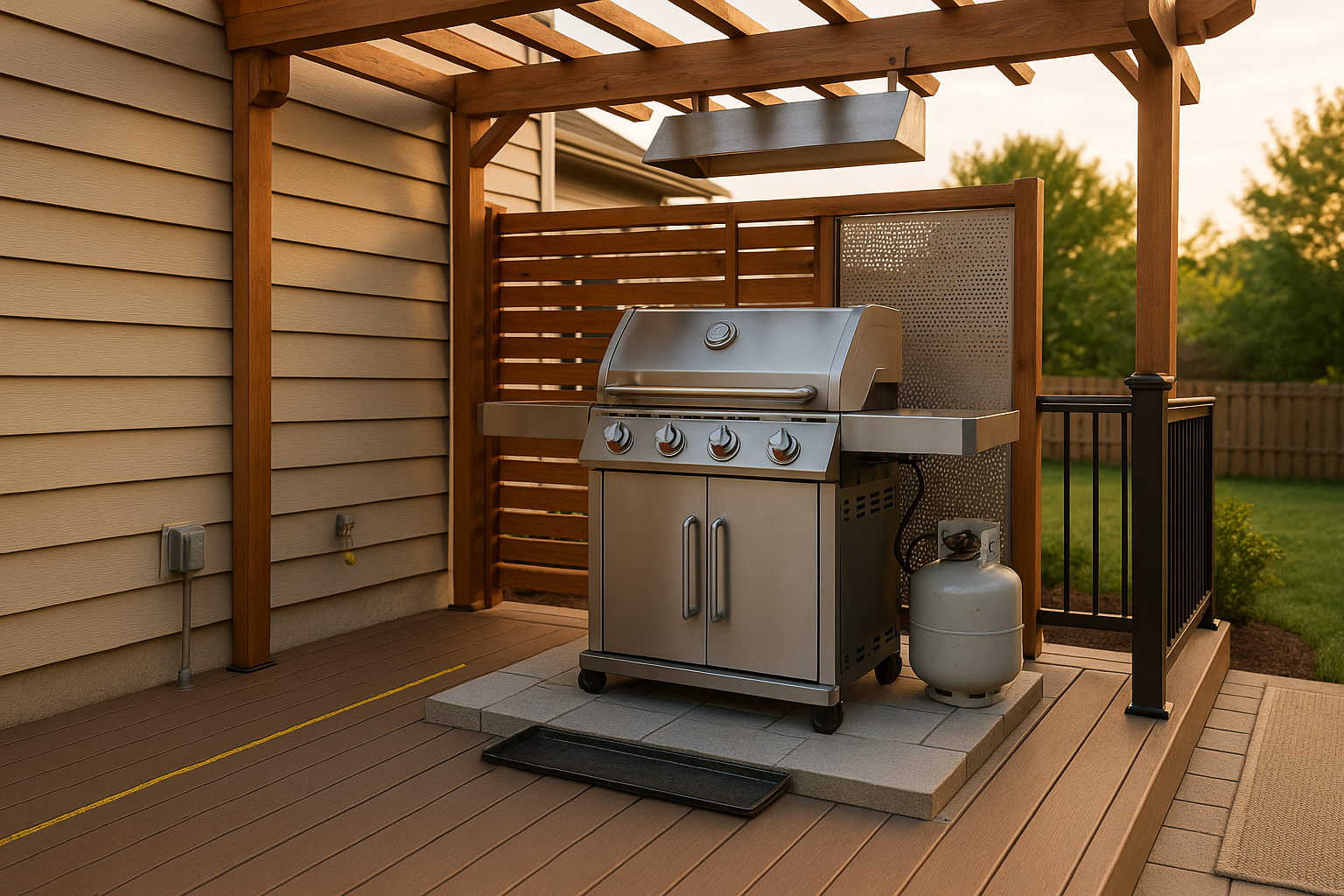
A poolside deck isn't just the floor — it's an outdoor living space. Built-in benches provide seating without extra furniture that gets wet. Storage benches can hold pool toys, floats, and cleaning tools. A pergola over the pool deck adds shade and cuts down on glare from the water. Privacy screens block neighbor views and reduce wind.
Flush transitions from deck to pool coping look clean and prevent tripping. Picture-frame borders — where the perimeter boards are arranged in a frame pattern — give a custom, modern look that works well with clean-lined pools.
Maintenance Is Simple, But Not Zero
Even low-maintenance composite and PVC decks need some care. Rinse off splash zones with a hose once a week during pool season. If you spot a stain, clean it with a mild soap and soft brush — don't use bleach or pressure washers on high. In winter, clear leaves and debris so moisture doesn't sit. That's about it. Unlike wood, you won't be sanding or staining every couple of years.
Getting Started
If you're ready to build a poolside deck that's safe, looks great, and doesn't become a second job, start with a consult. Schedule an on-site evaluation with DeckPros to discuss your pool, your yard, and your ideas. We'll walk through materials, code requirements, and budget so you get a deck you'll actually enjoy.
A friend of mine in Noblesville put it best: “I used to dread pool season because of the deck. Now it's my favorite spot.” That's the goal, right?
Thinking about your own deck or pergola?
Free in-home design consultation, 3D rendering, and a written quote — no pressure.