My neighbor Mike in Carmel built a beautiful pressure-treated deck last June. By July 4th, he was hosting a barbecue and bragging about how fast he got it stained. By September, the stain was peeling off in sheets. He looked at me like, 'What the heck happened?' Easy answer: he stained too soon.
So how long should you wait before staining a new pressure-treated deck? The short answer: at least 6 months, often closer to 12, depending on the wood and the weather. But it's not a date on the calendar—it's about the moisture inside the boards. Let's break it down so you don't end up like Mike.
Why Staining Too Soon Ruins Your Deck
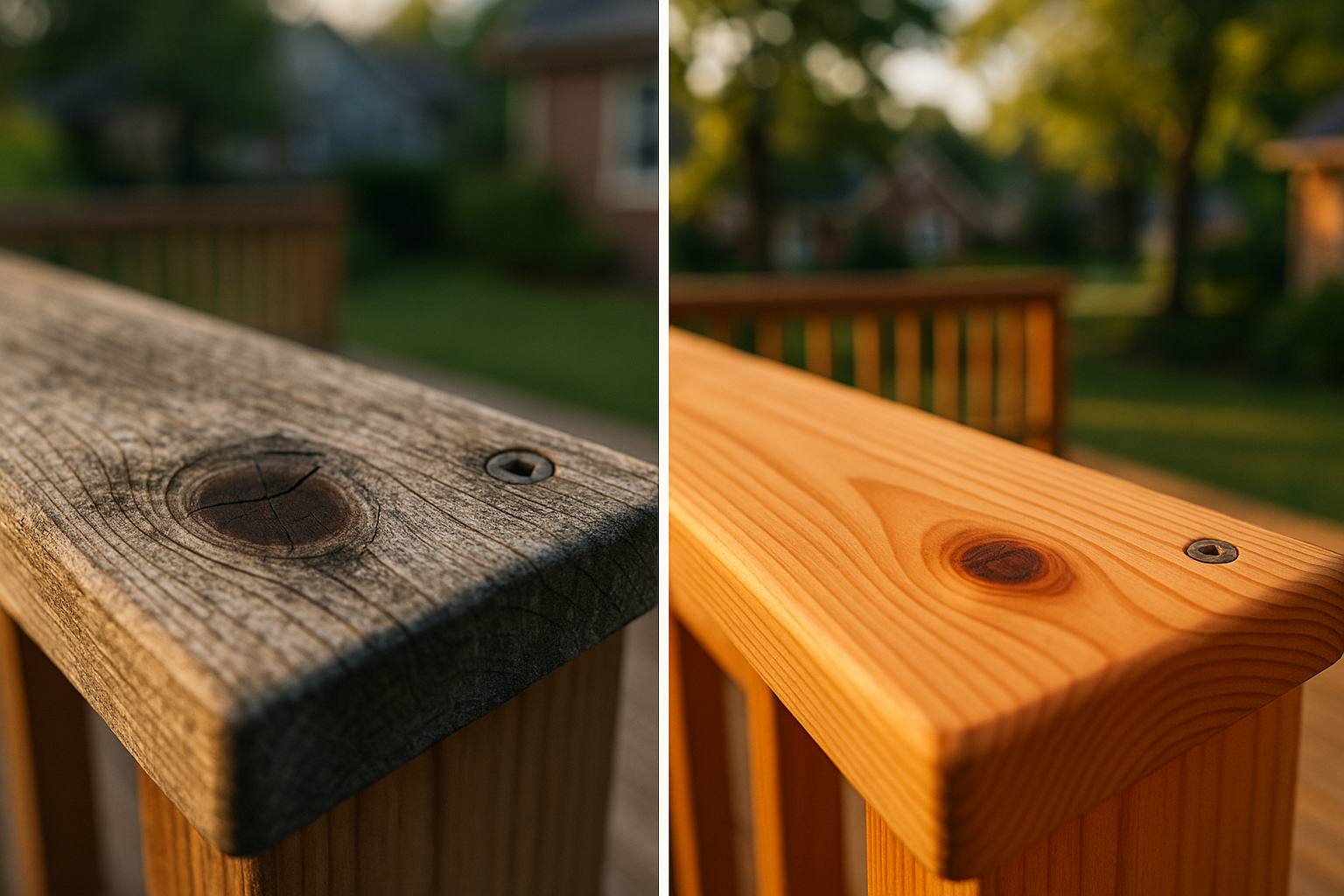
Pressure-treated lumber is wet. Really wet. It's injected with water and preservatives at the factory, and it takes months for that moisture to evaporate. If you stain while the wood is still wet, you're sealing moisture inside instead of protecting the surface. The stain can't penetrate, so it sits on top like paint on a wet sponge. Then it peels, blisters, or turns blotchy.
Cedar has a similar issue but on a shorter timeline. New cedar needs 2-8 weeks to dry out, but it also has mill glaze—a hard, shiny surface left from the planer. Mill glaze blocks stain from soaking in, so you have to sand it off or use a brightener. On a pressure-treated deck, you don't usually deal with mill glaze, but you still have to wait longer because the wood is far more saturated.
Pressure-Treated vs. Cedar: Different Wait Times
If you're asking 'when to stain a new cedar deck,' the answer is much quicker than pressure-treated. Kiln-dried cedar can be ready in as little as two weeks, while green or air-dried cedar might take a month or more. For pressure-treated, the standard advice is 6-12 months. In Indianapolis, our hot summers help, but our humid springs can slow things down. That's why you can't just mark a day on the calendar—you need to test the wood.
The Moisture Meter Is Your Best Friend
Get a moisture meter. They're cheap, and they'll save you a world of peeling. The magic number is 12-15% moisture content. For cedar, the same range applies—stain when you hit 12-15% on a few different boards. If you're above 15%, wait. If you don't have a meter, do the water droplet test: sprinkle a few drops of water on the deck. If the water beads up and sits there, the wood's too wet. If it soaks in within a minute or so, you're probably ready. But the meter is way more accurate.
Prepping a New Pressure-Treated Deck Before Stain
Even a brand-new deck needs some love before stain. Start by giving it a light rinse with a garden hose—low pressure only. High PSI will fur up the wood fibers and ruin the surface. (If you need to wash an older deck, check out our guide on safe pressure washing.) For cedar, you'll also want to use a deck brightener with oxalic acid to remove mill glaze and any darkened spots. Pressure-treated wood usually doesn't need brightener, but a mild cleaner can't hurt.
Choosing the Right Stain for Your Deck
Now for the stain itself. You want a penetrating, semi-transparent stain—not a solid paint or film-forming coating. Those sit on top and will peel, especially on a first stain. Oil-based or oil-modified stains work best because they soak into the wood fibers. Water-based can work too, but you have to be more careful about moisture. For cedar, the same rules apply: oil vs water-based stain for cedar is a big debate, but an oil-based semi-transparent penetrating stain is the safest bet for UV protection. On a pressure-treated deck, the same type of product will last longer and look better. Pick a medium tone with enough pigment to block UV—Indiana summers are brutal on decks.
Indianapolis Weather: When to Actually Stain
Our weather here is a pain. You might think a sunny July day is perfect, but staining in direct sun is a recipe for lap marks and flash drying. The ideal temperature is 50-85°F, with humidity between 40-70%. More important: the dew point has to be at least 5 degrees below the surface temperature, or you'll get condensation under the stain. And check the forecast—no rain for 24-48 hours after you stain. Early fall and late spring are often the sweet spots in Indy. Avoid July and August afternoons if you can.
Application Tips and Cure Time
When you finally get to staining, go thin. One even coat is better than two heavy ones. Use a brush, roller, or sprayer, but always back-brush the stain into the wood. That means going over the wet stain with a brush to work it into the grain and avoid puddles. Don't forget the end grain and cut ends—they soak up moisture like crazy, so give them extra attention. After you're done, the deck is usually dry to the touch in 4-8 hours. Light foot traffic after 24-48 hours, and wait 48-72 hours before moving furniture back.
Maintenance and Recoating
In Indianapolis, a stained deck needs a recoat every 1-2 years depending on sun exposure and traffic. A gentle spring cleaning with a wood-safe cleaner is enough. Don't let dirt and pollen sit on the stain for months—it can wear it down faster. If you have a cedar deck, the same maintenance schedule applies, but cedar might need a refresh coat a little sooner in full sun.
Common Mistakes to Avoid
- Staining the week the deck is built (pressure-treated especially).
- Using a solid stain on a new deck—it'll peel.
- Staining in direct sun or high humidity.
- Skipping the moisture test.
- Over-applying stain—more is not better.
- Pressure washing too aggressively before staining.
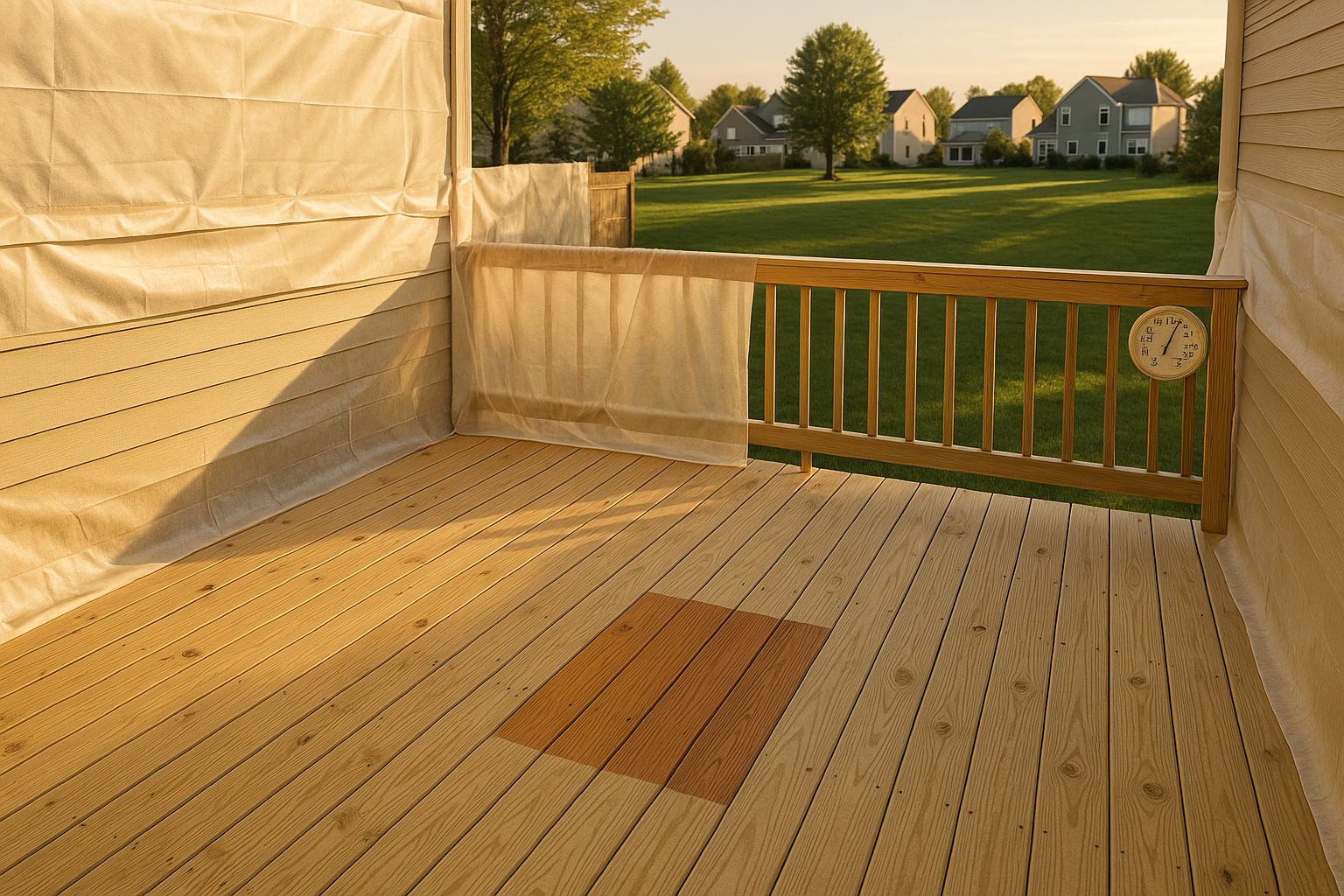
- Not protecting nearby landscaping and siding.
Local Notes for Indy Homeowners
If you're in Carmel, Fishers, Zionsville, or any of the surrounding areas, you know our weather flips fast. One day it's 75 and dry, the next there's a pop-up thunderstorm. That's why we schedule staining around the forecast and dew point. We also check for HOA color restrictions—some neighborhoods are picky. And if your deck has a railing, don't forget it: we're railing contractors too, so we can stain the rails to match. If you have a fence nearby, overspray is a real concern; as fence contractors, we know how to mask things off. And if you have a patio enclosure or screen room attached, we'll coordinate so the stain doesn't mess up the frame. Basically, we treat your whole outdoor space as one project.
Ready to Get It Right?
Don't guess and end up like my neighbor Mike. Get a moisture check and a staining plan that works with Indy's weather. We'll test your deck, prep it properly, and pick the next good window to apply the stain. Then you can relax and enjoy your deck for years instead of peeling it off after one summer.
Book your free deck staining consult
Thinking about your own deck or pergola?
Free in-home design consultation, 3D rendering, and a written quote — no pressure.