Last January, my buddy Dave in Carmel texted me a picture of his composite deck. It looked like a crime scene. The gray boards had long white streaks where he'd scraped ice with a metal shovel. He thought he was being careful. He wasn't. Those scratches weren't just ugly—they'd let moisture in and shorten the life of the deck. The worst part? He could have avoided all of it with a $15 plastic shovel and a little patience. That's what deck snow removal should be about: working with the deck, not against it.
Here in central Indiana, we get every kind of winter weather. Snow, ice, then a 40-degree day that melts everything, then a hard freeze overnight. That freeze-thaw cycle is brutal on decks, especially composite ones. And if you live in Indianapolis, Fishers, or Noblesville, you've probably seen how a north-facing deck can hold ice for days. This post is about how to clear snow and ice without wrecking your boards, and when to call a pro.
Why Composite Decks Need Different Winter Care
Composite decking isn't wood. The outer cap is tough, but it's not scratch-proof. Drag a metal edge across it and you'll leave a mark. Shovel with the grain? No problem. Across the grain or at an angle? You can catch board edges or lift plugs. Also, composite surfaces stay slick when wet, and ice can bond to them. You don't want to chip at it with an ice chopper.
Indianapolis averages somewhere in the low 20s for snowfall each year, but we also get ice storms and drifting. A good deck contractor will tell you the real enemy isn't the snow itself—it's the melting and refreezing in board gaps and on stair treads. Deck snow removal around Indianapolis isn't just about clearing a path—it's about doing it without damaging the surface. And if you're wondering what yearly upkeep runs, we covered that in the annual maintenance cost post.
The Right Tools for Safe Deck Snow Removal
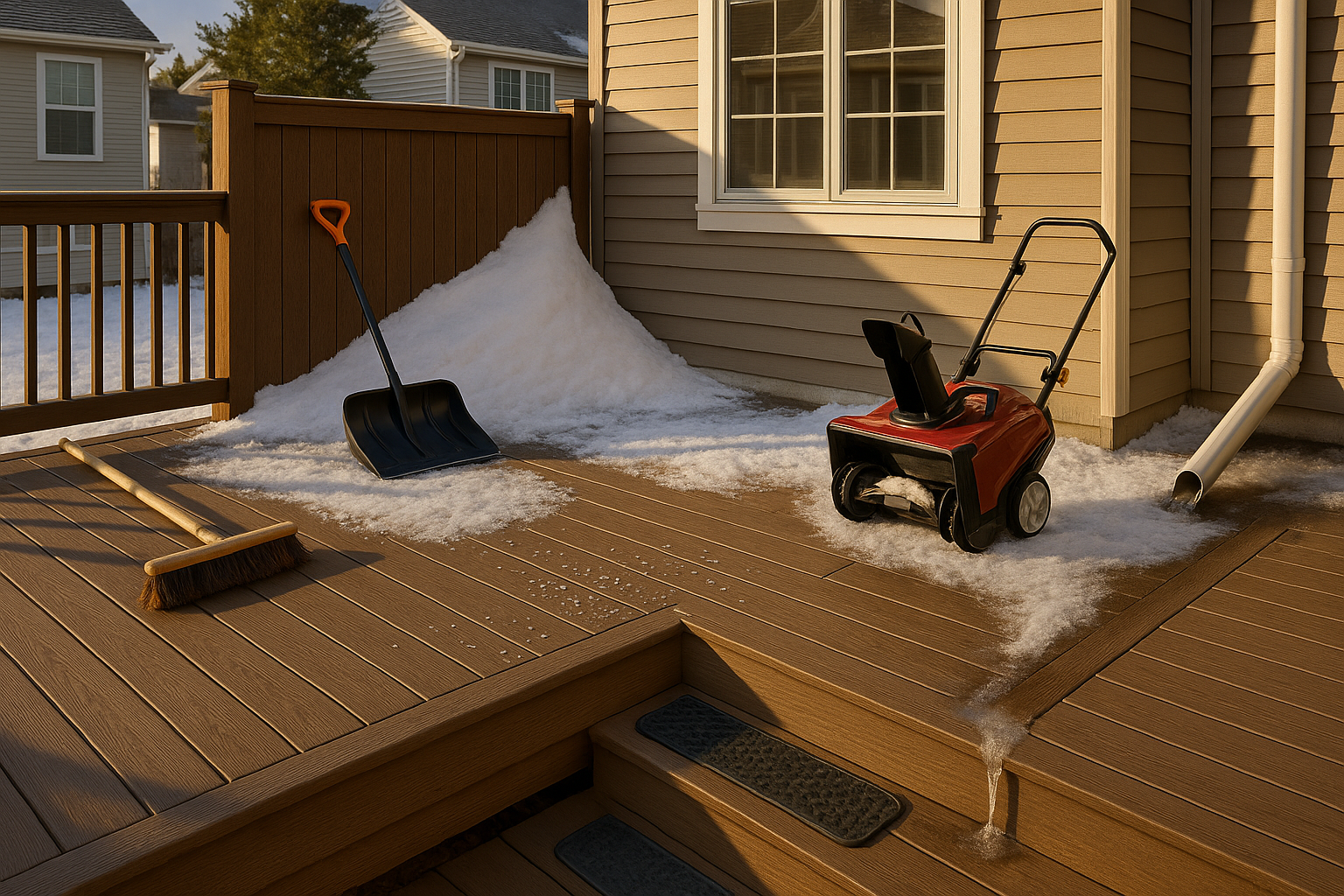
Start with a broom. Seriously. If the snow is light and powder, a push broom clears it fast and won't scratch anything. For heavier snow, use a plastic shovel with a rounded edge. Poly or synthetic, not steel. The rounded edge keeps you from catching board gaps. Push the snow in the direction the boards run—with the grain. Don't pry. Don't chop. And never drag the shovel sideways.
What about snowblowers? A single-stage snowblower with rubber paddles can work if you raise the skids so the housing doesn't scrape the deck. But to be honest, I wouldn't risk it on a composite deck unless you've done it before. A metal auger will chew up the cap in seconds. If you must use one, go slow and keep the chute pointed off the deck, not into a pile that refreezes. The short answer on snowblower on deck safe? It's a maybe—only with the right machine and a light touch.
Wind Drifts and Fence Lines
If your deck sits up against a privacy fence, you know that corner collects drifts. I've seen it in Fishers and Westfield—snow piles two feet deep right at the fence line. A fence contractor can add a windbreak or adjust panel spacing to reduce drift, but for now, just clear that area first. Pushing snow against the fence over and over will trap moisture against the deck and the fence posts.
Ice Melt and Traction That Won't Ruin Your Boards
So snow's cleared, but now there's a sheet of ice. Can you use salt on composite decking? This is the big question. The answer: avoid rock salt. It can discolor some composites and leave a chalky film. For most composite brands, calcium chloride pellets are the best ice melt for composite deck. Use them sparingly. They work fast and don't stain as much. But if you have pets or sensitive plants, look for a pet-safe ice melt that's labeled for composite decks—there are a few chloride-free options that work okay. I know some folks skip chemicals entirely and just use rubber traction mats on stairs and landings. That works too.
Don't use sand, kitty litter, or grit. They'll grind into the cap like sandpaper and track inside. And don't use anything with dye—it can stain lighter boards. After the ice melts, sweep up any leftover pellets and rinse the deck when temps climb above freezing. That keeps the film from building up over the season.
Stairs, Railings, and Drainage—The Forgotten Spots
Your stairs are the most dangerous part. If you only clear one area, clear the steps and landing. Rubber stair mats with a low profile give solid traction, and they won't scratch the composite. Avoid metal ice choppers on treads. I had a customer in Greenwood who used a pick on her stairs and ended up with deep gouges right where you step. She called us for a repair, and the whole tread had to be replaced.
Railings matter too. Don't pile snow against balusters—the weight can bend them. If your railing is already a bit wobbly, a railing contractor can tighten connections and add braces before ice adds more stress. If the posts move, the whole railing could fail when someone grabs it on an icy morning.
Drainage might be the sneakiest issue. If a downspout dumps water onto your deck or stairs, it'll freeze into black ice every night. We covered downspout conflicts in another post—read it here. And if you have a patio enclosure or three-season room under your deck, meltwater dripping through the board gaps can freeze on the concrete below. That's where under-deck drainage helps, and a patio enclosure supplier can talk you through options. Or call us—we install those systems too.
Before the Storm: A Quick Winter Deck Checklist
Here's what I tell friends around Indianapolis: before snow hits, clear leaves and debris out of the board gaps. Those gaps need to drain. Check downspouts to make sure they point away from the deck. Tighten any loose stair treads or railing sections. And if your deck has been slippery in past winters, add traction strips now—not after someone falls. We have a full safety checklist you can read before hosting.
When to Call DeckPros
Most deck snow removal you can do yourself. But if you've got recurring ice from drainage problems, deep scratches from past winters, or a deck that feels bouncy under snow load, call us. We're a local deck builder and contractor serving Indianapolis, Carmel, Fishers, Zionsville, Westfield, Noblesville, Greenwood, Brownsburg, Avon, and Plainfield. We'll check the structure, fix drainage, and suggest traction upgrades that actually work. Request a no-hassle quote. No pushy sales talk—just a straight answer on what your deck needs to survive Indiana winters.
Thinking about your own deck or pergola?
Free in-home design consultation, 3D rendering, and a written quote — no pressure.