A buddy of mine in Zionsville bought a house with a cedar deck that hadn’t been touched in four years. It looked like something out of a ghost story—gray, splintery, and one board was outright spongy. He called me up, half-laughing, half-defeated. “I thought cedar was supposed to last forever.” Turns out, it can. But forever means something different when you’re dealing with Indiana’s moody weather. So let’s walk through the real cedar deck pros and cons Indiana homeowners need to think about before they commit.
Cedar decks have this reputation. They’re warm, they smell great when they’re new, and they feel cooler under bare feet than any composite. Walk out onto a fresh Western Red Cedar deck in the middle of July in Westfield—versus the scorching surface of a composite board—and you’ll know what I mean. That alone makes a lot of homeowners overlook the downsides.
But if you’re thinking about building a cedar deck around Hamilton County, you need the full picture. Not just the pretty parts, but the upkeep, the costs, and how this wood actually holds up to our freeze-thaw cycles, sticky summers, and those tree-lined lots that dump leaves like clockwork.
Why Cedar Wins Homeowners Over (and Over)
Cedar’s charm isn’t hard to spot. The grain is tight and warm, with these subtle pink and brown tones that feel alive. It’s a natural insulator, so your deck won’t turn into a griddle by lunchtime. Indiana summers can be brutal, but cedar stays comfy—I’ve seen friends’ kids play on a cedar deck all afternoon without that hot-foot dance you get on plastic wood. For a lot of folks, that’s one of the biggest cedar deck pros. And when you compare that to composite, the difference is night and day.
It’s also naturally rot-resistant. The wood has oils that keep bugs and decay at bay, which is why it can hang in there for a decade or two if you treat it right. Plus, it’s lighter than hardwoods like Ipe, so a skilled contractor can build faster without wrestling massive boards. And it doesn’t demand exotic fasteners—stainless steel or coated deck screws work great. As a local deck builder, I’ve seen many a homeowner breathe a sigh of relief when we tell them we can sand and re-stain cedar to almost-new. Try that with a faded composite board.
Another win? Cedar actually lets you control the look. You can let it go silvery-gray (some people love that coastal vibe) or keep it rich with a penetrating stain. The choice is yours.
The Not-So-Rosy Side: What Cedar Asks From You
Here’s the part my friend in Zionsville didn’t know: cedar needs attention. Indiana’s weather can be rough on it. Our humid summers team up with high UV to break down finishes faster than you’d think. Then comes winter, with freeze-thaw cycles that pry open tiny cracks and let moisture sneak in. If your deck sits under mature oaks or maples (common in neighborhoods like Village Farms or Monon Trail area), you’ll battle mildew and leaf stains every fall. Nobody tells you that at the lumberyard. When weighing the cedar deck pros and cons, Indiana climate this is a big negative.
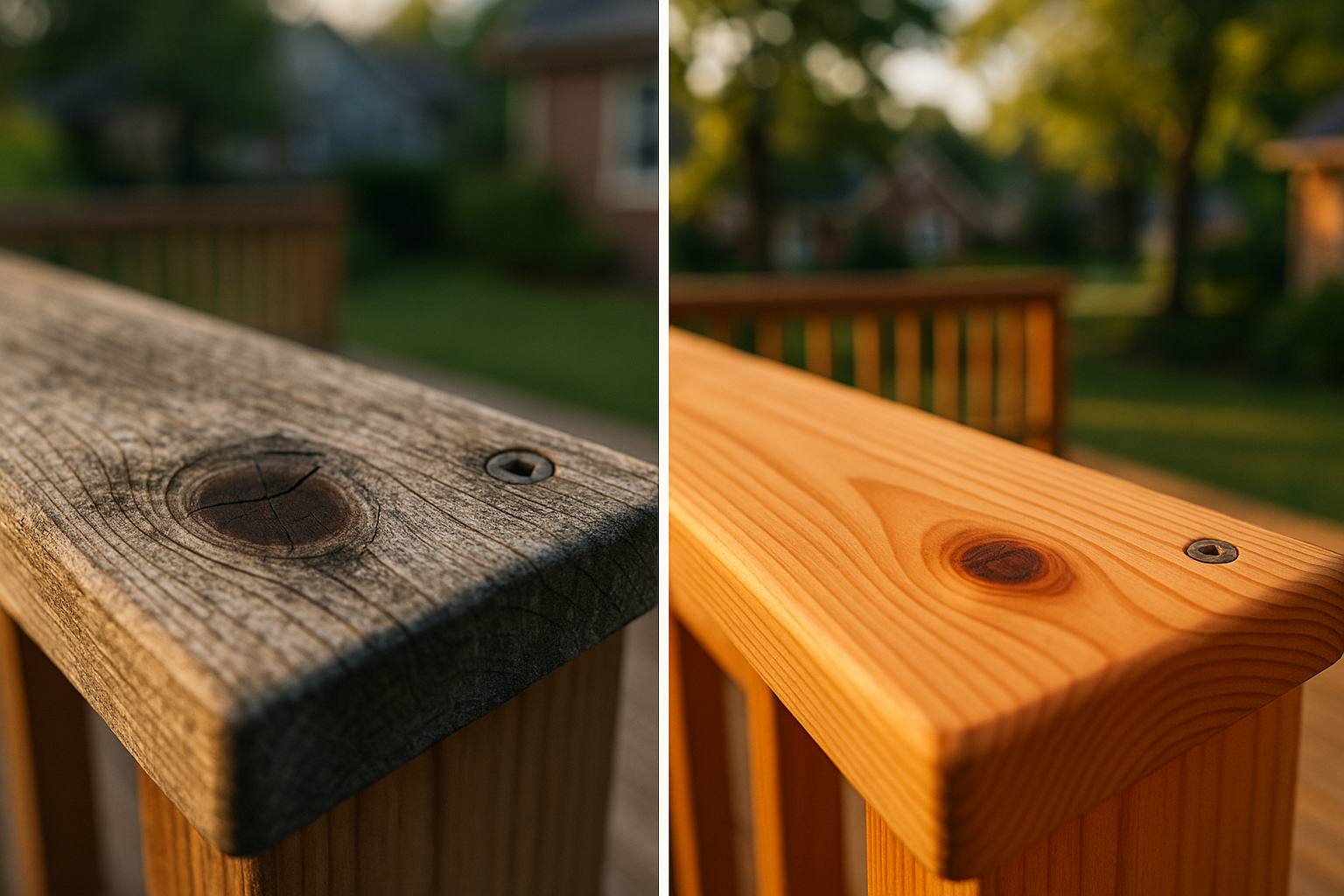
Maintenance is the big one. I’m talking about gentle washing each spring (a hose and soft brush, no pressure washer), spot cleaning after leaf drop, and re-staining every one to three years depending on sun exposure. Miss a year or two, and that golden beauty fades to a dull gray. Gray cedar isn’t ruined—many people leave it that way—but it does get rougher over time and might pick up splinters. If you have dogs with claws or kids dragging toys, you’ll notice scratches and dents. Cedar is soft. A dropped hammer leaves a mark, and a Lab running laps can chew up the surface. If you want something that handles traffic with less fuss, we’ve got a full comparison of composite vs wood to help you decide.
Then there’s the cost. Cedar itself sits somewhere between pressure-treated pine and premium composites or hardwoods. But the real cost sneaks in later—the gallons of quality stain, the hours of your time or money paid to a pro for refinishing. Over 15 years, a cedar deck might cost you more in upkeep than a composite one. It’s the classic trade: natural beauty versus constant care.
What Cedar Actually Costs in the Long Run (Hint: It’s Not Just the Price Tag)
When we bid a cedar deck in Westfield, we’re not just thinking about decking boards. There’s the framing (usually pressure-treated lumber, not cedar—cedar’s too soft for structural work), the fasteners, the railings, and the finish. If you go with clear-grade cedar (fewer knots, more expensive but looks sleek), you’ll pay more upfront. Knotty cedar saves you money and looks more rustic, but it sheds finish quicker around the knots. You’re picking your poison.
Now, let’s talk about those secondary costs that slide in under the radar. Say you pair your cedar deck with a nice cable or aluminum railing system. That’s a big plus for looks and cuts down on maintenance—you’re not staining dozens of balusters every other year. A railing contractor who’s skilled with modern systems can make that transition seamless, and your deck suddenly feels open and current. We’ve covered some great cable and aluminum railing options if you want to explore. Many of our clients love the combo: cedar for the decking warmth, black aluminum for the railings. It’s a look that holds up well.
If your HOA has rules about fence materials—many in Carmel and Westfield do—a fence contractor might have used cedar for your perimeter, and you can coordinate staining schedules. Or maybe you’re thinking of adding a patio enclosure to create a three-season porch. A patio enclosure supplier can show you how a solid roof over part of the deck cuts sun and rain, slashing your cedar’s refinishing cycle. We’ve seen homeowners cut maintenance in half just by adding a simple pergola with a canopy. Small moves, big impact.
And don’t forget the permit side. In Hamilton County, new decks and even full replacements need a permit. Footing specs, ledger attachments, guardrail heights—all of it has to meet Indiana Residential Code. It sounds fussy, but it keeps your deck safe. If you’re curious about what’s involved in deck permits, we broke it down in plain English. A good contractor will handle this, but it’s smart to know the basics.
Building a Cedar Deck That Goes the Distance
So you’ve decided cedar’s your jam. How do you give it the longest life with the least headache? It starts on day one. We gap the boards just right (about 1/8 inch for dry cedar, wider if it’s fresh from the yard) to let rainwater drain and air move. We use stainless or polymer-coated fasteners so they don’t bleed rust into the wood over time—that’s a rookie mistake that ruins a deck fast. Every single end cut gets sealed before a board goes down. And the whole structure sits on sturdy footings dug below frost depth (usually 36 inches around here) with proper drainage away from the house.
Pre-finishing the boards on all sides before install is a game changer. It seals moisture out from every angle. We like breathable, penetrating oil-based stains for the Midwest—they don’t form a film that peels, and they’re easy to recoat without stripping. If your deck gets beat by sun all day (looking at you, new builds near Grand Park), you might be re-staining every 18 months. A shady spot in a mature neighborhood might go three years.
One more tip: cedar can’t touch the ground. Ever. So ledger flashing has to be right, and any ground-level skirting needs airflow. I’ve seen decks rot in eight years because someone buried cedar posts in soil. Don’t let that happen.
Is Cedar the Right Move for You? (Let’s Be Real)
I’ll tell you what I tell anyone who asks. Cedar is for the homeowner who loves the look and feel of real wood, doesn’t mind pulling out a hose and brush once a year, and gets that nothing stays perfect forever. If you’re the type who enjoys puttering around the yard and restoring the deck becomes a sort of meditative ritual, cedar’s a solid pick. It’s also a winner if you dread burning your feet on a hot deck—cedar stays cooler than any synthetic I’ve walked on.
But if your house has a dog that acts like a little tornado, or you’re someone who just wants to power-wash and forget it, look hard at composite or even Ipe. Ipe’s crazy durable (and crazy heavy—we did a deep dive on Ipe hardwood if you want to compare), but it still asks for annual oiling. Composite is the true low-maintenance hero, but you lose that organic warmth. We’ve helped folks in Fishers and Westfield land on the right material just by talking through their real weekly lives, not a brochure fantasy.
If you’re in Westfield, Carmel, Zionsville, or any of our surrounding areas, and you’re still mulling over the cedar deck pros and cons, Indiana weather might be the deciding factor. We’re happy to do a planning-first visit—no charge, no pressure. We’ll walk your space, look at sun and drainage, note any HOA quirks, and talk material options from cedar to composite and everything in between. Then we’ll give you a straightforward, itemized quote. Nothing fluffy. You can grab a consultation time right here.
We’ve been around enough Indiana decks to know there’s never one perfect answer. But if you’ve got a soft spot for the way cedar smells after a rain? Well, we get that too.
Thinking about your own deck or pergola?
Free in-home design consultation, 3D rendering, and a written quote — no pressure.