A couple of years ago, a homeowner in Meridian-Kessler called me. She loved her deck but felt like she was living in a fishbowl. Every time she sat outside, she could see her neighbor’s kitchen window, and they could see her. She tried a cheap privacy screen from the big-box store, but it blew over in the first spring storm. She wanted something that looked good, blocked sightlines, and could survive an Indiana thunderstorm. That’s when we started talking about a pergola with built-in privacy panels.
That call is pretty typical. A lot of Indianapolis homeowners want privacy on their deck, but they don’t want to feel closed in or block the breeze. Pergola-based privacy screens solve that. Let’s walk through what works, what doesn’t, and what you need to know about code and climate.
What a Deck Privacy Screen Really Is
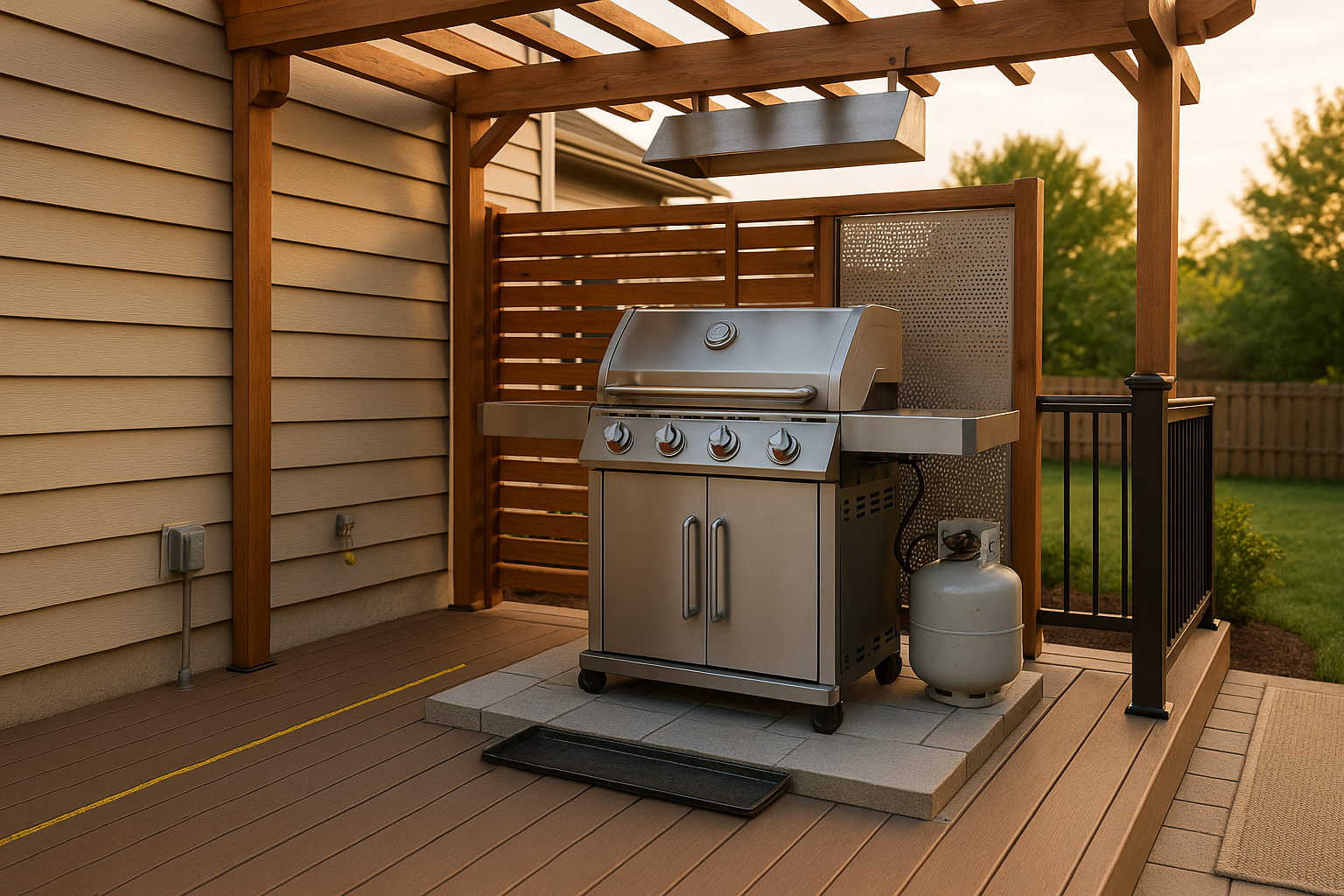
A deck privacy screen is just a wall, a panel, or a series of slats placed on or around your deck to block views. But done right, it shouldn’t feel like a wall. With a pergola above, you get a defined outdoor room that still feels open. You can sit on your deck and not worry about who’s watching.
Most of the time, your privacy screen will be attached to the pergola posts or built as a separate structure tied into the deck framing. We design them so they don’t feel like walling off your yard. Instead, they create a room with a ceiling and a partial wall.
Material Options: What Actually Holds Up in Indy
Cedar Panels
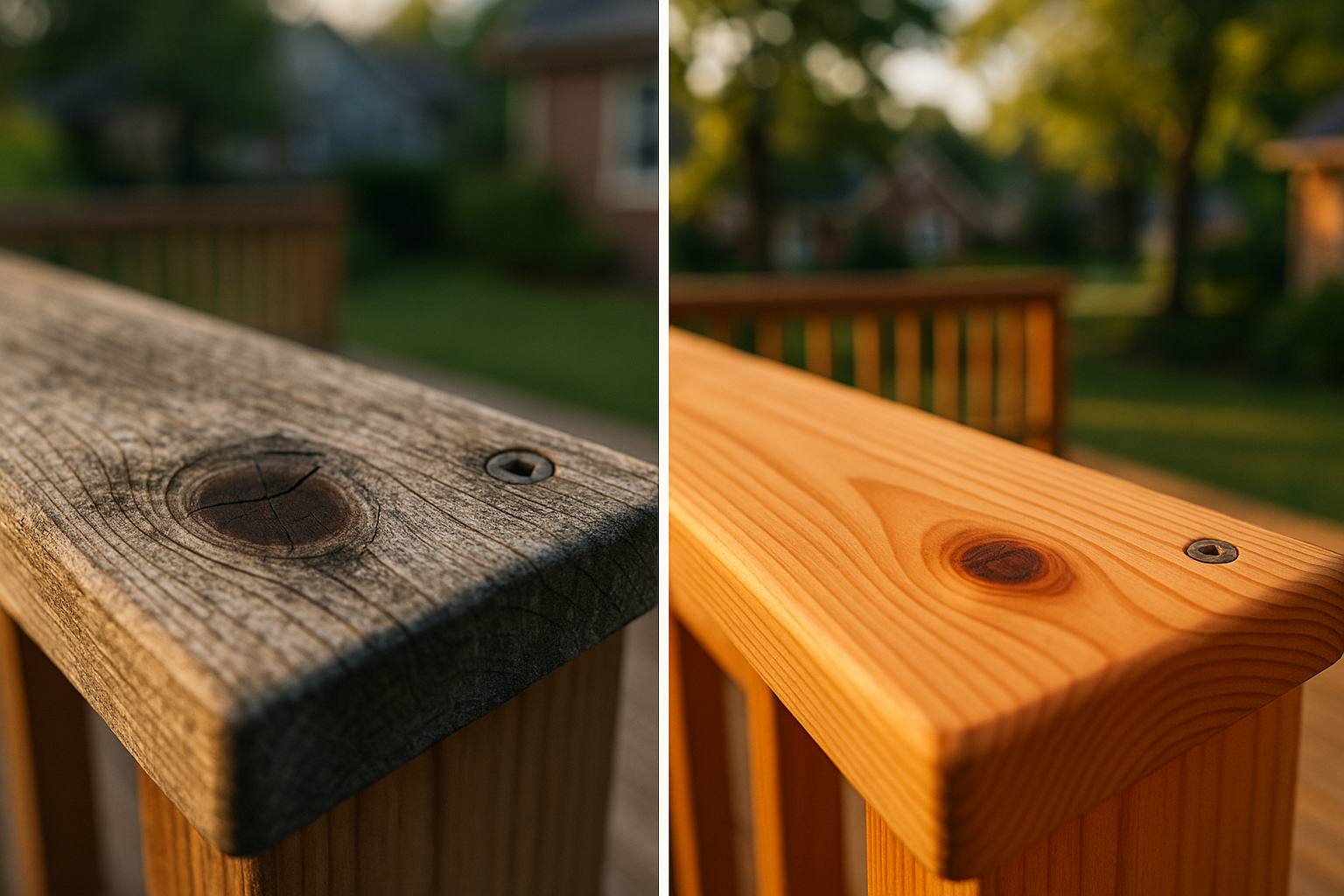
Cedar is warm, natural, and stains nicely. It’s what a lot of people imagine. But it does need maintenance—staining every two or three years. In our freeze-thaw cycles, cedar can crack if not sealed well. Still, it’s affordable and looks great with a modern horizontal slat pattern.
Composite Privacy Panels
Composite (like Trex or TimberTech) is color-consistent and doesn’t rot. It’s low-maintenance and handles Indiana humidity okay. But it’s heavier than cedar, so the structure underneath has to be beefy. And it gets hot in direct sun.
Aluminum or Powder-Coated Steel
Aluminum privacy panels are strong, light, and almost zero maintenance. You can get them in colors that match your railing. They handle wind really well and don’t rust. Downside? They’re pricier than wood. But for a set-it-and-forget-it solution, it’s hard to beat.
Retractable Shades or Fabric Panels
For seasonal privacy, retractable shades are a good option. They let you open up the deck when you want. But if you’re in an area with strong winds, you’ll need a system rated for it. And fabric won’t hold up like solid panels in winter snow.
Living Screens (Trellis + Vines)
I’ve done a few trellis screens with climbing hydrangea or ivy. They look fantastic and provide natural cooling. But they’re not instant—takes a couple of years to fill in. Plus, they drop leaves in fall. For a permanent, immediate solution, most homeowners prefer something solid.
Height and Spacing: How Tall Without Going Over?
Most privacy screens are 6 to 8 feet above the deck surface. That’s enough to block views while keeping the space open. If you’re in a historic district or a tight HOA (common in Carmel, Fishers, Zionsville), you might be limited to 6 feet. We can dial it in during the design.
The gap between slats matters too. Wider gaps let more light through, which is nice, but they also let in more view. We typically do slats with a 1:1 ratio—say, 4-inch slats with a 4-inch gap—for a balance of privacy and openness. Adjustable louvers are even better, because you can tilt them to block sightlines while still getting airflow.
Structure: It’s Not Just Decoration
A privacy screen acts like a sail when the wind picks up. That means the structure needs to handle wind loads. We usually tie the screen into the pergola posts, which are set on footings that go 36 to 42 inches deep—below frost line. If the screen is heavy or tall, we use through-bolts and sometimes diagonal bracing.
One thing I always check: can the existing deck framing handle the extra load? If you have a deck built a while ago, we might need to reinforce it or pour new footings. I’ve seen too many DIY screens that got ripped off in a storm because they were just lagged into a 2x6.
Permits and HOA Approvals: The Reality
In Marion County, once your privacy wall acts like a fence (over a certain height, or attached to the deck), you might need a permit. It depends on height and location. We always check for your address and pull the permit if needed. Same for HOAs—many Indianapolis suburbs require approval for any structure that changes the roofline or adds a wall.
We handle that. We prepare drawings and submit to the HOA or building department. It’s part of the process, and it saves you headaches down the road.
Integrating with Your Deck and Home Style
Your deck privacy screen should feel like it belongs, not like an afterthought. If your home has clean, modern lines (Broad Ripple or Irvington), horizontal slats in aluminum or cedar look great. For a Craftsman bungalow in Meridian-Kessler, a pergola with tapered posts and traditional railing styles works better.
We also think about sun and wind orientation. Prevailing winds in Indy come from the west and southwest. We angle louvers to soften gusts while letting natural ventilation through. And we position solid panels to block the low evening sun—it cuts glare without making the space dark.
Add-Ons That Make the Space Work Year-Round
Once you have a pergola and privacy screen, you’ve created an outdoor room. That’s the time to plan for lighting, heaters, fans, and even insect curtains. We run low-voltage wiring during construction, so you don’t have exposed cables later. Heaters need clearance from structures, but we check that in design. And if you have an elevated deck, we make sure drainage paths stay clear so water doesn’t get trapped behind the screen.
Want to learn more about how we plan outdoor spaces? Check out our pergola design ideas for inspiration.
Maintenance: What to Expect
Cedar: seal every 2–3 years. Composite: hose off once a year. Aluminum: just rinse. Louvers: lubricate hinges once a year. Snow and ice: if you have fabric panels, take them down in winter. Solid panels handle snow fine, but we design drip edges and top caps to shed moisture. In our climate, corrosion-resistant fasteners are non-negotiable.
Getting a Clear Quote
The cost of a pergola with integrated privacy screen depends on a few variables: number of panels, height, material, and how much structural work is needed. Your best bet is a site consult where we look at your deck, your yard, and your wants. Then we give you a clear, comparable quote with an itemized scope.
We’re used to HOAs in Carmel, Fishers, Westfield, and Noblesville. We’re used to permits in Marion County. And we’re used to building things that last through Indiana winters.
If you’re tired of feeling like you’re on display every time you step onto your deck, let’s talk. Request a consultation and we’ll walk you through what’s possible for your home.
Thinking about your own deck or pergola?
Free in-home design consultation, 3D rendering, and a written quote — no pressure.