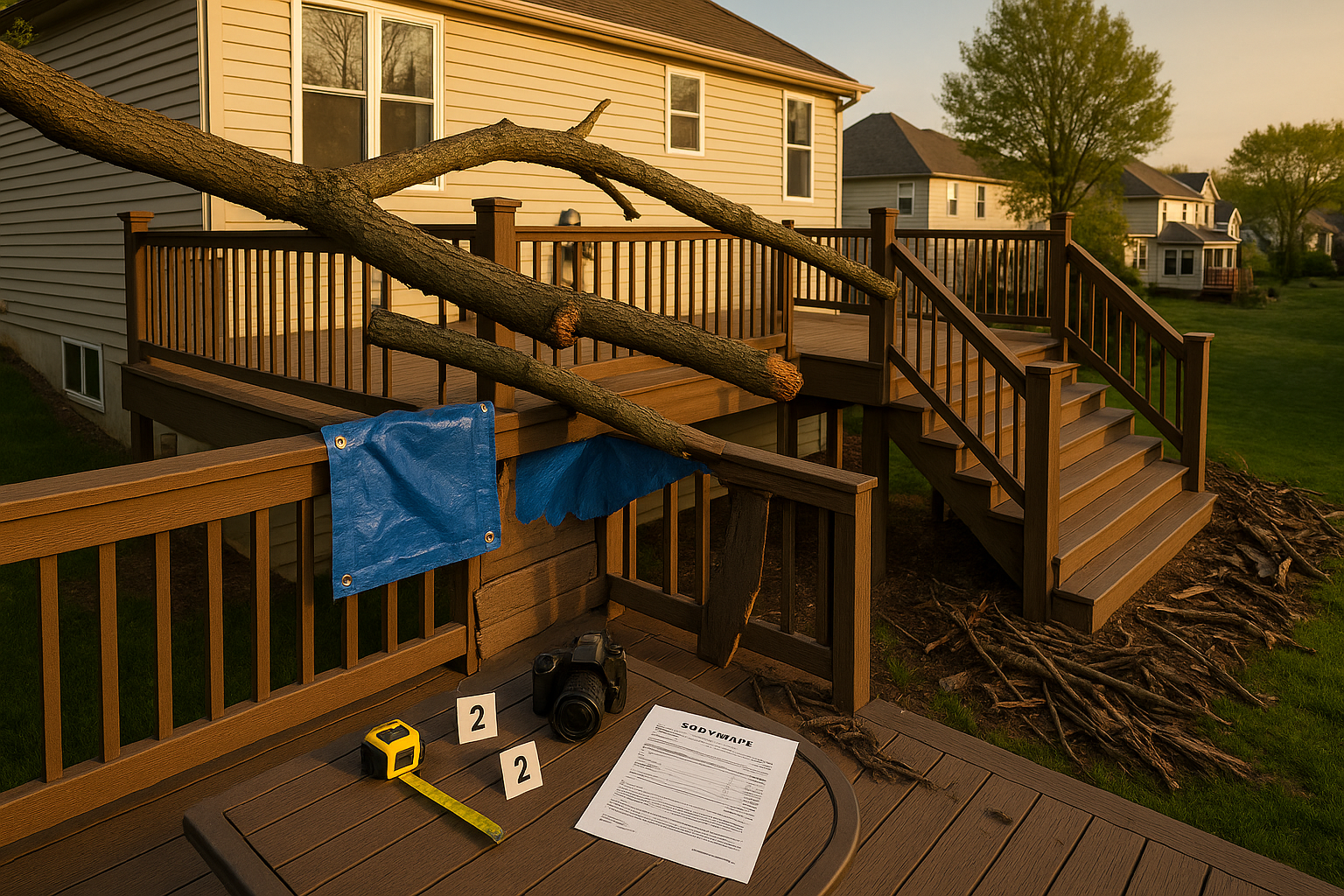
Last spring, a friend in Carmel called me after a windy night. A big limb off an old maple came down and clipped the corner of his two-level composite deck. It didn't smash the whole thing, just the top rail, a few deck boards, and the stair landing. But then the adjuster said the damage fell under 'Other Structures' because the deck wasn't attached to the house? My friend was confused. He'd always thought the deck was part of the house. Turned out, his policy had a lower limit for detached stuff, and he was worried the check wouldn't cover a proper rebuild. That's where a lot of Indianapolis homeowners get tripped up with deck home insurance.
What Your Homeowners Policy Actually Says About a Deck
Most policies start with two buckets: Coverage A for your actual house, and Coverage B for 'other structures' like a detached garage, a fence, or a freestanding deck. That's a big deal because Coverage B often caps out at ten percent of your dwelling limit. So if your house is insured for $400,000 and you've got a detached deck that gets hit by a tree, the most you might get for that deck is $40,000 before depreciation. Attached decks? They usually ride with the house under Coverage A. If your deck is bolted to the rim joist with a proper ledger, it's part of the dwelling. But if someone built it as a floating platform a few feet off the house, it could be lumped in with the fence and the shed. This is why a lot of homeowners ask, 'does homeowners insurance cover deck?' The answer isn't a simple yes or no—it depends on what caused the damage and whether the deck is attached or detached.
In Central Indiana, wind and hail from spring and summer storms are the most common culprits. A sudden gust that peels back deck boards or hail that dimples composite surfaces falls under storm damage deck claims. If a tree limb crashes down, tree fell on deck insurance generally applies. Snow and ice deck collapse coverage can also kick in if the deck gives way under the weight of a heavy snow load—but only if the collapse is sudden and from the weight, not from years of rot eating the joists. Slow wear, rot, bug damage, and improper installation? Nope, those are excluded. That's why regular maintenance matters.
Multi-Level Decks and Code Upgrades
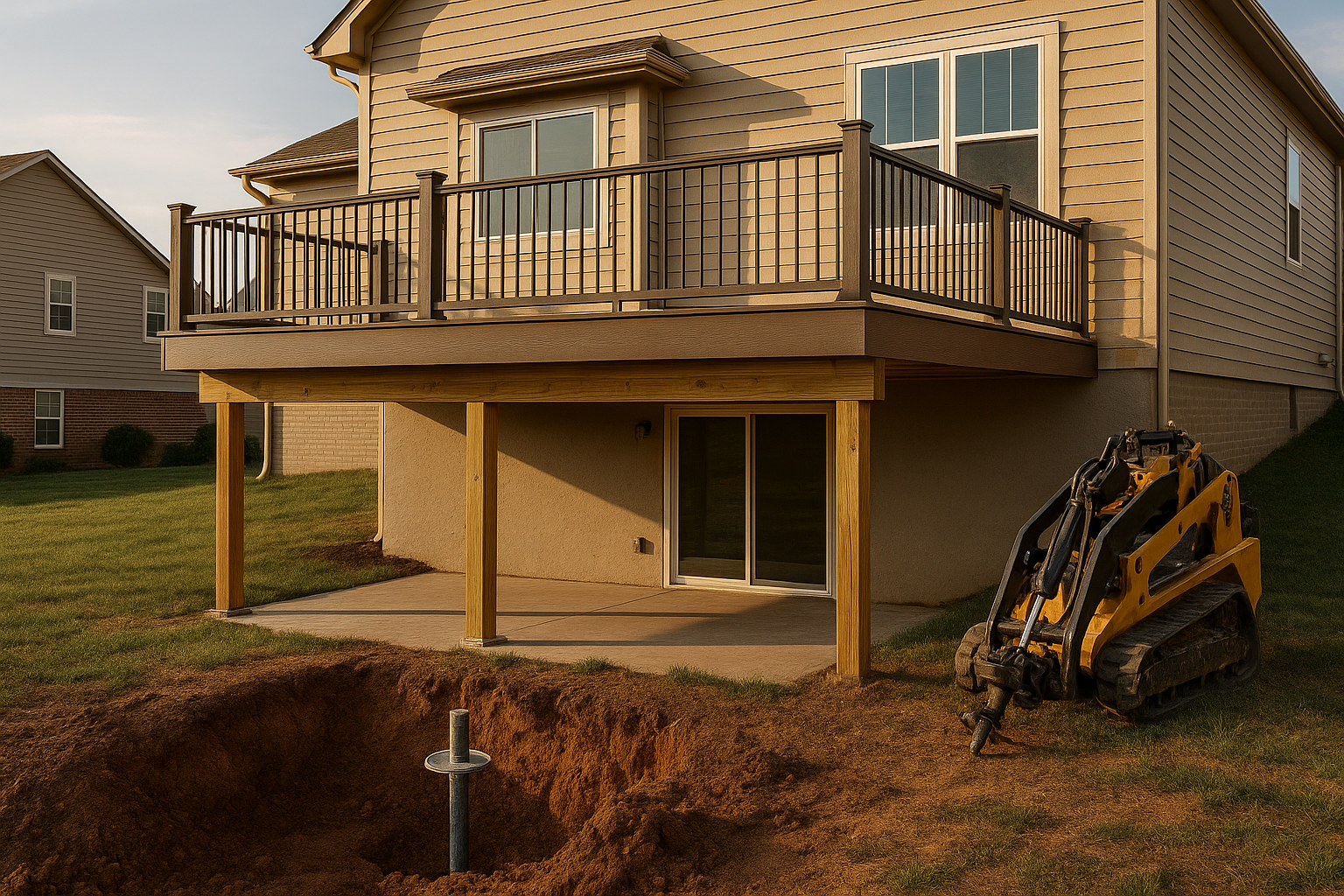
Multi-level decks add another wrinkle. Say your two-level deck in Fishers has damage on the upper level, but the lower level is old and no longer meets current guard height and baluster spacing rules. The building inspector may require you to bring everything up to code before signing off. That's where ordinance or law coverage comes in. If you don't have it, you're paying out of pocket for those code upgrades. And if your deck is attached to a walkout basement in a sloped Zionsville yard, that's still part of the dwelling, but the adjuster might see it differently if the ledger isn't obvious. We've got a whole post on building decks on walkout basements if you want the details.
The Claim Process: Don't Make These Mistakes
A guy in Greenwood had a multi-level cedar deck with a broken stair railing after a storm. The adjuster wrote an estimate for just the railing and a few boards, but didn't account for the fact that the whole stair system had to be brought up to current code. He accepted the check and later found out the contractor had to rip out more to get an inspection. That's a classic actual cash value trap—the insurer pays based on the deck's age and condition, not what it costs to rebuild to code. Replacement cost vs actual cash value deck coverage is a huge difference. If you have an older wood deck, you might only get a fraction of the cost unless you've got a replacement cost endorsement.
Deck railing liability insurance is another thing people forget. If someone falls from a faulty railing, that's a liability claim against your policy, not a property claim. That's why railings are safety-critical. In fact, a railing contractor should inspect your deck railings every year—loose balusters or wobbly posts are a lawsuit waiting to happen. And don't forget about debris removal: after a tree falls, the cost to haul away the mess is usually covered under debris removal coverage for deck, but only up to a certain limit. Temporary repairs after deck damage—like tarping a hole to keep rain out—are often reimbursable, but you need to keep receipts.
Before you call your carrier, take a hundred photos from every angle. Measure the damage with a tape measure. Don't tear anything down until the adjuster has seen it. And if you can, get a contractor estimate for insurance claim that spells out every line item: lumber, hardware, labor, permits, code upgrades, debris hauling. That gives the adjuster something concrete to work with. If you need a ballpark on what rebuilding might cost, check our post on deck cost per square foot in Indiana.
Codes, Permits, and Why They Matter for Your Claim
Indianapolis and the surrounding counties—Marion, Hamilton, Boone, Hendricks—all require permits and inspections for most structural deck work. That means footings sized for frost depth (36 inches in much of Central Indiana), ledgers attached with proper flashing, guard rails at least 36 inches high for residential, balusters spaced no more than 4 inches apart, and stair geometry that won't trip people. If your deck was built without a permit, or it's never been inspected, the insurer might use that as a reason to deny a claim. But if you have documentation that it was built to code, that strengthens your case.
We've written a full breakdown of the deck permit and inspection timeline in Hamilton County, so you know what to expect. As a local deck contractor, we handle the permit paperwork for you—it's half the headache. And one thing homeowners don't think about: if you also have a fence and a detached deck, both fall under Coverage B, so one big claim on the deck could leave less coverage for the fence. That's why some folks in Avon and Plainfield raise their other structures limit after adding a detached deck. If you later decide to add a screened patio enclosure or a roof over part of the deck, that can reclassify the structure as part of the dwelling. We work with patio enclosure suppliers on projects like that, and it's a conversation to have with your agent before you build.
Material Choices: Wood, Composite, and Steel Framing
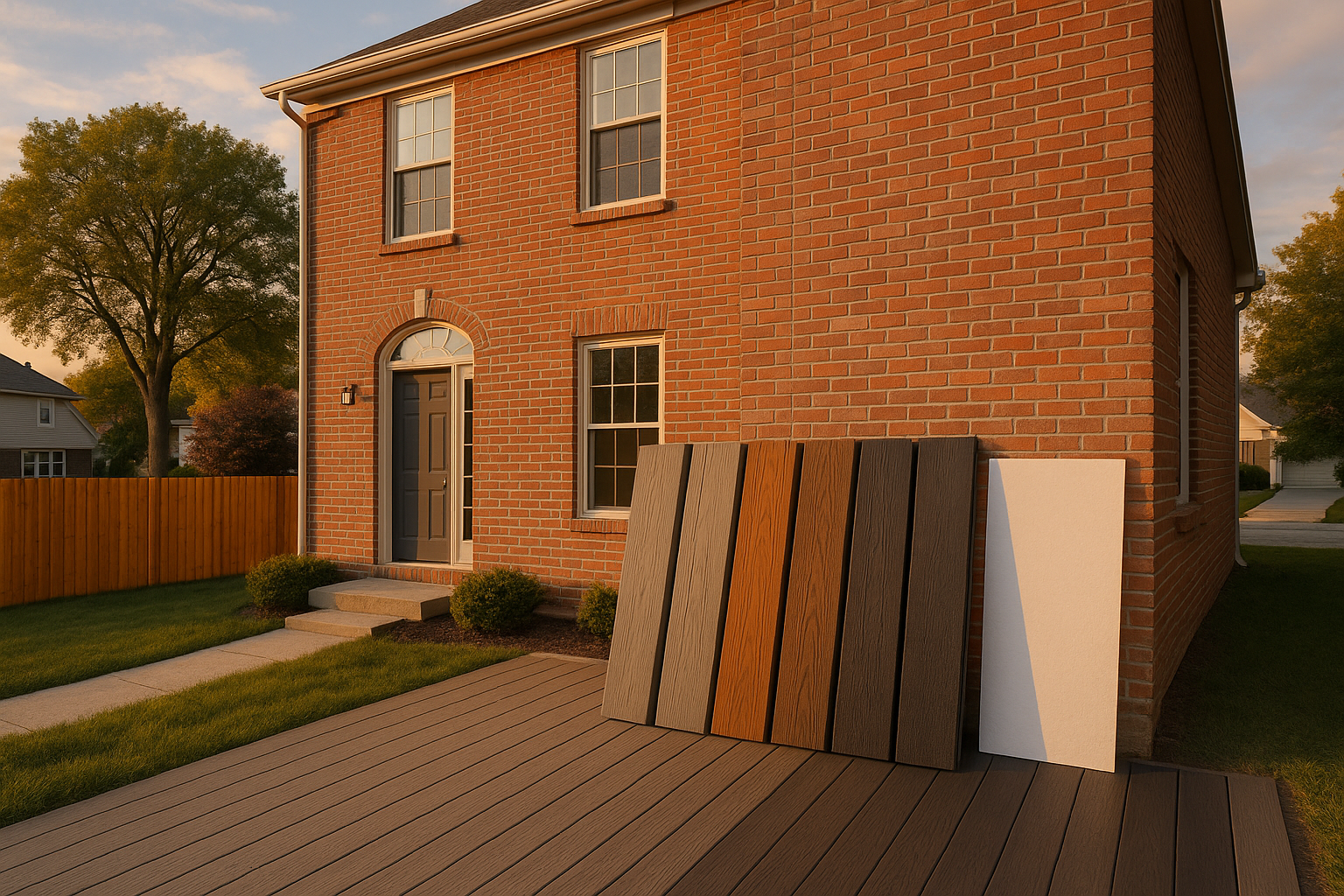
Older wood decks get hit hard by depreciation in an insurance claim. Composite decking and steel deck framing don't automatically earn you a premium discount, but they reduce the odds of a denial based on rot or neglect. Composite vs wood deck insurance considerations come down to maintenance history. If you can show the deck was properly maintained, the adjuster is less likely to say the damage was pre-existing. Steel deck framing is especially handy in Indiana because it won't rot from freeze-thaw cycles, and it doesn't warp like wood. We covered steel vs wood framing in another post if you're curious.
Winter is brutal on decks around here. Snow melt and refreeze seeps into cracks, and de-icing salts can eat away at metal hardware. That's why we tell homeowners to follow our winterizing guide for composite decks. And if you've got cable railing, the constant temperature swings can loosen tension over time—a quick fix but often overlooked. Check our cable railing tension and maintenance article for that. Bottom line: a well-maintained deck with quality materials is less likely to end up in a denied claim, even if the insurer never explicitly says so.
The Smart Way to Rebuild After a Claim
If your deck has damage, don't rush to demo. Get the adjuster out first. Have a contractor like DeckPros come do an insurance-ready assessment. We'll document everything, write a scope that matches the adjuster's line items, and include local code requirements for Marion or Hamilton County. We also handle HOA approval for deck rebuild if you live in a neighborhood with an active association—Carmel and Fishers have plenty of those. Multi-level deck safety and insurance go hand in hand: a rebuild that meets code is easier to insure and easier to sell later.
Here's the thing about deductibles. If your deductible is $2,500 and the damage is $3,000, you probably shouldn't file a claim. The premium increase might not be worth it. Deck deductible considerations are personal, but a good contractor can help you estimate real repair costs before you decide.
At DeckPros, we've seen too many homeowners settle for a lowball check because they didn't have the right documentation or the right contractor. We work across Indianapolis, Carmel, Fishers, Zionsville, Westfield, Noblesville, Greenwood, Brownsburg, Avon, and Plainfield. If your deck got hammered by a storm or you're just staring at sagging joists and wondering what insurance would say, let's talk before you file a claim. We'll give you a clear scope and documentation to hand to your adjuster. Grab a spot at /#quote or call—we'll help you sort out the coverage mess.
Thinking about your own deck or pergola?
Free in-home design consultation, 3D rendering, and a written quote — no pressure.