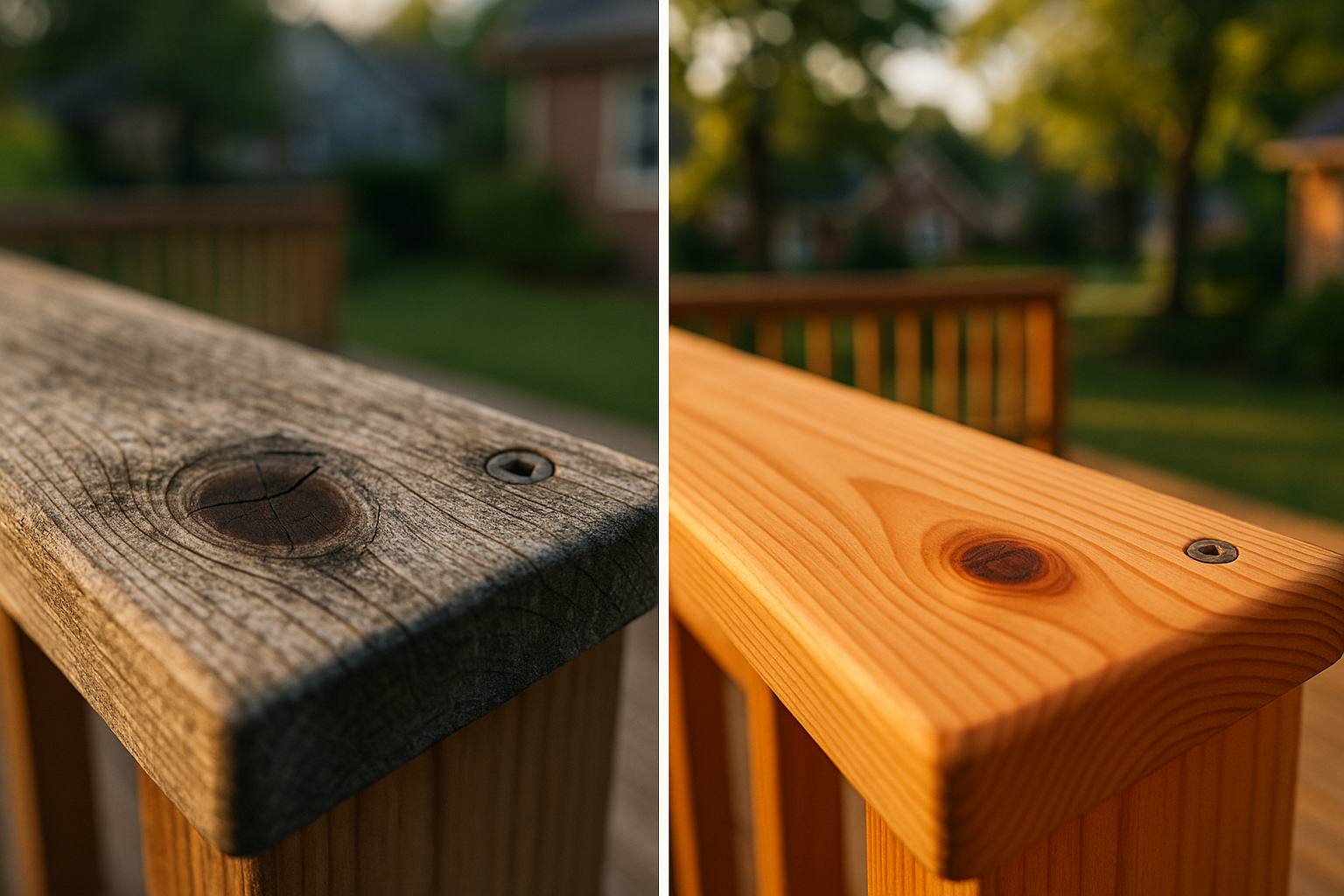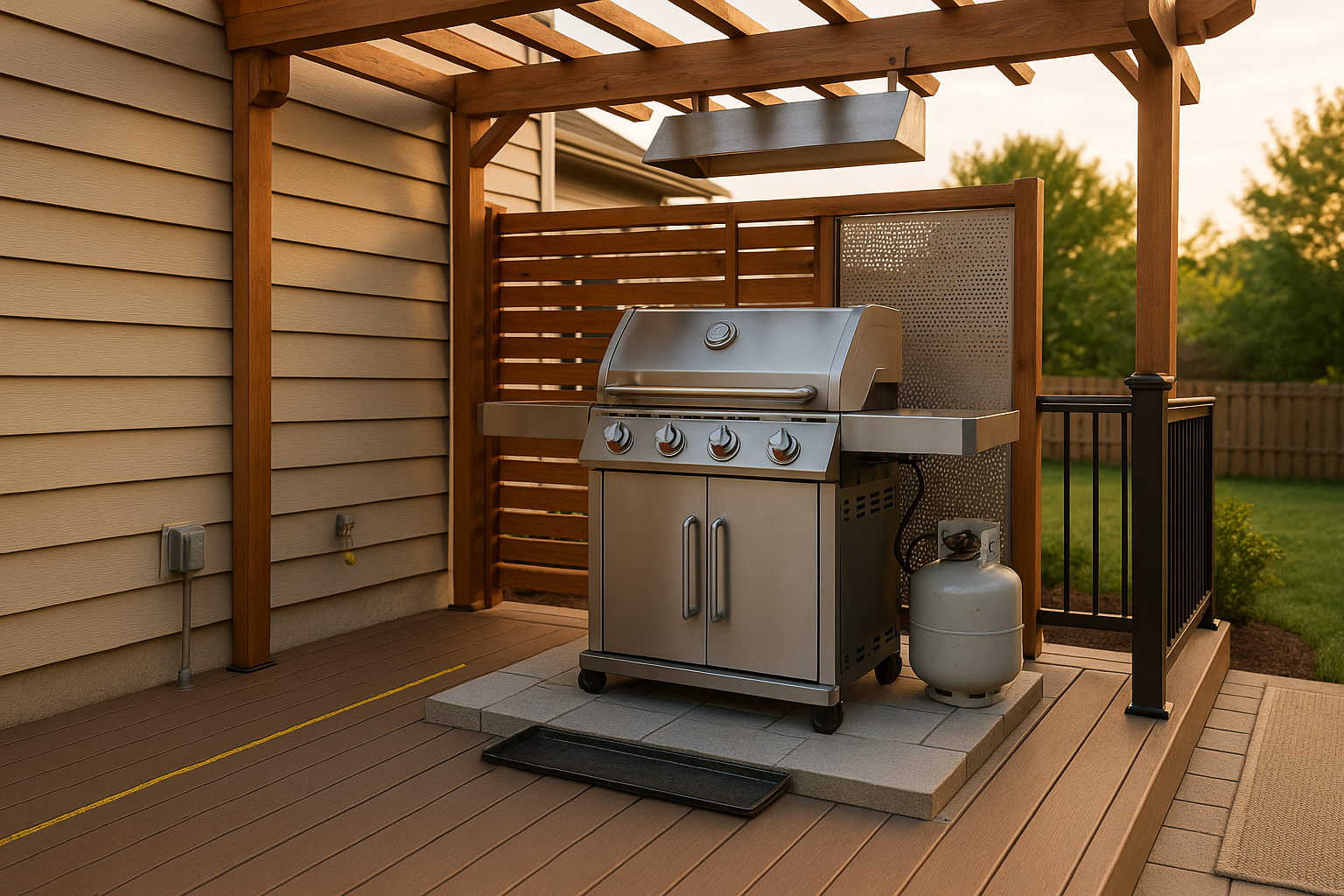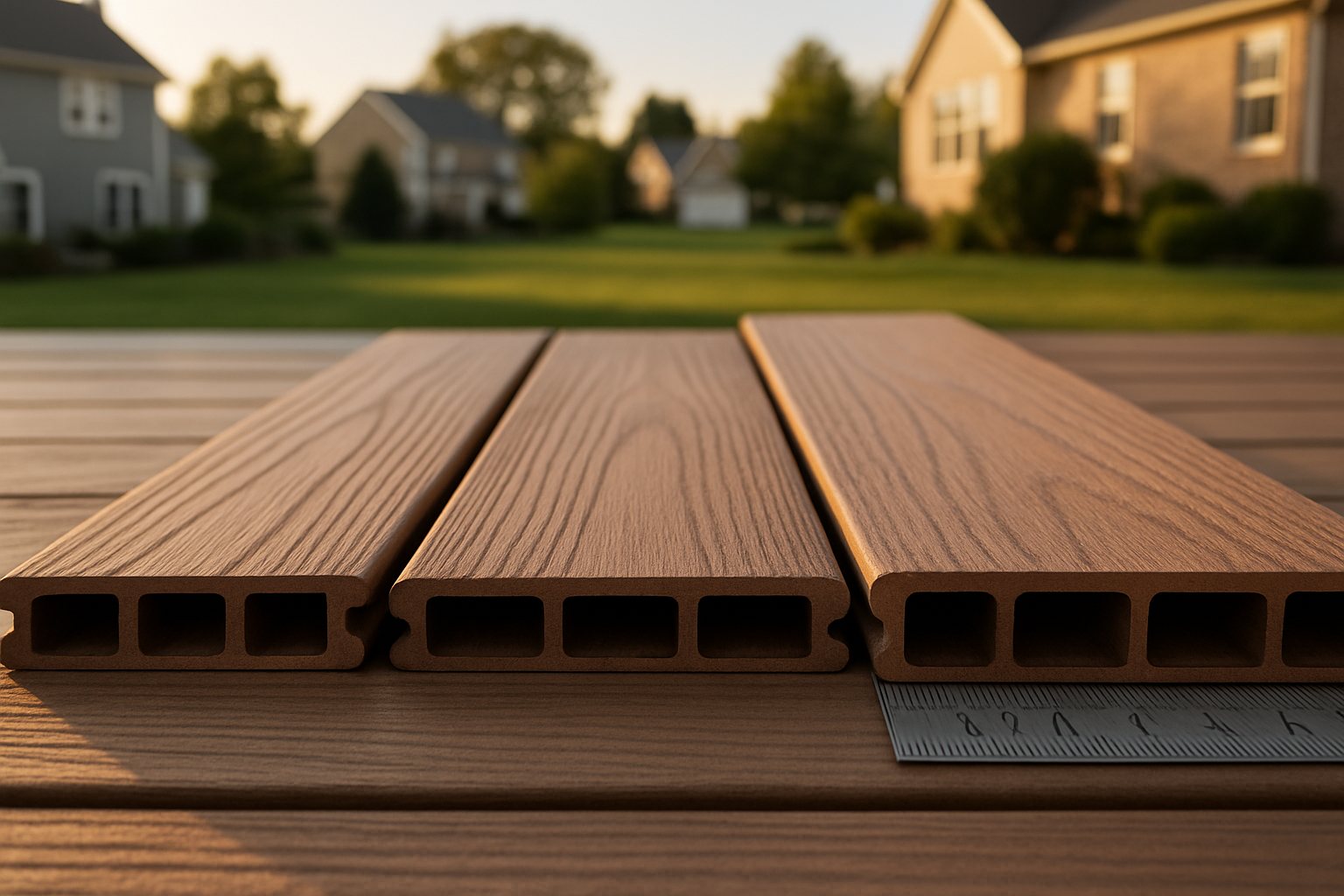
When my neighbor in Fishers started planning his deck resurface, he stood in the lumberyard aisle for 20 minutes just staring at sample boards. Not colors—widths. He kept picking up a 5.5-inch board, then a narrow 3.5-inch one, then a big 7.25-inch plank. 'I didn't know deck boards came in different widths,' he said. 'I thought they were all the same.' That's the moment I realized most homeowners don't think about deck board width until it's time to order materials. And by then, it feels like a decision you can't undo.
The Standard Width: 5.5 Inches (Give or Take)
Most composite deck boards sold in Indianapolis are what we call a 'standard' width. The label says 6 inches, but the actual board usually measures between 5.3 and 5.5 inches. That little difference comes from manufacturing tolerances and how composite boards are milled. When someone asks about '5.5 inch deck boards,' they're talking about this standard size. It's the default for a reason: it covers decent square footage without looking too wide or too busy. On a typical 12x16 deck, you'll need about 48 boards if you go with 5.5-inch width and 1/8-inch gaps. Not a big deal, but numbers matter when you're pricing things out.
If you want a quick idea, a deck board coverage calculator can help, but a pro will give you exact counts. Standard width is also the easiest to find locally. Walk into any lumberyard in Carmel or Greenwood and they'll have 5.5-inch composite in stock. Narrower or wider boards? Sometimes you're waiting two weeks for a special order. That's not a problem if you plan ahead, but it can delay a project if you decide last minute.
Narrow Boards, Wide Boards, and What They Do to a Deck's Look
Narrow deck boards—usually 3.5 to 4 inches—create a fine, detailed pattern. They make a small deck in a tight Indianapolis backyard feel more refined, like a piece of furniture instead of a platform. Downside? More boards, more fasteners, more install time. And visually, some people think narrow boards look busy, especially on a larger deck. I've heard homeowners say narrow boards remind them of old wooden bleachers. But on a 10x10 deck in Broad Ripple, they can look sharp.
Wide composite deck boards (7.25 to 9.25 inches) are the opposite. They reduce seam lines and give a clean, modern look. On a big deck in Zionsville—something over 400 square feet—wide boards make the surface feel uncluttered. But wide boards aren't just an aesthetic choice. They can cost more per linear foot, and some brands only offer them in limited colors. Worse, wide boards may require tighter joist spacing to prevent flexing. That means extra framing lumber if you're building new or resurfacing.
No, wide boards won't automatically sag or bounce. But if your joists are 16 inches on center and you put a 9-inch wide board on top, you might notice a little give. Manufacturers know this, so they often recommend 12-inch spacing for wide boards. That's a framing cost you should plan for.
Mixing widths is getting popular, especially in Carmel and Fishers where homeowners want a custom look without going overboard. You might use standard 5.5-inch boards for the main field, then frame the perimeter with a narrow board as a picture-frame border. Or use wide boards for the main deck and a narrow board for a breaker board down the middle. Mixing widths doesn't void a composite warranty as long as you follow the manufacturer's installation specs. I've seen too many people assume it's forbidden. It's not—you just need to get the gapping and fastening right.
Gapping and Expansion: Why Indiana Weather Makes It Matter
Composite boards expand and contract with temperature changes. In Indianapolis, we get hot summers and freezing winters, so those boards are moving a lot. The width of the board doesn't change the need for gaps, but wider boards might show expansion more if you don't leave the right space. Side-to-side gaps should be around 1/8 to 3/16 inch. End gaps are bigger—3/8 inch or more depending on the install temperature. Always check the brand's chart. I've seen decks where someone butted the boards tight in July, and by January the joints were buckling. That repair is not cheap.
Freeze-thaw cycles also mean water can get between boards and freeze, pushing them apart. So while a tiny gap might look nicer, you need some space for drainage and ice. Clogged gaps? Leaf debris can be an issue if you have overhanging trees, but a standard gap of 1/8 inch is usually fine. If you go wider, you might notice more debris, but it's manageable with a leaf blower.
Good airflow under the deck also helps boards dry out, which keeps gaps from staying wet and inviting rot. (Yes, composite can still get moldy if it stays damp.) Check out our post on under-deck ventilation and airflow if you want to keep the whole system healthy.
Layout Tricks: Picture Frames, Breaker Boards, and Seams
A picture-frame border is when you run boards perpendicular to the main field around the edge of the deck. It adds a crisp outline and hides the cut ends of the field boards. Many homeowners in Noblesville and Westfield ask for this because it makes the deck look finished. The border board can be the same width as the field or a different width for contrast. If you're using standard 5.5-inch field boards, a border of the same width works, but a narrower border (like 3.5-inch) can look sharp without being too loud.
Breaker boards are boards installed perpendicular within the field to break up long runs and create intentional seams. They're useful on decks longer than 20 feet where butt joints would look random. You can use a breaker board to transition from one width to another, or just to add visual rhythm. I've seen decks in Greenwood where a single breaker board down the middle made a 24-foot deck look designed instead of stretched.
Don't Forget the Other Trade Pros Around Your Deck
A good deck contractor thinks about board width from the frame up. If you change widths mid-project or resurface with a different width than the original, your joist spacing and blocking might need adjustment. That's part of our planning-first process at DeckPros—we don't just swap boards, we check what's underneath. Resurfacing a deck in Avon that had 2x6 pressure-treated boards? Those were probably 5.5 inches, so moving to a 5.5-inch composite is easy. But if you want wide boards, we might need to add joists or blocking.
If your deck sits next to a fence, consider how the board widths play together. A fence contractor can tell you that standard pickets are often 5.5 inches wide, same as standard deck boards. Matching widths creates a cohesive look across your whole backyard. It's a small detail, but when you're standing in the yard looking from fence to deck, it makes the space feel planned.
Thinking about adding a screened porch or three-season room over part of the deck later? A patio enclosure supplier will want to know your deck board width and layout because the threshold and wall framing need to sit flush. If you've got wide boards and tight seams, the transition from open deck to enclosed space can be nearly invisible. If you mix widths, they'll need to plan around that.
Railing contractors have a similar concern. Railing posts usually mount through the deck boards to the frame below, so they need to know where seams and breaker boards fall. A post landing right on a seam can ruin the look or make fastening awkward. We often work with railing contractors to position posts before finalizing the board layout. It's easier than drilling new holes after the deck is done.
Stairs and Resurfacing: Widths That Make Sense
Stairs are where board width gets really practical. A typical composite stair tread is made by ripping or using two boards side by side. If you use 5.5-inch boards, two boards give you an 11-inch tread depth—pretty standard. Wide boards might be too deep for a comfortable rise. Narrow boards might be too shallow. Some stair layouts use a single wide board with a nosing piece. Just make sure the tread depth meets code (usually 10 inches minimum) and feels safe underfoot. In icy winters, wider treads with less seams can actually be better because there are fewer grooves for ice to form in.
If you're resurfacing an existing deck and want to change board widths, you might need to add blocking or adjust joist spacing. That's often cheaper than a full rebuild, but not always. A deck that's 20 years old in Brownsburg might have joists spaced 24 inches on center—fine for old 2x6s but too wide for some composites, especially wide boards. We can tell you if it's smarter to resurface or rebuild after looking at the frame. Here's a deeper look at that decision.
A Simple Way to Pick the Right Width
Small deck (under 150 square feet)? Narrow or standard boards. Medium deck (150-300 square feet)? Standard is your safest bet. Large deck (over 300 square feet)? Wide boards or a mixed pattern. But don't forget local availability. In Indianapolis, standard widths and popular colors are usually in stock. Narrow or wide boards in less common colors might be special order. We help coordinate that so you're not stuck waiting.
Board color matters more than width when it comes to heat. A dark wide board will get just as hot as a dark narrow board. If your deck faces south or west in Fishers, consider a lighter color or plan for shade. More on that in our article about south-facing deck color fade.
The best way to see how different board widths will look on your deck is to lay them out. Not literally—you can't return cut boards. But we can do a layout mockup on paper or with samples on site. We'll show board counts, seam placement, and cost differences by width. Then you decide with confidence. Book a free on-site measurement and design session here. We serve Indianapolis, Carmel, Fishers, Zionsville, Westfield, Noblesville, Greenwood, Brownsburg, Avon, Plainfield, and the rest of the metro. Want more deck help? Check our blog.
Thinking about your own deck or pergola?
Free in-home design consultation, 3D rendering, and a written quote — no pressure.